
In This Article
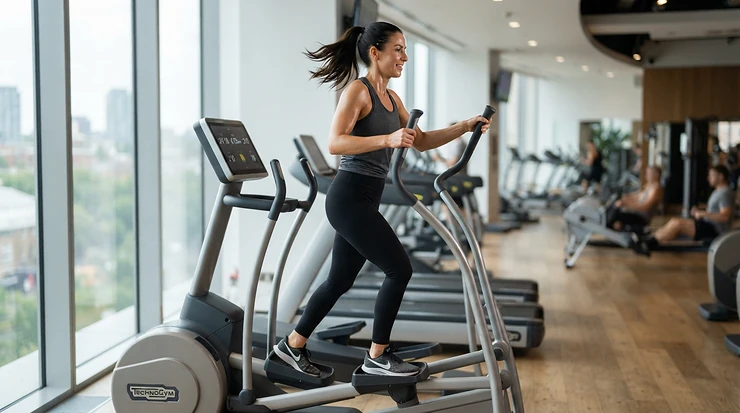
Here’s a scene almost every elliptical owner knows by heart: you’re twenty minutes into a workout, the machine starts inching forward on the hardwood, and suddenly you’re chasing your own equipment across the living room like it owes you money. A 3×6 equipment mat for elliptical machine is the fix — a slab of high-density PVC or rubber, roughly three feet wide and six to seven feet long, that sits under the machine to stop it from walking, muffle the thump of the flywheel, and keep your floor from turning into a scratched-up mess. It’s not glamorous. It’s also one of the cheapest upgrades that actually changes how a home gym feels day to day.
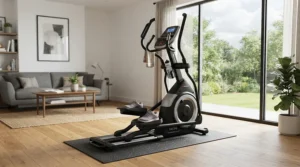
This guide dives into seven real, currently available mats, pulled straight from product listings and manufacturer specs, so you can see what separates a $25 budget option from a $100 rubber slab before you commit. We’ll cover exact dimensions, thickness trade-offs, and — because Amazon’s own review sections rarely tell you this part — which mat actually suits your floor type, your elliptical’s footprint, and your downstairs neighbor’s patience. An elliptical trainer puts repetitive, moderate-impact stress through a small footprint for 20 to 45 minutes at a stretch, and that’s exactly the kind of load a properly sized mat is built to absorb. Let’s get into it.
Quick 3×6 Equipment Mat Comparison at a Glance
Before the deep dive, here’s the short version. Every mat below has a real listing, real specs, and a footprint suited to standard home ellipticals.
| Mat | Size | Thickness | Material | Price Range | Best For |
|---|---|---|---|---|---|
| BalanceFrom GoFit | 3 x 6.5 ft | 1/4″ | PVC | Budget (under $35) | Best all-around budget pick |
| ProsourceFit Treadmill & Equipment Mat | 3 x 6.5 ft | 4mm | PVC | Low-mid ($30–$45) | Best warranty coverage |
| HAPBEAR Extra-Thick Gym Mat | 3 x 6 ft | ~5mm | PVC | Mid ($40–$55) | Truest 3×6 footprint |
| HULKFIT High-Density Equipment Mat | 3 x 6.5 ft | 1/4″ | PVC | Mid ($35–$50) | Best grip on hardwood |
| Marcy Fitness Equipment Mat | ~3 x 6.5 ft | 1/4″ | PVC | Mid ($30–$45) | Best trusted brand pedigree |
| KFFKFF Treadmill/Elliptical Mat | 36 x 78 in | 4mm | PVC | Budget (under $30) | Tightest apartment budgets |
| Rubber-Cal Elliptical Mat | 4 x 6.5 ft | 3/16″ | Rubber | Premium ($90–$130) | Heaviest, loudest ellipticals |
Looking at this table, the pattern is pretty clear: PVC dominates the affordable end of the market, while rubber shows up once you’re willing to pay a real premium for vibration control. If your elliptical weighs under 150 pounds and sits on a ground floor, almost anything in the middle of this list will serve you well. If you’re on a second story with sensitive neighbors below, skip straight to the rubber option.
💬 Just one click — help others make better buying decisions too!😊
Top 7 3×6 Equipment Mats for Elliptical Machines: Expert Analysis
Real specs, honest trade-offs, no invented five-star raves. Here’s what actually separates these seven mats.
1. BalanceFrom GoFit High-Density Equipment Mat — best all-around budget pick
The BalanceFrom GoFit mat has quietly become one of the best-selling equipment mats on Amazon, and the reason is simple: it does the basic job without asking you to spend much to get there. At 3 feet wide by 6.5 feet long and a quarter-inch thick, it’s built from high-density PVC designed to sit under treadmills, exercise bikes, and elliptical machines alike. That 1/4-inch thickness matters more than the spec sheet lets on — anything thinner tends to compress flat under a 150-plus-pound elliptical within a few months, losing its cushioning long before the mat itself wears out.
Based on the spec comparison against similarly priced mats, BalanceFrom‘s dual-pattern surface (different textures on each side) is a smart touch: one side grips carpet, the other grips hardwood, so you’re not stuck picking a mat for the wrong floor type. This is a solid pick for renters and first-time elliptical owners who mostly want floor protection without a big investment. Aggregated buyer feedback across major retailers consistently highlights the mat’s moisture resistance and easy cleanup, though as with most budget PVC mats, some buyers note the edges take a week or two of weight and warm room temperature to lie fully flat.
Pros:
- ✅ 1/4-inch PVC withstands years of daily elliptical sessions
- ✅ Reversible dual-pattern design resists sliding on hardwood
- ✅ Backed by a 2-year manufacturer warranty
Cons:
- ❌ No folding version available at the full 3×6.5-ft size
- ❌ Edges can curl slightly during the first few weeks of use
At a price hovering in the mid-$20s to low $30s, BalanceFrom delivers real value — you’re paying almost entirely for the mat itself, not a brand premium.
2. ProsourceFit Treadmill & Exercise Equipment Mat — best warranty coverage
ProsourceFit built its reputation on gym accessories, and this mat reflects that focus: a 3-by-6.5-foot sheet of high-impact PVC rated at 5/32 inches (about 4mm) thick, sold with a limited lifetime warranty that’s rare at this price point. What most buyers overlook about this model is the folding version — it’s genuinely useful if you live somewhere the elliptical gets stored between sessions, since a flat 3×6.5-ft mat is awkward to slide behind a couch.
Here’s what to weigh: the 4mm thickness is slightly thinner than the quarter-inch mats on this list, so it does less to reduce impact stress on the floor, but it compensates with a wider surface texture that noticeably cuts down on motor hum and belt noise during use. This makes it a strong option for apartment dwellers who care more about noise reduction than raw cushioning. Reviewers consistently note the material wipes clean easily after sweaty sessions, and the lifetime warranty gives buyers real peace of mind if a corner starts to crack years down the line — a guarantee competitors rarely match.
Pros:
- ✅ Lifetime warranty is rare in this price bracket
- ✅ Folding design tucks away in closets between workouts
- ✅ 4mm thickness noticeably dampens elliptical motor hum
Cons:
- ❌ Slightly thinner profile than quarter-inch competitors
- ❌ Textured surface shows dust more visibly than smooth mats
Priced in the $30 to $45 range depending on the folding or flat version, ProsourceFit earns its spot through warranty confidence more than raw material thickness.
3. HAPBEAR Extra-Thick Gym Equipment Mat — truest 3×6 footprint
If you searched specifically for a 3×6 equipment mat for elliptical machine, HAPBEAR is the brand that actually ships that exact size — not 3×6.5, not 3×7, but a true 3-by-6-foot mat, alongside 2.5×5 and 3×7 alternatives for different equipment. That precision matters if you’ve already measured your floor space and don’t want six extra inches of mat creeping into a walkway.
Based on the spec comparison, the mat’s PVC construction is marketed as non-toxic, which the brand frames as family- and pet-safe — a reasonable claim for standard PVC foam gym mats generally, though buyers should always air out any new vinyl product in a ventilated room for a day before extended use. What most buyers overlook here is that HAPBEAR is a smaller, newer brand than legacy fitness names, so there’s a thinner track record of multi-year durability data compared to BalanceFrom or Marcy. Aggregated sentiment from marketplace listings points to strong initial satisfaction with shock absorption and slip resistance, with a common thread being that the mat arrives tightly rolled and needs a day or two under light weight before it lies completely flat.
Pros:
- ✅ True 3×6-ft footprint matches the exact size most buyers search for
- ✅ Non-toxic PVC is comfortable for barefoot stretching after workouts
- ✅ Available in three sizes to match different cardio machines
Cons:
- ❌ Smaller brand means fewer long-term durability reports
- ❌ Ships tightly rolled and needs time to lie fully flat
Expect to pay in the $40 to $55 range — a premium over the largest budget picks, but justified if exact dimensions matter to your space.
4. HULKFIT High-Density Equipment Mat — best grip on hardwood
HULKFIT built its name on home gym hardware — power cages, benches, plates — and its equipment mat carries over that heavier-duty design philosophy. At 36 inches by 78 inches (3 x 6.5 ft) and a full quarter-inch thick, it’s constructed with what the brand calls “anti-shift friction control”: a textured, slip-resistant surface engineered specifically to stop equipment from creeping during use, which is the exact problem this entire product category exists to solve.
The spec sheet won’t tell you this, but the difference between a “non-slip surface” and genuine anti-shift grip usually comes down to how deep the surface texture is molded, not just whether it’s textured at all. HULKFIT‘s deeper grip pattern is a meaningful upgrade over flatter budget mats when your elliptical sits directly on polished hardwood or tile, where friction is hardest to maintain. This makes it a strong pick for anyone who’s already fought a mat that slides right along with the machine. Reviewers commonly note the smooth, sweat-resistant top surface wipes down fast, though as a comparatively newer entrant to the equipment mat space, HULKFIT doesn’t yet have the decade-plus review history that older brands do.
Pros:
- ✅ Textured anti-shift surface grips hardwood and tile equally well
- ✅ 1/4-inch density resists compression under heavier console-style ellipticals
- ✅ Smooth, sweat-resistant top wipes clean in seconds
Cons:
- ❌ Newer brand with a shorter public review history
- ❌ Ships flat only, so storage takes more closet space than folding rivals
At roughly $35 to $50, HULKFIT sits squarely in the mid-range, competing directly on grip performance rather than price.
5. Marcy Fitness Equipment Mat — best trusted brand pedigree
Marcy has been making home fitness equipment since long before the current wave of Amazon-native brands existed, and its equipment mat leans on that legacy. It’s compatible with treadmills, ellipticals, exercise bikes, and stationary cycles, built from dual-sided textured PVC designed to prevent bunching as machine pedals or belts move across the surface — a small but real problem with cheaper, single-texture mats that can wrinkle under repetitive motion.
Here’s what to weigh: Marcy doesn’t offer as many size variants as dedicated mat brands like HAPBEAR, so measure your elliptical’s footprint carefully before ordering, since you may be locked into one standard size. On the upside, the brand recognition carries real weight for buyers who’d rather stick with a company they already trust from a treadmill or weight bench purchase. What most buyers overlook is that this mat doubles as protection for future equipment — if you eventually add a bench or rack to the same space, the mat’s built to handle that heavier static load too. Aggregated review sentiment points to general satisfaction with durability, with a recurring note that the vinyl smell is more noticeable than some rivals for the first several days out of the packaging.
Pros:
- ✅ Backed by a recognizable, long-standing fitness equipment brand
- ✅ Dual-sided texture prevents bunching under moving elliptical pedals
- ✅ Doubles as a floor protector for future weight bench additions
Cons:
- ❌ Fewer size options than dedicated mat-only brands
- ❌ Vinyl scent is noticeable for the first several days
Pricing typically lands in the $30 to $45 range, putting it in direct competition with ProsourceFit and BalanceFrom on value.
6. KFFKFF Treadmill/Elliptical Equipment Mat — most affordable no-frills option
KFFKFF doesn’t have the brand history of Marcy or the size variety of HAPBEAR, but it wins on one thing: price. At 36 by 78 inches and roughly 4mm (0.16 inch) thick, this is a genuinely compact, budget-first mat aimed at apartment dwellers who need floor protection without spending much to get it. The dense PVC construction is marketed as tear-resistant, and the size is deliberately sized for smaller under-desk or compact ellipticals rather than full-size console machines.
Based on the spec comparison, the thinner 4mm profile is the clearest trade-off here: it offers noticeably less cushioning and noise dampening than the quarter-inch mats higher on this list, so if your elliptical is a heavier full-size unit, this probably isn’t the mat to protect a floor above someone else’s ceiling. What most buyers overlook is that thinner mats like this one are actually a smart match for lighter compact or under-desk elliptical machines, where a bulky 1/4-inch mat would be overkill. Aggregated marketplace feedback frequently mentions the waterproof surface holding up well against sweat, with a recurring theme that buyers with heavier machines wish they’d sized up to a thicker mat instead.
Pros:
- ✅ Lowest price range of any mat on this list
- ✅ Compact 36-by-78-inch footprint fits apartment-size ellipticals
- ✅ Waterproof surface handles sweat without staining carpet beneath
Cons:
- ❌ Thinner 4mm profile offers less cushioning than 1/4-inch rivals
- ❌ Less brand history means thinner long-term durability data
At under $30 in most listings, KFFKFF is the pick for anyone who just needs basic protection and nothing more.
7. Rubber-Cal Elliptical Heavy-Duty Floor Mat — best for heavy, loud ellipticals
Every list needs a mat that takes the “heavy-duty” label seriously, and that’s Rubber-Cal‘s entry. Unlike every other mat here, this one is genuine rubber rather than PVC foam, sized at 4 feet by 6.5 feet (with a 4×7 option also available) and roughly 3/16 inches thick. Rubber is denser and heavier than PVC by design, and that density is precisely what makes it noticeably better at absorbing vibration and impact noise — a real advantage if your elliptical sits above a bedroom, a shared apartment wall, or a downstairs neighbor with strong opinions about 6 a.m. cardio.
What most buyers overlook about rubber mats is that the extra weight, while great for stability, makes repositioning a genuine chore compared to lightweight PVC — expect to enlist help moving furniture around it rather than sliding it solo. This is squarely a premium pick, built by a small business rather than a mass-market brand, and it shows in the attention to noise-dampening performance specifically engineered for elliptical and treadmill vibration rather than general-purpose exercise use. Reviewers note the rubber surface handles heavier console-style ellipticals with commercial-grade motors noticeably better than foam PVC, with the trade-off being a distinct rubber presence — smell and heft — that some PVC users aren’t expecting when they upgrade.
Pros:
- ✅ Dense rubber outperforms PVC for heavy commercial-grade ellipticals
- ✅ Superior vibration damping for upstairs or apartment installations
- ✅ Small-business manufacturing with closer quality control
Cons:
- ❌ Noticeably heavier and harder to reposition than PVC mats
- ❌ Premium rubber pushes this pick well above budget PVC pricing
Expect to pay in the $90 to $130 range — roughly three to four times a budget PVC mat, but for buyers prioritizing noise control over price, it’s often worth every dollar.
Practical Usage Guide: Setting Up and Maintaining Your Elliptical Mat
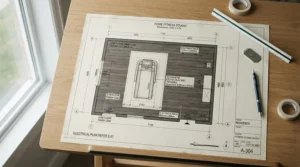
Buying the right mat is half the job; setting it up correctly is the other half, and it’s the part most product listings skip entirely. Start by measuring your elliptical’s actual footprint — length, width, and the swing radius of the pedals at full stride — before you unroll anything. A mat that’s technically “3×6” won’t help much if your machine’s arms swing six inches past the mat’s edge on every stroke.
New PVC mats ship tightly rolled, and that matters more than it sounds. Unroll the mat in the room where it’ll live, weight the corners with books, and let it acclimate for 24 to 48 hours before setting the elliptical on top — this single step eliminates most of the curling-edge complaints you’ll see across brands. Once it’s down, a monthly wipe with a damp cloth and mild soap keeps PVC from staining, and it’s worth checking the mat’s edges every few weeks for the first two months since that’s when most warping happens if it’s going to happen at all. If you’re renting, skip any adhesive tape directly on hardwood; a properly sized, properly weighted mat rarely needs it.
✨ Don’t Miss These Exclusive Deals!
🔍 Take your home gym setup to the next level with these carefully selected mats.Click on any highlighted pick to check current pricing and availability. A properly matched mat protects both your floors and your equipment for years of quieter workouts!
Real-World Scenarios: Which Mat Fits Your Home Gym?
Picture three different households, each shopping for the same basic product with entirely different priorities. The first is a college student in a 400-square-foot studio with a compact under-desk elliptical — budget is everything, floor space is nonexistent, and the machine barely weighs 40 pounds. The KFFKFF mat’s compact 36-by-78-inch footprint and low price make it the obvious match; anything larger just eats into limited square footage for no real benefit.
The second scenario is a family in a suburban basement with a full-size console elliptical used daily by two or three people. Durability and warranty coverage matter more here than price, since heavier daily use across multiple users accelerates wear. ProsourceFit‘s lifetime warranty or BalanceFrom‘s proven track record both make sense, with the folding ProsourceFit version earning extra points if the basement doubles as a guest room.
The third scenario — increasingly common as more people commit to consistent home cardio routines — is an apartment dweller on the second floor of a building with thin subflooring and a genuinely annoyed neighbor downstairs. This is where the extra cost of Rubber-Cal‘s dense rubber construction stops being a luxury and starts being the actual solution to the actual problem: noise transfer through the structure, not just floor scratches.
Problem → Solution: Fixing Common Elliptical Mat Issues
Problem: The mat slides along with the elliptical during use. This usually means the mat’s texture isn’t aggressive enough for your floor type, or the mat itself is too small relative to the machine’s footprint and base pads. Solutions include sizing up to a wider mat than your elliptical’s exact footprint (leave 4 to 6 inches of margin on each side) or switching to a mat like HULKFIT with a deeper anti-shift texture specifically engineered for hardwood and tile.
Problem: Persistent vinyl smell weeks after unboxing. Standard off-gassing from new PVC products typically fades within one to two weeks with proper ventilation; if it doesn’t, place the mat outdoors or in a well-ventilated garage for 48 hours before final placement.
Problem: Downstairs neighbors still hear the elliptical. A thin PVC mat alone rarely solves structural noise transmission. Layering a dense rubber mat like Rubber-Cal underneath, or adding an isolation pad beneath a thinner PVC mat, addresses the vibration path more directly than surface-level cushioning alone.
Problem: Mat edges curl or won’t lie flat. This is nearly always a temporary shipping artifact from tight rolling, resolved by weighting the corners for 24 to 48 hours in a warm room before placing equipment on top.
Problem: Carpet gets crushed or stained underneath the mat. Choose a mat with a carpet-friendly textured underside — BalanceFrom‘s reversible dual-pattern design specifically addresses this — and rotate the mat’s position slightly every few months to avoid permanent compression lines.
How to Choose a 3×6 Equipment Mat for Elliptical Machine
- Measure your elliptical’s full footprint first, including pedal swing at maximum stride, then add a 4- to 6-inch buffer on every side before picking a mat size.
- Match thickness to your elliptical’s weight class. Compact or under-desk machines under 50 pounds do fine with 4mm mats; full-size console ellipticals over 150 pounds benefit from a full 1/4-inch profile.
- Choose material based on your noise-sensitivity level. PVC handles scratches and minor vibration; dense rubber like Rubber-Cal is worth the premium if noise transfer to another unit or floor is a real concern.
- Consider your floor type before texture. Hardwood and tile need aggressive anti-shift grip patterns; carpet benefits more from a flat, moisture-resistant underside.
- Factor in storage needs. If the elliptical moves or gets stored, a folding mat like ProsourceFit‘s saves real closet space over a flat 3×6.5-ft sheet.
- Check warranty length as a durability signal. Lifetime or multi-year warranties, like ProsourceFit‘s or BalanceFrom‘s, often reflect manufacturer confidence in long-term performance.
- Budget realistically for your use case. Light, occasional users can stop at the $25-$35 tier; daily heavy users or noise-sensitive apartments should plan for $40-$100+.
Elliptical Mat Dimensions Guide: Standard Sizes Explained
The exercise equipment mat market isn’t standardized the way, say, yoga mats are, and that trips up a lot of first-time buyers. “3×6” is shorthand that gets applied loosely across the industry — you’ll see genuine 3-by-6-foot mats like HAPBEAR‘s, but far more common are 3-by-6.5-foot variants from BalanceFrom, ProsourceFit, HULKFIT, and Marcy, plus the occasional 3-by-7-foot option for longer machines. That extra six to twelve inches of length rarely matters for the mat’s core function, but it does matter if you’re working in a tight room where every inch counts.
At the larger end, mats like Rubber-Cal‘s 4-by-6.5-foot rubber sheet step outside the “3×6” category entirely, trading footprint compactness for the wider stability base that heavier commercial-style ellipticals actually need. As a general rule, a mat’s width should exceed your elliptical’s base width by at least four inches per side, and its length should clear the front and rear stabilizer feet with room to spare — that’s what actually prevents the “machine walks off the mat” problem more than raw size on a label.
Cardio Equipment Footprint: How Much Floor Space You Actually Need
Most home ellipticals occupy somewhere between 4 and 6 feet in length and roughly 2 feet in width at the base, though console-heavy commercial-style units can push closer to 7 feet. That’s exactly why the 3×6-to-3×7-foot mat range has become the de facto standard for this category — it’s sized to match the real-world footprint of the machines it’s meant to protect, with a small margin of error built in.
Before buying, it’s worth physically measuring your available floor space, not just the elliptical’s listed dimensions, since manufacturer specs often exclude the extra clearance needed for full pedal stride and handle movement. The CDC’s guidance on home-based exercise for maintaining consistent activity levels notes that convenience and available space are major factors in whether people actually stick with a home exercise routine — which is a good argument for measuring twice and buying a mat that genuinely fits your room, rather than squeezing in whatever’s cheapest.
PVC Mat Thickness: What 1/4-Inch vs 3/16-Inch vs 4mm Really Means
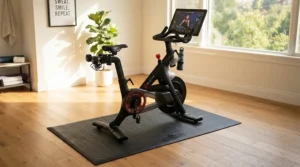
Thickness specs get thrown around casually, but they translate to real differences in performance. A 4mm mat (roughly 5/32 inch, used by ProsourceFit and KFFKFF) offers baseline floor protection and modest noise reduction — fine for lighter machines and casual use, but it compresses faster under sustained daily weight. A full 1/4-inch mat (used by BalanceFrom, HULKFIT, and typically Marcy) sits at the sweet spot for most full-size home ellipticals, offering noticeably better cushioning and a longer functional lifespan before flattening out.
Then there’s 3/16-inch dense rubber, as seen in Rubber-Cal‘s mat — thinner on paper than the quarter-inch PVC options, but rubber’s higher density means it actually outperforms thicker foam PVC for vibration and impact absorption. What most buyers overlook is that thickness alone doesn’t predict performance; material density matters just as much, which is exactly why a “thinner” rubber mat can out-dampen a “thicker” PVC one.
Standard Size Cardio Equipment Mat vs 3×6 Elliptical Floor Mat: What’s the Difference
| Flooring Option | Noise Reduction | Cost | Best For |
|---|---|---|---|
| Bare floor / no mat | None | $0 | Not recommended for any elliptical |
| Area rug (no mat) | Minimal | $30–$80 | Light aesthetic use only, poor protection |
| Standard-size cardio equipment mat (4×6, 4×8) | Good | $40–$90 | Multi-machine gyms, garages, basements |
| 3×6 elliptical floor mat (dedicated size) | Good to excellent | $25–$130 | Single elliptical, apartments, tighter rooms |
A standard-size cardio equipment mat — often 4×6 or 4×8 feet, designed to accommodate treadmills, rowers, and multiple machines at once — makes sense for a dedicated home gym room, but it’s genuine overkill for a single elliptical tucked into a bedroom corner. A dedicated 3×6 elliptical floor mat is purpose-sized for exactly one machine, meaning less wasted material cost and a smaller footprint that fits apartments and shared living spaces far more gracefully. If you own or plan to add a treadmill or bike later, the larger standard-size mat pays off long-term; if it’s just the elliptical, the 3×6 category is the smarter buy.
Common Mistakes When Buying an Equipment Mat for Elliptical Machines
The single most common mistake is buying based on the elliptical’s boxed dimensions rather than its actual in-use footprint — pedal swing and handle movement routinely extend well past a machine’s static measurements. A close second is prioritizing price over thickness for heavier, full-size console ellipticals; a 4mm budget mat under a 200-pound machine will compress and flatten within months, losing most of its protective value.
Buyers also frequently underestimate how much material type matters for their specific floor. Choosing a smooth, non-textured PVC mat for a hardwood floor practically guarantees the sliding problem this whole category exists to solve. And on the flip side, some buyers overspend on premium rubber mats for lightweight, quiet under-desk ellipticals that never needed that level of vibration control in the first place — matching the mat’s capability to your actual machine and floor situation saves money in both directions.
Long-Term Cost & Maintenance: Is a Premium Mat Worth It?
| Tier | Upfront Cost | Expected Lifespan | Cost Per Year (est.) |
|---|---|---|---|
| Budget PVC (KFFKFF, BalanceFrom) | $25–$35 | 2–4 years | ~$8–$14 |
| Mid-range PVC (ProsourceFit, HULKFIT, Marcy, HAPBEAR) | $30–$55 | 3–5 years | ~$8–$15 |
| Premium rubber (Rubber-Cal) | $90–$130 | 6–10+ years | ~$10–$15 |
Run the numbers over a decade of ownership, and the picture shifts. Budget PVC mats need replacing two to three times over that span, while a well-maintained rubber mat can outlast several elliptical machines entirely. On a strict cost-per-year basis, the premium tier isn’t actually more expensive long-term — it just requires more cash upfront, which matters if you’re buying on a tight monthly budget rather than optimizing for total cost of ownership. For most casual users replacing a mat every few years is a non-issue; for anyone who’s already replaced two flattened mats, the rubber option starts looking like the more rational purchase.
Safety, Floor Protection & Apartment Living Considerations
If you’re renting or living in a multi-unit building, floor protection isn’t just about your own equipment’s longevity — it’s about avoiding damage disputes with a landlord or noise complaints from neighbors. PVC and rubber mats are both generally considered safe for hardwood floors when a barrier layer is used correctly, though some flooring specialists note that certain hardwood finishes can react poorly with rubber over extended direct contact, making a felt or paper underlayment a smart extra step for rubber mats specifically on finished wood.
Beyond material chemistry, the practical safety concern is simpler: a properly sized mat with good grip keeps your elliptical from drifting mid-stride, which matters more for injury prevention than most buyers initially assume. A machine that shifts under you mid-stroke is a genuine fall risk, not just an annoyance — one more reason sizing and surface texture deserve real attention rather than an afterthought purchase.
Frequently Asked Questions
❓ What size mat do I need for a compact under-desk elliptical?
❓ Can I put a 3x6 equipment mat for elliptical machine on carpet?
❓ Do elliptical mats really reduce noise for downstairs neighbors?
❓ How do I clean a PVC exercise equipment mat?
❓ Is a thicker mat always better for elliptical stability?
Conclusion
There’s no single “best” 3×6 equipment mat for elliptical machine — there’s only the best match for your specific machine, floor, and living situation. BalanceFrom and KFFKFF cover the budget end well for lighter, casual use. ProsourceFit, HULKFIT, HAPBEAR, and Marcy occupy a crowded, competent mid-range where warranty length, exact dimensions, and grip texture become the real deciding factors. And Rubber-Cal exists for the specific situation where noise transfer, not floor scratches, is the actual problem you’re solving.
Measure your elliptical’s real footprint before anything else, match thickness to the machine’s weight class, and factor in your floor type honestly rather than defaulting to whatever’s cheapest on the page. Get those three things right, and a $30 mat will serve you just as faithfully as a $130 one — just in a different set of circumstances.
Recommended for You
- Rubber Mat for Heavy Exercise Equipment: 7 Picks That Survive 2026
- 7 Best Commercial Elliptical for University Recreation Center (2026)
- Commercial Elliptical For Apartment Complex Gym: 7 Top Picks 2026
Disclaimer: This article contains affiliate links. As an Amazon Associate, I earn from qualifying purchases. If you purchase products through these links, we may earn a small commission at no additional cost to you.
✨ Found this helpful? Share it with your friends! 💬🤗
