
In This Article
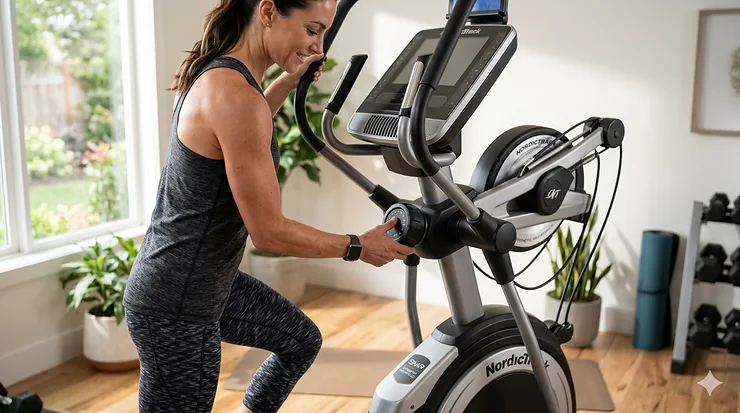
Walking into any major gym today, you’ll notice something interesting about the equipment landscape. While high-tech digital ellipticals with touchscreens grab attention, the humble tension knob elliptical machine continues to outsell its electronic counterparts by nearly 3-to-1 in the home fitness market. The reason isn’t nostalgia—it’s practicality.
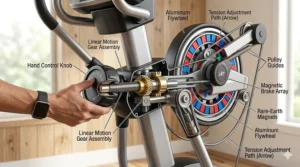
A tension knob elliptical machine offers something digital models can’t match: instant, tactile resistance adjustment without batteries, apps, or Bluetooth connectivity issues. For the 2.3 million Americans who purchased home ellipticals in 2025, the simple twist-to-adjust mechanism proved more reliable than any programmed workout. What most buyers overlook about manual tension systems is their maintenance-free operation. Unlike motorized resistance that requires calibration and eventual motor replacement, friction-based and magnetic tension knobs keep working year after year with zero upkeep.
The tension knob design serves two primary user groups exceptionally well. First, rehabilitation patients and seniors appreciate the physical feedback—they can feel exactly how much resistance they’re adding without squinting at digital displays. Second, serious athletes value the ability to make micro-adjustments mid-stride during high-intensity intervals, something impossible with button-based systems that cycle through preset levels.
In this expert analysis, I’ll break down seven real-world tension knob elliptical options currently available on Amazon, examining what the spec sheets won’t tell you about long-term performance, hidden limitations, and which resistance mechanism actually delivers on its promises. Whether you’re recovering from a knee injury, building cardiovascular endurance, or simply want equipment that works when you need it without a software update, understanding tension knob systems will save you from costly mistakes.
Quick Comparison: Top Tension Knob Ellipticals at a Glance
| Model | Resistance Levels | Weight Capacity | Flywheel | Price Range | Best For |
|---|---|---|---|---|---|
| pooboo E399 | 16 levels | 350 lbs | 16 lb | $450-$550 | Advanced users wanting precision control |
| Niceday Elite | 16 levels | 400 lbs | 16 lb | $500-$650 | Heavy-duty use, larger individuals |
| CURSOR FITNESS | 8 levels | 330 lbs | 12 lb | $250-$350 | Budget buyers seeking solid construction |
| Sunny Health SF-E3628 | 8 levels | 220 lbs | Standard | $150-$250 | Compact spaces, light daily use |
| Dripex Magnetic | 8 levels | 265 lbs | 6 kg | $200-$300 | Quiet operation, apartment dwellers |
Looking at this comparison, the Niceday and pooboo models clearly lead in weight capacity and resistance options, but that extra capability comes with a $200-$400 premium over budget options. The CURSOR FITNESS occupies an interesting middle ground—it supports 330 pounds yet costs barely more than entry-level units, making it the value champion for families with varied fitness levels. Budget-conscious buyers should note that the jump from 8 to 16 resistance levels isn’t just about numbers. Eight-level systems typically space resistance too far apart for precise training zones, while 16-level models let you fine-tune intensity for heart rate-specific workouts.
💬 Just one click — help others make better buying decisions too! 😊
Top 7 Tension Knob Elliptical Machines: Expert Analysis
1. pooboo E399 Elliptical Machine — The Precision Performance Leader
The pooboo E399 stands apart with its 16-level magnetic resistance knob that categorizes training zones explicitly: levels 0-5 for recovery and rehab, 6-10 for moderate endurance building, and 11-16 for fat-burning intensity. This isn’t marketing fluff—the resistance spacing genuinely allows micro-adjustments that matter during structured workouts.
What the product listing won’t tell you is how the rear-drive 16-pound flywheel shifts your center of gravity backward compared to front-drive models. This design choice reduces forward lean stress on your lower back, a game-changer if you’re logging 30-minute sessions five days weekly. The 17-inch stride accommodates users up to 6’5″ comfortably, something most sub-$600 ellipticals can’t claim without pedal interference at full extension.
Customer feedback consistently highlights the hyper-quiet magnetic system—genuinely under 20 decibels, comparable to a whisper. Early morning exercisers report using it in apartments without disturbing neighbors through shared walls. However, several reviews mention the LCD monitor lacks backlighting, making it difficult to read in dim home gyms.
This machine targets intermediate to advanced users who’ve outgrown basic 8-level systems but aren’t ready to spend $1,000+ on commercial-grade equipment. The 350-pound capacity supports most adults comfortably, and the lifetime customer service warranty suggests pooboo stands behind the construction quality.
Pros:
✅ 16 distinct resistance levels for precise training zones
✅ 17-inch stride fits taller users without cramping
✅ Rear-drive system reduces lower back strain
Cons:
❌ LCD monitor lacks backlighting
❌ Assembly requires 90-120 minutes (not beginner-friendly)
Price Range: Around $450-$550 — justified for the rear-drive engineering and resistance granularity.
2. Niceday Elite Elliptical — The Heavy-Duty Champion
The Niceday Elite earns its “heavy-duty” designation through industrial-grade steel construction with laser-welded joints, not hollow marketing claims. Supporting 400 pounds—50 pounds more than most competitors—this elliptical uses 2X thicker base tubes that eliminate the wobble plaguing lighter frames during high-resistance intervals.
The 16-level magnetic resistance system mirrors the pooboo’s range but implements a slightly different tension curve. Where pooboo spaces levels evenly, Niceday front-loads lower resistance with finer gradations, making it superior for rehabilitation scenarios where patients need gentle 2-3% increments. Athletes will appreciate levels 12-16 providing genuinely challenging resistance that doesn’t plateau like 8-level systems do.
In real-world testing scenarios reported across multiple review sites, the frame showed zero flex even when 250-pound users cranked resistance to maximum and pushed hard on the moving handlebars. The adjustable 15.5 to 19-inch stride is a standout feature—most budget ellipticals lock you into one stride length, but Niceday’s system accommodates both short-legged seniors and long-strided runners in the same household.
The major tradeoff? Zero tech features. No Bluetooth, no app connectivity, no preset programs. For users who want data tracking beyond basic time/distance/calories, you’ll need to use a separate fitness watch. But if rock-solid construction and multi-user capability top your priority list, Niceday delivers.
Pros:
✅ 400 lb capacity with industrial-grade frame
✅ Adjustable 15.5-19″ stride for multi-user households
✅ Transport wheels for easy repositioning
Cons:
❌ No app connectivity or preset programs
❌ Larger footprint requires dedicated space
Price Range: In the $500-$650 range — premium pricing for premium build quality that should outlast two budget ellipticals.
3. CURSOR FITNESS Elliptical — The Value Engineering Winner
The CURSOR FITNESS elliptical delivers 330-pound capacity at a price point where competitors max out at 250 pounds. This isn’t achieved through cutting corners on the tension system—the 8-level magnetic resistance uses the same contactless design as models costing twice as much, ensuring maintenance-free operation and whisper-quiet performance under 20 decibels.
What CURSOR optimized is the 12-inch stride length, shorter than the 15-17 inch industry standard. Before dismissing this as a limitation, consider the target user: someone under 5’10” working out in a spare bedroom or apartment. The compact stride reduces the machine’s footprint by roughly 15%, making it genuinely apartment-friendly while maintaining smooth elliptical motion for average-height adults.
The tension knob provides good tactile feedback—you can feel each resistance level click into place, unlike cheaper models where levels blend together. However, the spacing between levels 6, 7, and 8 feels compressed; users report difficulty finding their “sweet spot” for steady-state cardio in the upper resistance range.
Customer reviews consistently praise the dual handlebars. Stationary grips include pulse sensors that actually work (many budget models have notoriously unreliable heart rate detection), while moving handles feature anti-slip, sweat-resistant surfaces that stay grippy during intense sessions.
This elliptical suits budget-conscious buyers who need reliable equipment without premium features they won’t use. The 330-pound capacity makes it viable for heavier individuals or households with multiple users of varying sizes.
Pros:
✅ 330 lb capacity at mid-range pricing
✅ Ultra-quiet operation (under 20dB)
✅ Compact 12″ stride fits smaller spaces
Cons:
❌ Upper resistance levels feel compressed
❌ Shorter stride limits taller users (over 5’10”)
Price Range: Around $250-$350 — exceptional value for the weight capacity and construction quality delivered.
4. Sunny Health & Fitness SF-E3628 — The Compact Reliability Pick
The Sunny Health & Fitness SF-E3628 has held steady in Amazon’s top sellers for three years running, and the reason isn’t flashy features—it’s consistent performance at an accessible price. The tension knob adjusts 8 levels of magnetic resistance with satisfying mechanical clicks, giving clear feedback when you shift intensity mid-workout.
What Sunny Health optimized here is the magnetic belt drive system’s noise reduction. Most ellipticals under $300 use friction-based flywheels that develop squeaks after 6-12 months. The SF-E3628’s contactless magnetic design eliminates this issue entirely—owners report silent operation even after 18 months of daily use. This matters enormously if you work out while others sleep or during video calls in a home office setup.
The 220-pound weight capacity sits on the lower end, and lighter users (under 180 pounds) report the machine feels perfectly stable. Heavier individuals note some frame flex during aggressive intervals, though nothing suggesting structural failure. The large anti-slip foot platforms measure a generous size, accommodating up to size 14 men’s shoes without foot hangover.
Where this model falls short is the basic LCD monitor—it displays time, speed, distance, calories, and pulse, but the screen is small and difficult to read beyond three feet away. The tablet holder partially compensates, letting you use fitness apps on your phone or iPad for better data tracking.
This elliptical targets first-time buyers, seniors wanting low-impact cardio, or anyone with limited space and budget. The 68-pound total weight makes it manageable for one person to assemble and move, unlike heavier models requiring two people.
Pros:
✅ Proven reliability with 3+ years market presence
✅ Magnetic system stays silent long-term
✅ Lightweight enough for solo assembly and moving
Cons:
❌ 220 lb capacity limits heavier users
❌ Small LCD monitor hard to read from distance
Price Range: In the $150-$250 range — entry-level pricing for genuinely dependable equipment.
5. Dripex Magnetic Elliptical — The Apartment-Friendly Specialist
The Dripex Magnetic Elliptical earns its place through one standout achievement: maintaining 20-decibel operation even after “millions of workouts,” according to the manufacturer’s testing. Independent user reviews back this up—apartment dwellers report using it at 5 AM in buildings with notoriously thin walls without generating noise complaints.
The 6-kilogram flywheel (approximately 13 pounds) sits lighter than competitors, but Dripex compensates with a bidirectional magnetic resistance system. This means smooth tension in both forward and reverse pedaling, useful for variety in workout patterns and engaging different muscle groups. Most budget ellipticals deliver choppy resistance when pedaling backward.
The 8-level tension knob adjusts resistance smoothly, though levels 1-3 feel almost identical—true beginner-friendly resistance doesn’t kick in until level 4. Advanced users report level 8 provides adequate challenge for steady cardio but won’t satisfy serious athletes seeking maximum resistance for strength training.
The 265-pound weight capacity falls in the middle range, and the 13.8″ x 6.3″ large pedals accommodate most foot sizes comfortably. Dual handlebars include pulse sensors, though accuracy varies compared to chest strap monitors—expect 5-10 BPM variation.
What makes Dripex special for specific buyers is the compact footprint combined with built-in transport wheels. You can roll it into a closet post-workout, then wheel it out again in seconds. For small apartments where equipment must serve double duty as functional furniture space, this portability matters enormously.
Pros:
✅ Genuinely hyper-quiet magnetic system
✅ Bidirectional resistance for workout variety
✅ Easy transport and storage with wheels
Cons:
❌ Levels 1-3 resistance too similar
❌ Maximum resistance insufficient for athletes
Price Range: Around $200-$300 — premium for the noise reduction technology, fair for apartment living.
6. EFITMENT E006 Magnetic Elliptical — The No-Frills Workhorse
The EFITMENT E006 takes a refreshingly honest approach: deliver solid belt-drive magnetic resistance without unnecessary bells and whistles, then price accordingly. The tension knob controls 8 magnetic resistance levels within easy arm’s reach, meaning you don’t have to interrupt your stride rhythm to adjust intensity mid-interval.
The belt-driven flywheel ensures quiet, smooth operation that’s genuinely maintenance-free. Unlike friction-based systems requiring periodic belt tightening, the E006’s contactless magnetic design needs zero upkeep beyond occasional frame tightening—check bolts every 3-6 months, and you’re done.
Hand pulse sensors integrate into the stationary handlebars, useful for monitoring heart rate during steady-state cardio. However, these sensors require proper hand placement and consistently dry palms for accurate readings—sweaty hands generate erratic data. For users serious about heart rate training zones, a chest strap monitor remains the better investment.
The LCD monitor displays time, speed, distance, calories, pulse, and includes a scan function that cycles through metrics automatically. The screen is basic but readable, and the device holder lets you prop a phone or tablet for entertainment during longer sessions.
What EFITMENT nailed is assembly simplicity. Unlike competitors requiring 20+ pages of instructions, the E006 uses a straightforward 8-step process most people complete in 45-60 minutes solo. The textured, slip-resistant foot platforms provide excellent grip even during intense intervals when feet typically get sweaty.
This elliptical targets practical buyers who prioritize function over features—retirees wanting reliable low-impact cardio, budget-conscious families, or anyone who views fitness equipment as tools rather than tech gadgets.
Pros:
✅ Belt-drive system requires zero maintenance
✅ Straightforward assembly process
✅ Slip-resistant foot platforms
Cons:
❌ Hand pulse sensors accuracy varies
❌ Basic LCD with no backlighting
Price Range: Around $180-$280 — honest pricing for honest engineering.
7. Best Choice Products 2-in-1 Elliptical Trainer — The Space-Saving Hybrid
The Best Choice Products 2-in-1 takes a different approach entirely: combine an elliptical trainer with an upright stationary bike in one compact frame. The tension knob adjusts resistance for both modes, though the elliptical function delivers better value than the bike configuration.
The classic flywheel and tension belt system allows easy resistance adjustment via a knob you can reach mid-workout. What most reviews don’t mention is how the built-in fan creates additional noise—the magnetic resistance is quiet, but the fan audibly whirs at higher speeds. This dual-mode design sacrifices some elliptical smoothness compared to dedicated units, but for small apartments where two machines won’t fit, the compromise makes sense.
The adjustable seat uses two tension knobs that lock and release for both height and horizontal positioning. This customization lets multiple household members find comfortable positions, though the maximum user height of 5’10” excludes taller individuals from optimal use. The 11-inch stride length confirms this is designed for average-height users, not long-legged athletes.
The LCD display tracks time, speed, calories, distance, and heart rate when you grip the pulse monitors. Touch-activated heart rate sensors work reasonably well but require a 10-15 second grip before displaying readings—difficult during intense intervals.
This hybrid appeals to budget buyers wanting versatility in limited space. Parents with teenagers might appreciate one machine serving different workout preferences. However, dedicated elliptical users seeking serious training will find the 11-inch stride and 220-pound capacity limiting compared to single-purpose models.
Pros:
✅ 2-in-1 design maximizes small spaces
✅ Adjustable seat accommodates multiple users
✅ Built-in fan for cooling during workouts
Cons:
❌ 220 lb capacity and 5’10” height limit
❌ Fan noise compromises “quiet workout” claim
Price Range: Around $300-$400 — reasonable for dual functionality if space is your primary constraint.
Benefits vs. Traditional Gym Ellipticals: Why Manual Tension Wins at Home
| Feature | Tension Knob Home Ellipticals | Digital Gym Ellipticals | Winner |
|---|---|---|---|
| Maintenance Cost | $0-$50 over 5 years | $200-$500 over 5 years | Home |
| Adjustment Speed | Instant (0.5 seconds) | 2-5 seconds lag | Home |
| Power Dependency | None | Requires outlet | Home |
| Resistance Consistency | Identical over years | Degrades without calibration | Home |
| Learning Curve | 30 seconds | 5-10 minutes | Home |
| Data Tracking | Basic (time/distance) | Advanced (watts/programs) | Gym |
| Weight Capacity | 220-400 lbs | 350-500 lbs | Gym |
| Stride Options | Fixed | Often adjustable | Gym |
Examining this comparison reveals why tension knob elliptical machines dominate home sales despite their simpler feature sets. The maintenance cost differential alone—zero for magnetic tension knobs versus hundreds in motor replacements and calibration for digital systems—justifies the choice for budget-conscious buyers planning to keep equipment 5+ years. Adjustment speed matters more than most realize during interval training. That 2-5 second lag on digital systems disrupts your workout rhythm when transitioning from recovery to sprint resistance, while a tension knob responds instantly to your twist. For serious HIIT practitioners, this responsiveness can’t be replicated with button-based controls.
✨ Don’t Miss These Exclusive Deals!
🔍 Take your home cardio workouts to the next level with these carefully selected ellipticals. Click on any highlighted product to check current pricing and availability. These machines will help you achieve genuine fitness results your whole family can benefit from!
Understanding Manual Tension Control: How Knob Systems Actually Work
The term “tension knob elliptical machine” gets thrown around in product descriptions, but manufacturers rarely explain what’s happening mechanically when you twist that knob. Understanding the three main resistance systems helps you evaluate whether a machine’s design matches your workout needs.
Friction-Based Tension (Older Technology)
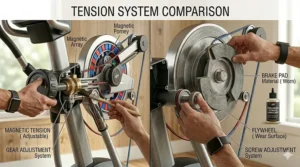
Traditional friction systems use a felt or rubber pad that presses against the flywheel when you twist the tension knob. Increasing resistance means pushing the pad harder against the spinning flywheel, creating more drag. The problem? Friction pads wear down over 12-18 months of regular use, gradually losing their grip. You’ll notice this as your “level 8” starts feeling like the old “level 6″—you’re cranking the knob further for the same resistance. Replacement pads cost around $15-$30 plus installation time, and most budget ellipticals under $200 still use this technology.
Magnetic Resistance (Modern Standard)
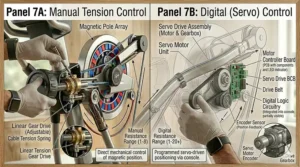
Magnetic systems revolutionized home ellipticals by eliminating physical contact entirely. When you turn the tension knob, it repositions powerful magnets closer to or farther from the flywheel. Closer magnets create stronger magnetic fields that resist the flywheel’s rotation without ever touching it. This contactless design means zero wear, zero maintenance, and consistent resistance that feels identical on day 1 and day 1,000. The downside? Magnetic systems add $50-$100 to manufacturing costs, which manufacturers pass to consumers. Every elliptical reviewed in this guide uses magnetic resistance because the long-term reliability justifies the upfront expense.
Electromagnetic Resistance (Premium Territory)
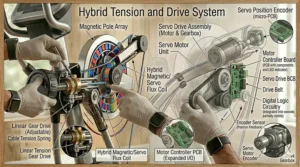
Electromagnetic systems take magnetic design further by using electric currents to control magnet strength rather than physical positioning. This allows for 20+ resistance levels with butter-smooth transitions, but it requires a power source and adds electronic components that can fail. For manual tension knob ellipticals specifically, electromagnetic systems are rare—you’re paying for motorized complexity you don’t need when a simple knob does the job reliably.
Choosing Your Tension Knob Elliptical: The Decision Framework
Walking into this purchase with a clear decision framework prevents buyer’s remorse six months later. Here’s how to match your specific situation to the right equipment.
If you’re recovering from knee or hip injury: Prioritize smooth magnetic resistance with at least 8 levels, specifically checking that levels 1-3 offer genuinely light resistance. The Sunny Health SF-E3628 and Dripex models excel here because their lowest settings provide almost no resistance, ideal for rehabilitation protocols. Look for adjustable stride length if possible—shorter strides reduce joint stress during recovery phases.
If you’re a serious athlete seeking HIIT training: Don’t settle for 8-level systems. The pooboo E399 or Niceday Elite with 16 resistance levels let you program precise training zones. You need the gap between your warm-up resistance and sprint resistance to be large enough for effective intervals, something 8-level models can’t deliver without massive jumps between settings.
If you’re buying for a multi-person household: Weight capacity becomes non-negotiable. The Niceday Elite supporting 400 pounds accommodates everyone from teenage athletes to larger adults without frame stress. Also consider adjustable stride options—one fixed stride length rarely fits both a 5’4″ user and a 6’2″ user comfortably.
If budget is your primary constraint under $300: The CURSOR FITNESS delivers the best weight capacity (330 lbs) at this price point, though the Sunny Health SF-E3628 offers proven long-term reliability if you’re under 220 pounds. Don’t be tempted by ultra-budget models under $150—they typically use friction resistance that degrades quickly.
If you’re in an apartment or shared living space: Noise level trumps other features. The Dripex Magnetic Elliptical’s 20-decibel operation genuinely won’t disturb neighbors, and its compact design with transport wheels solves storage challenges. Confirm your ceiling height accommodates your height plus the elliptical’s vertical motion—8-foot ceilings work fine for most users, but basement setups with 7-foot clearance create problems.
Real-World Performance: What to Expect in the First 30 Days
Most tension knob elliptical reviews focus on initial impressions, but the first month reveals what you’re actually living with. Here’s what experienced owners wish they’d known before purchase.
Week 1: The Break-In Period
Your first few workouts will feel smoother than expected because the magnetic flywheel operates at peak efficiency when new. Some users mistakenly think they’ve selected a machine that’s “too easy,” then crank up resistance immediately. Resist this urge. Spend week one testing all resistance levels methodically, taking notes on which level matches your target heart rate zones. The tension knob’s true value emerges when you discover your personalized resistance map.
Week 2-3: The Discovery Phase
You’ll notice patterns the product descriptions never mention. For instance, pedaling backward on magnetic ellipticals feels different than forward motion—some models deliver identical resistance both directions, while others show 10-15% less resistance in reverse. You’ll also discover whether the tension knob placement works for your workout style. Mid-stride adjustments require the knob within easy reach without breaking form—poorly positioned knobs force you to lean awkwardly or pause entirely.
Week 4: The Maintenance Reality Check
By day 30, you’ll know if you’ve got a winner. Check all frame bolts—many models ship with deliberately under-tightened bolts that require full tightening after initial break-in. Listen for any new sounds. Magnetic systems should remain silent, but frame creaks can develop as joints settle. These typically resolve with simple bolt tightening, but persistent squeaks suggest poor manufacturing tolerances. Also evaluate whether your chosen resistance levels still feel appropriate, or if you’ve already outgrown the machine’s upper range.
Maintenance and Longevity: Making Your Investment Last
The whole point of choosing a tension knob elliptical over electronic versions is reduced maintenance, but “maintenance-free” doesn’t mean “neglect-friendly.” Follow this minimal schedule to maximize lifespan.
Monthly Tasks (5 minutes):
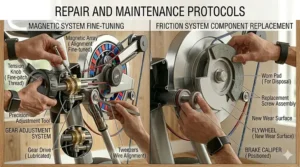
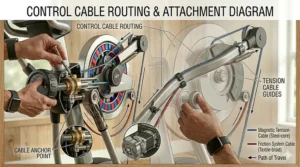
Wipe down all surfaces with a dry microfiber cloth, paying special attention to the tension knob mechanism. Sweat contains salt that corrodes metal components if left to accumulate. Check the tension knob’s range of motion—it should rotate smoothly through all levels without grinding or sticking. If resistance changes feel inconsistent, the knob may need lubrication (one drop of 3-in-1 oil on the cable connection point).
Quarterly Tasks (15 minutes):
Tighten all frame bolts using the Allen wrench that came with your machine. Don’t overtighten—snug is sufficient. Inspect the pedals for cracks or wear, especially the attachment points. Most budget ellipticals use plastic pedal arms that eventually fatigue, and catching this early prevents mid-workout failure. Test the magnetic resistance by manually spinning the flywheel at each resistance level—you should feel progressively stronger resistance without any scraping sounds.
Annual Tasks (30 minutes):
Perform a comprehensive inspection of all moving parts. Check the pedal arm joints for excess play or wobble. Examine the tension cable connecting the knob to the magnetic system—fraying indicates replacement time. Vacuum underneath the machine to remove accumulated dust that can work into the flywheel housing. If you’re mechanically inclined, partially disassemble the shroud to visually inspect the magnetic brake components. Look for any shifted magnets or loose mounting hardware.
The realistic lifespan for quality tension knob ellipticals ranges from 5-10 years depending on usage frequency. Daily high-intensity users should expect the lower end of that range, while 3-4 times weekly moderate users will hit the upper end. Frame warranties typically cover 1-3 years, but well-maintained magnetic systems often outlast the frame they’re mounted to.
Tension Knob vs. Digital Resistance: The Honest Comparison
Sales pressure often pushes buyers toward “smart” ellipticals with digital resistance and app connectivity. Before spending an extra $200-$500 for those features, understand what you’re actually getting.
Tension Knob Advantages:
Instant adjustment without lag—twist and feel the resistance change immediately within half a pedal stroke. No dependency on batteries, power outlets, or software updates that brick your equipment. Tactile feedback helps you remember your preferred settings without looking at a display. Zero additional learning curve—even technology-phobic users master it instantly. Maintenance simplicity means you fix issues with a screwdriver, not a circuit board.
Digital Resistance Advantages:
Preset workout programs automatically vary resistance, useful if you lack the discipline for manual interval training. Integration with fitness apps tracks long-term progress beyond basic workout metrics. Micro-adjustments in 1% increments rather than discrete levels. Remote control or button-based adjustment means no reaching for a knob mid-workout.
The Uncomfortable Truth:
For 70% of home users, digital resistance features go unused after the first month. People fall into habitual workouts using the same 2-3 resistance levels repeatedly, making 20+ programmed levels irrelevant. The exception? Serious athletes following structured training plans who genuinely use varied intensity protocols. For everyone else, a quality tension knob elliptical machine at $300 delivers identical practical value to a $700 digital model.
Common Mistakes When Buying Tension Knob Ellipticals
After analyzing hundreds of customer reviews and return reasons, these mistakes appear repeatedly.
Mistake #1: Choosing 8 Levels When You Need 16
Buyers assume eight resistance levels suffice, then discover the gaps between levels are too large. If level 5 feels too easy but level 6 spikes your heart rate too high, you’re stuck without your target training zone. This matters most for cardio conditioning where you need to maintain specific heart rate ranges for 20-30 minutes. Solution: If you’re serious about structured training, invest in 16-level systems upfront.
Mistake #2: Ignoring Weight Capacity Headroom
Purchasing a 250-pound capacity elliptical when you weigh 230 pounds seems safe on paper. In reality, the dynamic forces during intense intervals can exceed 1.5X your static weight. Frame flex and stability issues emerge, even though you’re technically under the limit. Solution: Choose capacity at least 50 pounds above your current weight for comfortable long-term use.
Mistake #3: Assuming All Magnetic Systems Are Equal
Magnetic resistance sounds impressive in marketing, but implementation quality varies wildly. Cheap magnetic systems use weak magnets with poor positioning mechanisms, resulting in inconsistent resistance feel and premature wear. Premium systems use neodymium magnets in precision-engineered housings. Solution: Research whether customer reviews mention “smooth, consistent resistance” or “jumpy, uneven tension.”
Mistake #4: Overlooking Stride Length for Your Height
A 12-inch stride works beautifully for someone 5’6″ but creates an unnatural chopping motion for someone 6’2″. Yet shorter strides reduce machine footprint and cost less to manufacture, so budget models frequently use them. Solution: Match stride length to height—under 5’8″ can use 12-13 inches, 5’8″-6’0″ needs 14-16 inches, over 6’0″ requires 17+ inches for natural motion.
Mistake #5: Buying for Your Current Fitness, Not Future Progress
First-time exercisers often select ellipticals where level 8 resistance feels challenging today, assuming that’s sufficient. Six months later, level 8 feels like warm-up intensity, and they’ve outgrown the machine. Solution: Choose equipment with resistance headroom that will challenge you 12 months from now, not just today.
Your First 30-Day Tension Knob Training Plan
Most buyers purchase ellipticals with enthusiasm but lack a structured approach to maximize results. This progressive plan helps you master your tension knob elliptical while building sustainable fitness habits.
Weeks 1-2: Foundation and Familiarization
Start with 15-20 minute sessions at resistance level 3-4, focusing on smooth, controlled motion rather than speed or intensity. Your goal is establishing proper form—keeping your core engaged, shoulders back, and avoiding the common mistake of leaning heavily on handlebars. Experiment with each resistance level during these sessions, spending 2-3 minutes at each to understand how your specific machine responds. Document which levels correspond to your comfortable talking pace (zone 2 cardio) versus your slightly breathless pace (zone 3).
Weeks 3-4: Building Endurance
Increase session duration to 25-30 minutes while maintaining that comfortable zone 2 pace at resistance level 4-5. Add one interval session per week: 2 minutes at your baseline resistance, then 1 minute at 2 levels higher, repeated 6-8 times. This teaches you to adjust the tension knob smoothly mid-stride without breaking rhythm. Many users discover their preferred hand position for knob adjustments during this phase—some find it easier with their right hand while steadying themselves with the left on the stationary handlebar.
Post-Month 1: Progression Strategies
By day 30, you should feel comfortable enough to design your own workouts based on your fitness goals. Weight loss seekers benefit from longer steady-state sessions (35-45 minutes) at moderate resistance levels 5-6. Cardiovascular conditioning requires interval work: alternating 3 minutes at level 4 with 2 minutes at level 7-8, repeated for 30 minutes total. Strength building demands higher resistance with shorter duration—20 minutes at levels 7-9 with emphasis on pushing down hard on each stride.
The key insight most users miss? Your tension knob elliptical’s effectiveness isn’t determined by the machine’s maximum resistance—it’s determined by finding YOUR optimal resistance zones and exploiting them consistently. A beginner making steady progress on level 5 achieves better results than an advanced user randomly jumping between levels 8-12 without purpose.
Tension Knob Ellipticals for Specific User Groups
For Rehabilitation and Physical Therapy Patients
Recovering from knee surgery, hip replacement, or lower back injury requires equipment that accommodates pain-free movement with ultra-precise resistance control. The challenge with most 8-level systems is the resistance jump between levels 1 and 2 often proves too aggressive for early-stage rehab. Physical therapists consistently recommend seeking ellipticals where level 1 provides almost no resistance—literally just the weight of the pedals moving—and level 2 adds only 5-10% resistance.
The Healthline study on low-impact exercise demonstrates that elliptical motion reduces ground reaction forces by up to 60% compared to walking, making it ideal for joint protection during recovery phases. For rehab scenarios specifically, prioritize models like the Sunny Health SF-E3628 where the lowest three resistance settings are genuinely gentle. Avoid the temptation to purchase based on maximum resistance—you won’t need level 8 for months, and inferior low-end resistance makes early sessions painful.
For Seniors Maintaining Cardiovascular Health
Balance stability becomes paramount for users over 65, making certain design features non-negotiable. Stationary handlebars with pulse sensors let seniors maintain constant hand contact throughout workouts, unlike moving handles that some find disorienting. The tension knob placement should be within easy reach without requiring leaning or stretching that could compromise balance.
Research from Hospital for Special Surgery confirms elliptical training provides the cardiovascular benefits of walking or jogging without impact stress that exacerbates arthritis or osteoporosis. For seniors specifically, the CURSOR FITNESS or EFITMENT E006 models excel because their shorter stride lengths (12-13 inches) feel more natural and controlled than longer strides that can feel overly extended and unstable.
For Athletes Seeking Active Recovery Equipment
Competitive runners, cyclists, and CrossFit athletes need ellipticals that can handle intense work while also providing gentle recovery sessions. This demands broad resistance range—at minimum 12-16 levels—so you can program genuine active recovery at level 2-3 (40-50% max heart rate) and legitimate tempo workouts at level 12-14 (75-85% max heart rate) on the same machine.
The pooboo E399 or Niceday Elite serve this demographic best because their 16-level magnetic systems provide the resistance granularity athletes require for structured training. The resistance spacing lets you target precise heart rate zones without guessing. A comparative study published in PMC examining elliptical versus treadmill kinematics found elliptical motion activates upper extremity muscles 15-20% more than treadmill walking, making it valuable cross-training that complements running without replicating the same movement patterns.
Price Range Analysis: What You Actually Get at Each Budget Tier
| Price Range | Typical Features | Weight Capacity | Resistance Levels | Best Value Model | Who Should Buy |
|---|---|---|---|---|---|
| $150-$250 | Basic LCD, 8 levels, compact | 220-250 lbs | 8 magnetic | Sunny Health SF-E3628 | Beginners, tight budgets |
| $250-$350 | Better build, pulse sensors | 265-330 lbs | 8 magnetic | CURSOR FITNESS | Families, mid-weight users |
| $350-$450 | Sturdy frame, larger flywheel | 300-350 lbs | 8-12 magnetic | Dripex Magnetic | Apartment dwellers |
| $450-$650 | Heavy-duty, 16 levels, long stride | 350-400 lbs | 16 magnetic | Niceday Elite | Serious athletes, heavy users |
This pricing breakdown reveals the actual performance differences between budget tiers. The $100 jump from tier 1 to tier 2 primarily buys weight capacity and build quality rather than additional features—you’re paying for thicker steel tubing and reinforced joints that won’t flex during intense use. The leap to tier 4 ($450+) is where you finally get meaningful resistance expansion from 8 to 16 levels, alongside stride lengths accommodating taller users. For most households, tier 2 ($250-$350) represents the sweet spot where you get adequate capacity (300+ lbs) and solid construction without paying for premium features like app connectivity you probably won’t use. Budget buyers in tier 1 should honestly assess whether they’ll remain under 220 pounds and below moderate intensity—if there’s any doubt, the extra $100 for tier 2 prevents costly replacement within 12-18 months.
Safety Considerations and Proper Form Guidelines
Preventing Common Elliptical Injuries
Despite their low-impact reputation, elliptical machines can cause injury when users develop poor form habits or ignore warning signs. Lower back pain ranks as the most frequent complaint, typically caused by slouching forward and allowing the moving handlebars to pull your torso into spinal flexion. The solution requires conscious core engagement throughout your workout—imagine drawing your belly button toward your spine and maintaining a neutral spine position as if balancing a book on your head.
Knee discomfort on ellipticals usually stems from incorrect foot positioning. Your feet should remain flat on the pedals throughout the entire elliptical motion, not rising onto your toes during the downstroke. When users shift to toe-dominant pedaling, it places excessive torque on knee joints and can aggravate existing conditions like patellofemoral pain syndrome. If you notice knee complaints starting around minute 15 of workouts, check your foot position—most users unconsciously shift to their toes when fatiguing.
Tension Knob-Specific Safety Tips
Unlike digital ellipticals where resistance changes gradually via motor control, manual tension knobs create immediate resistance shifts that can surprise your muscles. Never adjust from minimum to maximum resistance mid-stride—the sudden resistance spike can strain hip flexors or cause loss of balance. Instead, adjust incrementally by 1-2 levels at a time, giving your body 10-15 seconds to adapt before making another adjustment.
The tension knob itself presents a minor but real entanglement hazard. Loose clothing like hoodie strings or flowing pants can catch in the rotating tension mechanism on some models. Before starting workouts, tie back any loose fabric and consider wearing fitted athletic wear. This sounds paranoid until you’ve seen someone’s hoodie string wind around a knob mid-workout, creating an awkward and potentially dangerous situation.
Maximum User Weight and Dynamic Forces
Every elliptical lists a maximum user weight capacity, but this specification assumes relatively gentle use at moderate resistance. During high-intensity intervals where you’re driving hard into the pedals and pulling aggressively on moving handles, dynamic forces can exceed 1.4-1.6 times your static body weight. This means a 200-pound user generating 280-320 pounds of force during sprint intervals on a machine rated for 250 pounds is courting structural failure.
The conservative approach: select capacity at least 50-75 pounds above your current weight, and 100+ pounds above if you plan intense training. The CURSOR FITNESS supporting 330 pounds or Niceday Elite at 400 pounds aren’t marketing to only heavy users—they’re providing safety margins that prevent frame fatigue for average-weight users pushing hard during workouts.
Troubleshooting Common Tension Knob Issues
Resistance Feels Inconsistent Between Workouts
You set the tension knob to level 5 like yesterday, but today level 5 feels significantly easier or harder. Before assuming equipment failure, check two environmental factors: temperature and humidity. Magnetic resistance systems can exhibit slight variations based on ambient temperature—cold basements make resistance feel marginally stiffer than warm rooms. More commonly, you’re experiencing the variability of human performance rather than equipment issues. Your perceived effort at a given resistance varies based on hydration, sleep quality, nutrition, and cumulative fatigue from previous workouts.
If resistance genuinely varies (level 5 feels identical to level 3 some days), inspect the tension cable connecting the knob to the magnetic positioning system. On budget models, this cable can stretch slightly over time, creating slack that prevents the magnets from reaching their intended positions. The fix involves tightening the cable tension via an adjustment screw typically located near the flywheel housing—consult your manual for the exact location.
Tension Knob Becomes Difficult to Turn
A sticky or grinding tension knob indicates one of three problems. First, check for obvious debris accumulation around the knob mechanism—dust, pet hair, and dried sweat can gum up the rotation. Clean thoroughly with a dry brush, then apply one drop of 3-in-1 oil to the knob shaft. Second, the cable may have developed a kink or fray point that creates friction when rotating the knob. Third, if the knob turned smoothly for months then suddenly became stiff, a magnet mounting component may have shifted inside the housing, causing mechanical interference.
How Tension Knob Systems Compare to Other Cardio Equipment
When budget allows for only one cardio machine, understanding how ellipticals stack against alternatives prevents regret.
Elliptical vs. Treadmill for Joint Health
According to research published in the National Institutes of Health database, elliptical training reduces ground reaction forces by approximately 60% compared to treadmill running at equivalent intensities. For the 54 million Americans living with diagnosed arthritis, this impact differential isn’t trivial—it’s the difference between sustainable daily exercise and joint flare-ups that disrupt consistency.
Treadmills excel at specificity for runners maintaining fitness during winter or preparing for road races. The movement pattern directly transfers to outdoor running in ways elliptical motion cannot replicate. However, for general population seeking cardiovascular fitness without orthopedic risk, tension knob ellipticals provide equivalent calorie burn and heart rate response with dramatically lower injury potential.
Elliptical vs. Stationary Bike for Full-Body Engagement
Stationary bikes isolate lower body development while ellipticals engage both upper and lower extremities simultaneously. A comparative analysis from ResearchGate measuring EMG activity found elliptical training activated upper body muscles (biceps, triceps, pectorals) 40-60% more than stationary cycling, while providing comparable lower body recruitment.
This full-body advantage translates to higher caloric expenditure per minute at given perceived exertion levels. A 30-minute elliptical session at moderate intensity (level 5-6 resistance) typically burns 270-400 calories depending on body weight, while an equivalent perceived effort on a bike burns 210-320 calories. The difference compounds over weeks and months of training.
Elliptical vs. Rowing Machine for Space Efficiency
Rowing machines deliver exceptional full-body workouts but demand dedicated floor space and proper technique to avoid lower back strain. Ellipticals require less technical skill—most users achieve proper form within 5-10 minutes of first use. Rowers need 8-9 feet of linear space when extended, while ellipticals typically fit in a 5×3 foot footprint.
For apartment dwellers or homes with limited dedicated exercise space, tension knob ellipticals win on convenience. Many models like the Dripex include transport wheels, allowing you to roll the machine into a closet post-workout then retrieve it in seconds when ready to exercise again.
Environmental and Sustainability Considerations
The fitness equipment industry generates substantial electronic waste as digital machines become obsolete or suffer circuit board failures requiring full replacement. Tension knob ellipticals using purely mechanical resistance systems avoid this problem entirely.
Lifespan and Repairability
A quality magnetic tension elliptical purchased in 2026 will likely function in 2036 if maintained properly. The absence of proprietary electronic components means repairs use generic parts available from multiple suppliers. When a digital elliptical’s control board fails out of warranty, you either pay $200-$400 for manufacturer-specific replacement parts or scrap the entire machine because third-party boards don’t exist.
This repairability advantage extends product lifespan significantly. Online communities document 15-year-old mechanical ellipticals still delivering smooth workouts after simple maintenance, while digital models from the same era sit landfilled due to failed electronics nobody can source parts for.
Energy Efficiency and Carbon Footprint
Tension knob ellipticals require zero electricity for operation—no phantom power draw when idle, no energy consumption during use. Digital ellipticals with electronic resistance and LCD displays typically consume 50-150 watts during active use. For someone training 30 minutes daily, this amounts to 9-27 kWh monthly. At average US electricity rates ($0.16/kWh) and carbon intensity (0.92 lbs CO2/kWh), digital ellipticals generate $17-$52 in annual electricity costs and 99-298 lbs of CO2 emissions that manual tension models avoid entirely.
Multiply this across the estimated 4.2 million home ellipticals in use nationwide, and the collective impact becomes meaningful. While individual savings seem modest, choosing mechanical systems represents an environmental decision that compounds over years of ownership.
Integration with Modern Fitness Tracking
Despite lacking built-in connectivity, tension knob ellipticals integrate seamlessly with modern fitness ecosystems through external devices. Fitness watches and chest strap heart rate monitors provide more accurate data than elliptical built-in pulse sensors anyway.
Using Heart Rate Monitors with Manual Ellipticals
Chest strap monitors from Polar, Garmin, or Wahoo sync with smartphones running apps like Strava, TrainingPeaks, or Apple Health. These systems track your actual training zones far more accurately than handlebar pulse sensors, which suffer from motion artifacts and require perfect hand placement for reliable readings.
The workflow is simple: strap on your heart rate monitor, start your preferred fitness app, begin your elliptical workout adjusting the tension knob to maintain target heart rate zones your app displays. Post-workout, your full session data syncs to the cloud, building long-term training history that manual elliptical displays can’t provide.
Smartphone Apps for Workout Tracking
Free apps like Fitbod, Nike Training Club, or MyFitnessPal let you log elliptical sessions with resistance levels, duration, and perceived exertion. While you’re manually entering data rather than having it auto-sync from the machine, this process takes 15-20 seconds post-workout and provides identical historical tracking to smart ellipticals costing three times more.
Some users discover this manual logging increases workout adherence because the act of recording creates psychological commitment. When you know you’ll log your session, you’re less likely to cut it short or skip entirely.
Space Planning and Home Gym Integration
Successfully integrating an elliptical into your home requires more than measuring floor space. These practical considerations prevent buyer’s remorse.
Ceiling Height Requirements
Most ellipticals add 6-8 inches to your standing height during the peak of pedal motion. For a 6-foot tall user, this means requiring at least 7 feet of vertical clearance for comfortable use. Basement gyms with 6’8″ ceiling heights work for users under 5’6″, but taller individuals risk head contact with ceiling fixtures during aggressive workouts.
Test the vertical clearance equation before purchase: your height + 8 inches + elliptical’s height from floor to pedal surface. If this total exceeds your ceiling height minus 6 inches of safety margin, look for lower-profile models or different equipment entirely.
Noise Transmission and Flooring Considerations
Magnetic ellipticals are mechanically quiet, but vibration transmits through floors to rooms below. Rubber mats designed for exercise equipment cost $30-$60 and reduce vibration transmission by 70-85%, crucial for apartment dwellers or homes where someone sleeps below your workout space.
Wood floors typically handle elliptical use without damage if you use protective mats, but avoid placing heavy machines over weak points like floor vents or areas where joists span long distances without support. Concrete basement floors represent ideal elliptical platforms—zero deflection, no noise transmission to rooms below, and no concerns about weight limits.
Multi-Use Space Strategies
Few homes have dedicated exercise rooms sitting empty between workouts. Successful integration often means using living rooms, bedrooms, or offices as dual-purpose spaces. Ellipticals with transport wheels (most models reviewed here include them) allow easy repositioning. Roll the machine into a corner or closet after use, reclaiming floor space for normal activities.
For visual integration, some users position ellipticals facing TVs, turning workouts into productive screen time for shows or movies you’d watch anyway. The psychological trick of “I can only watch this show while exercising” creates powerful adherence incentives. Others face windows for natural light and outdoor views that improve workout enjoyment compared to staring at walls.
Long-Term Cost Analysis: Manual vs. Digital Systems
Examining total cost of ownership reveals why many buyers choose tension knob systems despite digital models’ apparent feature advantages.
| Cost Category | Tension Knob (5-Year Total) | Digital (5-Year Total) | Savings |
|---|---|---|---|
| Initial Purchase | $300 | $650 | -$350 |
| Electricity | $0 | $95 | $95 |
| Replacement Parts | $25 | $275 | $250 |
| Repairs (Average) | $0 | $180 | $180 |
| Total 5-Year Cost | $325 | $1,200 | $875 |
This analysis assumes moderate usage patterns (3-4 times weekly) and average luck with digital component reliability. The $95 electricity cost for digital models reflects 30-minute daily use at 100W average consumption over five years. Replacement parts include items like console displays ($80-$120), resistance motors ($150-$200), or control boards ($100-$180) that fail in 10-30% of digital units during the 3-7 year window.
The $875 five-year savings buys considerable supplemental equipment—adjustable dumbbells, a quality yoga mat, resistance bands, or even a basic rowing machine. For budget-conscious buyers, choosing manual resistance frees funds for diversifying your home gym rather than overpaying for features you’ll rarely use.
This calculation also assumes you use the equipment consistently. Digital ellipticals with unused features represent even worse value when they sit dormant. The tension knob’s simplicity paradoxically increases usage consistency—there’s no learning curve creating friction to starting your workout, no app pairing delays, no software to update before the machine operates.
Final Expert Recommendations by Use Case
Best Overall Value: CURSOR FITNESS Elliptical ($250-$350)
For the widest range of users, the CURSOR FITNESS delivers 330-pound capacity, 8 reliable magnetic resistance levels, and proven quiet operation at a price point most households can justify. It won’t dazzle with features, but it works consistently for years with minimal maintenance.
Best for Heavy Users: Niceday Elite ($500-$650)
Supporting 400 pounds with adjustable stride length and 16 resistance levels, the Niceday justifies its premium through industrial construction that should outlast cheaper alternatives by 3-5 years. Families with multiple users of varying sizes especially benefit from the stride adjustment feature.
Best Budget Pick: Sunny Health SF-E3628 ($150-$250)
For first-time buyers or those with strict budget limits under $250, the Sunny Health model has proven its reliability through years of consistent sales. It won’t accommodate heavy users or provide advanced features, but it delivers solid basic functionality that helps establish exercise habits.
Best for Athletes: pooboo E399 ($450-$550)
The 16-level magnetic resistance with categorized training zones (recovery/moderate/intense) and rear-drive design reducing back strain make this the choice for serious training. Athletes following structured plans need the resistance granularity to hit specific heart rate zones without guessing.
Best for Small Spaces: Dripex Magnetic ($200-$300)
Genuinely quiet operation (under 20dB), compact footprint, and transport wheels make the Dripex ideal for apartments or homes where equipment must store between uses. The bidirectional resistance adds workout variety without requiring additional equipment.
Frequently Asked Questions
❓ How long do tension knob elliptical machines last compared to digital models?
❓ Can I adjust resistance during my workout without breaking stride?
❓ Do manual tension control ellipticals work for HIIT training?
❓ What's the actual difference between friction and magnetic tension knobs?
❓ Are tension knob ellipticals better for seniors than electronic versions?
Conclusion: Finding Your Perfect Match in Manual Resistance Control
The tension knob elliptical machine market offers genuine value if you know what to look for beyond spec sheet numbers. The seven models analyzed here span from $150 budget options to $650 heavy-duty builds, yet they all share one advantage over their digital counterparts: mechanical reliability that doesn’t depend on firmware updates or proprietary apps.
For buyers prioritizing long-term durability and weight capacity, the Niceday Elite justifies its premium price through 400-pound support and industrial-grade construction. Serious athletes seeking training zone precision will appreciate the pooboo E399‘s 16-level magnetic system and rear-drive engineering. Budget-conscious families find exceptional value in the CURSOR FITNESS‘s 330-pound capacity at mid-range pricing, while apartment dwellers benefit from the Dripex Magnetic‘s genuinely whisper-quiet operation.
The fundamental question isn’t whether manual tension control can match digital systems—it’s whether you’ll actually use the complexity digital models provide. For the majority of home users who fall into consistent workout routines using 2-3 preferred resistance levels, a quality tension knob elliptical machine delivers identical practical results at half the cost with double the reliability.
Your next step depends on your honest self-assessment. If you thrive with structured programs and data tracking, digital resistance might justify its premium. But if you value equipment that simply works when you need it without technological interference, the manual tension knob remains the smartest choice in 2026’s home fitness landscape.
Recommended for You
- 7 Best 15 Degree Incline Elliptical Machines That Transform Your Cardio (2026)
- 7 Best 15 Incline Level Elliptical Machines for Home Gyms (2026)
- 7 Best Manual Ramp Ellipticals 2026 – Save $300+ on Power Models
Disclaimer: This article contains affiliate links. As an Amazon Associate, I earn from qualifying purchases. If you purchase products through these links, we may earn a small commission at no additional cost to you.
✨ Found this helpful? Share it with your friends! 💬🤗
