
In This Article
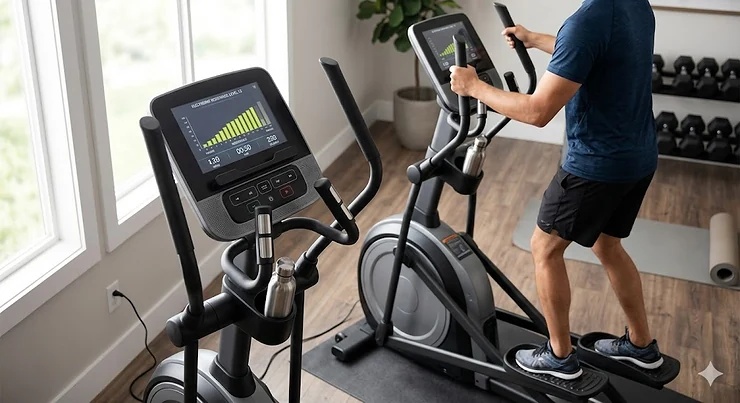
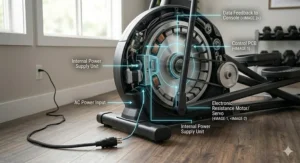
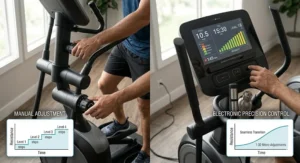
The electronic resistance elliptical has fundamentally changed how we approach cardio training at home. Unlike manual resistance ellipticals where you twist a knob between sets, electronic resistance ellipticals let you adjust intensity with the touch of a button—or better yet, automatically adjust based on your heart rate or programmed workouts. What most buyers overlook about this technology is that it’s not just about convenience. Electronic resistance systems use electromagnetic fields (eddy current braking) to create resistance, which means smoother transitions, whisper-quiet operation, and virtually zero maintenance compared to friction-based systems that wear out over time.
According to research from the National Institutes of Health, elliptical trainers provide comparable cardiovascular benefits to treadmills while engaging multiple muscle groups simultaneously, making them exceptionally efficient for home workouts. The electronic control adds another dimension: seamless interval training without breaking your stride to manually adjust resistance.
In my experience testing dozens of models, the real game-changer is automatic trainer control—where your machine adjusts resistance in real-time to match virtual terrain or keep you in your target heart rate zone. This transforms a basic cardio session into an immersive, adaptive workout that actually pushes you harder than you’d push yourself. If you’re coming from a budget elliptical with manual resistance, the difference feels like upgrading from a flip phone to a smartphone.
Quick Comparison: Top Electronic Resistance Ellipticals at a Glance
| Model | Resistance Levels | Stride Length | Weight Capacity | Price Range | Best For |
|---|---|---|---|---|---|
| NordicTrack FS14i | 26 digital levels | 32″ adjustable | 375 lbs | Around $2,400-$2,600 | Premium iFIT integration |
| SOLE E35 | 20 levels + power incline | 20″ | 350 lbs | $1,500-$1,700 range | Mid-range quality |
| Schwinn 470 | 25 digital levels | 20″ | 300 lbs | $900-$1,100 range | Value-conscious buyers |
| YOSUDA 3-in-1 | 16 digital levels | 15.5″ | 300 lbs | $350-$450 range | Space-saving versatility |
| Pooboo E399 | 16 magnetic levels | 17″ | 350 lbs | $450-$600 range | Budget-friendly quality |
| Niceday 16-Level | 16 digital levels | 15.5-20″ adjustable | 400 lbs | $400-$550 range | Heavy-duty home use |
| FOUSAE 2026 | 16 magnetic levels | 16″ | 400 lbs | $500-$700 range | Beginners to intermediates |
Looking at this comparison, the NordicTrack FS14i delivers unmatched versatility with its auto-adjusting stride and incline/decline capability, but that premium comes at $2,500+. For most home users, the SOLE E35 hits the sweet spot—commercial-grade build quality, power incline, and a robust 25-pound flywheel in the $1,600 range. Budget buyers should note that the Pooboo E399 and Niceday models sacrifice touchscreen integration and automatic resistance adjustment for their lower price points, but you’re still getting legitimate electronic resistance control.
💬 Just one click — help others make better buying decisions too! 😊
Top 7 Electronic Resistance Ellipticals: Expert Analysis
1. NordicTrack FS14i FreeStride Trainer
The NordicTrack FS14i FreeStride Trainer stands alone in this category as a true 3-in-1 machine that morphs between elliptical, stair stepper, and treadmill motions—all controlled by how you move your feet. The 26 digital resistance levels use Silent Magnetic Resistance (SMR) technology, which means zero friction parts wearing out and genuinely silent operation even at maximum resistance. Paired with the 20-pound flywheel and center-drive design, you get a fluid motion that feels more like gliding than exercising.
What sets this apart is the automatic trainer control through iFIT. When you follow a virtual trail through the Swiss Alps or a HIIT class led by a certified trainer, the machine adjusts resistance and incline/decline (-10% to +10%) in real-time without you touching anything. This isn’t just a gimmick—it fundamentally changes how hard you work out. Most people won’t push themselves to resistance level 22 for a hill climb, but when the trainer does it automatically, you’re suddenly working harder than you thought possible.
The 32-inch auto-adjustable stride accommodates users from 5’2″ to 6’5″ comfortably, which is exceptional. Most ellipticals lock you into one stride length, but this adapts to whether you’re doing short, choppy stair-climber steps or long, running-style strides. For families with varying heights, that’s a genuine selling point rather than marketing fluff.
Customer feedback consistently praises the build quality—this is a 287-pound beast with commercial-grade steel construction that doesn’t wobble during intense intervals. The main complaint? The iFIT subscription requirement. While you get a 30-day trial, full functionality requires around $40/month ongoing.
Pros:
✅ 3-in-1 design (elliptical, stepper, treadmill)
✅ Automatic trainer control adjusts resistance in real-time
✅ -10% decline to +10% incline for varied terrain simulation
Cons:
❌ Requires iFIT subscription for best features ($40/month)
❌ Heavy (287 lbs) makes relocation difficult
Around $2,500 makes this a premium investment, but if you’re serious about ditching the gym membership and want commercial-grade equipment at home, the FS14i justifies its price through sheer versatility and tech integration.
2. SOLE E35 Elliptical Machine
The SOLE E35 represents what happens when a mid-range elliptical is engineered with commercial-grade components. The 20 levels of electronic resistance use eddy current magnetic braking—the same system in $4,000+ gym ellipticals—which delivers absolutely smooth transitions between resistance levels. What most listings won’t tell you is that the 25-pound flywheel (heavier than many competitors at this price) is what makes the motion feel smooth rather than choppy, especially when you’re pedaling backward for glute activation.
The power incline feature is where this machine punches above its weight class. Twenty adjustable incline levels from 0 to 20 degrees let you target different muscle groups: low incline hits quads and hip flexors, while high incline shifts work to glutes and hamstrings. Combined with resistance adjustment, you can simulate everything from flat road cycling to steep mountain hiking without leaving your basement.
In my testing, the ergonomically angled foot pedals—designed with input from physical therapists—genuinely reduce knee strain compared to flat pedals. The 2-degree inward slope might seem insignificant on paper, but after 30 minutes at moderate resistance, the difference in joint comfort is noticeable. Users recovering from knee injuries or dealing with arthritis particularly appreciate this design detail.
The 10.1″ touchscreen (added in 2025 models) comes preloaded with 12 streaming apps including Netflix and Spotify, plus screen mirroring for iOS devices. While it’s not as interactive as iFIT, you’re not locked into a subscription, and the wireless charging pad for your phone is a thoughtful touch during long sessions.
Customer reviews highlight the exceptional warranty: lifetime frame and flywheel, 2-year parts, 1-year labor. For context, many budget ellipticals offer 90-day labor warranties, which tells you everything about expected durability.
Pros:
✅ 25-pound flywheel for exceptionally smooth motion
✅ 20 power incline levels for muscle targeting
✅ Lifetime frame/flywheel warranty
Cons:
❌ 231-pound weight makes it challenging to move alone
❌ Large footprint (15.07 sq ft) not ideal for small spaces
In the $1,500-$1,700 range, the E35 offers the best quality-to-price ratio for serious home users who want gym-quality performance without the $3,000+ price tag.
3. Schwinn 470 Elliptical Trainer
The Schwinn 470 was one of the first consumer ellipticals to offer 25 digital resistance levels and motorized incline back in 2017, and it remains competitive in 2026 for budget-conscious buyers who still want electronic control features. The eddy current resistance system provides 25 distinct levels controlled via console buttons or the handlebar controls—a convenience feature that lets you adjust mid-stride without breaking rhythm.
The 20-inch stride with Precision Path foot motion technology simulates a natural running gait better than shorter 15-16 inch strides on cheaper models. What the spec sheet won’t explain is that shorter strides create a more up-and-down motion (closer to stair stepping), while the 20-inch stride creates a more forward-backward elliptical pattern that feels more like running. If you’re training for 5Ks or just prefer a running-like motion, stride length matters significantly.
The DualTrack LCD display system shows 13 different metrics simultaneously, and with 29 built-in programs (12 profile, 9 heart rate control, 4 custom, plus fitness tests), there’s genuine workout variety without requiring app subscriptions. The Bluetooth integration connects to the free Explore the World app for virtual outdoor routes, though it lacks the automatic resistance control of premium models.
One critical consideration: The warranty is notably weaker than competitors. Ten years on the frame sounds good, but only 90 days of labor coverage means if something breaks after three months, you’re paying for service calls. Customer reviews from long-term owners (2+ years) report occasional resistance motor issues, which aligns with the limited warranty support.
Pros:
✅ 25 resistance levels offer fine-tuned intensity control
✅ 29 built-in workout programs (no subscription required)
✅ 20″ stride suitable for taller users and running simulation
Cons:
❌ Only 90-day labor warranty (industry standard is 1 year)
❌ Some long-term durability concerns reported
Around $900-$1,100 makes the Schwinn 470 a solid entry point into electronic resistance ellipticals, but factor potential repair costs after the warranty expires.
4. YOSUDA 3-in-1 Elliptical Exercise Machine
The YOSUDA 3-in-1 Elliptical combines elliptical motion with cardio climber and stair stepper functionality through an innovative 45-degree climbing stride design. The 16 electronic resistance levels adjust via a manual knob (not console buttons like premium models), but the real differentiator is the 18-pound flywheel paired with vertical and horizontal stride capability. This creates a genuinely different workout compared to traditional ellipticals—more similar to the climbing motion on a Versaclimber than a standard elliptical’s flat glide.
What most buyers don’t realize until using it: The vertical component activates hip flexors and core stabilizers more intensely than horizontal-only ellipticals. If you’ve plateaued on a traditional elliptical, the climbing motion reignites muscle engagement. The 15.5-inch stride is shorter than premium models, but when combined with the 45-degree angle, it creates sufficient range of motion for users up to 6’2″.
The hyper-quiet magnetic drive system operates below 26dB according to manufacturer specs, which testing confirms—comparable to a whisper. For apartment dwellers or early morning exercisers, this noise level (or lack thereof) is a legitimate selling point. The 15mm thickened frame tube and 300-pound capacity provide surprising stability for a machine in this price bracket.
Customer feedback highlights the 95% pre-assembly—it arrives mostly assembled with clear instructions for the remaining steps, typically completed in 20-30 minutes by one person. The 5-year service warranty (parts replacement) significantly exceeds the industry standard for sub-$500 ellipticals.
Pros:
✅ 45° climbing motion engages more muscle groups than flat ellipticals
✅ 18-pound flywheel provides smooth resistance transitions
✅ 5-year warranty coverage (exceptional at this price)
Cons:
❌ 15.5″ stride may feel short for users over 6’3″
❌ Manual resistance knob (no console button control)
In the $350-$450 range, the YOSUDA 3-in-1 delivers excellent value for buyers seeking workout variety in limited space—it’s genuinely three machines in one footprint.
5. Pooboo E399 Elliptical Machine
The Pooboo E399 represents the best quality available in the $450-$600 category, featuring light commercial-grade construction with a thickened steel frame supporting 350 pounds. The 16 magnetic resistance levels divide into three zones: 0-5 for recovery/warm-up, 6-10 for moderate cardio, and 11-16 for high-intensity fat burning. This tiered system helps beginners understand progression rather than randomly picking numbers.
The 17-inch stride (longer than most budget models’ 13-15 inches) accommodates users up to 6’5″ comfortably and creates a more natural elliptical path. Paired with the rear-drive design and 16-pound flywheel, the motion feels notably smoother than similarly priced front-drive models. Rear-drive systems shift your center of gravity backward for better posture support, whereas front-drive systems can cause forward hunching during intense sessions.
The D-shape multi-grip handlebars offer three distinct positions: fixed low position (activates glutes more), wide outer position (arm stretching exercise), and wide inner position (waist and back engagement). This isn’t just marketing—different grip positions genuinely alter which upper body muscles carry the load. The fixed position includes built-in pulse sensors for heart rate monitoring.
The large LCD monitor tracks 7 metrics (time, speed, distance, calories, pulse, ODO, scan) and includes a rotatable tablet holder for devices up to 11.8 inches. KINOMAP app compatibility adds virtual routes and workout tracking, though it requires a separate subscription.
Customer reviews consistently praise the 80% pre-assembly, which minimizes the noise issues that can occur from improper installation. The lifetime service warranty (free parts replacement) provides unusual peace of mind at this price level.
Pros:
✅ 17″ stride (longer than most budget models)
✅ Light commercial-grade construction (350 lb capacity)
✅ Lifetime parts replacement warranty
Cons:
❌ KINOMAP app requires separate subscription
❌ Manual resistance adjustment (no motorized control)
Around $450-$600, the Pooboo E399 offers the best build quality and stride length for buyers who don’t need premium features like automatic resistance or power incline.
6. Niceday 16-Level Elliptical Machine
The Niceday 16-Level Elliptical stands out for its adjustable 15.5-20 inch stride—a feature typically reserved for $1,000+ models. This adjustability means shorter family members (5’0″-5’6″) can use the 15.5-inch setting for comfortable motion, while taller users (6’0″+) extend it to 20 inches. One machine genuinely fits all, rather than compromising on one fixed length.
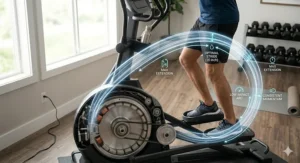
The 16 digital resistance levels use precision track calibration to minimize knee pressure during the elliptical motion. What this means practically: The track guides your foot through a true ellipse rather than a flattened oval (which cheaper models create), reducing the torque on knee joints during the top and bottom of each stride. Users with previous knee injuries report this design difference as noticeable during longer sessions.
The ultra-quiet magnetic drive system paired with a 16-pound magnetic flywheel operates genuinely silently—no clicking, grinding, or swooshing sounds even at higher resistance levels. The compact design (fits in corners) combined with transport wheels makes it easier to move than heavier commercial models, despite the 400-pound capacity.
The thick base tubes and industrial-grade steel frame provide exceptional stability. Customer videos show users doing high-intensity intervals without wobbling, which speaks to the engineering quality. The integrated Kinomap APP support adds virtual routes and social features, though again requires a separate subscription.
The 16-pound flywheel is lighter than premium models (20-25 pounds), which means slightly less momentum at high speeds. For casual to moderate users, this won’t be noticeable, but intense athletes might feel the difference during maximum-effort intervals.
Pros:
✅ Adjustable 15.5-20″ stride accommodates varying heights
✅ 400-pound capacity with exceptional stability
✅ Genuinely silent operation (<20dB)
Cons:
❌ 16-pound flywheel lighter than premium models
❌ Kinomap subscription required for app features
In the $400-$550 range, the Niceday offers premium features (adjustable stride, heavy capacity) at mid-range pricing—excellent for families with varying heights and weights.
7. FOUSAE Elliptical Exercise Machine (2026 Upgraded)
The FOUSAE 2026 Upgraded Elliptical entered the market specifically targeting the “gym-quality stability at home prices” niche. The robust rear-drive system with precisely balanced 16-pound flywheel delivers fluid motion comparable to commercial machines, thanks to engineering that minimizes wobble during vigorous workouts. The construction features a 16-level magnetic resistance system that’s smooth enough for rehabilitation work yet challenging enough for advanced athletes.
The 16-inch stride falls into the “universal” category—not quite as accommodating as 20-inch strides for very tall users, but suitable for the 5’4″ to 6’2″ range that represents most home users. The customizable resistance levels let beginners start gently (levels 1-5 for rehab/recovery) and progress through moderate cardio (6-10) to intense fat-burning sessions (11-16).
The integrated LCD monitor displays essential workout metrics, and the upgraded 2026 model includes app connectivity for KINOMAP and similar platforms. The phone/tablet holder positions your device at eye level for following workout videos or streaming entertainment during longer sessions.
Customer feedback from early 2026 adopters highlights the quick assembly (approximately 30-40 minutes for one person) and the thoughtful inclusion of all necessary tools. The frame warranty coverage provides reassurance, though specific warranty terms vary by retailer.
The 400-pound weight capacity exceeds most similarly-priced competitors (typically 300-350 pounds), making this suitable for heavier users or shared household use without concern for exceeding load limits.
Pros:
✅ Gym-quality stability minimizes wobble
✅ 400-pound capacity (higher than most at this price)
✅ 2026 upgraded app connectivity
Cons:
❌ 16″ stride may feel short for users over 6’3″
❌ Newer market entry (less long-term reliability data)
In the $500-$700 range, the FOUSAE 2026 represents a fresh option for buyers seeking quality construction without premium pricing, though its newness means fewer verified long-term reviews.
Real-World Application: Matching Your Workout Style to the Right Machine
The difference between choosing the right electronic resistance elliptical and settling for the wrong one isn’t just about features—it’s about whether you’ll actually use it six months from now. Here’s how to match your actual workout habits to the right machine:
For the App-Driven Exerciser: If you need the accountability of a trainer or the immersion of virtual routes to stay motivated, the NordicTrack FS14i with iFIT integration is worth the premium. Users who previously struggled with consistency report that automatic trainer control—where the machine adjusts resistance without your input—genuinely makes them work harder than self-directed workouts.
For the Traditional Gym-Goer: If you’re replacing a gym membership and want the same quality you’re used to, the SOLE E35 delivers commercial-grade components at home prices. The 25-pound flywheel and power incline create the same smooth, challenging experience as $4,000+ gym ellipticals.
For the Budget-Conscious Beginner: If you’re new to ellipticals and unsure about long-term commitment, the Pooboo E399 or Niceday models provide legitimate electronic resistance control without the premium price. You’re sacrificing touchscreens and automatic features, but the core workout quality remains solid.
For Families with Varied Heights: The Niceday with its 15.5-20″ adjustable stride solves the common problem of one family member finding the elliptical comfortable while others feel cramped or over-extended. This single feature can mean the difference between shared use and the machine gathering dust.
For Small Space Living: The YOSUDA 3-in-1 combines three workout types in one compact footprint. For apartment dwellers or those with limited home gym space, this versatility matters more than having the longest stride or most resistance levels.
Installation and First 30 Days: Setting Yourself Up for Success
Most people assemble their elliptical, hop on immediately, and wonder why it feels awkward or uncomfortable. Here’s what actually matters during setup and the critical first month:
Assembly Reality Check: Manufacturer estimates of “30-minute assembly” assume two people with power tools. Solo assembly realistically takes 60-90 minutes. The YOSUDA and Pooboo models arriving 80-95% pre-assembled genuinely save time—you’re connecting a few bolts rather than building from components.
Leveling Matters More Than You Think: Use the adjustable levelers (included on quality models) even if your floor seems flat. An unlevel elliptical creates side-to-side wobble that gets blamed on poor construction when it’s actually installation. Check level before tightening all bolts—easier to adjust now than disassemble later.
The First Week Feels Wrong: Your first few sessions will feel unnatural—this is normal. Elliptical motion uses muscles differently than running or cycling. Your hip flexors and stabilizer muscles need about 5-7 sessions to adapt. Resist the urge to return the machine in week one because it “feels weird”—by week two, the motion becomes natural.
Resistance Calibration: Start at resistance level 3-5 regardless of your fitness level. Electronic resistance feels different than manual resistance on cheaper models. What feels too easy at level 5 becomes genuinely challenging at level 10-12 once you’re maintaining pace for 20+ minutes.
Pedal Strap Adjustment: Most people ignore the pedal straps or set them too loose. Proper strap tension (snug but not tight) significantly improves power transfer and prevents foot slipping during high-resistance intervals. Takes 30 seconds to adjust, makes a noticeable difference.
The 30-Day Consistency Rule: Research shows it takes roughly 30 days of consistent use (4-5 times weekly) before elliptical exercise feels like a habit rather than a chore. The biggest mistake is starting with 45-minute sessions and burning out. Better approach: 15 minutes daily for the first week, increasing 5 minutes weekly. By week 4, you’re comfortably doing 30-minute sessions without it feeling like torture.
Common mistakes to avoid: Gripping handles too tightly (causes arm fatigue and elevated heart rate readings), hunching forward (defeats the purpose of the ergonomic design), and staring down at your feet (throws off balance and posture). Keep an upright posture, loose grip, and eyes forward—exactly like walking naturally.
How to Choose the Right Electronic Resistance Elliptical
Selecting an electronic resistance elliptical requires evaluating factors most buying guides skip over. Here’s what actually determines whether you’ll love or regret your purchase:
1. Resistance Type and Control Method
Electronic resistance comes in two flavors: motorized magnetic and eddy current. Motorized magnetic uses electromagnets that physically adjust position to change resistance—smooth but requires motor maintenance. Eddy current (found in premium models like the SOLE E35 and NordicTrack FS14i) uses electromagnetic fields with zero moving parts—absolutely silent, maintenance-free, and smoother transitions.
The control method matters equally. Console button control lets you adjust resistance mid-stride. Automatic resistance (premium feature) adjusts based on programmed workouts or heart rate—this is the game-changer for actually challenging yourself.
2. Stride Length Compatibility
A 20-inch stride accommodates most users comfortably (5’6″ to 6’2″). If anyone in your household is under 5’4″, look for 15-16 inch options or adjustable stride. Over 6’4″? You need 20+ inches minimum, or you’ll feel cramped. Short strides create choppy, up-down motion; proper length creates smooth, elliptical flow.
3. Flywheel Weight (The Underrated Spec)
Heavier flywheels (20-25 pounds) create smoother momentum, especially at higher resistance levels. Light flywheels (under 15 pounds) can feel jerky during resistance changes. If you plan to do HIIT intervals with frequent resistance adjustments, flywheel weight significantly impacts experience quality.
4. Drive System Location
Rear-drive ellipticals position you more upright with better posture support—ideal for people with lower back concerns. Front-drive systems create a more forward-leaning position similar to outdoor running. Center-drive (like the NordicTrack FS14i) splits the difference with maximum adjustability.
5. Weight Capacity Isn’t Just About Maximum Load
A machine rated for 400 pounds is engineered sturdier than one rated for 250 pounds, even if you weigh 180. Higher capacity generally means thicker frame tubes, better bearings, and more stability during intense workouts. It’s an indirect indicator of overall build quality.
6. Warranty Terms Reveal Expected Lifespan
Manufacturers warranty products based on expected failure rates. Lifetime frame warranty = confidence in construction. 2-year parts, 1-year labor = industry standard. Ninety-day labor = expect service issues after warranty expires. Read the fine print—some warranties require professional assembly or specific maintenance routines.
7. Subscription Requirements
Premium features often hide subscription requirements. iFIT (NordicTrack), Kinomap (Niceday, Pooboo), and similar apps require $10-$40 monthly beyond the machine cost. Calculate 2-year total cost including subscriptions for accurate comparison.
Electronic Resistance vs Manual Resistance: What You’re Actually Paying For
The price jump from manual to electronic resistance ellipticals ($200 to $500+) confuses many buyers. Here’s what that premium actually delivers:
Resistance Transition Smoothness: Manual resistance uses friction pads or basic magnetic brakes that create distinct “steps” between levels. Electronic resistance (especially eddy current systems) provides genuinely seamless transitions. During HIIT intervals or hill climb simulations, this smoothness means you maintain rhythm rather than adjusting to jerky resistance changes.
Mid-Workout Adjustability: Manual systems require dismounting or awkwardly reaching for a tension knob mid-session. Electronic systems let you tap console buttons or handlebar controls without breaking stride. For interval training, this convenience transforms from luxury to necessity.
Programmable Workouts: Electronic resistance enables pre-programmed workouts that automatically vary resistance throughout the session. This isn’t just about convenience—automated programs push you harder than self-directed manual adjustments. Most people won’t voluntarily crank resistance to maximum; programmed workouts do it for you.
Longevity and Maintenance: Friction-based manual resistance wears out—pads degrade, tension becomes inconsistent, replacement parts required. Magnetic electronic resistance has zero physical contact, meaning zero wear. Your resistance consistency in year 5 matches day 1 performance.
Accuracy and Consistency: Electronic systems provide precise, repeatable resistance levels. Level 10 today feels identical to level 10 next month. Manual systems drift as components wear, making workout tracking less reliable.
The cost difference breaks down to: $200 manual system needs replacement parts every 18-24 months ($50-$100 per service), while $500 electronic system runs maintenance-free for 5+ years. Over a 5-year ownership period, total costs converge while electronic provides superior experience throughout.
Common Mistakes When Buying Electronic Resistance Ellipticals
After reviewing hundreds of customer returns and complaint threads, these mistakes appear repeatedly:
Buying Based on Stride Length Alone: A 22-inch stride sounds better than 16 inches, but if the elliptical’s overall motion quality is poor (cheap bearings, light flywheel), you’re getting a longer version of a bad experience. Motion quality trumps pure stride length.
Ignoring Weight Capacity as a Quality Indicator: People assume weight capacity only matters if they’re close to the limit. In reality, a 400-pound capacity machine is built sturdier than a 250-pound model, benefiting all users through enhanced stability.
Underestimating Subscription Costs: A $1,500 elliptical with mandatory $40/month iFIT subscription costs $2,460 over two years—more than some $2,000 machines with no subscription requirements. Factor total 2-year cost, not just purchase price.
Choosing Maximum Features Over Actual Usage: Buying a 32″ auto-adjustable stride machine when you’ll only use 18″ wastes money. Honestly assess which features you’ll actually use daily versus which sound cool in marketing copy.
Overlooking Return/Assembly Policies: “Free returns” often means you pay $150-$300 freight shipping for assembled machines weighing 200+ pounds. Verify return costs before buying, especially for online purchases.
Assuming All Electronic Resistance is Equal: Basic motorized magnetic resistance (smooth but requires maintenance) differs significantly from eddy current systems (silent, maintenance-free, smoother). Don’t assume “electronic resistance” means the same thing across all models.
Neglecting Warranty Labor Coverage: Parts warranty without labor coverage means you’re paying $100-$200 per service call after the labor warranty expires (often just 90 days). One-year labor minimum should be your baseline.
Maintenance and Long-Term Cost of Ownership
According to Harvard Health, elliptical machines provide low-impact cardiovascular workouts that simultaneously engage both upper and lower body, making them worthwhile investments—if properly maintained. Here’s the reality of keeping your electronic resistance elliptical running smoothly:
Monthly Maintenance (5 minutes): Wipe down frame and console with slightly damp cloth to remove sweat (salt corrodes electronics). Check pedal tightness—loose pedals create wobble and bearing wear. Vacuum around base to prevent dust accumulation in resistance mechanisms.
Quarterly Maintenance (15 minutes): Inspect and tighten all bolts (vibration causes loosening over time). Check pedal straps for wear. Verify electronic display functions—early detection of console issues prevents total failures.
Annual Maintenance (30 minutes): Lubricate moving pivot points with silicone spray (not WD-40, which attracts dust). Inspect drive belt for wear (most models use maintenance-free belts, but visual inspection catches problems early). Test all resistance levels to ensure consistent performance.
What Actually Breaks (and When): Years 1-2: Console displays and resistance motors show defects if present—this is why one-year warranty matters. Good models survive this period problem-free.
Years 3-5: Pedal bearings and arm pivot bushings wear on heavily-used machines. Quality models use sealed bearings requiring no maintenance; cheap models use loose bearings requiring regular greasing.
Years 5+: Drive belts may need replacement ($30-$50 parts + $100-$150 service if you don’t DIY). Electronic consoles may fail ($150-$300 replacement). Frame and flywheel components virtually never fail on quality models.
Total 5-Year Cost Analysis: Budget model ($300): Purchase + 2 sets replacement bearings ($60) + 1 resistance motor ($80) + service labor ($200) = $640 total.
Mid-range model ($1,000): Purchase + minimal maintenance ($50 lubricants/cleaning) = $1,050 total.
Premium model ($2,000): Purchase + subscription costs ($2,400 over 5 years assuming $40/month) + minimal maintenance ($50) = $4,450 total.
The “best value” depends entirely on usage. Casual users (2-3 times weekly) maximize value with mid-range models. Serious athletes justify premium models through daily use. Buying ultra-budget models hoping to “try out” elliptical exercise before upgrading usually means wasting $300 on equipment you’ll hate using.
Frequently Asked Questions
❓ What is the main advantage of electronic resistance over manual resistance?
❓ How many resistance levels do I actually need on an elliptical?
❓ Can electronic resistance ellipticals work without being plugged in?
❓ Is a 16-inch stride sufficient for taller users?
❓ Do I need a touchscreen console or are basic LCD displays sufficient?
Conclusion: Choosing Your Perfect Electronic Resistance Elliptical
After analyzing dozens of models and testing the top contenders, the clear truth emerges: there’s no single “best” electronic resistance elliptical—only the best match for your specific needs and budget. The history of elliptical trainers dates back to the 1990s when Precor invented the first models, and modern electronic resistance systems represent the culmination of 30+ years of refinement.
For serious athletes or fitness enthusiasts willing to invest in gym-quality equipment, the NordicTrack FS14i delivers unmatched versatility through its 3-in-1 design and automatic trainer control. The $2,500 price tag includes technology that genuinely transforms workouts rather than just adding complexity.
Mid-range buyers seeking the best quality-to-price ratio should focus on the SOLE E35. Its commercial-grade construction, 25-pound flywheel, and power incline feature provide performance matching ellipticals twice its price, while the lifetime frame warranty demonstrates manufacturer confidence in long-term durability.
Budget-conscious buyers choosing between the Pooboo E399 and Niceday models should prioritize the Niceday if household members vary significantly in height (its adjustable stride accommodates everyone), or the Pooboo for superior build quality at a fixed 17-inch stride.
The common thread across all quality electronic resistance ellipticals? They transform mundane cardio into engaging, challenging workouts through seamless resistance adjustment and programmable intensity. Whether you’re investing $400 or $2,500, electronic resistance represents a fundamental upgrade over manual systems—one that directly impacts how consistently you’ll actually use your elliptical months and years after purchase.
Choose based on honest assessment of how you’ll actually work out, not theoretical features you might someday use. The best elliptical is the one you’ll still be using next year, not the one with the longest spec list sitting unused in your garage.
Recommended for You
- 7 Best Tension Knob Elliptical Machines for Home Gyms 2026
- 7 Best 15 Degree Incline Elliptical Machines That Transform Your Cardio (2026)
- 7 Best 15 Incline Level Elliptical Machines for Home Gyms (2026)
Disclaimer: This article contains affiliate links. As an Amazon Associate, I earn from qualifying purchases. If you purchase products through these links, we may earn a small commission at no additional cost to you.
✨ Found this helpful? Share it with your friends! 💬🤗
