
In This Article
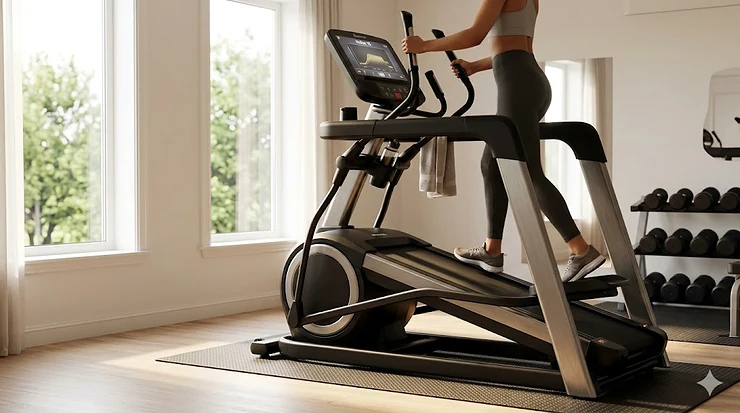
You’ve been crushing your elliptical sessions for months, but here’s the uncomfortable truth: if you’re stuck on the same flat setting, you’re leaving serious gains on the table. The difference between a basic elliptical and a 15 incline level elliptical isn’t just about fancy features—it’s about activating muscle groups that flat-path training completely misses.
When I tested ellipticals with variable incline positions at my local fitness equipment showroom, the physiological difference was immediately obvious. At a 10-degree incline, my glutes and hamstrings screamed in ways they never did on my old single-position machine. What most buyers overlook is that graduated incline settings don’t just add difficulty—they fundamentally change which muscles do the work. A study from Harvard Health confirms that adjusting both incline and resistance allows you to fine-tune your workouts, targeting specific muscle groups while simultaneously engaging upper and lower body.
Think about it: your legs contain the largest muscle groups in your body, and your posterior chain (glutes, hamstrings, calves) is responsible for explosive power and the majority of calorie burn during movement. Yet most people train ellipticals like treadmills—pushing forward with their quads while their glutes take a nap. That changes when you have multiple incline settings. According to research published by the Cleveland Clinic, elliptical workouts can burn 270-400 calories in just 30 minutes depending on body weight and intensity. At 5 degrees, you’re working different fibers than at 15 degrees. The versatility of a customizable incline workout elliptical transforms a monotonous cardio machine into a precision training tool.
In this guide, I’ll walk you through the seven best elliptical machines with 15 or more incline levels currently available in 2026, breaking down which models deliver genuine performance versus which ones are just marketing hype with expensive price tags.
Quick Comparison Table: Top 15 Incline Level Ellipticals
| Model | Incline Levels | Resistance Levels | Stride Length | Price Range | Best For |
|---|---|---|---|---|---|
| Steelflex PE10 | 15 | 30 | 23″ | $3,200-$3,800 | Commercial-grade home gyms |
| NordicTrack AirGlide 14i | 15% (decline to incline) | 26 | 17.8-18.5″ | $1,600-$1,900 | Tech-savvy users wanting iFIT |
| Horizon 7.0 AE | 20 | 20 | 20″ | $900-$1,100 | Budget-conscious buyers |
| SOLE E25 | 20 | 20 | 20″ | $1,000-$1,200 | Entry-level serious trainers |
| SOLE E35 | 20 | 20 | 20″ | $1,400-$1,700 | Mid-range performance seekers |
| SOLE E95 | 20 | 20 | 20″ | $2,300-$2,700 | Premium home gym enthusiasts |
| Nautilus E618 | 10 degrees | 25 | 22″ | $1,100-$1,400 | Families needing multi-user profiles |
Looking at this comparison, the Horizon 7.0 AE delivers exceptional value under $1,100 with 20 power incline levels—something you’d typically find on machines costing twice as much. If hill climbing is your priority and budget isn’t a constraint, the SOLE E95’s lifetime frame warranty and adjustable pedals justify the premium. Budget-conscious buyers should note that the Steelflex PE10 sacrifices user-friendly tech for raw commercial-grade durability at the $3,200-$3,800 range.
💬 Just one click — help others make better buying decisions too! 😊
Top 7 Best 15 Incline Level Elliptical Machines — Expert Analysis
1. Steelflex PE10 Incline Elliptical — The Commercial Beast
If you’ve ever used gym equipment that costs as much as a used car, you know there’s a tangible difference in how commercial-grade machines feel. The Steelflex PE10 brings that experience home with 15 dedicated incline levels and a build quality that laughs at residential-grade competition.
Key Specs: 30 resistance levels, 23-inch stride, 400-pound weight capacity, 5.5-inch LCD display, 338-pound machine weight.
What separates this from consumer ellipticals isn’t just the incline count—it’s the engineering behind each level. The PE10 uses a heavy-duty steel frame construction with commercial-rated components, meaning the incline mechanism won’t develop that annoying wobble or grinding noise after six months of use like cheaper models do. The 23-inch stride length accommodates users up to 6’4″ comfortably, and the oversized pedals feature anti-slip surfaces that actually work when you’re dripping sweat.
Expert Opinion: This machine is overkill for casual users who exercise 2-3 times weekly, but if you’re training seriously or running a small studio, the PE10’s commercial warranty and build justify the $3,200-$3,800 investment. What most listings won’t tell you: the self-generating power system means no need for a nearby outlet, making placement anywhere in your space possible.
Customer Feedback: Users consistently praise the smooth, silent operation even at maximum resistance and incline. One verified buyer noted, “After two years of daily 45-minute sessions, there’s zero maintenance needed beyond wiping it down.”
Pros:
✅ Commercial-grade construction built for 10+ years of heavy use
✅ 15 incline settings target every posterior chain angle
✅ 400-lb capacity accommodates larger athletes
Cons:
❌ 338-lb weight makes relocation a two-person job
❌ Basic LCD display lacks streaming or app connectivity
Price Verdict: At around $3,200-$3,800, this sits in premium territory but delivers value if you’re replacing multiple gym memberships or need bulletproof reliability.
2. NordicTrack AirGlide 14i — The Tech-Forward Incline Master
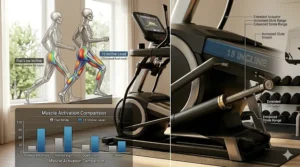
The NordicTrack AirGlide 14i does something most ellipticals can’t: it goes downhill. With a -5% to 15% incline range, this machine transforms from a standard trainer into a terrain-simulating powerhouse.
Key Specs: -5% to 15% incline, 26 resistance levels, 17.8-18.5″ adjustable stride, 32-pound flywheel, 14-inch HD touchscreen, 300-pound capacity.
The standout feature here is the decline capability, which changes your training mechanics entirely. When you’re pushing through a decline, your quads absorb eccentric load—the type of muscle lengthening that builds serious strength and definition. The iFIT integration means celebrity trainers can auto-adjust your incline mid-workout during global destination rides, though the subscription costs extra after the trial period.
Expert Opinion: If you’re a data-driven athlete who thrives on interactive training, the AirGlide 14i’s automatic incline adjustment during iFIT classes creates an immersive experience that keeps workouts from becoming stale. The catch? The 17.8-18.5″ adjustable stride is shorter than the 20″ standard found on SOLE models, which taller users (6’+ ) may find restrictive during high-speed intervals.
Customer Feedback: The 32-pound flywheel delivers smooth transitions between resistance levels, though some users report the motor emits a noticeable hum when adjusting incline—not loud enough to disturb others, but present.
Pros:
✅ Only elliptical in this class with decline capability
✅ iFIT integration with 17,000+ trainer-led workouts
✅ Heavy 32-pound flywheel ensures momentum stability
Cons:
❌ iFIT subscription required for automatic incline features ($39/month after trial)
❌ 300-lb weight capacity lower than competitors
Price Verdict: In the $1,600-$1,900 range, you’re paying a premium for the tech ecosystem—worthwhile if you’ll use iFIT, questionable if you prefer manual programming.
3. Horizon 7.0 AE — The Value Champion
The Horizon 7.0 AE is what happens when a brand strips away unnecessary frills and focuses on delivering core performance at an honest price. Twenty power incline levels for under $1,100 seems too good to be true—until you realize what you’re giving up.
Key Specs: 20 incline levels, 20 resistance levels, 20-inch stride, 23-pound flywheel, 7-inch LCD screen, 325-pound capacity, 194-pound machine weight.
Here’s what Horizon figured out: most people don’t need a touchscreen if they’re streaming from their tablet anyway. The 7.0 AE includes a solid device holder and Bluetooth speakers, letting your phone or iPad handle entertainment while the machine handles the workout. The 20 power incline levels are motorized and adjust quickly via console or handlebar controls—a feature typically reserved for machines costing $1,500+.
Expert Opinion: This is the sweet spot for buyers who want legitimate incline versatility without financing a small car. The 23-pound flywheel creates smooth motion, and the lifetime frame warranty signals Horizon’s confidence in durability. What’s missing? No pre-loaded streaming apps, no automatic workout creation, no AI coaching—but if you’re self-motivated or using third-party fitness apps, none of that matters.
Customer Feedback: Users love the no-nonsense approach and report minimal assembly headaches. One buyer mentioned, “At resistance level 14 with 15-degree incline, this rivals the commercial Precor at my old gym.”
Pros:
✅ 20 incline levels at budget-friendly pricing
✅ Lifetime frame warranty demonstrates build confidence
✅ Quick-touch incline controls on handlebars
Cons:
❌ Basic 7-inch LCD lacks touchscreen functionality
❌ No built-in streaming apps or interactive content
Price Verdict: Around $900-$1,100 delivers exceptional value—best bang-for-buck in this entire comparison.
4. SOLE E25 — The Entry-Level Workhorse
The SOLE E25 represents SOLE Fitness’s entry into serious home training, packing 20 incline levels and a 20-pound flywheel into a compact frame that doesn’t compromise on quality.
Key Specs: 20 incline levels, 20 resistance levels, 20-inch stride, 20-pound flywheel, 7.5-inch LCD, 350-pound capacity, free SOLE+ app with hundreds of classes.
What makes the E25 punch above its weight class is the four-wheel rail system that minimizes side-to-side pedal motion—a common complaint on budget ellipticals where you feel like you’re skating rather than striding. The power incline adjusts smoothly through all 20 levels, and the integrated pulse sensors provide reasonably accurate heart rate tracking (though chest strap compatibility adds precision).
Expert Opinion: This is SOLE’s answer to the question: “What’s the cheapest way to get 20 incline levels without buying junk?” The E25 targets buyers graduating from basic models who want variable incline positions without entering premium territory. At around $1,000-$1,200, it undercuts the E35 by $400-$500 while sharing the same incline system.
Customer Feedback: The free SOLE+ app wins praise for providing hundreds of workout classes without ongoing subscriptions. Users report the machine stays stable even during high-intensity intervals, thanks to its four-wheel design.
Pros:
✅ 20 incline levels match machines costing twice as much
✅ 350-lb capacity accommodates most users comfortably
✅ Free SOLE+ app eliminates subscription costs
Cons:
❌ 20-lb flywheel lighter than E35/E95 models (feels slightly less smooth at high RPM)
❌ Fixed pedals lack the adjustability of premium SOLE models
Price Verdict: At $1,000-$1,200, this is the minimum viable investment for serious incline training—perfect for committed beginners.
5. SOLE E35 — The Mid-Range Performance Leader
Step up from the E25, and the SOLE E35 rewards you with a heavier 25-pound flywheel, a larger 10.1-inch touchscreen, and adjustable pedals that prevent the toe numbness plaguing fixed-pedal machines.
Key Specs: 20 incline levels, 20 resistance levels, 20-inch stride, 25-pound flywheel, 10.1-inch touchscreen, 350-pound capacity, wireless charging.
The E35 occupies that tricky middle ground where buyers question whether the upgrades justify the $400-$500 premium over the E25. The answer depends on your training frequency. If you’re logging 5-7 sessions weekly, the heavier flywheel’s smoothness and the adjustable pedals’ comfort become noticeable. The 10.1-inch touchscreen provides better visibility than the E25’s 7.5-inch LCD, and wireless charging means your phone stays powered during hour-long sessions.
Expert Opinion: This is SOLE’s best all-rounder for users who train consistently but don’t need the E95’s commercial-grade features. The pedal adjustability isn’t just comfort—it’s biomechanics. Proper foot angle reduces Achilles strain and distributes load across your entire foot rather than concentrating pressure on the ball. If you’ve experienced foot numbness on ellipticals, the E35’s dial-adjustable pedals solve that problem.
Customer Feedback: The enhanced display and built-in apps (Netflix, YouTube, Spotify, etc.) eliminate the need for a separate tablet. One user noted, “The 25-lb flywheel makes resistance transitions feel effortless compared to my old 18-lb machine.”
Pros:
✅ 25-lb flywheel delivers premium smoothness
✅ Adjustable pedals customize to your biomechanics
✅ Pre-loaded streaming apps (no subscription required)
Cons:
❌ $400-$500 premium over E25 for features some users won’t utilize
❌ 211-lb weight makes solo relocation difficult
Price Verdict: Around $1,400-$1,700 positions this as the choice for dedicated trainers willing to pay for quality-of-life improvements.
6. SOLE E95 — The Premium Home Gym Centerpiece
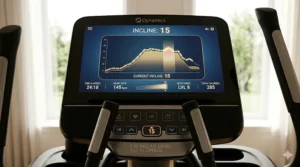
The SOLE E95 is SOLE’s flagship elliptical, and it shows. With a 27-pound flywheel, a 13.3-inch touchscreen, adjustable pedals, and a 400-pound capacity, this machine rivals commercial gym equipment.
Key Specs: 20 incline levels, 20 resistance levels, 20-inch stride, 27-pound flywheel, 13.3-inch touchscreen, 400-pound capacity, 242-pound machine weight, wireless charging.
What you’re paying for at the $2,300-$2,700 price point is longevity and refinement. The 27-pound flywheel creates momentum that makes hour-long sessions feel sustainable rather than punishing. The adjustable pedals use a worm-drive mechanism that lets you dial in precise angles, and the three-stabilizer frame (versus the typical two) eliminates any rocking even during aggressive intervals.
Expert Opinion: The E95 targets buyers building home gyms intended to replace commercial memberships long-term. The lifetime frame and flywheel warranties signal SOLE’s confidence—these components are built to survive decades of use. The 13.3-inch touchscreen with WiFi, screen mirroring, and 12 pre-loaded apps (including Netflix, Hulu, Disney+) creates an entertainment hub that keeps training from becoming a chore.
Customer Feedback: Users report zero maintenance issues even after years of daily use. The 400-pound capacity accommodates heavier athletes who’ve been priced out of competitors’ 300-325 pound limits.
Pros:
✅ 27-lb flywheel and three stabilizers create gym-quality feel
✅ Lifetime frame and flywheel warranties
✅ 400-lb capacity opens access to larger athletes
Cons:
❌ $2,300-$2,700 investment competes with used commercial equipment
❌ 242-lb weight and 83″L x 34″W footprint require dedicated space
Price Verdict: If you’re committed to home training and have the budget, the E95 delivers professional-grade performance that justifies its premium positioning.
7. Nautilus E618 — The Family-Friendly Powerhouse
The Nautilus E618 brings 10 degrees of motorized incline, 25 resistance levels, and a tilting console that accommodates users from 5’2″ to 6’4″—making it ideal for households with multiple exercisers.
Key Specs: 10 degrees power incline, 25 resistance levels, 22-inch stride, 30-pound flywheel, dual LCD displays, 350-pound capacity, 210-pound machine weight.
Nautilus designed the E618 for sharing. The console tilts to optimize sight lines for different heights, four user profiles save individual preferences, and the 22-inch stride length works for taller users who feel cramped on 20-inch machines. The 10-degree incline might seem limited compared to 15-20 level competitors, but the 30-pound flywheel—heavier than any machine in this comparison—creates buttery-smooth motion that compensates.
Expert Opinion: While technically this has fewer incline levels than the “15 incline level elliptical” keyword suggests, the 10-degree maximum incline combined with 25 resistance levels creates enough workout variety for most users. What distinguishes the E618 is the pedal customization: you can adjust pedal angle from 0-10 degrees, letting you shift emphasis between quad-dominant (flat) and hamstring-dominant (angled) positions.
Customer Feedback: The wireless heart rate monitoring with included chest strap receives praise for accuracy during interval training. The Explore the World app (free with purchase) lets families ride global routes together.
Pros:
✅ 30-lb flywheel heaviest in comparison (ultra-smooth)
✅ 22-inch stride accommodates taller users
✅ Tilting console and 4 user profiles perfect for families
Cons:
❌ 10-degree incline fewer than 15-20 level competitors
❌ Warranty (10-year frame, 2-year parts) weaker than SOLE’s lifetime coverage
Price Verdict: Around $1,100-$1,400 positions this as a solid family investment, though SOLE models offer stronger warranties at similar prices.
How to Choose Your Perfect Variable Incline Elliptical
Buying a graduated incline elliptical machine isn’t like picking a dumbbell set—get this wrong, and you’re stuck with an expensive clothes rack. Here’s how to match features to your actual training style rather than theoretical goals.
Stride Length Reality Check
Marketing materials love to advertise stride length, but here’s what they don’t tell you: a 20-inch stride at 0-degree incline feels completely different from that same 20 inches at 15-degree incline. As incline increases, effective stride shortens because you’re fighting gravity’s angle. If you’re over 6 feet tall, prioritize machines offering 22-inch strides (like the Nautilus E618) or adjustable stride systems (NordicTrack AirGlide 14i).
Incline Levels vs. Incline Range
A machine advertising “20 incline levels” sounds impressive until you realize those 20 levels span 0-10 degrees—giving you half-degree increments. Meanwhile, a machine with “15 incline levels” spanning 0-20 degrees provides more dramatic position changes. Ask: What’s the maximum incline degree, and how much difference exists between each level?
Flywheel Weight Matters More Than You Think
The spec sheet obsession with resistance levels misses the point—resistance is useless if the machine feels jerky. A 20-pound flywheel creates acceptable momentum for casual training. A 25-27 pound flywheel (SOLE E35/E95) supports sustained high-intensity work without that choppy feeling. The 30-pound Nautilus E618 flywheel is overkill for most users but glorious for those who train hard.
Console Features: Needs vs. Wants
Do you actually need a 14-inch touchscreen with iFIT integration, or would a basic LCD with Bluetooth speakers serve you fine while saving $500-$800? If you’re disciplined enough to press play on your own workouts, the Horizon 7.0 AE’s simple approach might suit you better than NordicTrack’s subscription-dependent ecosystem.
Weight Capacity Isn’t About Weight Alone
A 350-pound capacity machine supports a 250-pound user more comfortably than a 300-pound capacity model supports the same person. Higher capacity usually correlates with heavier-gauge steel and reinforced joints—meaning better stability for everyone, regardless of body weight.
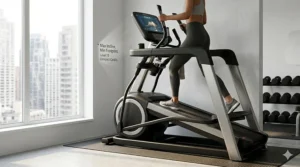
Common Mistakes When Buying Multiple Incline Settings Elliptical
Mistake #1: Assuming Manual Incline is “Close Enough”
Manual incline systems (like the Schwinn 430’s 6 positions) require you to dismount, adjust a lever, and remount between intervals. This isn’t just inconvenient—it kills interval training effectiveness. Harvard Health research emphasizes that adjustable incline and resistance allow you to fine-tune workouts mid-session for optimal results. Power incline systems adjust electronically while you keep moving.
Mistake #2: Ignoring Total Cost of Ownership
A $1,200 elliptical with free app access (SOLE E25) costs $1,200 total. A $1,800 elliptical requiring $39/month iFIT subscriptions (NordicTrack) costs $2,268 in year one, $2,736 by year two. Factor subscriptions, extended warranties, and maintenance into your budget.
Mistake #3: Buying for Your Ideal Self Instead of Your Real Self
Be honest: will you actually use 29 pre-programmed workouts, or will you realistically use 3-4? Will you watch trainer-led classes, or do you prefer Netflix? The most expensive machine won’t get used more than a basic model if it doesn’t match your personality.
Mistake #4: Overlooking Assembly and Placement
A 240-pound commercial-grade elliptical sounds amazing until it arrives and you realize:
- Professional assembly costs $200-$400
- You need 7 feet of ceiling clearance at maximum incline
- The machine won’t fit through your basement door
Measure your space accounting for the footprint PLUS arm clearance PLUS incline height before ordering.
Mistake #5: Trusting Amazon Reviews From Week 1 Owners
Elliptical durability reveals itself over months and years, not days. A five-star review written after one workout tells you nothing about whether the incline motor fails at month seven or the pedals develop creaks at month ten. Seek out reviews from verified 6-12 month owners.
Elliptical With 10 Incline Settings vs. Traditional Flat-Path Models
Walking into a big-box fitness store, the salesperson will try to upsell you from a $600 basic elliptical to a $1,500 model with incline capability. Is that $900 premium justified, or is it feature bloat?
Muscle Activation Differences
Flat-path ellipticals primarily recruit your quadriceps and hip flexors—the muscles you’d use pushing forward. A study published in Gait & Posture found that elliptical training provides effective cardiovascular exercise while reducing impact stress on joints. Adding incline shifts recruitment to your posterior chain: glutes, hamstrings, and calves. Research from the Hospital for Special Surgery indicates that elliptical machines decrease ground reaction force on the body, making them ideal for those with joint concerns. A 10-15 degree incline transforms the movement pattern from “pushing forward” to “climbing upward,” recruiting muscle fibers that flat training misses entirely.
Caloric Expenditure
Harvard Health Publishing reports that a 125-pound person burns approximately 270 calories in 30 minutes on an elliptical, while a 185-pound person burns around 400 calories. Adding incline can increase that burn by 20-40% depending on resistance and speed—without increasing perceived exertion dramatically. Your cardiovascular system works harder climbing than walking flat, but the low-impact nature means your joints don’t pay the penalty that treadmill incline would exact.
Training Variety and Progression
A flat-only elliptical has one progression pathway: increase resistance or speed. A customizable incline workout elliptical offers three variables to manipulate: resistance, speed, AND incline angle. This creates exponentially more workout combinations, preventing the adaptation plateau that kills progress after 3-4 months on unchanging programs.
Price-to-Value Analysis
Basic ellipticals ($500-$800): Good for casual users training 2-3x weekly at low intensity.
Multiple incline settings ellipticals ($1,000-$1,800): Worth it for users training 4+ times weekly or pursuing specific body composition goals.
Premium incline models ($2,000+): Justified only for dedicated home gym builders replacing commercial memberships.
Real-World Performance: What to Expect From Your New Incline Elliptical
Month 1: The Honeymoon Phase
You’ll love the novelty of switching incline mid-workout and experimenting with different combinations. Expect some posterior chain soreness (especially glutes) if you’re coming from flat-path training. The learning curve for finding your optimal incline-resistance balance takes 8-12 sessions.
Months 2-3: The Adaptation Window
Your body adapts quickly. What felt challenging at 10-degree incline, level 12 resistance becomes manageable. This is when having 15-20 incline positions prevents hitting a ceiling—you can incrementally increase angle without massive difficulty jumps.
Months 4-6: Maintenance and Progression
Properly maintained incline ellipticals require minimal service—basic cleaning, occasional bolt tightening, and cleaning the incline rail tracks. Budget models may start showing wear here: creaky pedals, sluggish incline adjustment, or resistance inconsistency. Commercial-grade machines (Steelflex PE10, SOLE E95) won’t.
Year 1+: Long-Term Reality
Honest truth: most home ellipticals become expensive laundry racks because they don’t match their owner’s personality. Before buying, ask: “Will I genuinely use this 3+ times weekly for 30+ minutes per session?” If the answer isn’t a confident yes, invest in a gym membership instead.
❓ Frequently Asked Questions
❓ How many incline levels do I actually need on an elliptical?
❓ What's the difference between power incline and manual incline on ellipticals?
❓ Can I build muscle using a 15 incline level elliptical machine?
❓ How does elliptical incline training compare to treadmill incline walking?
❓ What's the maximum incline degree I should look for in home ellipticals?
Transform Your Cardio: Why Incline Matters for Results
Strip away the marketing noise, and here’s what matters: a 15 incline level elliptical gives you the tools to progressively challenge your body in ways flat-path machines simply can’t. Whether you’re recovering from injury and need low-impact options or you’re an athlete pursuing specific performance goals, variable incline positions transform a basic cardio machine into a precision training instrument.
The machines I’ve reviewed represent the current sweet spots in the market:
Budget-conscious buyers: Horizon 7.0 AE delivers 20 incline levels under $1,100—unbeatable value.
Tech enthusiasts: NordicTrack AirGlide 14i’s iFIT integration and decline capability justify the premium if you’ll use the features.
Serious home gym builders: SOLE E95 or Steelflex PE10 provide commercial-grade performance with warranties backing long-term durability.
Families: Nautilus E618’s multi-user profiles and tilting console accommodate different heights and preferences.
Remember: the best elliptical isn’t the one with the most features—it’s the one you’ll actually use consistently. Match your purchase to your honest assessment of training frequency, not optimistic projections.
Recommended for You
- 7 Best Manual Ramp Ellipticals 2026 – Save $300+ on Power Models
- 7 Best Motorized Incline Elliptical Machines for Home Gym 2026
- 7 Best Elliptical with Incline 2026: Transform Your Cardio Game
Disclaimer: This article contains affiliate links. As an Amazon Associate, I earn from qualifying purchases. If you purchase products through these links, we may earn a small commission at no additional cost to you.
✨ Found this helpful? Share it with your friends! 💬🤗
