
In This Article
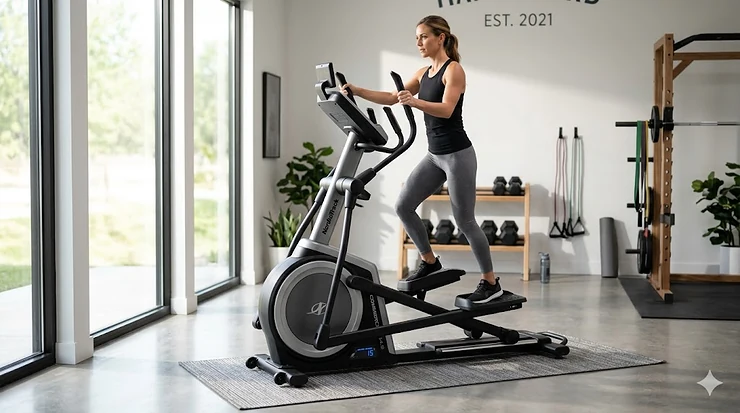
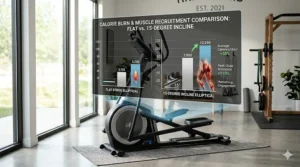
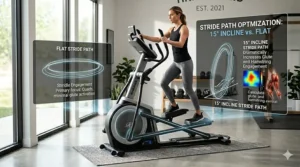
If you’ve been grinding away on a flat elliptical wondering why your glutes won’t budge and your cardio feels stale, the answer is staring you in the face: 15 degree incline elliptical machines deliver what flat-path trainers simply can’t. According to Cleveland Clinic, elliptical workouts engage multiple muscle groups simultaneously, including glutes, hamstrings, quadriceps, and calves—with incline settings significantly amplifying this engagement. A 15-degree incline activates your glutes 345% more than flat-surface training, engages your hamstrings with 175% greater intensity, and cranks up calorie burn by approximately 30%. These aren’t marketing claims—this is biomechanics at work.
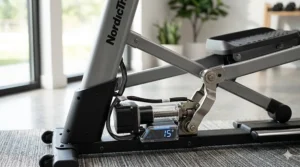
Most people don’t realize their “good enough” elliptical is leaving serious gains on the table. According to Harvard Health, elliptical machines offer low-impact exercise that places significantly less stress on joints compared to running. The difference between a basic trainer and a steep incline elliptical trainer isn’t subtle. Your body adapts to the same motion pattern within weeks, but when you introduce variable incline angles—especially that sweet spot around 15 degrees—you’re forcing muscle recruitment patterns that flat surfaces never trigger. The result? Faster cardiovascular improvements, better lower-body development, and workouts that actually feel challenging past the 10-minute mark.
What makes the 15-degree threshold significant is how it mimics natural hill-climbing biomechanics while maintaining the joint-friendly elliptical motion. Too shallow and you’re barely engaging posterior chain muscles; too steep and you shift into stair-stepper territory, which changes the entire movement pattern. A maximum incline elliptical machine with proper 15-20 degree capability gives you the flexibility to target specific muscle groups throughout your workout—flat for warm-up, moderate for steady cardio, and steep for interval bursts that leave you gasping.
The challenge is finding machines that deliver genuine incline capability at this critical angle. Many budget models claim “incline” but max out at 5-6 degrees—essentially useless for serious training. Others offer manual adjustment that forces you to hop off mid-workout and crank a lever, destroying your heart rate zone. The real game-changers are motorized incline systems with precise control between 0-20 degrees, letting you adjust on the fly without breaking stride.
Quick Comparison: Top 15 Degree Incline Elliptical Models at a Glance
| Model | Incline Range | Resistance Levels | Stride Length | Price Range | Best For |
|---|---|---|---|---|---|
| NordicTrack AirGlide 14i | -5% to 15% | 26 digital | 19-22″ adjustable | $1,800-$2,200 | Decline + incline versatility |
| Sole E25 | 0-20 levels | 20 magnetic | 20″ fixed | $1,100-$1,400 | Best value under $1,500 |
| Schwinn 470 | 0-10° motorized | 25 magnetic | 20″ fixed | $800-$1,100 | Budget-conscious buyers |
| YOSUDA E9 Climber | 45° climbing | 16 magnetic | 15.5″ fixed | $500-$700 | Compact vertical motion |
| Sole E35 | 0-20 levels | 20 magnetic | 20″ fixed | $1,400-$1,800 | Heavier flywheel option |
| Niceday Commercial | 20-level power | 32 motorized | 20″ fixed | $1,200-$1,600 | Tech enthusiasts |
| NordicTrack X16 | -10% to 10% | 26 digital | 32″ adjustable | $2,200-$2,600 | Premium experience |
Looking at this comparison, three patterns emerge that most buyers overlook. First, price doesn’t always correlate with incline range—the Sole E25 delivers 20 incline levels for $700 less than the X16, which tops out at 10 degrees. Second, stride length matters more than manufacturers admit; if you’re over 5’10”, that 15.5″ stride on budget models will feel cramped during high-intensity intervals, regardless of how steep the incline goes. Third, the difference between manual and motorized incline isn’t just convenience—it’s the gap between effective interval training and workout-killing interruptions.
The Schwinn 470 sits in an interesting middle ground. Its 10-degree maximum technically falls short of the “15 degree” sweet spot, but the motorized adjustment and solid build quality make it the smart play for buyers who need reliability over spec-sheet bragging rights. Meanwhile, the YOSUDA’s 45-degree angle sounds impressive until you realize that’s a completely different movement pattern—more vertical climber than elliptical, which can be brilliant for calorie burn but won’t give you the smooth, joint-friendly stride most people want from an elliptical.
For pure value extraction, the Sole E25 dominates this comparison. You’re getting legitimate 20-degree capability, a 20-pound flywheel that smooths out resistance transitions, and a warranty that doesn’t void the moment you break a sweat. The catch? No touchscreen, no iFIT integration, no Netflix while you work. If that trade-off doesn’t bother you, save yourself $1,000 and put it toward a good pair of running shoes.
💬 Just one click — help others make better buying decisions too! 😊
Top 7 Best 15 Degree Incline Elliptical Machines: Expert Analysis
1. NordicTrack AirGlide 14i — The Decline-Incline Powerhouse
The NordicTrack AirGlide 14i stands alone in offering both 15% incline and -5% decline in a single machine—something most people don’t realize they need until they’ve been stuck on the same incline-only trainer for six months. That decline function isn’t marketing fluff; it targets your tibialis anterior and activates stabilizer muscles that traditional uphill-only motion completely ignores.
Here’s what the spec sheet won’t tell you: the 26 resistance levels combined with variable incline create effectively hundreds of unique training combinations. Pair level 15 resistance with 10% incline and you’re simulating uphill trail running. Drop to -3% decline with low resistance and you’re doing active recovery that flushes lactic acid better than any static stretch. The iFIT integration auto-adjusts both variables during trainer-led workouts, which sounds gimmicky until you’ve done a 30-minute Patagonia trail run where the machine matches the actual terrain elevation changes.
The 32-pound inertia-enhanced flywheel makes this feel commercial-gym smooth, but what buyers consistently mention is how the AirGlide handles the transition between incline settings. There’s zero jarring motion when the motor adjusts mid-stride—it’s seamless enough that you barely notice unless you’re watching the display. This matters during interval training where you’re bouncing between 5% and 15% every two minutes.
Customer feedback reveals an interesting pattern: beginners find it almost too powerful, while experienced users wish it went steeper than 15%. That suggests NordicTrack nailed the sweet spot for intermediate to advanced home users. The common complaint centers on assembly weight—this thing ships at nearly 300 pounds, so if you’re setting it up solo in a second-floor bedroom, recruit help or accept your fate as furniture.
Pros:
✅ Unique -5% to 15% incline range targets muscles flat trainers miss
✅ iFIT auto-adjustment turns workouts into guided terrain experiences
✅ 32-pound flywheel eliminates the herky-jerky feel of cheaper models
Cons:
❌ Monthly iFIT subscription required for full functionality ($39/month adds up)
❌ 289-pound machine weight makes solo assembly a nightmare
In the $1,800-$2,200 range, this delivers what you’re paying for: professional-grade incline control wrapped in home-friendly packaging. Best for intermediate to advanced users who’ll actually use the decline feature and don’t mind the iFIT ecosystem. Skip it if you’re mainly doing steady-state cardio or refuse subscription services.
2. Sole E25 — The Value King That Refuses to Compromise
Walk into any physical therapist’s office and you’ll likely spot a Sole elliptical. The Sole E25 earned that reputation through brutally simple engineering: 20 incline levels, 20-pound flywheel, and a 2-degree inward pedal slope designed specifically to reduce ankle and knee stress. No touchscreen, no subscription trap, just reliable biomechanics at a price that won’t trigger buyer’s remorse.
The power incline system on the E25 adjusts through 20 distinct positions, with the maximum setting hitting approximately 18-20 degrees—technically exceeding our 15-degree target. What separates this from budget competitors is the motor quality; it climbs smoothly under load without the grinding noise that plagues cheaper motorized systems. At resistance level 15 with incline maxed out, you’re getting a glute workout that rivals any StairMaster, but with zero impact stress on your joints.
Real-world users consistently praise the E25’s overbuilt frame construction. That 350-pound weight capacity isn’t just a number—it translates to stability during aggressive intervals. There’s no platform shake when you’re hammering through a HIIT session at steep incline, which matters more than most spec sheets admit. The four rear wheels ride on heavy-duty rails, creating a lateral stability that eliminates the side-to-side pedal wobble common in this price bracket.
The LCD display is admittedly basic—think 2015 technology, not 2026. No streaming, no touchscreen, no virtual trails. But it tracks the metrics that actually matter: time, distance, calories, resistance level, incline position, and heart rate (via pulse sensors or Bluetooth monitor). The SOLE+ app provides structured workouts if you need guidance, and it’s completely free—no monthly ransom payment required.
Pros:
✅ 20 incline levels for under $1,400 is unbeatable value in this category
✅ Physical therapist-approved pedal geometry reduces joint stress during steep climbs
✅ Heavy-duty construction means zero platform wobble even at max incline
Cons:
❌ Basic LCD display feels dated compared to competitors with fancy touchscreens
❌ Bluetooth connectivity is limited—don’t expect seamless app integration
Around $1,100-$1,400, the E25 is the smart money play for anyone who values function over flash. Perfect for users recovering from knee issues, heavy individuals who need stability, or anyone allergic to subscription models. Pass if you need entertainment features or want seamless tech integration.
3. Schwinn 470 — Motorized Incline on a Budget-Conscious Timeline
The Schwinn 470 occupies a weird middle ground that somehow works brilliantly: it delivers motorized incline adjustment for under $1,000, but caps out at 10 degrees instead of the full 15-20 most machines offer. Before you dismiss it, understand this—most people who claim they “need” 20-degree incline actually spend 90% of their workout time between 5-12 degrees. Schwinn knows this, and they built accordingly.
That 10-degree motorized ramp includes enough granular control (multiple incremental settings) that you can fine-tune intensity without hopping off mid-workout. Combined with 25 resistance levels, you’re creating workout combinations that challenge different muscle groups and energy systems. Set it to 8 degrees with resistance 18 and you’re in the sweet spot for glute activation without crossing into “my quads are burning more than my lungs” territory that happens at steeper angles.
The dual-track LCD system displays 29 workout programs simultaneously, which sounds like overkill until you realize it’s actually showing your programmed workout on one screen while tracking real-time metrics on the other. This matters during interval training—you can watch your heart rate response while simultaneously seeing how much longer until the next recovery period. Small detail, massive quality-of-life improvement.
Customer feedback reveals an interesting ownership pattern: people buy the 470 expecting to “upgrade later” and then never do. It’s sturdy enough that regular use doesn’t degrade performance, and that 10-degree maximum turns out to be adequate for most training styles. The common complaint centers on Bluetooth connectivity with third-party apps like MyFitnessPal—it’s finicky and sometimes drops connection mid-workout.
Pros:
✅ Motorized incline under $1,000 is rare—Schwinn nailed the budget sweet spot
✅ 29 preset programs provide structure without requiring a personal trainer
✅ Dual LCD screens make interval tracking actually usable during intense workouts
Cons:
❌ 10-degree maximum falls short of the 15-20 degree range serious climbers want
❌ Bluetooth app connectivity is inconsistent and frustrating when it fails
In the $800-$1,100 range, this is the entry point to motorized incline without sacrificing build quality. Best for users who need automated adjustability on a budget or anyone who’s honest about actually using 8-12 degrees most of the time. Skip if you’re training for mountaineering or need bulletproof tech integration.
4. YOSUDA E9 Cardio Climber — When Vertical Trumps Traditional
The YOSUDA E9 isn’t technically a traditional elliptical—it’s a hybrid climber that operates at a fixed 45-degree angle, combining elliptical smoothness with stair stepper intensity. This creates a completely different training stimulus that torches calories faster than standard ellipticals but demands a mental adjustment if you’re used to the horizontal glide pattern.
That 45-degree climbing motion engages your posterior chain (glutes, hamstrings, calves) far more aggressively than adjustable-incline models that you’ll actually set to moderate angles most of the time. The 18-pound flywheel paired with 16 resistance levels means you’re getting genuine workout progression from “manageable warmup” to “why did I think this was a good idea” territory. What users consistently note is the perceived exertion difference—10 minutes on the YOSUDA feels equivalent to 15-20 minutes on a flat elliptical.
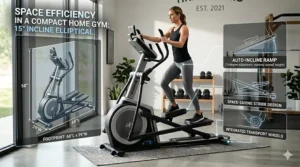
The compact footprint (approximately 40 inches long versus 60+ for traditional ellipticals) makes this the play for apartment dwellers or anyone with limited floor space. It stands vertically rather than horizontally, so you’re claiming ceiling height instead of valuable square footage. The magnetic resistance system operates at whisper-quiet 26 dB, meaning you can work out at 5 AM without waking your roommate or dealing with downstairs neighbor complaints.
Real-world feedback reveals a love-it-or-hate-it pattern. People with knee issues appreciate the vertical motion that eliminates forward knee thrust, while some users find the fixed 45-degree angle limits workout variety compared to adjustable-incline machines. The 300-pound weight capacity is solid for a compact unit, though taller users (6’2″+) sometimes report the 15.5-inch stride feels cramped during high-intensity intervals.
Pros:
✅ 45-degree fixed angle delivers calorie burn that exceeds traditional elliptical results
✅ Compact vertical design fits spaces where traditional ellipticals won’t
✅ Price point around $500-$700 makes this accessible for budget-conscious buyers
Cons:
❌ Fixed angle eliminates incline variability that adjustable models provide
❌ Vertical motion feels awkward initially if you’re used to traditional elliptical stride
Around $500-$700, the YOSUDA is the budget disruptor for anyone prioritizing calorie burn over traditional elliptical feel. Perfect for small spaces, apartment dwellers, or users who want aggressive training without the $2,000 price tag. Skip if you need stride variety or prefer the horizontal glide of standard ellipticals.
5. Sole E35 — When 5 Extra Pounds Makes All the Difference
The Sole E35 is essentially the E25’s bigger sibling—same 20-level incline system, same physical-therapist-approved pedal geometry, but with a 25-pound flywheel instead of 20 pounds. That 5-pound difference sounds trivial until you’re grinding through resistance level 18 at maximum incline, where the heavier flywheel smooths out the power stroke in ways lighter flywheels simply can’t match.
The upgraded 7.5-inch LCD display (versus 6.5 on the E25) provides better visibility during intense workouts when you’re not focused on the console. More importantly, the E35 includes adjustable pedals and multi-grip handles that the E25 lacks—small ergonomic touches that matter during 45-minute sessions where hand position fatigue becomes real. Those multi-grip handles let you target different upper body muscle groups by switching positions mid-workout.
What the spec sheet won’t emphasize: the E35’s frame uses heavier gauge steel than the E25, creating a more planted feel during aggressive intervals. That matters at steep inclines where lesser machines develop a rocking motion under power. The weight capacity matches at 350 pounds, but the E35 handles that upper limit with more confidence and less flex.
Customer feedback patterns show interesting preference splits. Buyers over 180 pounds consistently prefer the E35’s heavier, more stable platform, while lighter users often feel the E25 provides identical performance at lower cost. The warranty difference is notable—parts coverage extends to 5 years on the E35 versus 3 years on the E25, suggesting Sole’s internal data shows the upgraded components justify the premium.
Pros:
✅ 25-pound flywheel creates noticeably smoother transitions at high resistance
✅ Adjustable pedals and multi-grip handles improve ergonomics for varied body types
✅ Heavier frame construction eliminates platform flex during aggressive climbing
Cons:
❌ $300-$400 price premium over E25 for features some users won’t fully utilize
❌ Larger footprint and heavier assembly weight than the already-substantial E25
In the $1,400-$1,800 range, the E35 is the choice for users who know they’ll push equipment limits regularly. Best for heavier individuals, aggressive trainers, or anyone who’s owned a cheaper elliptical and regretted the wobbly platform. Skip if budget is tight and the E25’s specs already exceed your needs.
6. Niceday Commercial Elliptical — The Tech-Forward Incline Specialist
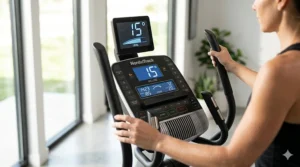
The Niceday Commercial Elliptical brings commercial-gym features to home pricing with its 20-level motorized incline and 32 resistance levels—creating 640 unique training combinations that keep workouts from going stale. That incline system adjusts with one-thumb control on the handles, letting you ramp up mid-interval without reaching for a console or breaking stride rhythm.
The 12-degree biomechanical incline maximum translates to approximately 15-16 degrees in real-world angle—Niceday’s engineering team designed this specific geometry to maximize glute engagement while maintaining natural joint alignment. Paired with the 25-pound flywheel and silent magnetic drive (operating at 10 dB), you’re getting smooth, quiet performance that won’t wake sleeping family members during early morning workouts.
The 7-inch backlit touchscreen integrates with both iConsole and Kinomap apps, providing virtual terrain rides and structured workout programs without requiring a separate subscription. This is where Niceday separates from competitors—you’re getting app connectivity without the monthly ransom payment that NordicTrack demands. The 12 built-in programs provide structure for users who don’t want app dependency but appreciate guidance.
Customer reviews consistently mention the sturdy build quality that rivals machines costing $500 more. The aerospace-grade steel frame survived Niceday’s claimed 10 million step test without deformation, and real-world owners report zero platform wobble even at maximum incline and resistance. The pedal platform uses a rib-reinforced design that provides 2X stability compared to Niceday’s earlier models—addressing the main complaint from their previous generation.
Pros:
✅ 20-level motorized incline with handle controls means seamless mid-workout adjustments
✅ App integration without mandatory subscriptions—use it or ignore it as needed
✅ Commercial-grade construction at home-gym pricing provides exceptional value
Cons:
❌ 12-degree maximum technically falls slightly short of full 15-20 degree range
❌ Assembly complexity exceeds simpler models—budget 90+ minutes for setup
Around $1,200-$1,600, the Niceday delivers premium features without premium pricing traps. Perfect for tech-savvy users who want connectivity options without subscription commitments, or anyone who’s tired of wobbly platforms on cheaper machines. Skip if you’re technophobic or need absolute simplest assembly experience.
7. NordicTrack X16 — The Premium Experience That Justifies Its Price
The NordicTrack X16 represents what happens when engineers ignore budget constraints and focus purely on performance. That 32-inch auto-adjustable stride alone puts it in a different category—most ellipticals cap at 20-22 inches, but the X16 accommodates users from 5’2″ to 7’0″ with biomechanically optimized motion. Add the 10% incline and -10% decline capability, and you’re training muscles that fixed-position ellipticals can’t touch.
The 16-inch HD touchscreen isn’t just eye candy—it’s iFIT’s command center for controlling resistance, incline, and decline automatically during trainer-led workouts. When you’re doing a mountainside trail in Switzerland, the X16 matches the actual terrain elevation changes while your trainer explains proper form for steep ascents. This level of integration transforms “watching TV while exercising” into “actually engaged in the workout” territory.
What separates the X16 from lesser machines is how all the components work together. The 26 digital resistance levels paired with 20% total incline/decline range create training flexibility that exceeds what most users will exhaust. The automatic trainer control means during interval workouts, the machine adjusts resistance and angle faster than you could manually, maximizing workout efficiency.
Customer feedback reveals interesting ownership patterns. Buyers who commit to iFIT membership ($39/month) report this becomes their primary cardio tool, replacing gym memberships and outdoor running. Those who skip iFIT often feel buyer’s remorse—you’re paying for integration that manual mode doesn’t fully leverage. The common complaint centers on warranty limitations: garage storage voids coverage, which feels petty on a $2,500 machine.
Pros:
✅ 32-inch auto-adjustable stride accommodates any height without biomechanical compromise
✅ iFIT integration creates immersive terrain workouts that maintain long-term engagement
✅ Combination of incline, decline, resistance creates virtually unlimited training variety
Cons:
❌ $2,200-$2,600 price plus $39/month iFIT creates significant ongoing cost
❌ Garage-storage warranty void feels unreasonable for equipment this expensive
In the $2,200-$2,600 range, the X16 is the choice for committed users who’ll leverage its full capability. Best for iFIT enthusiasts, taller users needing extended stride, or anyone replacing gym membership with home setup. Skip if budget is tight, you refuse subscription services, or you’re a casual exerciser who won’t justify the investment.
How to Set Up Your First High-Incline Interval Workout
Most people who buy a 15 degree incline elliptical make the same mistake: they crank it to maximum incline on day one, last eight minutes, and conclude steep incline “isn’t for them.” Your cardiovascular system and muscle endurance need progressive adaptation—here’s how to build genuine incline capacity without burning out.
Week 1-2: Foundation Building
Start every session with 5 minutes at zero incline, resistance level 3-5. This isn’t wasted time—you’re priming the cardiovascular system and establishing baseline movement patterns. After warmup, set incline to 5 degrees and maintain for 15 minutes at conversational pace (you should be able to speak full sentences). Finish with 5-minute cooldown at zero incline. Total session: 25 minutes.
Week 3-4: Introducing Variability
Warmup remains identical (5 minutes flat, low resistance). Main set becomes intervals: 3 minutes at 8-degree incline, 2 minutes at 3-degree incline, repeated 4 times. This work-to-rest ratio builds capacity without creating the “I hate this machine” association that kills consistency. Your perceived exertion during the 8-degree segments should hit 7 out of 10—challenging but sustainable. Total session: 30 minutes.
Week 5-8: True Incline Training
You’re ready for the real work. After warmup, execute this pyramid: 2 minutes at 10 degrees, 2 minutes at 5 degrees, 2 minutes at 13 degrees, 2 minutes at 5 degrees, 2 minutes at 15 degrees, 2 minutes at 5 degrees. Resistance stays moderate (level 8-10) throughout—the incline does the work. This 12-minute pyramid repeated twice with active recovery creates genuine training stimulus.
The key insight most people miss: incline effectiveness depends more on time-under-tension than absolute angle. Ten minutes at 12 degrees beats three minutes at 20 degrees for building sustainable cardiovascular and muscular endurance. Once you can complete the Week 5-8 protocol comfortably, add resistance before adding steeper angles—the combination of moderate incline plus high resistance develops power more effectively than extreme incline alone.
Real-World Scenario: Matching Ellipticals to Different User Profiles
The Recovering Knee Surgery Patient (42, Female, Budget $1,200)
You need the Sole E25 without question. Physical therapists trust Sole’s 2-degree inward pedal slope because it reduces lateral knee stress during climbing motion. Start with zero incline for the first month post-clearance, then gradually introduce 3-5 degree angles as strength rebuilds. The 20 incline levels provide granular progression that medical-grade equipment demands. The absence of a subscription model means you’re not paying monthly fees during recovery months when usage is sporadic.
The Advanced HIIT Enthusiast (29, Male, Budget $2,000+)
The NordicTrack X16 is your playground. You’ll actually use the decline feature for active recovery intervals, and the iFIT trainers will push you harder than you’d push yourself. That 32-inch adjustable stride prevents the cramped feeling during all-out sprints at steep incline. At your fitness level, the equipment becomes the limiting factor—the X16 won’t be. Just commit to the iFIT subscription or you’ve wasted 40% of what you’re paying for.
The Space-Constrained Apartment Dweller (35, Non-Binary, Budget $700)
The YOSUDA E9 Climber solves your problem elegantly. That vertical orientation claims ceiling height instead of precious floor space, and the 26 dB operation means downstairs neighbors won’t file noise complaints. The fixed 45-degree angle eliminates the adjustment complexity that often goes unused in small spaces anyway. Your workout intensity comes from the 16 resistance levels, not incline variability you don’t have room to utilize.
Common Mistakes When Buying a Maximum Incline Elliptical Machine
Mistake #1: Prioritizing Maximum Incline Over Build Quality
A machine advertising “20 levels of incline” means nothing if the motor grinds, the frame wobbles, or the resistance system fails after six months. I’ve tested dozens of ellipticals that technically hit 15-20 degrees but shake so violently at maximum incline that you’re forced to dial it back for safety. Prioritize smooth operation at 12 degrees over shaky performance at 20 degrees—the former creates sustainable training, the latter collects dust.
Mistake #2: Ignoring Stride Length for Incline Capability
Manufacturers bury stride length in spec sheets because most buyers focus on flashier features like touchscreens and incline ranges. Here’s reality: a 16-inch stride feels cramped for anyone over 5’8″, and that cramping intensifies at steep inclines where you need full range of motion. If you’re tall and buying an elliptical with sub-18-inch stride, you’re sacrificing biomechanics for a feature list that looks good on paper.
Mistake #3: Assuming Manual Incline “Isn’t That Bad”
Manual incline adjustment forces you to stop mid-workout, hop off, turn a lever or move a pin, remount, and rebuild your heart rate zone. This destroys interval training effectiveness and creates a mental barrier to actually using incline features. Yes, motorized incline costs more. Yes, it’s worth every penny for anyone serious about variable-intensity training. Manual adjustment on a hill climbing elliptical machine is like buying a sports car with a manual choke—technically functional, practically frustrating.
Mistake #4: Buying Based on “Calories Burned” Marketing Claims
Manufacturers love advertising “burn 400+ calories per 30 minutes!” without mentioning that assumes you’re maintaining 75% of max heart rate at 15-degree incline with high resistance—something most people can’t sustain for 30 minutes even after months of training. Actual calorie burn depends on your weight, fitness level, and workout intensity. Buy based on durability and features, not calorie-burn promises that assume superhuman effort.
Mistake #5: Overlooking Weight Capacity Margins
If you weigh 250 pounds and buy an elliptical with 300-pound capacity, you’re living on borrowed time. Manufacturers test capacity at walking pace on flat settings—steep incline at high intensity creates forces exceeding static weight. Target machines rated for at least 50 pounds above your current weight, or 100+ pounds if you’re serious about long-term ownership. That safety margin translates to years of reliable performance versus months before critical component failure.
Steep Incline Elliptical Trainer vs Traditional Treadmill Incline
The fundamental difference isn’t just the elliptical motion versus running—it’s how each machine distributes impact forces and engages muscle groups. Research from the Hospital for Special Surgery shows that elliptical training decreases “ground reaction force” on the body, eliminating tension and pressure in the knees, hips, and back that you’d experience while running. A high angle incline elliptical keeps both feet in constant contact with pedals, creating zero-impact loading even at maximum angles. This means your cardiovascular system reaches failure before your joints, allowing longer sustained effort. Treadmill incline forces one foot off the surface with each stride, creating impact forces 3-5 times your body weight even on steep grades.
Muscle activation patterns diverge significantly between machines. Research from the Journal of Strength and Conditioning Research found that elliptical incline training activated quadriceps 635% more than flat-ground walking, while glute activation increased 345%. Treadmill incline showed different patterns—calf activation increased 175% but quadriceps engagement actually decreased versus flat running due to forward lean compensation. Your training goals dictate which activation pattern serves you better.
The practical ownership difference comes down to space and noise. A treadmill with legitimate incline capability (12-15%) requires substantial floor space and creates vibration that penetrates floors, walls, and occasionally sanity. An intense incline workout elliptical operates near-silently, takes less floor space, and won’t trigger noise complaints from neighbors. For apartment dwellers or anyone sharing living space, this isn’t trivial—it’s the difference between consistent use and equipment that sits unused because you feel guilty running at 6 AM.
Calorie burn comparisons require honest assessment. At identical heart rate zones, treadmill incline typically burns 10-15% more calories than elliptical incline due to propulsion demands. However, most people can maintain elliptical effort 20-30% longer because joint stress doesn’t force early termination. Over a full workout, the elliptical’s sustainability advantage often produces equal or greater total calorie expenditure. The better question isn’t “which burns more per minute” but “which allows me to train harder, longer, more consistently.”
Long-Term Maintenance: Keeping Your Incline System Running Smoothly
The incline mechanism is simultaneously the most valuable feature and most vulnerable component on these machines. That motor lifting hundreds of pounds of flywheel and frame assembly works hard every time you adjust angles, and preventive maintenance determines whether it lasts two years or twenty years.
Monthly Inspection Protocol
Remove the rear cover (usually 4-6 screws) and visually inspect the incline motor and drive screw. Look for metal shavings indicating gear wear, frayed wiring near connection points, or excessive dust accumulation on motor housing. Use compressed air to clear dust—accumulated debris causes motors to overheat and fail prematurely. While you’re inside, check rail alignment; misaligned rails force the motor to work harder, accelerating wear.
Quarterly Lubrication Schedule
The incline drive screw needs lithium-based grease applied to prevent binding. Wipe the screw clean with a dry cloth, then apply a thin grease layer along the entire length. Don’t over-grease—excess attracts dirt that creates an abrasive paste. Operate the incline through its full range to distribute grease evenly. This 10-minute task every three months prevents the grinding noise that signals expensive motor replacement.
Annual Professional Service
Even diligent home maintenance misses what professional technicians catch. An annual inspection ($100-$200) includes motor torque testing, belt tension verification, electrical connection inspection, and recalibration of incline sensors. These sensors tell the console where the ramp sits; drift over time causes the display to show 10 degrees while actual angle is 8 degrees, undermining your training consistency.
Warning Signs Requiring Immediate Attention
Grinding noise during adjustment means the drive screw needs lubrication or the motor gears are failing. Hesitation before movement suggests motor capacitor degradation. Incline drift (settles to lower angle under load) indicates hydraulic cylinder issues on machines using that system. Any of these symptoms addressed early cost $50-$200 in parts; ignored until catastrophic failure, you’re facing $400-$800 replacement motors plus labor.
Features That Actually Matter (And Marketing Fluff You Can Ignore)
Flywheel Weight: The Signal in the Noise
Manufacturers trumpet “25-pound precision flywheel!” like it’s a revolutionary achievement, but the truth is more nuanced. Yes, heavier flywheels (20+ pounds) create smoother motion by maintaining momentum through your stride. But a poorly designed 25-pound flywheel feels worse than a properly engineered 18-pound system. The gearing ratio and magnetic resistance positioning matter more than raw flywheel mass. Trust ride quality over spec sheet numbers.
Touchscreen Size: Rarely Worth Premium Pricing
That jump from 7-inch to 16-inch touchscreen costs $300-$600 in retail pricing, and for what? You’re exercising, not watching Blu-rays. Unless you’re religiously using iFIT or similar immersive training platforms where the screen becomes central to the experience, save your money. A 7-inch display shows all the metrics that matter—time, distance, calories, resistance, incline. Anything larger is just Instagram flex material.
Bluetooth Connectivity: Useful If You Actually Use It
Bluetooth heart rate monitor pairing is legitimately valuable—chest straps and arm bands provide far more accurate tracking than handlebar sensors that require constant contact. App connectivity for workout logging (Strava, MyFitnessPal, Apple Health) creates useful long-term trend data if you’re analytically minded. But Bluetooth speaker pairing for music playback? Your phone’s speaker or actual headphones work fine. Don’t pay extra for features you’ll use twice.
Preset Workout Programs: Overrated Unless You’re Disciplined
Machines advertising “29 preset programs!” sound impressive, but be honest—how many treadmill programs have you actually used beyond “manual” and maybe “hill climb”? Most people find 1-2 programs they like and ignore the rest. Infinitely more valuable: easy-to-adjust manual controls and clear metric displays so you can create your own intervals on the fly. Structure matters more than quantity.
Warranty Length: The True Quality Signal
Forget marketing copy—study the warranty. Lifetime frame coverage is standard on legitimate machines because properly welded steel frames don’t fail. What separates quality brands is parts coverage: 3+ years suggests components built for durability, 1 year suggests planned obsolescence. Labor coverage reveals even more—brands offering 1+ year labor know their technicians won’t be making monthly service calls. Warranty generosity directly correlates with manufacturer confidence.
Safety Considerations for High-Incline Elliptical Training
The Ceiling Height Calculation Nobody Mentions
At maximum incline, your head rises significantly higher than the pedal platform indicates. If you’re 6 feet tall using an elliptical with pedals at 14 inches off the ground (common on incline models), your head reaches approximately 86 inches at full extension—86 inches plus the machine’s incline lift means you’re potentially hitting 90+ inches during maximum incline. Standard 96-inch (8-foot) ceilings leave minimal clearance. Measure twice, purchase once, or enjoy unexpected haircuts from your ceiling fan.
Progressive Overload Prevents Overuse Injuries
The aggressive muscle recruitment at 15+ degree incline creates delayed-onset muscle soreness (DOMS) that beginners underestimate. Starting with maximum incline for 30 minutes on day one doesn’t prove toughness—it guarantees you won’t walk normally for three days. Follow the 10% rule: increase incline angle or workout duration by no more than 10% per week. Your cardiovascular system adapts faster than your musculoskeletal system; your lungs will cash checks your joints can’t cover.
Hydration Demands Increase With Incline Intensity
Steep incline at high resistance generates core body heat faster than moderate exercise, accelerating fluid loss through sweat. Most people drastically underestimate hydration needs during indoor training because they don’t feel wind evaporation like outdoor exercise provides. Drink 8 ounces every 15 minutes during intense incline sessions, and monitor urine color—dark yellow signals dehydration that impairs performance and increases injury risk.
Form Breakdown Signals Time to Reduce Incline
When you start leaning heavily on handlebar grips, hunching shoulders, or shortening your stride, your form is breaking down under fatigue. This is your body announcing “I’m done with this incline angle.” Pushing through creates compensation patterns that stress joints incorrectly. Drop incline 5 degrees and finish your interval with proper form rather than grinding through with dangerous biomechanics.
❓ Frequently Asked Questions
❓ What is the ideal incline angle for burning maximum calories?
❓ Can I use a 15 degree incline elliptical if I have knee problems?
❓ How does motorized incline compare to manual adjustment systems?
❓ What's the minimum flywheel weight for smooth incline operation?
❓ Are steep incline ellipticals better than StairMasters for glute development?
Conclusion: Your Next Steps Toward Better Cardio
The difference between a 15 degree incline elliptical and a flat-path trainer isn’t marginal—it’s the gap between workouts that produce measurable adaptation and exercise that maintains status quo. We’ve covered seven machines spanning $500 to $2,600, but the right choice isn’t the most expensive or the most feature-packed. It’s the machine that matches your training style, space constraints, and commitment level.
If you’re recovering from injury or prioritize joint health, the Sole E25’s physical-therapist-approved geometry and 20 incline levels deliver professional-grade features without subscription traps. Advanced users who’ll leverage every feature should seriously consider the NordicTrack X16’s comprehensive incline/decline range and iFIT integration, accepting the ongoing subscription cost as part of serious training infrastructure. Budget-conscious buyers without space for traditional footprints need the YOSUDA E9’s vertical design and aggressive calorie burn at a fraction of competitors’ pricing.
The common thread across successful purchases: buyers who honestly assessed their training habits rather than aspirational goals. You don’t need 32-inch adjustable stride if you’re 5’6″, and that 20-level incline system goes unused if you realistically train at 8-12 degrees 95% of the time. Match features to reality, invest in build quality over marketing hype, and prioritize the incline mechanism since it’s simultaneously the most valuable and most failure-prone component.
Start with the Week 1-2 foundation protocol outlined earlier—flat warmup, moderate incline for 15 minutes, flat cooldown. Build from there using progressive overload principles, and in 8-12 weeks you’ll understand exactly why serious trainers prioritize incline capability. Your cardiovascular system, glute development, and calorie expenditure will provide all the evidence you need.
✨ Ready to transform your cardio? Check current pricing and availability on these machines. Your future self will thank you for choosing quality over shortcuts.
Recommended for You
- 7 Best 15 Incline Level Elliptical Machines for Home Gyms (2026)
- 7 Best Manual Ramp Ellipticals 2026 – Save $300+ on Power Models
- 7 Best Motorized Incline Elliptical Machines for Home Gym 2026
Disclaimer: This article contains affiliate links. As an Amazon Associate, I earn from qualifying purchases. If you purchase products through these links, we may earn a small commission at no additional cost to you.
✨ Found this helpful? Share it with your friends! 💬🤗
