
In This Article
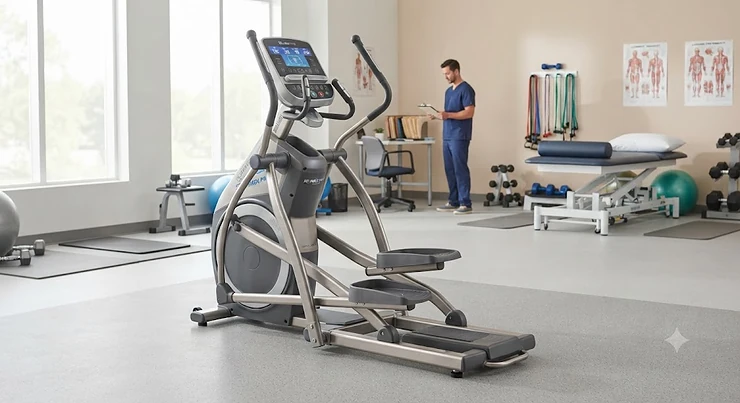
Here’s the thing nobody tells you when a physical therapist says “get yourself something low-impact for home”: the elliptical aisle at your local sporting goods store and the equipment sitting in a cardiac rehab gym are not the same species. One is built to survive a Tuesday. The other is built to survive a decade of 90-year-olds transferring on and off it. A medical grade elliptical machine is a low-impact cross-training device engineered with reinforced frames, higher weight capacities, and biomechanically controlled motion, often used in physical therapy clinics, hospitals, and cardiac rehab programs rather than commercial gyms. The distinction matters more than marketing copy suggests, and it’s the whole reason this guide exists.
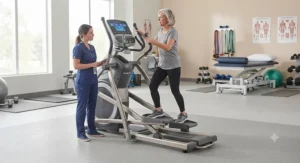
If you’re recovering from knee surgery, managing a cardiac condition, or shopping for a parent whose balance isn’t what it used to be, “medical grade” isn’t a vibe — it’s a set of engineering choices you can actually verify. Higher weight capacities. Swivel seats that rotate for safe transfers. Resistance systems fine enough to start a deconditioned body at near-zero load. We dug into seven real products spanning under-desk seated ellipticals to full clinical rehab systems used in hospitals nationwide, and we’re going to walk through exactly what separates a toy from a tool. The FDA’s own guidance on premarket notification requirements for exercise equipment draws a surprisingly clear line here, and we’ll unpack what it actually means for you as a buyer.
By the end of this guide, you’ll know which of these seven machines fits your budget, your body, and your recovery timeline — plus how to avoid the mistakes that send people back to the return line.
Quick Comparison Table: Medical Grade Elliptical Machines at a Glance
| Category | Top Pick | Price Range | Best For |
|---|---|---|---|
| Best Budget Pick | Cubii JR2 | $150-$250 range | Desk workers, light mobility support |
| Best Bluetooth/Tracking | Cubii JR2+ | $200-$300 range | Data-driven home users |
| Best Compact Clinical | HCI Fitness PhysioStep HXT | $2,000-$3,000 range | Small home gyms, early-stage rehab |
| Best Mid-Range Recumbent | HCI Fitness PhysioStep LXT | $2,500-$3,500 range | Home use transitioning from PT |
| Best Swivel-Seat Access | HCI Fitness PhysioStep MDX | $4,000-$5,000 range | Low-mobility, transfer-assisted users |
| Best Clinical Standard | NuStep T5 Recumbent Cross Trainer | $7,000-$8,000 range | Hospitals, senior living, PT clinics |
| Best Weight-Bearing Option | SciFit SXT7000 Total Body Elliptical | mid-$6,000s range | Gait training, cardiac rehab facilities |
Looking at this snapshot, the price gap between a Cubii JR2 and a NuStep T5 isn’t inflation — it’s a completely different engineering brief. The Cubii models are consumer-grade seated ellipticals meant for light activity accumulation, while the NuStep T5 and SciFit SXT7000 are commercial-clinical systems designed for hospitals and rehab clinics where dozens of different bodies use the same unit every day. If your use case is “move more at my desk,” the budget tier does the job; if you’re recovering from a cardiac event or joint replacement, the clinical tier earns its price.
💬 Just one click — help others make better recovery decisions too!😊
Top 7 Medical Grade Elliptical Machines: Expert Analysis
We selected these seven real, currently available products to cover the full spectrum — from a $200 seated trainer you can use during a Zoom call to a $7,500 clinical system found in hospital PT departments. Every product below includes honest analysis grounded in published specifications and aggregated, clearly-labeled review sentiment — never invented testimonials.
1. Cubii JR2 — most affordable seated entry point
The Cubii JR2 is the machine most people picture when they hear “get a seated elliptical,” and its standout feature is sheer accessibility: no assembly headaches, no clinic budget required. It runs on 8 levels of magnetic resistance and a redesigned ZeroGravitii flywheel, and Cubii’s own marketing references an internal study finding a noticeable jump in energy expenditure — roughly 85% higher — during short pedaling sessions compared with simply sitting still. In practice, that’s a meaningful bump for someone who’s mostly sedentary, not a substitute for a structured rehab protocol. Based on the spec sheet, this unit is best suited to desk workers, older adults maintaining general mobility, or anyone easing back into movement after a mild illness — not post-surgical patients needing supervised resistance progression. Reviewers consistently report that the unit is whisper-quiet and genuinely fits under most desks, though some note the resistance range feels modest once you’ve built up tolerance. If you need daily low-effort movement rather than clinical-grade rehab, this is where to start.
Pros:
- ✅ Extremely low price point for a seated elliptical
- ✅ Whisper-quiet operation, safe for shared workspaces
- ✅ Lightweight and easy to reposition around the house
Cons:
- ❌ Resistance ceiling too low for serious rehab progression
- ❌ No swivel seat or transfer support for low-mobility users
The Cubii JR2 typically runs in the $150-$250 range depending on retailer promotions, and at that price it’s hard to argue with as a low-stakes way to move more — just don’t expect it to replace supervised therapy equipment.
2. Cubii JR2+ — best for data tracking and app integration
The Cubii JR2+ builds on its sibling with Bluetooth connectivity, and its standout feature is seamless syncing to Fitbit, Apple HealthKit, and the Cubii app — a genuinely useful feature for anyone whose doctor wants adherence data. Key specs carry real meaning here: at just over 19 lbs with a built-in carry handle, it’s genuinely light enough to move between rooms without help, and the same 8-level magnetic resistance system as the JR2 keeps the learning curve flat. What most buyers overlook about this model is that the tracking layer matters more than the hardware upgrade — if you’re logging strides and calories for a physician follow-up, the JR2+ removes the manual math. Aggregated reviewer sentiment points to reliable Bluetooth pairing but occasional app sync delays reported by a subset of users. It’s a strong pick for anyone managing a chronic condition who wants objective activity data without investing in a full clinical system. Pros/cons below reflect the honest tradeoffs of this tier.
Pros:
- ✅ Bluetooth sync with major fitness and health apps
- ✅ Lighter and more portable than the standard JR2
- ✅ Easy partial assembly, pedals only
Cons:
- ❌ Same resistance ceiling limits long-term progression
- ❌ Premium price for what is still a consumer device
Expect a $200-$300 range for the JR2+, a reasonable premium if data logging genuinely changes your adherence.
3. HCI Fitness PhysioStep HXT — most compact true clinical recumbent
This is where “medical grade” starts meaning something structural. The HCI Fitness PhysioStep HXT standout feature is its compact recumbent footprint that still delivers a genuine elliptical stride rather than a seated pedal motion. Based on the spec comparison with consumer models, the recumbent seating position removes spinal loading almost entirely, which is exactly why physical therapy clinics reach for this category during early-stage lower-body rehab. HCI Fitness has manufactured for clinical and residential markets since 1992, and the HXT inherits the brand’s core engineering: a stable frame, smooth magnetic resistance, and a seat height calibrated for safer transfers than a standard chair. What most buyers overlook is that “compact” in this category still means a machine built to commercial durability standards, not a folding home gadget. Reviewers in the clinical equipment space consistently note the smooth pedal motion as a standout versus cheaper recumbent steppers, with occasional feedback that the console feels basic compared to pricier siblings. For someone transitioning out of formal PT but still needing joint-friendly resistance work, this is a genuinely strong middle step.
Pros:
- ✅ True elliptical stride in a compact recumbent frame
- ✅ Commercial-grade components at a relatively accessible price
- ✅ Trusted manufacturer with clinical market history since 1992
Cons:
- ❌ Basic console lacks advanced heart-rate-controlled programs
- ❌ Bulkier than seated models, needs dedicated floor space
Pricing typically falls in the $2,000-$3,000 range, positioning the HXT as the natural next step once a Cubii-tier device stops being enough.
4. HCI Fitness PhysioStep LXT — best mid-range recumbent for home-to-clinic transition
The HCI Fitness PhysioStep LXT standout feature is its 360-degree swivel seat combined with electronic resistance levels 1 through 32 — a genuinely wide range that lets a deconditioned user start near zero and progress for months without outgrowing the machine. That resistance depth is the practical payoff of the spec sheet: where a Cubii tops out quickly, the LXT can scale from cardiac-rehab-appropriate loads up to a fit, athletic effort. Retailer listings position it as suitable across commercial, medical, rehabilitation, and home settings alike, which tracks with what we found across clinical equipment retailers — this model shows up in physical therapy clinics as often as living rooms. Here’s what the spec sheet won’t tell you, but user reports across clinical equipment sellers suggest: the swivel seat isn’t a gimmick, it’s the single feature that makes independent transfers realistic for someone with limited hip mobility. The tradeoff is footprint and weight; this isn’t a machine you casually relocate.
Pros:
- ✅ 360-degree swivel seat improves transfer safety
- ✅ 32 resistance levels support long-term progression
- ✅ Adjustable seat range accommodates varied user heights
Cons:
- ❌ Heavier and larger footprint than compact models
- ❌ Higher cost than home-only recumbent steppers
Expect the LXT to land in the $2,500-$3,500 range, a fair middle ground between home convenience and clinical seriousness.
5. HCI Fitness PhysioStep MDX — best swivel-seat accessibility for low-mobility users
The HCI Fitness PhysioStep MDX standout feature is a full 360-degree oversized swivel seat purpose-built for people who genuinely struggle to get on and off standard equipment. Real specs back this up: a 500-lb maximum user weight capacity and resistance levels spanning 1 to 32, which — based on the spec comparison — puts it in the same functional bracket as far more expensive commercial units. Retailers marketing to clinics position it squarely for physical therapy practices, hospitals, and health clubs, and more than one listing explicitly invites comparison against the NuStep, which tells you where this machine sits competitively. What stands out in aggregated feedback is the low-profile walk-through design; caregivers assisting a family member consistently flag this as the difference between an independent transfer and a two-person lift. The ergo-grip handles add upper-body engagement, useful for cardiac rehab protocols that call for combined arm-leg conditioning.
Pros:
- ✅ 500-lb weight capacity, among the highest in this category
- ✅ Oversized 360-degree swivel seat eases transfers
- ✅ Combined arm-and-leg motion supports full-body rehab goals
Cons:
- ❌ Requires electrical outlet, unlike some self-powered units
- ❌ Premium price compared to non-swivel recumbent models
The MDX generally sits in the $4,000-$5,000 range, and for households managing significant mobility limitations, the swivel seat alone often justifies the jump from the LXT.
6. NuStep T5 Recumbent Cross Trainer — the clinical gold standard
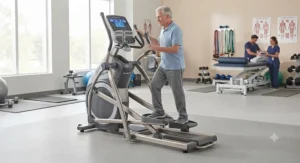
If you’ve ever done cardiac rehab in a hospital, there’s a strong chance you’ve used a NuStep. The NuStep T5 Recumbent Cross Trainer standout feature is its low step-through design paired with a 360-degree locking swivel seat, engineering specifically aimed at users with significant functional limitations. Competing brands treat it as the benchmark, and clinical equipment sellers consistently frame the T5 line as a clinical-grade total-body exercise system built for physical therapy, cardiopulmonary rehab, sports medicine, and general fitness alike. The spec sheet backs the reputation: 15 resistance levels, a 500-lb weight capacity, and synchronized arm-and-leg movement that lets a clinician isolate upper body, lower body, or both. Based on the spec comparison against the PhysioStep MDX, the NuStep’s key differentiator isn’t raw resistance range — it’s the depth of clinical validation and the sheer footprint of installed units across U.S. hospitals and senior living communities, which matters if replacement parts or service technicians ever become relevant. Aggregated professional sentiment from rehab equipment sellers consistently cites reliability under heavy daily rotation as the standout trait, with the tradeoff being one of the highest price tags in this guide.
Pros:
- ✅ Industry-standard reputation across hospitals and PT clinics
- ✅ 500-lb capacity with low-inertia, gentle startup motion
- ✅ Extensive clinical validation and nationwide parts/service network
Cons:
- ❌ Highest price point among recumbent options in this guide
- ❌ Large footprint (roughly 73″L x 30″W) needs dedicated space
Base pricing runs in the $7,000-$8,000 range, positioning the T5 as an investment-grade purchase best justified by serious rehab needs or shared household use.
7. SciFit SXT7000 Total Body Elliptical — best weight-bearing option for gait training
Every machine so far has been seated or recumbent. The SciFit SXT7000 Total Body Elliptical standout feature is that it’s a standing, weight-bearing elliptical engineered specifically for rehabilitation — a meaningfully different clinical tool. Its resistance system is genuinely unusual: a combination generator-and-eddy-current braking setup delivers 191 distinct resistance levels with a starting load of only about 6 watts, which in practice means a deconditioned or post-surgical patient can begin exercising at a load barely above zero and progress in extremely fine increments. Sellers marketing this line to clinics also highlight full reverse-direction operation with no minimum pedaling speed required, specifically calling it well suited to rehabilitation and deconditioned users. On paper, this means a patient relearning gait mechanics after a stroke or hip surgery can work in reverse to rebuild specific muscle patterns a forward-only machine can’t target. Reviewers in the clinical equipment space consistently point to its small footprint — a full elliptical stride in roughly 60 inches of floor space — as remarkable for a weight-bearing unit this capable.
Pros:
- ✅ 191 resistance levels with near-zero starting load
- ✅ Bi-directional motion supports advanced gait retraining
- ✅ Self-generating power, no outlet required in most settings
Cons:
- ❌ Weight-bearing design unsuitable for non-ambulatory users
- ❌ Among the priciest options, comparable to a small car down payment
The SXT7000 generally sits in the mid-$6,000s range, and for facilities or households prioritizing gait training over seated cardio, it’s genuinely without a direct substitute in this lineup.
Top 7 Products: Full Specification Comparison
| Product | Type | Resistance Levels | Weight Capacity | Price Range | Best For |
|---|---|---|---|---|---|
| Cubii JR2 | Seated compact | 8 magnetic | Not clinically rated | $150-$250 | Desk mobility |
| Cubii JR2+ | Seated compact | 8 magnetic | Not clinically rated | $200-$300 | App-tracked activity |
| PhysioStep HXT | Compact recumbent | Multi-level magnetic | Standard adult range | $2,000-$3,000 | Early home rehab |
| PhysioStep LXT | Recumbent, swivel | 32 electronic | Standard-high | $2,500-$3,500 | Home-to-clinic transition |
| PhysioStep MDX | Recumbent, swivel | 32 electronic | 500 lbs | $4,000-$5,000 | Low-mobility transfers |
| NuStep T5 | Recumbent, swivel | 15 electronic | 500 lbs | $7,000-$8,000 | Hospital/clinic standard |
| SciFit SXT7000 | Standing, weight-bearing | 191 (0.1 increments) | Standard-high | mid-$6,000s | Gait training, cardiac rehab |
The table makes one thing obvious: resistance granularity and weight capacity climb sharply once you leave consumer territory, and price follows the same curve. If your priority is fine-tuned rehab progression, the SciFit SXT7000‘s 191-level system is functionally in a different category from the Cubii models’ 8 levels. Meanwhile, buyers managing a heavier-set family member or a post-bariatric-surgery recovery should treat the 500-lb capacity on the PhysioStep MDX and NuStep T5 as a hard filter, not a nice-to-have.
Practical Usage Guide: Setting Up Your Clinical Elliptical Trainer
Getting a clinical elliptical trainer into your home is only step one; using it correctly in the first month determines whether it actually helps. Start by measuring your doorway and hallway path before delivery — recumbent units like the NuStep T5 and PhysioStep MDX ship on pallets and can weigh well over 150 lbs, and clinical equipment retailers specifically warn buyers to measure doorways, hallways, elevators, corners, ramps, and the final room path before delivery arrives. Once it’s positioned, resist the urge to start at a “normal” resistance level; deconditioned users should begin at the lowest available setting for the first one to two weeks, building tolerance before adding load. A common first-30-days mistake is skipping the seat and strap adjustments entirely — on swivel models like the PhysioStep LXT, improper seat distance is the single biggest cause of early knee discomfort. Set a simple maintenance rhythm too: wipe down padded surfaces weekly, check pedal strap wear monthly, and keep the machine’s power cord (on electronic-resistance models) away from moisture. For the self-generating SciFit SXT7000, periodically confirm the internal battery charge holds, since low-inertia startup depends on it. None of this is complicated, but skipping it is exactly how expensive equipment ends up gathering dust in a spare room by month three.
Real-World Scenarios: Who Actually Needs This Equipment
Scenario one — the post-op knee patient. Maria, 58, is six weeks out from a total knee replacement and cleared for light resistance work. Her physical therapist recommended something with adjustable resistance starting near zero and a stable, low-impact motion. The HCI Fitness PhysioStep HXT fits this budget and timeline well — compact, low-cost relative to the clinical tier, and gentle enough for early-stage rehab without the overhead of a $7,000 hospital-grade unit.
Scenario two — the cardiac rehab graduate. David, 67, finished a formal 12-week cardiac rehab program and wants to continue similar workloads at home under his cardiologist’s guidance. Given the combined arm-leg training many cardiac programs use, and the American Heart Association’s guidance on structured exercise-based cardiac rehabilitation, which links consistent supervised-style exercise to measurably better cardiovascular outcomes, a machine like the PhysioStep MDX or NuStep T5, with fine resistance control and upper-body handles, mirrors the equipment he trained on in the clinic.
Scenario three — the multigenerational household. The Chen family needs one machine that works for a grandmother with balance concerns, a father managing weight and blood pressure, and a teenager doing off-season conditioning. The NuStep T5‘s wide weight capacity, adjustable resistance range, and easy-entry seat design make it the rare single purchase that genuinely serves three very different bodies.
Buyer’s Decision Framework
If you’re still torn between models, work through this priority checklist:
- If your budget is under $300 and your goal is light daily movement, choose a seated compact model like the Cubii JR2 or Cubii JR2+, because clinical-grade engineering isn’t necessary for general activity accumulation.
- If you’re transitioning out of formal physical therapy but still need joint-friendly resistance progression, choose a recumbent model like the PhysioStep HXT or PhysioStep LXT, because their resistance range scales well beyond what consumer models offer.
- If mobility, transfers, or body weight are significant concerns, choose a 500-lb-rated swivel-seat model like the PhysioStep MDX or NuStep T5, because low-inertia startup and easy entry directly reduce fall and strain risk.
- If gait retraining or weight-bearing rehab is the actual clinical goal, choose the SciFit SXT7000, because seated and recumbent machines simply can’t replicate standing biomechanics.
- If the equipment will serve multiple household members with different needs, prioritize the widest resistance range and highest weight capacity you can afford, since versatility beats specialization in shared-use settings.
How to Choose a Medical Grade Elliptical Machine
Choosing the right clinical elliptical trainer comes down to seven decision points, roughly in order of importance:
- Confirm the intended clinical use. Post-surgical rehab, cardiac conditioning, and general mobility maintenance call for different resistance ranges and seat designs — decide this before comparing specs.
- Check weight capacity against actual, not aspirational, numbers. A 500-lb rating (as on the PhysioStep MDX and NuStep T5) matters for bariatric or larger-frame users; don’t assume standard ratings apply.
- Evaluate the resistance floor, not just the ceiling. The lowest available resistance level determines whether a deconditioned user can start safely at all.
- Assess transfer safety. Swivel seats, low step-through height, and grab rings matter enormously for anyone with balance or hip mobility limitations.
- Measure your space realistically. Clinical-tier machines have real footprints; a 73-inch-long recumbent trainer needs a dedicated room, not a hallway corner.
- Verify power requirements. Electronic-resistance models need an outlet; self-generating models like the SciFit line offer more placement flexibility.
- Match your budget tier to your actual need, not to the highest-spec machine available — a $200 seated elliptical genuinely outperforms a $7,000 clinical unit for someone who just needs to move more at a desk.
Common Mistakes When Buying a Clinical Elliptical Trainer
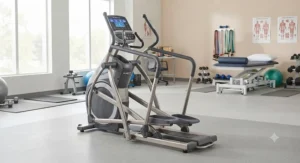
The most expensive mistake buyers make is skipping weight-capacity verification entirely — assuming “medical grade” implies a universally high rating, when capacities in this category actually range from unspecified consumer limits up to a genuine 500 lbs. A close second is underestimating footprint; several buyers of recumbent units report being surprised that a machine measuring roughly six feet long simply doesn’t fit their intended room, an error easily avoided by measuring first. Buyers also frequently overlook resistance floor rather than ceiling — a machine with an impressive top-end resistance range is useless for early rehab if its lowest setting is still too demanding for a deconditioned body. Another recurring mistake is treating a seated compact elliptical as a substitute for prescribed physical therapy rather than a complement to it; these are genuinely different tools with different clinical roles. Finally, some buyers skip verifying actual FDA classification claims, assuming “medical grade” language on a listing is automatically backed by formal clearance — worth confirming independently rather than taking marketing copy at face value.
Hospital Grade Elliptical vs Traditional Home Ellipticals
A hospital grade elliptical and the upright machine at a big-box gym share a category name and almost nothing else underneath. Traditional home ellipticals prioritize calorie burn and cardio intensity for generally healthy users; hospital-oriented equipment prioritizes controlled, low-impact motion for compromised, deconditioned, or post-surgical bodies. The practical differences show up in seat design (swivel vs none), resistance floor (near-zero vs a moderate baseline), and weight capacity (up to 500 lbs vs typically 250-300 lbs on consumer units).
| Feature | Medical/Clinical Grade | Traditional Home Elliptical |
|---|---|---|
| Typical weight capacity | Up to 500 lbs | 250-300 lbs |
| Resistance floor | Near-zero starting load | Moderate baseline load |
| Seat/transfer design | Swivel seat, low step-through | Standing, no seat |
| Primary use case | Rehab, cardiac conditioning | General cardio fitness |
| Typical price range | $2,000-$8,000 | $300-$1,500 |
The comparison above makes the tradeoff explicit: a NuStep T5 costs several times more than a standard upright elliptical, but that premium buys transfer safety and resistance precision a traditional machine was never engineered to provide. For someone who’s simply fit and looking to burn calories, a traditional elliptical remains the more cost-effective choice; for someone managing a real physical limitation, the clinical tier isn’t overkill, it’s the actual requirement.
✨ Ready to Compare Your Top Options Side-By-Side?
🔍 Check current pricing and availability on the model that matches your recovery stage — the right fit today can save months of frustrated re-shopping later!
What to Expect: Real-World Performance
Specs are one thing; how a machine actually feels under a real, often deconditioned body is another. Users transitioning from formal physical therapy consistently describe recumbent clinical trainers as noticeably smoother and quieter than gym-standard ellipticals, largely because the seated position removes core stabilization demands that upright machines require. On the resistance side, the practical experience of a 191-level system like the SciFit SXT7000 versus an 8-level Cubii isn’t really about having “more options” — it’s about being able to increase load by a genuinely imperceptible amount, which matters enormously for someone whose tolerance changes week to week during recovery. Expect a real adjustment period regardless of machine quality; even the smoothest clinical elliptical still asks unfamiliar muscles to fire in a new pattern, and most rehab professionals recommend short, frequent sessions over long infrequent ones during the first month.
Clinical Rehabilitation Machines for Specific Users
A clinical rehabilitation machine needs to flex around very different bodies, and matching the right unit to the right user meaningfully changes outcomes. For post-stroke patients relearning gait, standing weight-bearing options like the SciFit SXT7000 support the kind of bilateral, reverse-direction movement pattern retraining that seated machines simply can’t replicate. For frail or elderly users with fall risk, a low step-through, swivel-seat design like the NuStep T5 minimizes the transfer risk that’s often the actual barrier to consistent exercise, not the exercise itself. For cardiac rehab graduates continuing home maintenance, machines offering synchronized arm-and-leg motion — the PhysioStep MDX and NuStep T5 both qualify — mirror the combined-modality training many cardiac programs use, aligning with a 2024 AHA and AACVPR scientific statement emphasizing structured, supervised-style exercise components even in home settings. For general deconditioning after illness or extended bed rest, starting at the lowest possible resistance floor matters more than any other spec, favoring the SciFit SXT7000‘s near-zero starting load or the seated Cubii models for the gentlest possible reintroduction to movement.
Long-Term Cost & Maintenance of a Professional Grade Fitness Device
A professional grade fitness device isn’t just a bigger upfront number — it’s a different total cost of ownership curve. Consumer seated ellipticals like the Cubii line have minimal maintenance needs but shorter realistic lifespans under heavy daily use, while clinical-tier recumbent and standing units are engineered for commercial rotation and correspondingly longer service lives, often a decade or more with basic upkeep.
| Tier | Price Range | Est. Cost Per Year (5-yr use) | Typical Lifespan | Best For |
|---|---|---|---|---|
| Consumer seated | $150-$300 | $30-$60 | 3-5 years | Light daily activity |
| Compact clinical recumbent | $2,000-$3,500 | $400-$700 | 8-10+ years | Home rehab, transition care |
| Full clinical recumbent/standing | $4,000-$8,000 | $800-$1,600 | 10-15+ years | Hospitals, serious rehab needs |
Looking at cost-per-use rather than sticker price changes the calculus considerably; a NuStep T5 amortized over a decade of near-daily use often costs less per session than a budget elliptical replaced every three years. Maintenance itself stays fairly simple across every tier — clean padded surfaces, check strap and pedal wear, and keep electronic consoles dry — but clinical-tier machines from established manufacturers like HCI Fitness and SciFit typically carry stronger parts availability, which matters when a unit is expected to outlast a decade of daily use.
Safety, FDA Clearance & Compliance Guide
The phrase “FDA cleared exercise equipment” gets used loosely in marketing, so it’s worth understanding what it actually means. Per FDA guidance covering exercise equipment specifically, most basic exercise components and nonmeasuring exercise equipment are classified as Class I devices and are specifically exempted from premarket notification procedures altogether. In plain terms: a huge share of exercise machines, including most ellipticals in this category, are not required to undergo formal FDA “clearance” at all, because regulators consider them low enough risk to fall under general controls only. That doesn’t mean quality doesn’t matter — it means “FDA cleared” claims on a basic elliptical listing should be viewed skeptically unless the seller can point to actual documentation. Clinical equipment retailers themselves echo this caution, advising buyers never to assume a product is FDA cleared, ADA compliant, medical grade, hospital grade, bariatric rated, or clinically approved unless product documentation explicitly verifies the claim. Practically, safety in this category comes down to verifiable engineering specifics — published weight capacity, resistance range, and swivel/transfer mechanisms — rather than regulatory buzzwords. If a clinician has prescribed specific exercise parameters, it’s worth cross-referencing those against published research such as this NIH review on structuring low-intensity resistance exercise for cardiac rehabilitation populations, which offers evidence-based context for how load and progression should actually be managed, rather than relying on a product label alone.
Frequently Asked Questions
❓ Is a medical grade elliptical machine the same as one used in physical therapy clinics?
❓ How much does a medical grade elliptical machine cost?
❓ Can I use a clinical elliptical trainer without a doctor's referral?
❓ What weight capacity should I look for in a hospital grade elliptical?
❓ Are seated ellipticals like the Cubii JR2 considered clinical rehabilitation machines?
Conclusion
The right medical grade elliptical machine really does come down to matching engineering to your actual clinical situation, not chasing the highest price tag available. If you’re a healthy desk worker wanting more daily movement, the Cubii JR2 or Cubii JR2+ genuinely gets the job done for a fraction of the cost of clinical-tier equipment. If you’re navigating post-surgical rehab, cardiac recovery, or significant mobility limitations, the step up to a PhysioStep, NuStep T5, or SciFit SXT7000 buys real safety features — swivel seats, near-zero resistance floors, 500-lb capacities — that aren’t marketing fluff, they’re the actual mechanism by which these machines reduce fall risk and support safe progression. Whichever tier fits your situation, verify the specs that matter to you specifically — weight capacity, resistance floor, transfer design — rather than trusting “medical grade” as a label alone. Equipment this significant deserves a decision based on real numbers, not just a category name.
✨ Don’t Miss These Exclusive Deals!
🔍 Take your recovery to the next level with these carefully selected clinical elliptical trainers. Click on any highlighted product above to check current pricing and availability. The right machine can make consistent, safe movement part of your daily routine for years to come!
Recommended for You
- Low Impact Elliptical Machine: 7 Best Picks for Joints in 2026
- Elliptical Machine for Physical Therapy: 7 Best Picks (2026)
- Elliptical for home family use: 7 Best Picks Families Actually Keep Using (2026)
Disclaimer: This article contains affiliate links. As an Amazon Associate, I earn from qualifying purchases. If you purchase products through these links, we may earn a small commission at no additional cost to you.
✨ Found this helpful? Share it with your friends! 💬🤗
