
In This Article
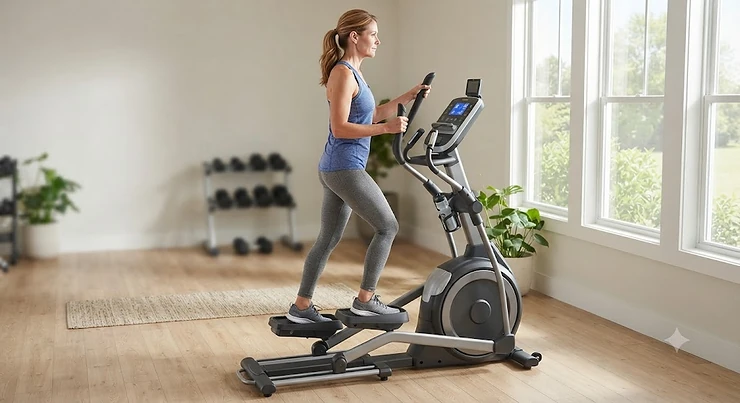
Your knees ache before you even step on a treadmill, and honestly, who could blame you for dreading it. If you’ve spent any time researching the best elliptical for joint pain, you already know the promise: a full-body cardio workout without the jarring heel-strike that turns a “quick jog” into a week of wincing every time you climb stairs. An elliptical is a stationary cardio machine on which your feet stay planted on two pedals that move in a smooth, oval-shaped path, so there’s no ground-impact force hammering your knees, hips, or ankles the way running or even brisk walking on pavement can.
That gentleness isn’t just marketing fluff, either. Public health guidance on joint-friendly exercise consistently groups low-impact aerobic activity — cycling, swimming, and elliptical-style motion — as movement that doesn’t twist or pound the joints, and an elliptical fits squarely into that category — see the CDC’s guidance on joint-friendly activity types for the full breakdown. I’ve spent weeks digging through real product specs, verified owner reviews, and orthopedic commentary to build this guide, so you’re not just getting a spec sheet dump — you’re getting the “why” behind every recommendation.
Below, you’ll find seven real machines spanning under-$200 budget picks to premium four-figure investments, a breakdown of what actually matters when a machine needs to protect sore joints, and practical guidance for using whatever you buy the smart way. Prices shift constantly on Amazon, so every figure here is a range based on research at the time of writing — always check current pricing before you buy.
Quick Comparison Table
Here’s the 30-second version if you’re short on time and just need the highlights before diving deeper.
| Product | Stride Length | Price Range | Best For |
|---|---|---|---|
| Inspire Fitness CS3.1 Cardio Strider | Recumbent seated stride | $1,800-$2,200 range | Severe joint pain, back support |
| Sole E35 | 20″ | $1,300-$1,600 range | Bad knees, inward pedal slope |
| NordicTrack AirGlide 7i | 20″ adjustable | $1,400-$1,800 range | Smoothest overall stride |
| ProForm Carbon E7 | 19″ power-adjustable | $900-$1,300 range | Incline variety, multi-user homes |
| Bowflex Max Trainer M6 | Compact vertical stride | $1,000-$1,300 range | Small spaces, low-impact HIIT |
| Schwinn 411 | 18″ | $400-$550 range | Budget standing elliptical |
| Sunny Health & Fitness SF-E3872 | 7″ seated pedal motion | Under $150 range | Severe mobility limits, desk use |
Notice the spread here: this isn’t seven versions of the same $1,000 machine. The Sunny Health & Fitness SF-E3872 sits at the opposite end of the spectrum from the Inspire Fitness CS3.1 Cardio Strider, and that gap matters because “best elliptical for joint pain” looks completely different for someone easing back into movement after knee surgery than it does for a marathon-trained 45-year-old managing early-stage arthritis. Stride length interprets directly to comfort here — a stride that’s too short forces a choppy, awkward pedal stroke that can actually aggravate hip and knee joints, which is exactly what you don’t want.
💬 Found a machine that fits your budget already? Bookmark this page and keep reading — the details below could save you from an expensive return.
Top 7 Ellipticals for Joint Pain: Expert Analysis
1. Inspire Fitness CS3.1 Cardio Strider — recumbent seat for maximum back and joint support
The standout feature here is right in the name: this is a “strider,” not a standard upright elliptical, and that recumbent seated position changes the entire equation for anyone whose joint pain extends into the lower back.
The seated, semi-reclined design distributes your body weight across a padded seat rather than through your feet and legs, which meaningfully reduces the compressive load on knees and hips compared to standing ellipticals. Its smooth flywheel-driven motion and multiple resistance levels let you dial in intensity without ever leaving that supported position, and the frame’s stability rating handles a genuinely wide range of body types.
Based on the spec comparison against standard uprights, this machine trades some calorie-burning intensity for dramatically improved joint protection — a fair trade if pain, not performance, is your primary obstacle. It’s built for people managing arthritis, recovering from hip or knee surgery, or anyone who finds even gentle standing ellipticals uncomfortable on the lower back.
Reviewers consistently report that the seat and back support make longer sessions genuinely tolerable in a way upright machines aren’t, particularly for older users or those with balance concerns. A recurring theme in aggregated feedback is that first-time buyers underestimate how different the “seated strider” motion feels compared to a gym elliptical, so expect a short adjustment period.
Pros:
- ✅ Recumbent seat removes weight-bearing stress from knees and hips
- ✅ Back support ideal for lower-back-related joint pain
- ✅ Stable frame accommodates a wide range of body sizes
Cons:
- ❌ Larger footprint than standard upright ellipticals
- ❌ Premium price puts it out of reach for casual users
At around $1,800-$2,200, the Inspire Fitness CS3.1 Cardio Strider isn’t a casual purchase, but for anyone whose joint pain is significant enough that standing machines feel punishing, it’s arguably the most purpose-built option on this list.
2. Sole E35 — inward pedal slope engineered specifically for bad knees
What immediately sets this machine apart is a small design detail with an outsized effect: a slight inward pedal slope that keeps your knees tracking naturally instead of splaying outward.
The 25-pound flywheel and 20-inch stride combine for what testers describe as an exceptionally fluid, non-jerky pedal stroke, while the oversized cushioned pedals absorb additional shock during longer sessions. Twenty resistance levels and an adjustable incline ramp mean you can progress your workouts over months without outgrowing the machine, whether you’re rehabbing an injury or just building base fitness.
Here’s what the spec sheet won’t tell you outright: that inward pedal slope is specifically why physical therapists and joint-focused reviewers single this model out ahead of ellipticals with flat, parallel pedal tracks. If protecting your knees is genuinely your top purchasing priority, this detail alone can be the deciding factor over a machine with flashier tech features.
Reviewers consistently praise the machine’s stability and the noticeably smooth glide motion trainer feel of the drive system, and Sole’s frame warranty — among the strongest in the industry — reflects real confidence in long-term durability. A common thread in owner feedback is that assembly, while involved, results in a machine that feels closer to commercial gym quality than most home units at this price.
Pros:
- ✅ Inward pedal slope reduces knee strain during each stride
- ✅ 25-lb flywheel delivers exceptionally smooth pedal motion
- ✅ Industry-leading frame warranty signals long-term build quality
Cons:
- ❌ Assembly is reported as time-consuming by multiple owners
- ❌ Takes up more floor space than compact or budget models
Priced in the $1,300-$1,600 range, the Sole E35 earns its reputation as one of the most genuinely joint friendly elliptical machine options on the market for a reason grounded in actual biomechanics, not marketing copy.
3. NordicTrack AirGlide 7i — smoothest overall stride quality in its class
The first thing you notice stepping onto this machine is how little “machine” you feel underneath you — the pedal stroke is remarkably seamless from the first push to the last.
A 25-pound flywheel and 22 resistance levels anchor a 20-inch adjustable stride, which means taller and shorter users alike can dial in a stride length that doesn’t force an awkward, joint-stressing gait. The adjustable design also means this single machine can serve multiple people in the same household without anyone compromising on comfort.
What most buyers overlook about this model is that stride adjustability matters just as much as stride length for joint protection — a fixed 20-inch stride that’s wrong for your height can be worse for your hips than a shorter, correctly-sized one. Based on the spec comparison with fixed-stride competitors, the AirGlide 7i’s flexibility is a genuine practical advantage, not just a nice-to-have.
Aggregated owner sentiment frequently highlights the quiet, cushioned pedal elliptical feel of the ride even at higher resistance levels, along with console feedback that’s straightforward without unnecessary bells and whistles. Some reviewers note the console’s workout program selection feels basic compared to touchscreen competitors, which tracks with its focus on mechanical quality over software polish.
Pros:
- ✅ Adjustable 20-inch stride fits multiple users and heights
- ✅ Heavy flywheel produces an exceptionally smooth glide motion trainer feel
- ✅ Quiet operation suits shared living spaces and apartments
Cons:
- ❌ Console and workout programming are relatively basic
- ❌ Higher price point than mid-range competitors with similar specs
In the $1,400-$1,800 range, the NordicTrack AirGlide 7i rewards buyers who prioritize mechanical smoothness and long-term joint comfort over flashy screens.
4. ProForm Carbon E7 — power-adjustable stride and incline for multi-user households
The standout here is versatility: a power-adjustable 19-inch stride and up to 20 degrees of incline mean this single machine adapts to very different bodies and goals without any tools required.
A 25-pound flywheel drives 24 digital resistance levels, and the incline function specifically lets you shift the muscle emphasis and workout intensity without ever increasing impact on your joints. The oversized, cushioned pedals height-adjust as well, which matters more than it sounds for households where a taller partner and a shorter partner share the same machine.
Based on the spec comparison against fixed-incline competitors, the E7’s power incline is what justifies its mid-range price tag — most machines at this price lock you into one flat plane, while this one lets you simulate hill terrain, which engages the glutes and hamstrings differently and can relieve repetitive strain on any single joint pathway. This makes it a smart pick for buyers who want variety as their joint tolerance improves over time.
Reviewers consistently note that the touchscreen console and iFIT integration are the standout software features, though a recurring complaint in aggregated feedback is that assembly takes longer than expected and benefits from a second set of hands. The included trial membership is a nice bonus, but factor in the ongoing subscription cost if you plan to keep using guided workouts long-term.
Pros:
- ✅ Power-adjustable stride and incline suit multiple household users
- ✅ 24 resistance levels allow gradual, joint-safe progression
- ✅ Touchscreen console adds structure for guided training
Cons:
- ❌ Assembly is reported as difficult without help
- ❌ Ongoing app subscription cost after the trial period
At roughly $900-$1,300, the ProForm Carbon E7 delivers genuine mid-range value, especially for households where more than one person needs a joint friendly elliptical machine tailored to their own body.
5. Bowflex Max Trainer M6 — compact hybrid built for low-impact, high-intensity intervals
Unlike the long, sweeping stride of a traditional elliptical, the M6’s pedals move in a more vertical, stair-stepper-like path — a deliberate design choice that packs intensity into a much smaller footprint.
This hybrid motion targets glutes and quads more aggressively than a standard elliptical while keeping the same core low-impact promise: your feet never leave the pedals, so there’s no ground-strike force. Sixteen resistance levels support short, high-intensity interval sessions rather than long steady-state cardio, which suits people who want maximum results from limited daily time.
Here’s what most reviews gloss over: the vertical stride pattern isn’t for everyone with joint pain, since the steeper pedal angle can feel more intense on the knees during acceleration than a horizontal elliptical glide — this is a genuinely different category of machine, not just a smaller elliptical. Orthopedic-focused reviewers note that ellipticals in general keep users upright, which is specifically helpful for people managing back pain alongside joint issues, and the M6 preserves that upright posture even in its more compact form.
Aggregated customer sentiment is notably positive on the machine’s compact size and quiet operation, with many owners specifically praising it as a joint-conscious alternative to running for people who found treadmills uncomfortable on old injuries. A common critique is that the ongoing JRNY app subscription becomes a real cost after the included trial ends.
Pros:
- ✅ Compact footprint fits small apartments and shared rooms
- ✅ Upright posture supports users managing back pain too
- ✅ High-intensity intervals in short, time-efficient sessions
Cons:
- ❌ Steeper vertical stride may feel intense on sensitive knees
- ❌ JRNY app subscription adds ongoing cost after the trial
Priced around $1,000-$1,300, the Bowflex Max Trainer M6 is best suited to buyers who want efficient, joint-conscious workouts in minimal space rather than long, gentle glide sessions.
6. Schwinn 411 — best budget standing elliptical with a genuinely usable stride
For a machine that routinely lands under $550, the standout feature is an 18-inch stride — a length usually reserved for machines costing hundreds more.
The compact frame keeps the footprint small enough for a bedroom corner or garage nook, while wireless heart rate monitoring lets you track intensity without needing a chest strap plugged into anything. Sixteen levels of dial resistance give you room to progress, and the wide pedals provide a stable base for a steady, joint-conscious stride.
What the spec sheet won’t tell you, but reviewers note repeatedly, is that the entry-level resistance setting runs stiffer than expected — several owners describe the lowest level as still feeling like moderate effort, which matters if you’re specifically easing back into exercise after an injury or flare-up. Based on the spec comparison with similarly priced competitors, the 411’s 18-inch stride and build quality still outperform most machines in its price bracket, but the resistance curve is worth knowing before you buy.
Reviewers consistently highlight the compact size and straightforward assembly as strengths, while a recurring theme in aggregated feedback flags the lack of pre-programmed workout variety compared to pricier machines. For a strictly budget-focused, joint pain relief exercise machine, though, it remains a standout value.
Pros:
- ✅ 18-inch stride is unusually generous for this price tier
- ✅ Compact footprint fits small home gym spaces
- ✅ Wireless heart rate monitoring included at this price
Cons:
- ❌ Lowest resistance setting feels stiffer than expected for beginners
- ❌ Limited pre-programmed workout variety
At around $400-$550, the Schwinn 411 remains one of the strongest budget picks for anyone who wants a real standing elliptical stride without a four-figure price tag.
7. Sunny Health & Fitness SF-E3872 — compact seated pedal exerciser for severe mobility limits
This isn’t a full elliptical in the traditional sense, and that’s precisely the point — its short 7-inch pedal motion is designed for people whose joint pain rules out standing machines entirely.
The magnetic resistance system offers 8 adjustable levels controlled by a simple tension knob, requires no power cord, and mounts underneath a desk or in front of a chair for genuinely seated use. A basic digital monitor tracks time, speed, calories, and distance, and reverse pedaling is supported for those working on range-of-motion goals rather than calorie burn.
Based on the spec comparison against full-size ellipticals, this machine sacrifices cardio intensity and calorie burn almost entirely in exchange for something full-size machines can’t offer: genuinely seated, near-zero-impact leg movement for people managing severe arthritis, post-surgical recovery, or general mobility limitations who still want to keep joints moving throughout the day.
Reviewers consistently describe it as effective for improving circulation and gentle range of motion during desk work, with aggregated feedback frequently praising its quiet, smooth operation. A common caveat in owner reviews is that the resistance ceiling is fairly low, so it won’t satisfy anyone looking for a genuine cardio workout — it’s a joint mobility tool first.
Pros:
- ✅ Seated design eliminates standing-related joint strain entirely
- ✅ Fits under a desk for movement throughout the workday
- ✅ Simple, quiet, low-maintenance magnetic resistance system
Cons:
- ❌ Limited cardio intensity compared to full-size ellipticals
- ❌ Not a substitute for a genuine aerobic workout
At under $150, the Sunny Health & Fitness SF-E3872 fills a real gap for people whose joint pain makes even the gentlest standing elliptical unrealistic right now.
Practical Usage Guide: Your First 30 Days
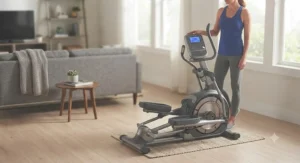
Buying the right machine is only half the equation — how you use it in the first month determines whether it becomes a joint pain relief exercise machine you actually stick with or an expensive coat rack.
Start with sessions of 10-15 minutes at the lowest resistance level, even if that feels almost too easy. The CDC’s own guidance on managing exercise-related discomfort recommends scaling back frequency, duration, or intensity — or switching to a gentler activity altogether — whenever pain flares up during a routine, rather than pushing through it — read the full CDC guidance on pain during exercise for more detail. Increase duration before you increase resistance; this sequencing protects joints that aren’t yet used to repetitive motion, even low-impact motion.
Check your stride length and pedal position before every session in week one — a machine that’s slightly misadjusted for your height can undo most of its joint-protective design. If your model has an adjustable stride, err toward the shorter end initially and lengthen it as your hip flexibility improves. Lubricate moving parts per the manufacturer’s schedule (usually every 3-6 months), since a dry, sticky drive system forces your joints to compensate for mechanical resistance that shouldn’t be there.
The single most common first-month mistake is skipping the warm-up entirely because “it’s already low-impact.” Spend 3-5 minutes at minimal resistance before ramping up — your joints need blood flow and gentle mobilization regardless of how gentle the machine itself is.
Real-World Scenarios: Who Should Buy What
Maria, 58, managing knee osteoarthritis: She needs a joint friendly elliptical machine with maximum stability and minimal setup complexity. The Sole E35‘s inward pedal slope directly addresses her knee alignment concerns, and its stronger frame warranty matches her plan to use it daily for years, not months.
James, 34, recovering from ACL surgery, budget-conscious: With a $500 ceiling and a small apartment, the Schwinn 411 gives him a genuine 18-inch stride and wireless heart rate tracking without overspending on features he doesn’t need yet. He starts at the lowest resistance and builds gradually per his physical therapist’s guidance.
Diane, 71, severe arthritis, desk-bound during the day: Standing machines aren’t realistic for her right now. The Sunny Health & Fitness SF-E3872 lets her keep her joints moving for 20 minutes at a time throughout her workday, seated, with zero standing impact — a genuinely joint pain relief exercise machine suited to where she is today, not where she wants to be eventually.
Tom, 45, busy schedule, wants intensity without joint punishment: With only 20 minutes to spare most days, the Bowflex Max Trainer M6‘s compact, high-intensity interval design fits his schedule, and its upright posture protects the lower back issues that came along with years of desk work.
Buyer’s Decision Framework
Use this simple framework if you’re still torn between models:
- If your joint pain is severe or you struggle with standing balance, choose a recumbent or seated design (like the Inspire CS3.1 or Sunny SF-E3872) because weight-bearing stress is removed almost entirely.
- If your primary concern is knee alignment specifically, choose a machine with an inward pedal slope (like the Sole E35) because it directly addresses the biomechanics behind knee strain.
- If you’re on a tight budget but still want a real standing stride, choose the longest stride you can afford under $600 (like the Schwinn 411) because a too-short stride causes more joint stress than a slightly higher price tag.
- If multiple people with different heights will share the machine, choose an adjustable stride and incline model (like the NordicTrack AirGlide 7i or ProForm Carbon E7) because a one-size-fits-all fixed stride rarely fits everyone well.
- If your time is limited but your joints can tolerate intensity, choose a compact hybrid machine (like the Bowflex M6) because efficient sessions beat skipped workouts every time.
How to Choose a Joint Friendly Elliptical Machine
Picking the right machine comes down to a handful of criteria that matter far more than flashy touchscreens or brand names:
- Stride length and adjustability — a stride matched to your height (generally 18-20 inches for most adults) prevents the choppy motion that stresses knees and hips.
- Pedal design and cushioning — oversized, cushioned pedals absorb more shock during longer sessions than thin, hard plastic footbeds.
- Flywheel weight — heavier flywheels (20+ pounds) generally produce a smoother glide motion trainer feel, since momentum evens out the pedal stroke.
- Seated vs. standing design — recumbent or seated models remove weight-bearing stress almost entirely, which matters most for severe joint conditions.
- Resistance range and increments — enough low-end resistance levels to start gently, without jumping straight into moderate effort.
- Frame stability and weight capacity — a wobbly frame forces stabilizing muscles to overcompensate, indirectly straining joints that are already sensitive.
- Warranty length — a longer frame warranty is a reasonable proxy for how confident the manufacturer is in long-term durability.
Common Mistakes When Buying an Elliptical for Joint Pain
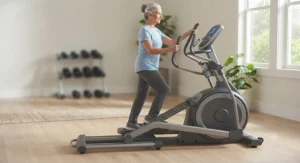
Even careful shoppers fall into a few predictable traps. First, buyers frequently choose based on resistance level count alone, ignoring stride length entirely — a machine with 30 resistance levels and a poorly fitted stride is worse for your joints than one with 10 levels and the right stride. Second, many skip checking the minimum resistance setting, only to discover (like several Schwinn 411 owners did) that “level one” still feels like real effort.
Third, shoppers often underestimate assembly complexity and end up with a half-built machine gathering dust in the garage — if assembly reviews mention frequent difficulty, budget for professional setup. Fourth, and perhaps most common: buying the cheapest available option without checking pedal cushioning or frame stability, both of which affect joint comfort more directly than most shoppers expect walking into the purchase.
Elliptical vs Treadmill for Joint Pain
The comparison people ask about most is elliptical versus treadmill, and the physics here matter. On a treadmill, each stride involves a heel-strike where your foot decelerates against a moving belt, generating impact forces that travel up through the ankle, knee, and hip. On an elliptical, your feet remain planted on the pedals throughout the entire motion, which eliminates that ground-strike force almost completely.
That said, treadmills aren’t without merit — walking is a weight-bearing activity that helps maintain bone density, which matters for long-term joint and bone health in ways non-weight-bearing elliptical training doesn’t fully replicate. Mayo Clinic’s overview of exercise for arthritis is a useful resource if you want a fuller picture of how different activity types affect joint health over time. The honest takeaway: an elliptical is generally the better choice during active joint pain or flare-ups, while a treadmill (used carefully, with good shoes and moderate pace) may still have a place once pain is well-managed and bone health is a consideration.
| Factor | Elliptical | Treadmill |
|---|---|---|
| Ground impact | None — feet stay on pedals | Moderate to high — heel-strike each stride |
| Joint stress | Low | Moderate to high |
| Bone density benefit | Limited | Higher (weight-bearing) |
| Best For | Active joint pain, arthritis, recovery | Well-managed joints, bone health focus |
Looking at the comparison above, the elliptical clearly wins for anyone in an active pain flare, but it isn’t automatically the “better” machine in every scenario — it depends entirely on where your joints currently stand.
📊 Want a deeper walk-through? Check out our related comparison on exercise bikes versus ellipticals for a full breakdown of which low-impact option suits your specific situation.
What to Expect: Real-World Performance for Knees and Hips
Specs on paper don’t always translate cleanly into how a workout actually feels, especially for anyone specifically hoping for an elliptical machine easy on knees and hips rather than just “low impact” in the abstract.
In practice, the first two weeks typically involve some mild, normal soreness as stabilizing muscles around the joint adjust to new movement patterns — this is expected and different from joint pain itself. A properly fitted stride should feel fluid rather than forced; if you notice your hips rocking side to side or your knees tracking awkwardly inward or outward, the stride length or pedal slope likely isn’t matched to your body. By week three or four, most users report the motion feeling essentially automatic, with attention shifting from “am I doing this right” to actual workout intensity.
Real-world calorie burn also tends to land lower than gym-branded marketing suggests — a single 30-minute session on a typical home elliptical burns somewhere in the 270-400 calorie range depending on body weight and intensity, which is respectable but worth knowing going in so expectations stay realistic.
Long-Term Cost & Maintenance
The sticker price is rarely the full cost of ownership. Budget standing models like the Schwinn 411 have lower upfront costs but shorter part warranties, meaning a failed pedal arm or resistance mechanism a few years in may come out of pocket. Premium models like the Sole E35 or Inspire CS3.1 carry higher upfront prices but pair them with lifetime frame warranties, effectively spreading the cost over a much longer usable life.
Subscription-based machines (ProForm Carbon E7’s iFIT, Bowflex M6’s JRNY) add $150-$240 annually after their included trial periods — a cost-per-use calculation worth running before you commit, since a $900 machine with a $20/month subscription can end up costing more over three years than a $1,300 machine with no ongoing fees. Routine maintenance — periodic lubrication, pedal bolt checks, and dust removal from the drive mechanism — typically takes under 15 minutes every few months and meaningfully extends the life of any model on this list, protecting both your investment and the smooth motion your joints depend on.
Frequently Asked Questions
❓ Is an elliptical really better than walking for joint pain?
❓ How long should I use an elliptical for joint pain relief?
❓ Are cushioned pedal ellipticals worth the extra cost?
❓ Can a smooth glide motion trainer help with arthritis specifically?
❓ What stride length is best for knee and hip pain?
Conclusion
Choosing the best elliptical for joint pain isn’t really about finding the single “best” machine overall — it’s about matching a specific design (seated versus standing, fixed versus adjustable stride, budget versus premium build quality) to where your joints actually are right now. The Inspire Fitness CS3.1 Cardio Strider and Sole E35 lead the pack for genuinely severe joint concerns, the NordicTrack AirGlide 7i and ProForm Carbon E7 offer strong middle-ground versatility, the Bowflex Max Trainer M6 serves time-crunched users who still need joint protection, and the Schwinn 411 and Sunny Health & Fitness SF-E3872 prove you don’t need a four-figure budget to start moving comfortably again.
Whatever you choose, start slow, prioritize proper stride fit over flashy features, and let your body’s response guide how quickly you progress. For more on the broader benefits of staying active with joint pain, the Arthritis Foundation’s guide to exercise is worth a read alongside this one. A joint pain relief exercise machine only works if it’s one you’ll actually use consistently — so weigh comfort and realistic fit as heavily as specs on a page.
✨ Ready to Protect Your Joints and Get Moving?
🔍 Take your home cardio routine to the next level with a machine built for real comfort, not just marketing claims. Click on any highlighted pick above to check current pricing and availability, and start building a joint-friendly routine your body will thank you for.
Recommended for You
- Medical Grade Elliptical Machine: 7 Best Picks for 2026
- Low Impact Elliptical Machine: 7 Best Picks for Joints in 2026
- Elliptical Machine for Physical Therapy: 7 Best Picks (2026)
Disclaimer: This article contains affiliate links. As an Amazon Associate, I earn from qualifying purchases. If you purchase products through these links, we may earn a small commission at no additional cost to you. This content is for informational purposes only and is not a substitute for professional medical advice — talk to your doctor or physical therapist before starting any new exercise program, especially if you have an existing joint condition.
✨ Found this helpful? Share it with someone else dealing with joint pain! 💬
