
In This Article
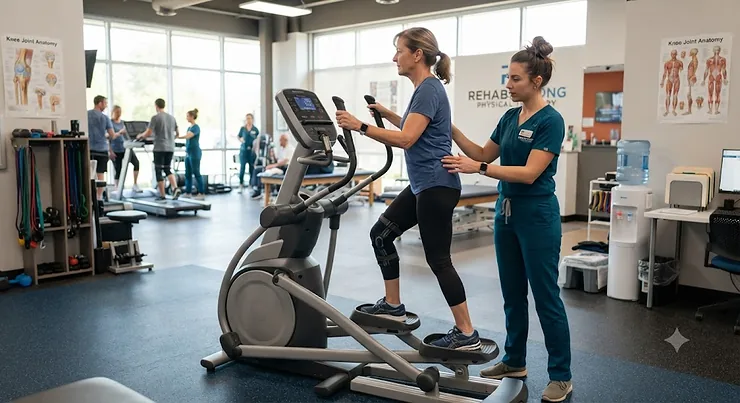
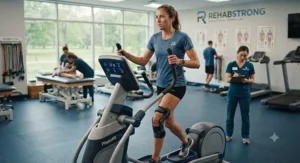
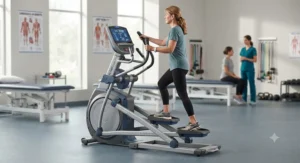
Recovering a joint is a strange kind of patience test. You want to move. Your knee, your hip, your surgeon, and your physical therapist all have slightly different opinions about how much. An elliptical machine for physical therapy sits right in the sweet spot of that disagreement — it’s a stationary cardio machine that mimics walking or stair-climbing through a smooth, oval-shaped pedal path, letting your joints travel through a full range of motion without the jarring heel-strike of a treadmill or sidewalk. That gliding motion is exactly why physical therapists have quietly used ellipticals, recumbent steppers, and seated cross-trainers in clinics for decades, long before “low-impact cardio” became a wellness buzzword.
This guide walks through seven real, currently available machines spanning seated under-desk units to clinical-grade recumbent cross-trainers, based on published specifications and aggregated customer and clinical feedback. According to physical therapist Corey Goldman of Harvard-affiliated Spaulding Rehabilitation, in an overview from Harvard Health Publishing, ellipticals offer a low-impact cardiovascular workout that engages both the upper and lower body at once, which is a big part of why they show up so often in rehab settings. We’ll cover which machines suit which recovery stage, what specs actually matter versus what’s marketing noise, and how to avoid the buying mistakes that leave people with an elliptical gathering dust in the garage. None of the pricing below reflects exact live figures — always check current price and availability before buying, since retailers adjust them constantly.
What Is an Elliptical Machine for Physical Therapy?
An elliptical machine for physical therapy is a low-impact cardio device — standing, seated, or recumbent — engineered to move a joint through a controlled, repeatable arc while minimizing ground-reaction force. Unlike a standard gym elliptical, PT-oriented models emphasize adjustable resistance, shorter or customizable stride lengths, safe entry/exit, and stability features suited to post-surgical, arthritic, or mobility-limited users.
That definition matters because “elliptical” gets used loosely. A seated pedal exerciser, a recumbent cross-trainer, and a standing cross-trainer are all elliptical-family machines, but they serve very different rehab stages — which is exactly why this list includes all three categories rather than assuming one shape fits every recovery timeline.
Quick Comparison Table
| Machine | Type | Best For | Price Range |
|---|---|---|---|
| Cubii JR2 | Seated, under-desk | Beginners & desk-bound rehab | Around $200-$260 |
| Sunny Health & Fitness SF-E3872 | Seated, under-desk | Tightest budget | Around $140-$170 |
| Schwinn 411 | Standing, compact | Small home gyms, general rehab | $450-$600 range |
| Teeter FreeStep LT1 | Recumbent stepper | Bad knees, post-op recovery | $900-$1,150 range |
| Body-Solid Endurance E400 | Standing, full-size | Mid-range home rehab | $1,500-$1,900 range |
| SportsArt E80C | Standing, professional | Clinic-quality at home | $2,500-$3,500 range |
| NuStep T4r | Recumbent cross-trainer | Clinical, wheelchair-adjacent transfers | Several thousand, varies by dealer |
A glance at this table tells you most of what you need to know about positioning: price climbs roughly in step with stability, weight capacity, and how “clinical” the machine feels, and the seated options at the top aren’t lesser versions of the standing ones at the bottom — they solve a completely different problem (balance limitations, standing tolerance) that no amount of extra resistance levels can fix. If you’re early in recovery and can’t safely stand for ten minutes, the priciest standing elliptical on this list is the wrong purchase regardless of budget. The rest of this guide breaks down why, machine by machine.
“Just one click — help others make better buying decisions too!” 😊
Top 7 Best Elliptical for Rehab: Expert Analysis
Here’s the honest, spec-and-review-grounded breakdown of seven real machines, organized loosely from most accessible to most clinical.
1. Cubii JR2 — best budget seated elliptical for rehab
The Cubii JR2 is a compact, under-desk seated elliptical, and its biggest selling point is that “seated” isn’t a compromise here — it’s the entire design philosophy. You pedal from a chair, couch, or wheelchair-adjacent seat rather than standing and bearing weight through the knee. It runs on eight levels of magnetic resistance paired with a newly redesigned ZeroGravitii Flywheel for smoother rotation, and the LCD console tracks strides, distance, time, and calories so a patient or therapist can log measurable progress session to session. Based on the spec sheet, the belt-driven magnetic system means near-silent operation — a real plus if you’re doing reps during a work call or in a shared living space.
Who should care: this is squarely for early-stage rehab, seniors with balance concerns, or anyone whose therapist has prescribed seated, low-load cardio before progressing to standing work. It won’t replace a full standing elliptical for someone cleared for weight-bearing exercise, and that’s fine — it isn’t trying to. Notably, a predecessor Cubii model (the JR1) was the actual device used in a Shirley Ryan AbilityLab clinical trial registered on ClinicalTrials.gov studying seated elliptical training for knee osteoarthritis, which is about as strong a real-world credibility signal as a consumer rehab product gets. Aggregated buyer feedback frequently describes the JR2 as a “game-changer” for people easing back into movement, with praise centered on portability and quiet operation, though a portion of reviewers note the resistance range feels limited for anyone who progresses past light rehab intensity.
Pros:
- ✅ Fully seated design removes standing weight-bearing entirely
- ✅ Studied in a real knee osteoarthritis clinical trial (JR1 predecessor)
- ✅ Whisper-quiet flywheel works during calls or shared spaces
Cons:
- ❌ Resistance ceiling may feel low once you progress past early rehab
- ❌ Max user weight capacity is lower than standing alternatives
Priced around $200-$260 at the time of research, the JR2 is an easy entry point if your PT has specifically prescribed seated, joint-sparing cardio — check current price before ordering, since Cubii periodically runs its own promotions.
2. Sunny Health & Fitness SF-E3872 — cheapest true under-desk option
If the Cubii JR2 is the budget pick, the Sunny Health & Fitness SF-E3872 is the budget-of-the-budget pick, and it’s a legitimately capable machine for the price. Spec-wise it mirrors a lot of what pricier seated ellipticals offer: eight levels of magnetic resistance, a belt-drive system, and a seven-inch stride length. That shorter stride matters in practice — it’s a smaller, gentler arc than most seated units, which can actually be preferable for someone in the first couple weeks post-surgery who needs a genuinely small range of motion rather than a full stride.
What most buyers overlook about the SF-E3872 is that its low price doesn’t mean low review confidence — this is one of the more heavily reviewed machines in this category. Reviewers consistently note strong value for the price, and aggregated feedback puts it at a notably high average rating across a large review pool, though a portion of older users report the roughly 25-pound unit is more awkward to relocate than its seated-elliptical peers. The max user weight rating tops out lower than most machines on this list, so it’s worth confirming that number fits your needs before buying.
Pros:
- ✅ Lowest price point of any machine on this list
- ✅ Short 7-inch stride suits very early post-op range of motion
- ✅ Large, heavily reviewed customer base with strong average rating
Cons:
- ❌ Lower maximum user weight capacity than most seated peers
- ❌ Reported as harder to relocate for some older users
At around $140-$170 depending on retailer promotions, this is the machine to consider when budget is the deciding factor and your PT has approved a short, gentle stride.
3. Schwinn 411 Compact Elliptical — best standing elliptical for small spaces
Once a patient is cleared to bear weight standing, the Schwinn 411 Compact Elliptical is one of the more surprising values in this category. Most sub-$600 standing ellipticals compress stride length to save space, but the 411 keeps an 18-inch stride at a footprint roughly 17 inches shorter than other Schwinn ellipticals, which is a genuinely unusual trade-off to pull off. Practically speaking, that means someone in a smaller condo or apartment doesn’t have to sacrifice natural gait mechanics just to fit the machine in a corner.
Here’s what the spec sheet won’t tell you, but multiple reviewers flag consistently: the resistance at its lowest setting runs stiffer than expected, which can be a genuine problem for someone very early in rehab who needs a truly gentle starting point. That’s a real consideration for this specific audience — this machine suits someone further along in recovery, not day one post-op. On the upside, it includes wireless heart rate monitoring and Bluetooth tracking via the Run Social app, letting a patient or therapist monitor cardiovascular response objectively rather than guessing from perceived exertion alone.
Pros:
- ✅ 18-inch stride length rare at this price and footprint
- ✅ Wireless heart rate monitoring for objective intensity tracking
- ✅ Compact enough for small home gyms or apartments
Cons:
- ❌ Lowest resistance setting reported as too stiff for true beginners
- ❌ No incline adjustment, limiting progression variety
Expect to pay in the $450-$600 range at the time of research — solid mid-recovery value once standing tolerance and light resistance are no longer a concern.
4. Teeter FreeStep LT1 — best PT-designed recumbent stepper
The Teeter FreeStep LT1 occupies its own category, and that’s precisely the point. Rather than a standing elliptical with softer pedals, it uses a seated, recumbent stepping motion where the stride pattern was licensed from equipment originally used in clinical physiotherapy settings. Based on the spec comparison, the geometry aligns the knee, hip, and ankle in a way that meaningfully reduces patellofemoral joint compression compared to both a standard standing elliptical and a typical recumbent bike — this isn’t just marketing language, it’s a structural difference in how force travels through the joint.
Who should care: anyone whose therapist has specifically flagged knee compression as a concern — post-ACL reconstruction, patellofemoral pain syndrome, or advanced knee osteoarthritis — is the ideal audience here. Aggregated buyer feedback repeatedly highlights meaningful gains in leg strength and circulation among users managing arthritis, post-surgical recovery, or mobility limitations, generally building up gradually from very short sessions. That said, this is a specialized tool: it isn’t designed to replicate a natural walking or running stride, so athletes maintaining sport-specific gait patterns should look elsewhere on this list.
Pros:
- ✅ Stride pattern licensed from clinical physiotherapy equipment
- ✅ Structurally reduces knee compression versus standing ellipticals
- ✅ Strong aggregated feedback from arthritis and post-op users
Cons:
- ❌ Doesn’t replicate a natural walking/running gait
- ❌ Seated stepping motion has a learning curve for new users
At roughly $900-$1,150 at the time of research, the FreeStep LT1 sits in the mid-tier price band but delivers a genuinely clinical design rationale that budget standing ellipticals simply don’t offer.
5. Body-Solid Endurance E400 — best mid-range standing home elliptical
The Body-Solid Endurance E400 earns its reputation as a stability-first machine, and stability is underrated in rehab contexts — a wobbly elliptical is a fall risk, full stop. Independent reviewers have named it a top pick specifically for its superb blend of stability, durability, and user-focused features, including an adjustable stride and advanced heart rate monitoring. The adjustable stride is the detail that matters most for a rehab buyer: rather than locking you into one fixed range of motion, it lets a therapist or user dial in a shorter arc early in recovery and lengthen it as tolerance improves.
What this means practically is that one machine can follow a patient through multiple stages of a rehab timeline instead of needing to be replaced as capacity improves — a meaningful long-term value argument even though the upfront price sits above entry-level standing ellipticals. Reviewers and clinic buyers commonly cite the frame’s rigidity under heavier or more vigorous use as the standout differentiator versus similarly priced home ellipticals, which tend to develop noticeable play in the pedal arms over time.
Pros:
- ✅ Adjustable stride accommodates multiple rehab stages
- ✅ Commercial-grade frame stability reduces fall risk
- ✅ Advanced heart rate monitoring for guided intensity
Cons:
- ❌ Higher price than entry-level standing ellipticals
- ❌ Larger footprint requires more dedicated floor space
Typically priced in the $1,500-$1,900 range, the E400 is the machine to consider when a single elliptical needs to serve an entire recovery arc rather than one phase of it.
6. SportsArt E80C — best professional-grade elliptical for home clinics
The SportsArt E80C is built for a specific buyer: someone who wants clinic-quality equipment without commuting to a clinic. It’s marketed explicitly as a professional elliptical machine for in-home use with a digital interface and a 330-pound user capacity, and that weight rating alone signals a heavier-duty frame and drive system than most consumer ellipticals in this price tier. On paper, that translates to a smoother, more consistent stride feel at higher resistance loads — exactly the kind of consistency a home health practice or a serious long-term rehab user wants from daily use.
This is the pick for in-home caregivers, small private practice therapists building out a home-visit kit, or patients whose insurance or budget supports investing once in commercial-grade durability rather than replacing a consumer model every couple of years. The trade-off is straightforward: this isn’t an impulse purchase, and its footprint and weight assume a dedicated, semi-permanent space rather than a fold-away corner unit.
Pros:
- ✅ Commercial-grade 330-lb weight capacity
- ✅ Digital interface built for professional/clinical use
- ✅ Smoother stride consistency under sustained daily use
Cons:
- ❌ Premium price puts it out of reach for casual home use
- ❌ Larger footprint assumes a dedicated, semi-permanent space
Expect a price in the $2,500-$3,500 range at the time of research — a genuine investment, but one aimed at buyers who need genuinely clinical durability rather than home-gym convenience.
7. NuStep T4r Recumbent Cross Trainer — best clinical recumbent cross-trainer
The NuStep T4r is the machine most people have actually seen if they’ve ever set foot in an outpatient rehab clinic, cardiac rehab program, or senior living fitness room — and there’s a reason it’s everywhere. Its recumbent, seated design combines synchronized upper- and lower-body movement, and the standout feature clinically is the 360-degree swivel seat and StrideLock system that locks the arm handles and foot pedals for safer, more independent transfers, which matters enormously for users transferring from a wheelchair or walker rather than simply sitting down.
Here’s what the spec sheet doesn’t fully convey: the T4r’s step-through height and seat design were built around safe transfer mechanics first and cardio performance second, which is exactly backwards from how a consumer elliptical is designed. That ordering is precisely why it’s the standard in cardiopulmonary rehab and sports medicine settings. With a 400-pound weight capacity and accommodation for users from 4’6″ to 6’4″, it’s built to be genuinely inclusive rather than fitting one body type well and everyone else poorly. Clinic-sourced feedback consistently praises the low-inertia startup and adjustable step length as safety features rather than mere comfort ones.
Pros:
- ✅ StrideLock and swivel seat built for safe wheelchair transfers
- ✅ 400-lb weight capacity with wide height accommodation
- ✅ Standard equipment in cardiopulmonary and sports medicine rehab
Cons:
- ❌ Price varies dramatically by dealer and new-vs-refurbished condition
- ❌ Large, heavy frame not intended for casual home relocation
Pricing on the T4r varies significantly — new units, certified pre-owned units, and GPO-contracted clinical pricing all differ substantially, so check current price directly with a dealer rather than assuming a single figure; this is genuinely a several-thousand-dollar clinical investment rather than a home-gym impulse buy.
How to Choose a Physical Therapy Elliptical Trainer
Picking the right physical therapy elliptical trainer isn’t about finding the “best” machine in the abstract — it’s about matching a machine’s design to your actual recovery stage. Here’s the reasoning, step by step:
- Confirm your weight-bearing status first. If you can’t safely stand for 10+ minutes, every standing elliptical on this list is off the table regardless of price — start with a seated or recumbent option.
- Ask your therapist about required stride length. Very early post-op patients often need a genuinely short arc; a longer stride that feels natural to a healthy user can be too aggressive for a healing joint.
- Weigh stability over resistance range. A machine that wobbles under normal use is a fall risk before it’s ever a fitness tool — this is why commercial-grade frames matter more in rehab contexts than in general fitness shopping.
- Check the weight capacity against your actual body weight, not a rounded estimate. Rehab equipment is frequently used at or near its rated capacity, so margin matters.
- Look for objective tracking, not just resistance levels. Heart rate monitoring or stride/distance logging gives you and your therapist real data instead of guesswork.
- Consider transfer safety if mobility is limited. Features like a swivel seat or locking pedals aren’t luxuries for wheelchair or walker users — they’re the difference between independent and assisted use.
- Budget for the whole recovery arc, not just today. An adjustable-stride machine that grows with you can be cheaper long-term than replacing a fixed-stride unit twice.
✨ Don’t Miss These Exclusive Deals!
🔍 Take your recovery routine to the next level with these carefully selected, PT-approved machines. Click on any highlighted pick to check current pricing and availability. The right controlled range of motion machine can help you rebuild strength safely, one stride at a time!
Practical Usage Guide: Getting Started Safely
Getting a new rehab elliptical set up correctly matters as much as picking the right one. Start by placing the machine on a firm, level surface — carpet padding can subtly tilt seated and recumbent units, throwing off pedal alignment over time. For your first session, resist the urge to test the full resistance range; most PT protocols start at the lowest setting for 5-10 minutes and add time before adding resistance, not the other way around.
A common first-30-days mistake is skipping a proper warm-up, jumping straight into a timed session the way you might on a gym treadmill. Spend two to three minutes at near-zero resistance to let the joint acclimate to the motion pattern before your therapist’s prescribed intensity kicks in. Maintenance is minor but not optional: wipe down pedal surfaces weekly to prevent grip degradation, and check any moving hinge or seat-swivel points monthly for unusual noise, which often signals it’s time to reference the manufacturer’s lubrication guidance. One optimization trick clinics use that home users rarely discover: logging session data (strides, resistance, duration) every single time, even in a basic notebook, turns vague “I feel stronger” impressions into an objective record your therapist can actually act on.
Real-World Scenarios: Matching Machines to Recovery Stages
Scenario one — the desk-bound knee replacement patient. Someone six weeks post total knee replacement, cleared for light movement but not standing cardio for extended periods, working a desk job. The Cubii JR2 fits this profile well: seated, quiet enough for a home office, and the resistance range matches early-stage prescribed intensity without overshooting it.
Scenario two — the weekend athlete rebuilding after an ACL repair. Cleared for weight-bearing but still managing patellofemoral sensitivity months into recovery. The Teeter FreeStep LT1 is built precisely for this window — enough intensity to matter for conditioning, but a stepping geometry designed to keep joint compression down while that sensitivity resolves.
Scenario three — the senior in a multi-stage cardiac and mobility rehab program. Needs safe, supervised transfers, synchronized upper- and lower-body work, and a program that can scale from very light to moderately vigorous over months. The NuStep T4r — the machine most outpatient clinics already trust for exactly this population — is the natural fit, even though it’s the priciest option here.
Buyer’s Decision Framework
Use this simple framework if you’re still torn between categories:
- If you cannot yet stand for a full session, choose a seated elliptical (Cubii JR2, Sunny SF-E3872) because standing tolerance, not cardio capacity, is your current limiting factor.
- If your therapist has flagged knee compression specifically, choose a recumbent stepper (Teeter FreeStep LT1) because the geometry directly addresses that mechanical concern.
- If you’re cleared for standing cardio and want a machine that scales with you, choose an adjustable-stride standing elliptical (Body-Solid E400, Schwinn 411) because it won’t need replacing as your capacity improves.
- If you need clinic-level durability, transfer safety, or you’re outfitting a professional practice, choose a recumbent cross-trainer or professional elliptical (NuStep T4r, SportsArt E80C) because consumer-grade equipment isn’t rated for that use intensity.
Common Mistakes When Buying Rehabilitation Cardio Equipment
The single most common mistake is buying based on price alone rather than weight-bearing status — a rock-bottom seated elliptical is useless for someone already cleared to stand and progress, just as a $3,000 standing machine is actively unsafe for someone who can’t yet bear weight. A close second: ignoring stride length adjustability and assuming “elliptical” means one universal motion pattern; as this list shows, an 18-inch standing stride and a 7-inch seated stride solve entirely different clinical problems.
Buyers also frequently overlook weight capacity margins, assuming a rated capacity is a hard ceiling rather than a stress-tested limit that’s best approached with room to spare. Another overlooked pitfall: skipping the manufacturer’s assembly and safety documentation because “it’s just an elliptical” — recumbent and seated units in particular often have specific seat-lock or chair-stabilization steps that, if skipped, meaningfully increase fall risk during transfers.
Controlled Range of Motion Machines vs Traditional Cardio Equipment
| Factor | Elliptical/Recumbent Family | Treadmill | Standard Recumbent Bike |
|---|---|---|---|
| Joint impact | Low — no heel strike | Higher — repeated impact | Low, but limited range |
| Upper body engagement | Yes, on standing/cross-trainer models | No | No |
| Range-of-motion control | Highly adjustable | Fixed gait pattern | Fixed pedal circle |
| Transfer/entry safety | Strong on recumbent models | Weak — requires standing balance | Moderate |
The core advantage of a controlled range of motion machine over a treadmill is straightforward: the weight-bearing action is more moderate compared with running or walking, since your feet don’t come up and down off the steps, making it a far safer choice for knee or hip osteoarthritis and post-injury recovery. Against a standard recumbent bike, the elliptical family’s advantage is range-of-motion adjustability and, on standing and cross-trainer models, genuine upper-body involvement — a recumbent bike simply can’t replicate that synchronized full-body movement pattern.
What to Expect: Real-World Performance in Recovery
Specs on a page don’t tell you what week three actually feels like. In practice, most rehab-focused users report the first few sessions feeling almost too easy at prescribed low resistance — that’s intentional, not a sign the machine is underpowered. By weeks four to six, aggregated feedback across seated and recumbent models consistently mentions noticeably easier transfers on and off the machine as core stability improves, often before raw leg strength gains become obvious. Standing elliptical users tend to report the opposite arc: an initial adjustment period getting comfortable with balance on the pedals, followed by a steadier, more linear strength curve once that confidence builds.
One pattern shows up across nearly every product’s aggregated reviews regardless of price tier: consistency of use matters far more than resistance level in reported outcomes. Users who log short, frequent sessions report better subjective recovery experiences than those who do longer, sporadic ones — which tracks with a registered clinical study on low-impact elliptical training for knee osteoarthritis outcomes, where structured, consistent low-impact sessions were the core intervention being measured.
Long-Term Cost & Maintenance
Thinking in total cost of ownership changes the calculus on several of these machines. A $150 seated elliptical that gets replaced within a year because a patient outgrows its resistance range isn’t actually cheaper than a $1,700 adjustable-stride machine used across an entire multi-year recovery and maintenance program — do the cost-per-year math, not just the sticker price. Maintenance costs across this category are generally low: belt-drive and magnetic-resistance systems (used in most machines here) require minimal upkeep beyond occasional cleaning, unlike older friction-resistance ellipticals that wear down mechanical brake pads over time.
Warranty terms are worth comparing directly since they hint at manufacturer confidence in long-term durability — frame warranties in this category commonly run 10 years, while labor and parts coverage windows vary far more, so read the fine print rather than assuming parity across brands.
PT Approved Exercise Equipment: Features That Actually Matter
Marketing copy loves to tout resistance level counts and screen size, but from a rehab standpoint, several less-flashy features matter more. Adjustable stride length matters more than maximum resistance, because most rehab protocols are far more concerned with range of motion than raw intensity. A stable, low-inertia startup — the ability to begin pedaling smoothly rather than fighting flywheel momentum — matters more than top resistance ceiling, since a jerky start is where falls and joint strain actually happen.
Conversely, features that matter less than they seem: built-in workout programs and app-syncing gamification are pleasant, but they don’t change the clinical value of the machine, and multiple built-in programs mean little if your therapist has prescribed a specific, manual protocol anyway. Similarly, touchscreen consoles look impressive but rarely outperform a basic LCD display for the actual metrics — strides, time, resistance level — that matter for tracking rehab progress.
Safety, Regulations & Compliance for Rehab Equipment
Because home exercise equipment isn’t classified as a medical device by the FDA, there’s no regulatory requirement that a “physical therapy elliptical” meet clinical safety standards — the labeling is a marketing category, not a certified one. That makes independent verification important: look for weight capacity ratings, stability testing claims, and, where available, actual clinical trial usage (as with the Cubii line’s osteoarthritis study) rather than relying on packaging language alone.
Clinical exercise guidance from the physical therapy field consistently emphasizes graded, individualized progression over generic intensity targets. The Academy of Orthopaedic Physical Therapy and American Academy of Sports Physical Therapy publish evidence-based clinical practice guidelines through the Journal of Orthopaedic & Sports Physical Therapy for exercise-based injury prevention and management, and it’s worth discussing any new equipment purchase with your treating therapist before starting an unsupervised program, particularly in the first several weeks after surgery.
Elliptical Machine for Physical Therapy for Different Audiences
For seniors managing balance concerns or arthritis, seated and recumbent options (Cubii JR2, Sunny SF-E3872, NuStep T4r) reduce fall risk while still delivering meaningful cardiovascular and muscular benefits. For post-surgical patients specifically managing knee compression sensitivity, the Teeter FreeStep LT1’s clinical stepping geometry is purpose-built for that exact window of recovery. For general orthopedic rehab patients cleared for standing work, the Schwinn 411 and Body-Solid E400 offer a natural progression path as tolerance improves. For clinics, home health practices, or serious long-term users, the SportsArt E80C and NuStep T4r represent the commercial-grade end of the spectrum, built for daily, sustained clinical use rather than occasional home sessions.
Frequently Asked Questions
❓ Is an elliptical machine good for physical therapy?
❓ What is the best elliptical for rehab after knee surgery?
❓ Can seniors safely use a physical therapy elliptical trainer?
❓ How is rehabilitation cardio equipment different from a regular elliptical?
❓ What makes a controlled range of motion machine PT approved exercise equipment?
Conclusion
There’s no single best elliptical machine for physical therapy — there’s only the right machine for where you currently are in recovery. A seated Cubii or Sunny model makes sense when standing tolerance is the limiting factor; a Teeter FreeStep earns its keep when knee compression is the specific concern; and a NuStep or SportsArt machine belongs in a clinic or serious long-term home setup where durability and transfer safety matter more than price. What actually matters across every price tier is the same: adjustable range of motion, real stability, and honest tracking of your progress over time — not resistance-level counts or flashy consoles.
Whatever you choose, loop your physical therapist in before starting an unsupervised routine, especially in the early weeks after surgery or injury. The right machine paired with the right progression plan is what actually rebuilds strength safely — not the machine alone.
✨ Don’t Miss These Exclusive Deals!
🔍 Take your recovery routine to the next level with these carefully selected products. Click on any highlighted item to check current pricing and availability. These picks can help you rebuild strength safely and get back to the movement you’re missing!
Recommended for You
- Elliptical for home family use: 7 Best Picks Families Actually Keep Using (2026)
- Best Elliptical for Athletes: 7 Top Picks Tested for 2026
- Elliptical for Heavy Person: 7 Best Heavy-Duty Picks (2026)
Disclaimer: This article contains affiliate links. As an Amazon Associate, I earn from qualifying purchases. If you purchase products through these links, we may earn a small commission at no additional cost to you.
✨ Found this helpful? Share it with your friends! 💬🤗
