
In This Article
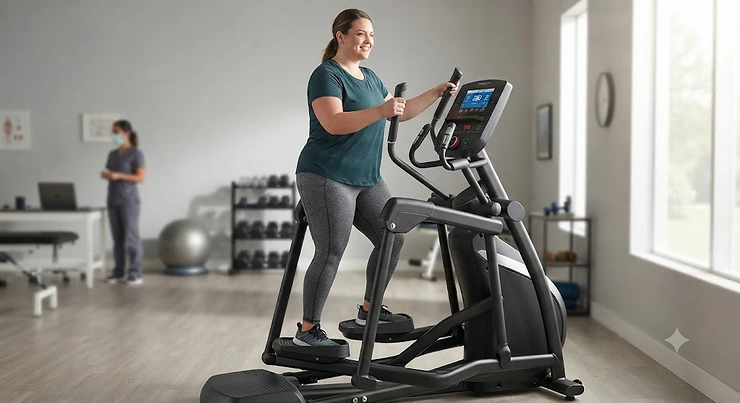
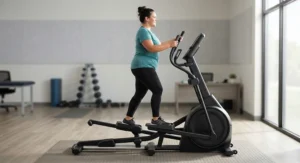
Here’s the truth nobody at the big-box fitness store wants to say out loud: most ellipticals are built for a 175-pound “average” user, and if you weigh more than that, the machine you’re standing on might be one hard stride away from a wobble, a creak, or a warranty claim. An elliptical for heavy person use is a low-impact cardio machine engineered with a reinforced steel frame, a higher-capacity flywheel, and a certified user weight limit — typically 350 to 500 pounds — so larger bodies get a stable, joint-friendly workout instead of a shaky one. That distinction matters more than most marketing copy admits.
I’ve spent the past few weeks digging through spec sheets, aggregated review data, and manufacturer engineering notes to figure out which machines actually deliver on that promise instead of just slapping a “heavy duty” sticker on a standard frame. This isn’t a rewritten Amazon listing — it’s a breakdown of what a thicker steel tube, a heavier flywheel, or a wider footprint genuinely changes about your workout when you’re carrying more weight.
Weight capacity isn’t a vanity number, either. Physical therapists and Harvard Health’s fitness researchers point out that ellipticals put meaningfully less strain on the knee, hip, and ankle joints than running or brisk walking, precisely because your feet never lift off the pedals — which is exactly why the category appeals so strongly to bigger bodies in the first place. But that joint-friendly promise only holds up if the machine underneath you is actually rated to carry your weight without flexing, rattling, or shortening its own lifespan.
Below, you’ll find seven real, currently available machines spanning budget-friendly 400-pound-rated units to 500-pound commercial-grade trainers, plus the comparison data, buying framework, and maintenance guidance to help you pick the right one — not just the most expensive one.
Quick Comparison Table: Ellipticals for Heavy Person Use at a Glance
| Product | Weight Capacity | Flywheel | Best For |
|---|---|---|---|
| Niceday CT11 | 400 lbs | 16 lbs | Best budget pick under $500 |
| FUNMILY Ultra-Quiet | 400 lbs | N/A (electric console) | Best compact/small-space option |
| Sole E95 | 400 lbs | 27 lbs | Best mid-premium all-rounder |
| NordicTrack Commercial 14.9 | 350 lbs | 32 lbs | Best tech and touchscreen coaching |
| Landice E7 Achieve | 500 lbs | 11″ electric brake | Best compact commercial-grade build |
| SportsArt V886 Verso | 500 lbs | Commercial drive | Best 3-in-1 versatility |
| SportsArt ECO-POWR G874 | 500 lbs | Self-generating | Best energy-efficient commercial unit |
Looking at the spread above, the gap between “high weight capacity” and “genuinely heavy-duty” is bigger than most shoppers expect — a jump from 400 to 500 pounds usually means moving from a home-grade steel frame to actual commercial engineering, and that jump also roughly triples the price. Budget shoppers land solidly with the Niceday CT11 or FUNMILY Ultra-Quiet, both of which punch above their price bracket for capacity even if they skimp on flywheel weight. If you want the heaviest possible margin of safety and don’t mind paying commercial-gym prices, the Landice E7 Achieve and both SportsArt models are where you should be looking instead.
💬 Just one click — help others make better buying decisions too!😊
Top 7 Elliptical for Heavy Person Picks: Expert Analysis
1. Niceday CT11 Elliptical Machine — highest capacity-to-price ratio under $500
The Niceday CT11 built its reputation on one number: 400 pounds of rated capacity for a machine that typically sells in the $400-$500 range, which is roughly half of what most 400-pound-rated competitors charge. That’s the standout feature, and it’s a genuinely rare combination in this price tier.
The frame uses extra-thickened steel tubing rather than the thin-wall tubing found on entry-level ellipticals, which is why it can carry more weight without the base-level flex you’d feel on a $250 machine. The 16-pound flywheel and 16 resistance levels mean the resistance curve is smooth at low intensities but starts to feel thin once you’re pushing hard — a heavier user generating more torque will notice the flywheel struggling to keep pace faster than a lighter user would.
Who should buy this: budget-conscious beginners and anyone who wants a no-frills machine that won’t buckle under real body weight. It’s not for someone chasing smart-console features or marathon-length stride training. Reviewers consistently report that the CT11 runs impressively quiet — testers at Garage Gym Reviews called it one of the quietest machines they’d used — but also flag some side-to-side shifting during higher-effort sessions, which tracks with the lighter flywheel not fully anchoring the frame’s momentum.
Pros:
- ✅ 400 lb weight capacity at a genuinely budget price point
- ✅ Extra-thick steel frame construction for the price tier
- ✅ Whisper-quiet magnetic resistance system
Cons:
- ❌ Some side-to-side wobble reported during intense efforts
- ❌ No Bluetooth or preset workout programs
Priced around $400-$500, the Niceday CT11 earns its spot as the value pick for anyone who needs real weight capacity without a four-figure price tag.
2. FUNMILY Ultra-Quiet Heavy Duty Elliptical — most compact 400 lb pick for small rooms
The FUNMILY Ultra-Quiet carves out its niche with a 36 x 11 x 22-inch stationary footprint, which is dramatically smaller than most 400-pound-rated machines that typically demand 5-6 feet of floor length. That compactness is the headline feature worth expanding on: this is a machine built for apartments and small home gyms, not just heavy users.
Specs-wise, the aluminum-and-steel hybrid frame supports the same 400-pound ceiling as the Niceday, paired with a 15-inch stride and 14 magnetic resistance levels. In practice, a shorter 15-inch stride means taller heavy users may feel slightly cramped compared to the 18-20 inch strides found on premium models — the spec sheet won’t tell you this, but a shorter stride generally means less hip extension per rotation, which translates to a marginally less natural gait for anyone over roughly 6 feet tall.
This model is best suited for shorter-to-average-height users prioritizing space savings over stride length, plus anyone who wants hidden transport wheels for easy storage between sessions. Aggregated customer feedback on major retail platforms skews positive on quietness and ease of setup, though — as with any budget-tier machine — verified long-term durability data beyond a year or two simply isn’t available yet, so it’s worth weighing that unknown against the very real space savings.
Pros:
- ✅ Compact footprint ideal for small rooms or apartments
- ✅ 400 lb weight capacity in a lightweight, movable frame
- ✅ Hidden transport wheels for effortless repositioning
Cons:
- ❌ Shorter 15-inch stride may cramp taller users
- ❌ Long-term durability data still limited
Expect to pay in the $300-$450 range for the FUNMILY Ultra-Quiet, making it one of the most accessible high-capacity options on this list.
3. Sole E95 — best mid-premium all-rounder for daily heavy-duty use
The Sole E95 is the machine that keeps winning “Best Buy” awards from independent testers year after year, and the reason is its 27-pound flywheel — nearly double the weight of the budget picks above. That standout feature alone changes the character of the workout: heavier flywheels store more rotational momentum, which smooths out the pedal stroke and reduces the jerky feeling heavier users often notice on lighter machines.
Beyond the flywheel, the E95 offers a 20-inch adjustable stride, 20 levels of both resistance and motorized incline, and a 400-pound weight capacity backed by a lifetime frame warranty. Based on the spec comparison with the budget tier, that adjustable stride is a meaningful upgrade — it lets taller or shorter users dial in a natural gait instead of being locked into one fixed length, which matters even more when body mass is higher and awkward biomechanics translate into more joint stress.
This is the pick for someone who works out most days and wants a machine that will still feel solid in year three, not just week three. Reviewers across multiple independent testing outlets consistently note the E95’s smooth, near-silent ride and cite its 4-star-plus aggregate rating on Amazon alongside a 4.5-star composite on Sole’s own site — though a handful of owners have reported console or resistance-adjustment failures after the warranty window closes.
Pros:
- ✅ Heavy 27 lb flywheel for a smooth, gym-quality stride
- ✅ Adjustable 20-inch stride fits a wide range of heights
- ✅ Lifetime frame and flywheel warranty
Cons:
- ❌ Pricier than budget-tier 400 lb machines
- ❌ Some owners report post-warranty console issues
The Sole E95 typically runs in the $1,500-$2,100 range depending on retailer and promotions — a real step up in cost, but one that reviewers consistently say is justified by the build quality.
4. NordicTrack Commercial 14.9 — best touchscreen coaching experience
The NordicTrack Commercial 14.9 leads with its 32-pound flywheel — the heaviest on this entire list outside full commercial-grade units — paired with a 14-inch HD touchscreen running the iFit coaching platform. That flywheel weight is the standout feature worth unpacking: more rotational mass means more resistance headroom and a noticeably smoother glide at the higher intensity levels heavier users tend to generate more force at.
The machine offers a 17.5-20 inch power-adjustable stride, 26 resistance levels, and automatic 20% incline adjustment, all controlled through the touchscreen rather than manual dials. Here’s what most buyers overlook about the weight capacity, though: independent testing outlets report it at 350 pounds, not 400 or 500 — respectable and above the roughly 300-pound industry baseline, but a step below the Sole E95 despite the heavier flywheel and higher price tag.
This is the right call for tech-forward users who want guided workouts, scenic route simulations, and automatic resistance coaching more than they want the absolute highest weight ceiling. Reviewers frequently flag some wobble on uneven flooring until the floor stabilizers are properly adjusted, but they’re just as consistent in praising the crisp touchscreen and the unusually heavy, smooth-feeling flywheel for a home unit.
Pros:
- ✅ Heaviest flywheel on this list for ultra-smooth resistance
- ✅ 14-inch HD touchscreen with iFit-guided workouts
- ✅ 26 resistance levels and automatic 20% incline
Cons:
- ❌ 350 lb capacity, lower than similarly priced 400-500 lb models
- ❌ Requires floor stabilizer adjustment to eliminate wobble
Priced just under $2,000, the NordicTrack Commercial 14.9 is best for buyers who value coaching tech as much as raw weight capacity.
5. Landice E7 Achieve — most compact 500 lb commercial-grade elliptical
The Landice E7 Achieve stakes its claim with a genuinely massive 500-pound weight capacity packed into a footprint roughly 20% smaller than competing center-drive machines — a rare combination of heavy-duty capacity and space efficiency. That’s the standout feature: most 500-pound machines are commercial-gym-sized, but this one is engineered to actually fit in a home.
Built around Landice’s patented center-drive “Rollmentum” system with an 11-gauge steel frame, 21-inch fixed stride, and 1,100-watt electric brake, the E7 replicates an upright running motion with genuinely zero pedal-lift impact. What the spec sheet won’t tell you, but the design clearly signals, is the 7-inch step-up height — the lowest of any elliptical in this category — which meaningfully reduces the mounting effort for larger or less mobile users compared to machines requiring an 8-10 inch step-over.
This is the machine for someone who wants commercial-gym durability without a commercial-gym footprint, and who’s willing to pay for it. Reviewers consistently praise Landice’s build quality and industry-leading lifetime parts warranty, and the brand’s decades-long reputation in commercial fitness circles lends real credibility to the 500-pound rating — though verified consumer review volume is thinner than for higher-volume brands simply because it sells through specialty dealers rather than mass retail.
Pros:
- ✅ 500 lb weight capacity in a compact, home-friendly footprint
- ✅ Lowest step-up height in its class for easier mounting
- ✅ Lifetime parts warranty backed by decades of commercial reputation
Cons:
- ❌ Premium commercial pricing, well above home-tier ellipticals
- ❌ Smaller review pool than mass-market brands
Expect a price in the $5,700-$6,400 range depending on console configuration — squarely commercial-grade territory, and priced accordingly.
6. SportsArt V886 Verso — best 3-in-1 versatility for varied training
The SportsArt V886 Verso distinguishes itself by combining elliptical, stepper, and cycle movements into a single 500-pound-rated commercial machine — you can switch training styles mid-session with fingertip controls instead of owning three separate machines. That versatility is the standout feature and the reason gyms and serious home users gravitate toward it.
The frame carries SportsArt’s Status-series ECO-NATURAL engineering with a self-powered design and an optional SENZA touchscreen console. Based on the spec comparison with single-mode ellipticals, the ability to toggle motion styles on the fly means you can shift stress patterns across different joints and muscle groups within one workout — useful for heavier users managing joint sensitivity in one area (say, knees) who still want stepper-style intensity elsewhere.
This is the pick for anyone who gets bored on a single-motion machine or who’s training around a specific joint limitation and wants options built into the hardware rather than the workout program. Aggregated commercial-gym feedback on SportsArt’s Status line consistently highlights the smoothness of the movement transitions, though the added mechanical complexity of a 3-in-1 system does mean more moving parts that could eventually need service compared to a single-motion elliptical.
Pros:
- ✅ 500 lb capacity with true 3-in-1 movement versatility
- ✅ Fingertip on-the-fly switching between elliptical, stepper, and cycle
- ✅ Self-powered, energy-efficient commercial engineering
Cons:
- ❌ Commercial pricing well beyond home-tier budgets
- ❌ More mechanical complexity than single-mode ellipticals
Pricing for the SportsArt V886 Verso sits in commercial-equipment territory — check current price directly with an authorized SportsArt dealer, as this model is typically sold through specialty fitness retailers rather than standard online listings.
7. SportsArt ECO-POWR G874 — best energy-efficient 500 lb commercial pick
The SportsArt ECO-POWR G874 runs on genuinely energy-generating technology — the motion of your workout powers most of the machine’s own electronics, cutting the ongoing energy draw compared to a standard plug-in commercial elliptical. That self-powered engineering is the standout feature, and it’s a meaningful differentiator for facilities running dozens of machines around the clock.
Specs include an electronically adjustable stride, front-drive design for a smaller horizontal footprint than rear-drive commercial units, real-time biometric feedback, and the same 500-pound weight capacity as its V886 sibling. Here’s what most buyers overlook: the front-drive layout isn’t just about energy — it also means the unit intrudes less into the room, which matters when you’re placing multiple 500-pound-rated commercial machines in a facility with limited floor space.
This is the right choice for gym operators or serious home-gym owners prioritizing durability, lower long-term energy costs, and floor-space efficiency over flashy touchscreen features. Reviewers and commercial buyers consistently note the smooth power-saving drive system and durable frame construction, though — as with the V886 — the primary tradeoff is that this is priced and sold as commercial equipment rather than a mass-market home unit, so support and delivery lead times can differ from what you’d expect from an Amazon purchase.
Pros:
- ✅ Energy-generating tech reduces long-term power costs
- ✅ Front-drive design saves horizontal floor space
- ✅ 500 lb capacity matched with real-time biometric feedback
Cons:
- ❌ Commercial sales channel means longer lead times than retail
- ❌ Premium pricing reflects commercial-grade positioning
The SportsArt ECO-POWR G874 is typically quoted directly through commercial fitness dealers — check current price and availability before budgeting, since this isn’t a standard retail listing.
Practical Usage Guide: Your First 30 Days on a Heavy-Duty Elliptical
Getting a new high weight capacity elliptical machine into your home is only step one — how you set it up and use it in the first month determines whether it lasts five years or fifteen. Start with the floor: even a 500-pound-rated frame needs a hard, level surface, so lay down an equipment mat before assembly rather than after, since it’s much easier to level stabilizer feet on a mat than to slide a 200-pound machine onto one later.
During assembly, torque every bolt to spec and then re-check them after your first three or four sessions — heavier users generate more vibration through the frame, which can loosen fresh hardware faster than it would on a lightly used machine. A common mistake in the first 30 days is skipping this re-torque step entirely and only noticing the wobble once it’s already annoying.
For your actual workouts, start at a lower resistance level than you think you need. A heavier flywheel (like the 27-32 pound units on the Sole E95 and NordicTrack Commercial 14.9) takes more effort to get spinning smoothly, and jumping straight to a high resistance level before your stride settles in can feel jerky rather than smooth. Give yourself two to three minutes of easy pedaling before increasing intensity.
Maintenance-wise, wipe down the rails and pedal arms weekly to prevent dust buildup from interfering with the resistance mechanism, and check the stabilizer feet monthly since heavier loads shift them out of level faster than lighter use would. Most manufacturers recommend re-lubricating moving joints every three to six months — skipping this is one of the fastest ways to shorten a machine’s working life regardless of its weight rating.
Real-World Scenarios: Who Actually Needs a High Weight Capacity Elliptical Machine
If you’re a 280-pound beginner just starting a cardio routine at home, the budget tier makes the most sense — something like the Niceday CT11 gives you real weight-capacity headroom without asking you to spend rent money before you know if home cardio will stick. Start at low resistance, track consistency over intensity, and revisit upgrading only once you’ve built a genuine habit.
If you’re a 350-pound intermediate exerciser recovering from a knee issue and want guided coaching to stay motivated, the NordicTrack Commercial 14.9 or Sole E95 fit that profile well — both offer heavier flywheels for smoother strides and, in the NordicTrack’s case, structured touchscreen programming that removes the guesswork of designing your own progression.
If you’re outfitting a home gym for a household where users range up to 450 or 500 pounds, or you manage a small training facility serving plus-size clients, the commercial-grade tier — Landice E7 Achieve, SportsArt V886 Verso, or SportsArt ECO-POWR G874 — is the only category genuinely built for that ceiling with the warranty support to back it up. The upfront cost is real, but so is the difference in engineering margin.
Buyer’s Decision Framework: Matching Capacity to Your Situation
If you’re on a tight budget and mainly need proven weight capacity without smart features, choose a budget 400 lb machine like the Niceday CT11 or FUNMILY Ultra-Quiet, because the core steel-frame engineering already exceeds industry-standard capacity at a fraction of premium pricing.
If you want daily-use durability and don’t mind paying more for a heavier flywheel and smoother stride, choose a mid-premium model like the Sole E95, because the extra flywheel mass directly improves ride quality for heavier users generating more torque per stride.
If touchscreen coaching and structured programming motivate you more than raw specs, choose the NordicTrack Commercial 14.9, because its iFit ecosystem removes the guesswork of designing your own workouts.
If you need the maximum available weight margin — 500 lbs — or you’re outfitting a shared or commercial space, choose Landice or SportsArt, because their commercial engineering and warranty structures are built for exactly that use case, at a correspondingly commercial price.
How to Choose an Elliptical for Heavy Person Use: 7 Expert Criteria
Before comparing specs, it’s worth grounding your decision in why weight capacity matters at all: the CDC’s physical activity guidelines recommend at least 150 minutes of moderate-intensity activity weekly for adults, and a machine you can trust to hold your full body weight without shifting or straining is what actually makes hitting that target sustainable week after week rather than a one-time attempt.
- Confirm the certified weight capacity, not the marketing headline. Look for the number in the manufacturer’s official spec sheet, not just a bolded claim on the box — capacity ratings vary by 100+ pounds even within the same brand’s lineup.
- Check flywheel weight. A heavier flywheel (20+ lbs) delivers a smoother stride and better handles the extra torque a heavier user generates than a light 10-13 lb flywheel.
- Look at frame gauge and stabilizer design. Thicker steel tubing and adjustable stabilizer feet reduce the wobble that heavier loads are more likely to expose.
- Match stride length to your height. An 18-20+ inch stride accommodates taller users far more comfortably than a 15-inch compact stride.
- Consider step-up height and mounting ease. Lower step-up designs, like the Landice E7’s 7-inch entry, reduce strain when mounting and dismounting.
- Weigh warranty length against your budget tier. Lifetime frame warranties on premium models reflect genuine engineering confidence, not just marketing.
- Factor in footprint versus available space. A 500-pound-rated commercial machine is worthless if it can’t physically fit in your workout room.
Elliptical Machine 400 lb Weight Capacity vs 500 lb Weight Capacity: What Actually Changes
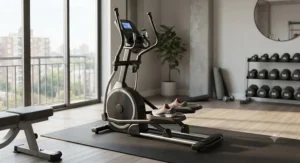
On paper, the jump from an elliptical machine 400 lb weight capacity rating to an elliptical machine 500 lb weight capacity rating looks like a simple 100-pound bump. In practice, it usually reflects a completely different manufacturing tier. The 400-pound class — where the Niceday CT11, FUNMILY Ultra-Quiet, and Sole E95 all sit — is built on residential steel frames with home-grade flywheels, electronics, and bearings, priced anywhere from a few hundred dollars to around $2,000.
The 500-pound class, represented here by Landice, and both SportsArt models, is generally commercial-grade equipment: thicker-gauge steel, industrial bearings rated for continuous multi-user gym duty, and electric brake or self-powered resistance systems designed to run eight-plus hours a day without degrading. That’s why the price gap isn’t incremental — it typically triples or quadruples between tiers rather than scaling proportionally with the extra 100 pounds of rated capacity.
For most home users under 400 pounds, the 400-pound tier delivers plenty of safety margin and dramatically better value. The 500-pound tier earns its price premium specifically when you’re at or near that 400-pound ceiling yourself, sharing the machine across a household with varied body weights, or running it in a semi-commercial or shared-facility setting where duty cycle and long-term reliability matter more than upfront cost.
What to Expect: Real-World Performance on a Heavy-Duty Elliptical
Specs only tell half the story — what actually happens once you’re moving matters more. On a properly rated, heavy-duty elliptical, a heavier user should feel a smooth, continuous glide with minimal frame flex, even as resistance climbs into the higher levels. Cleveland Clinic’s rundown of elliptical benefits notes that the format burns real calories and builds cardio fitness while staying easy on the joints, and that gentleness compounds in importance as body weight increases, since every pound translates into more force absorbed at the knee and hip with each stride on a high-impact alternative like running.
Where budget-tier 400-pound machines start to show their limits is at sustained higher intensity: lighter flywheels can feel like they’re “catching up” to your stride rather than smoothly resisting it, producing a slightly jerky sensation heavier users notice more than lighter ones. Premium and commercial-grade machines with 27-32+ pound flywheels largely eliminate that lag, delivering resistance that feels consistent whether you’re gliding at an easy pace or pushing into interval-level effort.
Noise and stability are the other real-world differentiators. Reviewers across budget and premium tiers alike consistently report that properly leveled stabilizers eliminate most wobble complaints — the shakiness people attribute to weight capacity is frequently a leveling issue rather than a true engineering limitation, which is exactly why the setup guidance earlier in this article matters as much as the spec sheet itself.
Common Mistakes When Buying Heavy Duty Cardio Equipment
The single most common mistake shoppers make with heavy duty cardio equipment is trusting a listing’s bolded weight-capacity claim without checking the manufacturer’s actual spec page — third-party marketplace listings occasionally round up or copy specs from a different model in the same product line. Always cross-reference the number against the brand’s own site.
The second mistake is ignoring flywheel weight entirely and shopping purely by weight capacity number. A 400-pound-rated machine with a heavy 27-pound flywheel, like the Sole E95, will often feel more stable and last longer under heavy use than a lower-flywheel machine boasting a higher capacity number on paper.
The third mistake is skipping floor prep. Buyers frequently blame “wobbly” ellipticals on weak engineering when an unlevel floor or a missing equipment mat is the actual culprit — this single oversight generates a disproportionate share of negative reviews across nearly every brand on this list.
Finally, shoppers often underestimate footprint requirements, ordering a commercial-grade 500-pound machine that technically fits the room’s square footage but leaves no clearance for the full stride motion — always measure the “active use” dimensions in the spec sheet, not just the static footprint.
Best Options as a Plus Size Fitness Machine: Tailored Advice by Body Type and Goal
As a plus size fitness machine, the ideal elliptical pick genuinely depends on your body type and training goal rather than a single “best overall” answer. Taller plus-size users — generally over 6 feet — should prioritize models with adjustable stride lengths of 18 inches or more, like the Sole E95, since fixed short-stride machines like the FUNMILY Ultra-Quiet can feel cramped and reduce natural hip extension.
Users managing joint sensitivity, particularly in the knees, should lean toward heavier-flywheel machines with smoother resistance curves and consider the low step-up height of the Landice E7 Achieve, which reduces strain during mounting and dismounting compared to standard step-over designs.
Beginners at any body size who are still building an exercise habit are generally best served by the budget tier — the Niceday CT11 removes cost as a barrier to entry while still delivering genuine 400-pound capacity, letting you build consistency before committing to a premium machine you might not fully use yet.
Long-Term Cost & Maintenance: Total Cost of Ownership
A budget elliptical priced around $400-$500 looks cheapest on day one, but total cost of ownership tells a fuller story. Lighter-flywheel budget machines typically carry shorter parts warranties — often just one to two years — meaning a resistance-mechanism failure in year three becomes an out-of-pocket repair or full replacement cost.
Mid-premium machines like the Sole E95, backed by a lifetime frame warranty, effectively front-load their higher purchase price against years of reduced repair risk — a real value calculation once you account for a $1,500-2,100 unit lasting a decade versus replacing a $400 unit every three to four years, which can add up to a similar or higher total spend.
Commercial-grade 500-pound machines from Landice and SportsArt represent the opposite extreme: high upfront cost, but engineering designed for continuous multi-user commercial duty cycles that dramatically outlast anything in the home tier, with warranty structures to match. For a household or shared setting genuinely putting heavy daily mileage on the machine, that price premium often pencils out favorably over a 10-15 year ownership horizon.
Features That Actually Matter (And Those That Don’t)
Weight capacity, flywheel weight, frame gauge, and stride adjustability actually matter — these directly affect stability, comfort, and longevity for heavier users, and they’re the specs worth prioritizing your budget around.
Touchscreen size and app ecosystems matter less than marketing suggests for most buyers, though they do add real motivational value for people who respond well to structured coaching — the NordicTrack Commercial 14.9‘s iFit integration is a genuine feature, not filler, but it shouldn’t outrank weight capacity and frame quality in your decision hierarchy.
Bluetooth speakers, built-in fans, and tablet holders are pleasant conveniences that show up across nearly every price tier and shouldn’t meaningfully sway your decision between two otherwise comparable machines — treat them as tiebreakers, not deciding factors.
FAQ
❓ What's the highest weight capacity elliptical you can buy?
❓ Are cheap ellipticals safe for heavy person use?
❓ Does flywheel weight matter for heavier users?
❓ How much does a 500 lb capacity elliptical cost?
❓ Can an elliptical wobble even if it's rated for my weight?
Conclusion
Choosing the right elliptical for heavy person use really comes down to matching your budget, body type, and training goals to the right engineering tier — not chasing the single highest weight number you can find. The Niceday CT11 and FUNMILY Ultra-Quiet prove that genuine 400-pound capacity doesn’t require a four-figure budget, while the Sole E95 and NordicTrack Commercial 14.9 show what a heavier flywheel and smarter console add once you’re ready to invest in daily-use durability.
For households or shared spaces where 450-500 pounds of capacity genuinely matters, the Landice E7 Achieve and both SportsArt commercial models deliver an engineering margin the home tier simply can’t match — at a price that reflects real commercial-grade manufacturing, not just a bigger sticker.
Whichever tier fits your situation, remember that setup matters nearly as much as the spec sheet: a leveled floor, properly torqued hardware, and realistic footprint planning will do more for your long-term experience than chasing another 50 pounds of rated capacity you may never need. Clinical research tracking overweight and obese adults through structured exercise programs consistently reinforces that the machine you’ll actually use consistently beats the one with the most impressive spec sheet sitting unused in the corner.
Recommended for You
- Elliptical for Short Person: 7 Picks That Actually Fit (2026)
- Long Stride Length Elliptical: 7 Top Picks for 2026
- Best Elliptical for People Over 6 Feet: 7 Tall-Frame Picks (2026)
Disclaimer: This article contains affiliate links. As an Amazon Associate, I earn from qualifying purchases. If you purchase products through these links, we may earn a small commission at no additional cost to you.
✨ Found this helpful? Share it with your friends! 💬🤗
