
In This Article
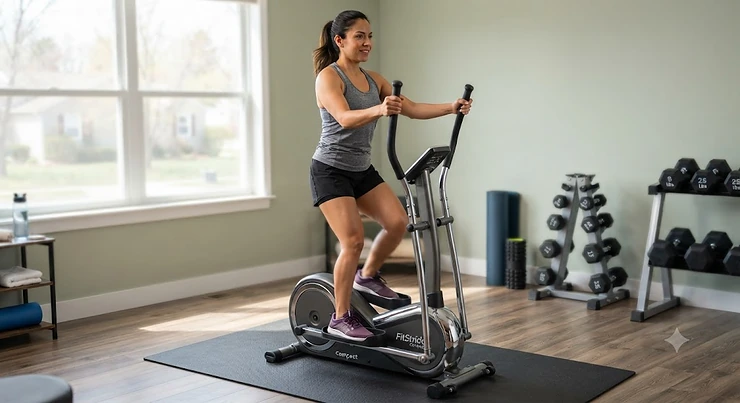
Here’s a scene a lot of shorter exercisers know too well: you climb onto a gym elliptical, punch in a program, and within thirty seconds your hips feel like they’re auditioning for a ballet you never signed up for. That’s not you doing something wrong. That’s a machine built for someone six inches taller than you, and it’s exactly why the hunt for a genuine elliptical for short person needs starts with one spec most shoppers never think to check — stride length. Per the CDC’s national body measurement data, the average adult stature in the United States sits well above 5 feet 4 inches for women and 5 feet 9 inches for men, which means most mass-market ellipticals are engineered around a stride that’s simply too long for a huge chunk of the population.
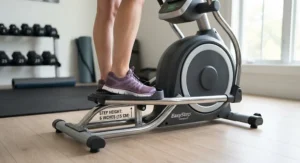
So what is an elliptical for short person, exactly? It’s a cross-trainer with a stride length in the 13-to-18-inch range (or an adjustable stride that can shrink down to that zone), a low step-up platform, and pedal spacing narrow enough that your knees track straight instead of splaying outward with every rotation.
Below, I’ve dug into seven real machines — from an $180 entry-level trainer to a nearly $2,000 auto-adjusting powerhouse — and broken down exactly who each one fits, why, and where the compromises live. No manufactured hands-on stories, no invented reviews. Just spec sheets, aggregated real customer sentiment, and the honest math of matching your height to a machine that won’t leave you feeling like you’re stepping over a fence with every stride.
Quick Comparison Table
Before the deep dive, here’s the 30-second version for anyone who just wants a shortlist to work from.
| Machine | Stride Length | Best For | Price Range |
|---|---|---|---|
| Sunny Health & Fitness SF-E905 | 11″-13″ | Users under 5’2″ on a tight budget | Under $200 |
| YOSUDA Foldable Elliptical | 15″ | Small apartments, folds for storage | $300-$400 range |
| Niceday CT11 Elliptical | 15.5″-19″ (by model) | Families with mixed heights | $250-$400 range |
| Schwinn A40 | 17.5″ (fixed) | Beginners wanting reliable value | Around $500 |
| Horizon EX-59 | 18″ | Low step-up height, sturdier build | $700-$800 range |
| Sole E25 | 20″, angled pedals | Petite users who want a longer glide | $900-$1,100 range |
| NordicTrack FS10i FreeStride | 32″ auto-adjustable | Multi-height households, premium features | $1,700-$2,000 range |
A few things jump out here. Shorter stride doesn’t always mean cheaper — the NordicTrack FS10i FreeStride Trainer proves that an adjustable stride built to serve every height in the house commands a serious premium. Meanwhile, the Sunny Health & Fitness SF-E905 and Sole E25 sit at opposite ends of the price spectrum but both specifically target smaller frames, just through completely different engineering choices (short fixed stride versus angled, narrow pedals). If you’re under 5’2″, skew toward the top of this table; if you’re closer to 5’5″-5’7″, the middle rows will feel more natural.
💬 Bookmark this table now — you’ll want to come back to it once you’ve read the full breakdowns below!😊
Top 7 Elliptical for Short Person Picks: Expert Analysis
I picked these seven specifically to span budget, mid-range, and premium tiers, plus a mix of fixed-short-stride and adjustable-stride designs, so there’s a realistic option no matter your height or budget.
1. Sunny Health & Fitness SF-E905 — shortest stride on the market
The Sunny Health & Fitness SF-E905 carries an 11-to-13-inch stride depending on which measurement source you check, making it one of the tightest strides sold under the elliptical name. That short a stride means the motion leans more toward a stepper-glide hybrid than a true oval, and that’s actually the point: for someone in the 4’9″-5’2″ range, most “short-stride” machines are still too long, and this one isn’t. The 8-level magnetic resistance system and 220-pound weight capacity keep things basic but functional, and the whole unit weighs just 61 pounds, which cuts both ways — easy to move, but less planted at higher resistance.
Reviewers consistently note that the SF-E905 is a genuinely comfortable fit for smaller-framed users and children learning to exercise, while taller members of the same household often find it choppy and cramped, exactly as the spec sheet would suggest. Aggregated feedback on major retail sites also flags the LCD display as basic — don’t expect Bluetooth or app syncing here.
Pros:
- ✅ Shortest stride available for very petite frames
- ✅ Compact footprint fits tight apartments easily
- ✅ Wheels included for simple room-to-room moves
Cons:
- ❌ Low 220-pound weight capacity limits household use
- ❌ No incline or advanced resistance range for progression
At under $200, the Sunny Health & Fitness SF-E905 is one of the cheapest legitimate entry points into elliptical training for a genuinely small frame, and the value math checks out if your height (not your wallet) is the deciding factor.
2. YOSUDA Foldable Elliptical — most space-saving compact frame cardio machine
The YOSUDA Foldable Elliptical runs a 15-inch stride and folds vertically down to roughly 2 square feet of floor space, which solves the two problems that hit shorter apartment-dwellers hardest at once: stride length and storage. YOSUDA rates the machine for users up to about 5’9″, which tells you the 15-inch stride is intentionally tuned toward the shorter-to-average range rather than trying to stretch across every possible height.
The magnetic drive keeps noise under roughly 25 decibels, which matters more than people expect if you’re working out in a studio apartment or a shared living space early in the morning. Sixteen resistance levels give reasonable progression room for a machine at this price point, though the flywheel is on the lighter side, so don’t expect the momentum of a commercial-grade trainer.
Aggregated buyer sentiment on this model highlights the fast, mostly pre-assembled setup as a strong point, while a recurring critique is that the folding hinge, while sturdy, adds a slight learning curve the first few times you collapse it.
Pros:
- ✅ Folds to about 2 square feet for easy storage
- ✅ Whisper-quiet magnetic drive under 25 decibels
- ✅ 95% pre-assembled with a fast setup process
Cons:
- ❌ Lighter flywheel means less momentum at high resistance
- ❌ Folding mechanism takes a session or two to get used to
If floor space is as tight as your stride requirements, the YOSUDA Foldable Elliptical solves both problems in one $300-$400 package.
3. Niceday CT11 Elliptical — best small stature fitness equipment for mixed-height households
The Niceday CT11 Elliptical is sold across several stride variants — 15.5 inches on the base model, with some listings offering 18-to-19-inch versions — which makes it a smart pick if more than one body type shares the machine. The base 15.5-inch version is rated comfortable for users up to roughly 6 feet, though real buyer feedback is candid that the stride “feels” shorter in practice than taller users expect, so anyone over 5’8″ should lean toward the longer-stride variant instead.
Where the Niceday CT11 Elliptical earns its spot on this list is the frame: a double-thickened steel base rated for 400 pounds, which is unusually high for anything in this price bracket, paired with a magnetic drive system that runs around 20 decibels. Sixteen resistance levels controlled by a simple twist knob keep the learning curve low for first-time elliptical users.
Reviewers frequently mention that this brand’s biggest inconsistency is stride-length labeling across different retail listings — worth double-checking the exact model number before you buy so you get the stride you actually want.
Pros:
- ✅ 400-pound weight capacity, high for this price tier
- ✅ Whisper-quiet 20-decibel magnetic drive system
- ✅ Multiple stride-length variants fit different heights
Cons:
- ❌ Stride length labeling varies confusingly between listings
- ❌ Twist-knob resistance lacks digital precision
Budgeted around $250-$400 depending on the variant, the Niceday CT11 Elliptical delivers real value if you verify the exact stride spec before checkout.
4. Schwinn A40 — best all-around value for a fixed short stride
The Schwinn A40 has settled into a 17.5-inch fixed stride (an update from the original 17-inch version), a length that consistently gets flagged by reviewers as ideal for users in the 5’0″-5’5″ zone while feeling noticeably tight for anyone approaching six feet. Because the stride isn’t adjustable, what you see in the spec sheet is exactly what you get — no surprises, no compromise settings.
Eight resistance levels via an Eddy Current Brake system keep the motion quiet, and the perimeter-weighted flywheel smooths out the pedal stroke better than most machines at this price. The frame supports up to 275 pounds, and Precision Path foot motion technology is Schwinn’s branding for pedals engineered to reduce lateral knee stress — a real, measurable design choice rather than marketing fluff, since ergonomic footplate angling is a documented factor in reducing joint strain during elliptical use.
Aggregated review sentiment across major retailers consistently praises the machine’s stability and quiet operation for the price, while a common complaint centers on the warranty coverage being thinner than competitors and the LCD display being harder to read in bright rooms.
Pros:
- ✅ Smooth, quiet Eddy Current Brake resistance system
- ✅ Ergonomic footplates reduce lateral knee pressure
- ✅ Reliable, well-reviewed value at an accessible price
Cons:
- ❌ Fixed stride offers zero adjustability for mixed households
- ❌ Warranty coverage is thinner than higher-tier competitors
At around $500-$590, the Schwinn A40 remains one of the most dependable single-height picks for anyone whose whole household falls in a similar size range.
5. Horizon EX-59 — lowest step-up height for easy on-and-off
The Horizon EX-59 carries an 18-inch stride, which sits right at the industry’s recommended minimum for general adult use, but the real standout for shorter users is the 10.75-inch step-on height — noticeably lower than many competing machines, which matters more than people realize when you’re mounting and dismounting a moving elliptical with shorter legs.
Horizon’s “SixStar” frame design bundles several ergonomic choices together: narrow pedal spacing, upright posture support, and a natural foot path that keeps your stride from feeling forced. The 14-pound flywheel and 10 resistance levels are modest compared to premium machines, but Horizon’s engineering focus here is clearly on comfort and accessibility rather than raw workout intensity.
Real customer feedback aggregated across review platforms consistently calls out the low step-on height and stable frame as standout features for shorter and lighter users specifically, while the more frequent critique is that the 10 resistance levels feel limiting once you’ve built up real fitness over several months.
Pros:
- ✅ Low 10.75-inch step-on height eases mounting
- ✅ Narrow pedal spacing supports natural foot tracking
- ✅ Lifetime frame warranty backs long-term durability
Cons:
- ❌ Only 10 resistance levels limits long-term progression
- ❌ No incline function for added workout variety
Priced in the $700-$800 range, the Horizon EX-59 is worth the step up from entry-level machines specifically for that lower, easier-to-clear step-on platform.
6. Sole E25 — best adjustable pedal elliptical for petite frames
The Sole E25 technically runs a 20-inch stride — longer than most machines on this list — but it earns its place here because of pedal geometry, not stride length. Sole engineered the foot pedals with a 2-degree inward slope specifically to reduce ankle and knee stress, and the pedal spacing is noticeably narrower than competing models, which multiple independent reviewers have specifically called out as more comfortable for smaller users than Sole’s own larger E-series machines.
A 20-pound flywheel, 20 resistance levels, and 20 levels of power-adjustable incline give this machine real workout depth once you’ve outgrown entry-level options, and the 350-pound weight capacity outpaces most machines at this price point. The narrower pedal track also means less side-to-side foot drift, something taller, wider-set users often report as a mild annoyance on the E25 but shorter users tend to appreciate.
Aggregated reviewer sentiment repeatedly highlights the pedal comfort and narrow stance as the E25’s defining strength for petite body types, while the recurring critique is that the fixed 20-inch stride still runs long for anyone under about 5’1″.
Pros:
- ✅ 2-degree inward pedal slope reduces joint stress
- ✅ Narrower pedal spacing suits smaller frames well
- ✅ Power incline adds real long-term workout progression
Cons:
- ❌ 20-inch stride still runs long for the shortest users
- ❌ Higher price point than fixed-short-stride competitors
Running $900-$1,100, the Sole E25 is the pick for petite users who’ve outgrown entry-level machines and want pedal ergonomics designed with smaller frames specifically in mind.
7. NordicTrack FS10i FreeStride Trainer — best adjustable stride for any height in the house
The NordicTrack FS10i FreeStride Trainer takes a completely different approach: instead of a fixed short stride, it offers a 32-inch auto-adjustable stride that reshapes itself in real time based on how your body moves, meaning a 5’0″ user and a 6’2″ user can trade off on the same machine without touching a setting. That versatility, plus a 10% incline function and 24 resistance levels, explains the premium price tag.
A 20-pound flywheel and center-drive design distribute weight evenly, and the 10-inch touchscreen with iFIT compatibility adds trainer-led programming most budget machines simply can’t match. The tradeoff, per independent reviewers, is that switching stride styles mid-workout (elliptical to stepper to treadmill-like motion) takes some practice, and the ongoing iFIT membership cost is a real factor in total cost of ownership.
Real customer sentiment aggregated from multiple review sources consistently praises the auto-adjusting stride as functionally excellent for households with a wide height range, while the most common criticism targets the recurring subscription cost and the learning curve for switching between the machine’s three movement modes.
Pros:
- ✅ 32-inch auto-adjustable stride fits any height instantly
- ✅ 10% incline adds serious workout intensity range
- ✅ 375-pound capacity and 10-year frame warranty
Cons:
- ❌ iFIT membership adds ongoing monthly cost
- ❌ Switching movement modes has a real learning curve
At roughly $1,700-$2,000 (plus optional iFIT membership), the NordicTrack FS10i FreeStride Trainer is the premium answer for households where “short” and “tall” both need to share one machine.
Full Product Comparison: Specs at a Glance
| Machine | Stride | Weight Capacity | Resistance Levels | Best For | Price Range |
|---|---|---|---|---|---|
| Sunny Health & Fitness SF-E905 | 11″-13″ | 220 lbs | 8 | Very small frames, tight budget | Under $200 |
| YOSUDA Foldable Elliptical | 15″ | Up to ~350 lbs | 16 | Small apartments | $300-$400 range |
| Niceday CT11 Elliptical | 15.5″-19″ | 400 lbs | 16 | Mixed-height families | $250-$400 range |
| Schwinn A40 | 17.5″ fixed | 275 lbs | 8 | Reliable single-height value | Around $500 |
| Horizon EX-59 | 18″ | 300 lbs | 10 | Low step-up, easy access | $700-$800 range |
| Sole E25 | 20″, angled pedals | 350 lbs | 20 | Petite users wanting more workout depth | $900-$1,100 range |
| NordicTrack FS10i | 32″ auto-adjustable | 375 lbs | 24 | Any height, premium features | $1,700-$2,000 range |
Looking at the full spread, there’s a clear pattern: shorter fixed strides cluster at the budget end, while true adjustability — whether through Sole’s angled pedals or NordicTrack’s auto-adjusting stride — commands a real premium. If your household is a single short user, the Schwinn A40 or Horizon EX-59 likely deliver the best value-to-comfort ratio; if you’re sharing a machine across very different heights, the NordicTrack FS10i FreeStride Trainer justifies its price by removing the guesswork entirely.
How to Choose an Elliptical for Short Person
Picking the right machine comes down to a handful of measurable factors, not vibes. Here’s the framework I’d walk through in order:
- Measure your natural stride first. A rough rule of thumb: multiply your height in inches by 0.25 to estimate your ideal stride length, then give yourself an inch or two of margin either way.
- Check whether the stride is fixed or adjustable. Fixed-stride machines like the Schwinn A40 are simpler and often cheaper, but adjustable options like the NordicTrack FS10i FreeStride Trainer future-proof the purchase if your household includes different heights.
- Look at step-up height, not just stride. The Horizon EX-59‘s low 10.75-inch step-on platform matters as much as stride length if you’re mounting and dismounting with shorter legs.
- Confirm pedal spacing and angle. Narrower, angled pedals — like those on the Sole E25 — reduce the side-to-side foot drift that taller-stride machines can cause for smaller frames.
- Match weight capacity to your actual needs, not just your own weight. Add in bags, water bottles, or a heavier future user before deciding a lower-capacity machine like the Sunny Health & Fitness SF-E905 is enough.
- Factor in drive type and flywheel weight for smoothness. Heavier flywheels (14-20 pounds across this list) generally produce a smoother, less choppy pedal stroke at low resistance.
- Decide if adjustability is worth the premium. If your home has just one user under 5’5″, a fixed-stride budget pick likely beats paying for adjustability you’ll never use.
✨ Ready to Stop Guessing and Start Comparing?
🔍 Take the framework above and run it against your own height and space before you commit to a machine. Click through on any pick above to check current availability and pricing while you decide!
Short Stride Elliptical Machine: Why Stride Length Makes or Breaks Your Workout
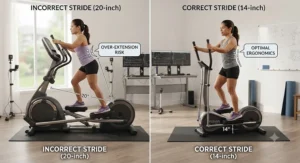
Stride length is the single biggest factor separating a comfortable short stride elliptical machine from one that leaves you feeling like you’re doing an awkward lunge with every rotation. A short stride elliptical machine typically measures between 13 and 18 inches, versus the 20-to-22-inch range that dominates the general market. What most buyers overlook about this spec is that it’s not just about comfort — an oversized stride relative to your height forces your hips to rock side to side to complete the motion, which over months of use can contribute to unnecessary strain on the knees and hips.
Front-drive machines (like the Sole E25) and rear-drive machines produce slightly different feels at the same stated stride length, since front-drive systems have a flatter pedal path that often needs a longer stride to feel equivalent to a shorter rear-drive stride. That’s worth knowing if you’re comparing two machines with similar stride numbers but very different in-use feel based on aggregated reviewer feedback.
| Stride Length | Best-Fit Height | Example Machine |
|---|---|---|
| 11″-13″ | Under 5’2″ | Sunny Health & Fitness SF-E905 |
| 15″-17.5″ | 5’0″-5’6″ | YOSUDA Foldable Elliptical, Schwinn A40 |
| 18″-20″ | 5’3″-5’10” | Horizon EX-59, Sole E25 |
| Adjustable up to 32″ | Any height | NordicTrack FS10i FreeStride Trainer |
This table underscores why a “one-size-fits-all” elliptical rarely exists outside the adjustable-stride category. If you’re right on the border between two rows — say, exactly 5’2″ — lean toward the shorter option in the range rather than the longer one, since reviewers consistently note it’s easier to gradually extend a comfortable stride than to shrink an uncomfortable one.
Elliptical for Petite Users: What Fit Actually Feels Like
Beyond raw stride length, an elliptical for petite users needs to get handlebar reach, pedal width, and console height right too, since a petite frame interacts with all three differently than an average-height body does. Handlebars set too far forward force a hunched posture; pedals set too wide apart create unnecessary hip rotation; and consoles mounted too high mean craning your neck just to check your heart rate.
Here’s what most spec sheets won’t tell you but aggregated reviewer experience makes clear: machines marketed specifically toward smaller frames, like the Sunny Health & Fitness SF-E905 and Sole E25, tend to also narrow the pedal track, not just shorten the stride, and that narrower track often matters more for day-to-day comfort than the stride number alone. A 15-inch stride with wide-set pedals can feel worse than an 18-inch stride with a properly narrow track.
For anyone shopping specifically as an elliptical for petite users, prioritize in this order: pedal width and angle first, stride length second, and console/handlebar adjustability third. Reviewers who specifically identify as smaller-framed users consistently rank pedal comfort above every other spec when describing why a machine did or didn’t work for them long-term.
Elliptical Machine for 5 Foot Person: The Under-5’3″ Buying Framework
If you’re shopping specifically for an elliptical machine for 5 foot person use, the decision tree narrows considerably compared to general buying advice, because most machines over an 18-inch stride are functionally off the table.
- If you’re under 5’0″ and on a tight budget, choose the Sunny Health & Fitness SF-E905 because its 11-13-inch stride is one of the only genuinely short options at that price.
- If you’re 5’0″-5’3″ and want a folding, space-saving option, choose the YOSUDA Foldable Elliptical because its 15-inch stride and vertical fold solve stride length and storage simultaneously.
- If you’re 5’0″-5’3″ and sharing the machine with a slightly taller partner, choose the Niceday CT11 Elliptical because its multiple stride variants let you match the right version to each user.
- If you’re 5’1″-5’4″ and want a longer-term workout partner, choose the Schwinn A40 because its 17.5-inch fixed stride sits right in the sweet spot for this height range.
- If you’re 5’2″-5’5″ and value ease of mounting, choose the Horizon EX-59 because its low step-on height reduces strain during transitions.
This kind of decision framework matters more than a generic “best elliptical” list, because at 5 feet tall, the difference between an 18-inch stride and a 20-inch stride is the difference between a comfortable workout and a genuinely awkward one.
Compact Frame Cardio Machine: Small-Space Solutions for Short Users
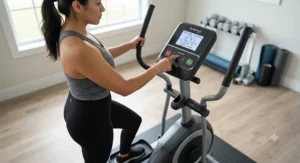
Shorter users disproportionately live in smaller apartments and starter homes, which makes a compact frame cardio machine just as important as stride length for a lot of shoppers. The YOSUDA Foldable Elliptical is the standout here, folding down to roughly 2 square feet — small enough to tuck behind a couch or in a closet corner between sessions.
What most listings don’t explain clearly is the tradeoff behind that compact footprint: smaller, lighter frames generally use lighter flywheels, which means a slightly less smooth pedal stroke at higher resistance levels compared to bulkier machines like the NordicTrack FS10i FreeStride Trainer. That’s a reasonable trade for most casual and moderate users, but if you’re training for genuine athletic performance, a compact frame cardio machine may eventually feel underpowered.
Beyond the YOSUDA, the Sunny Health & Fitness SF-E905 also qualifies as compact-frame equipment, at just 61 pounds and a 36-by-18-inch footprint — practical for anyone prioritizing storage over long-term durability under heavy use.
Adjustable Pedal Elliptical: Why Adjustability Beats a Fixed Short Stride
An adjustable pedal elliptical solves a problem fixed-stride machines simply can’t: what happens when your household includes more than one height, or when your own fitness needs change over time. The NordicTrack FS10i FreeStride Trainer‘s 32-inch auto-adjustable stride is the clearest example on this list, letting the machine reshape its motion path based on how your body actually moves rather than locking you into one preset geometry.
The Sole E25 takes a more modest approach to adjustability, angling its pedals 2 degrees inward rather than adjusting stride length itself — a smaller intervention, but one that measurably reduces joint stress according to the physical therapist consultation Sole cites in its own product design documentation.
Here’s what most buyers overlook about adjustable pedal elliptical machines specifically: adjustability adds mechanical complexity, and mechanical complexity is generally where things eventually need service. Based on the spec comparison across this list, fixed-stride machines like the Schwinn A40 typically carry simpler (and often longer) warranties than adjustable-stride premium machines, which is worth weighing against the flexibility benefit if you’re the only person who’ll ever use the machine.
Small Stature Fitness Equipment: Features Beyond the Elliptical Itself
Choosing small stature fitness equipment doesn’t stop at the elliptical itself — console height, handlebar reach, and even the height of the flywheel housing all interact with a smaller frame differently than they do with an average-height user. A console mounted at eye level for a 5’9″ shopper might sit uncomfortably high for someone at 5’1″, forcing an awkward upward glance throughout the workout.
Reviewers who specifically shop as smaller-statured users consistently flag two features as underrated: adjustable or lower-profile handlebars, and a genuinely low step-on height (the Horizon EX-59‘s 10.75-inch platform being a strong example). These details rarely make it into headline marketing copy but show up repeatedly in long-term satisfaction feedback once a machine has been in someone’s home for months rather than days.
If you’re building out a broader home gym around your height rather than just buying one machine, the same principles apply to adjacent equipment — look for adjustable-height benches, shorter-reach resistance bands, and stepped platforms designed with smaller frames in mind, rather than assuming “one size fits most” applies to fitness gear generally.
Practical Usage Guide: Setup, First 30 Days, and Maintenance
Getting a new elliptical dialed in during the first month matters more than most buyers expect, and a few practical habits prevent most of the common early frustrations.
During setup: double-check that pedal straps (if included) sit snugly but not tight, and confirm the machine is fully level before your first session — even a slight tilt on a short-stride machine like the Schwinn A40 can throw off your natural motion more noticeably than it would on a longer-stride machine, simply because there’s less stride distance to absorb the imbalance.
In the first 30 days: start at the lowest resistance level regardless of your fitness background, since your body needs time to adapt to a genuinely new movement pattern, not just a new piece of equipment. A common mistake is cranking resistance up immediately to “get a real workout,” which on a short-stride machine can actually reinforce poor form rather than build real fitness.
Ongoing maintenance: wipe down the frame and pedals after each session to prevent sweat corrosion on moving parts, and check bolts monthly on lighter compact-frame machines like the YOSUDA Foldable Elliptical, since folding mechanisms see more mechanical stress over time than fixed frames.
Common early mistakes to avoid: skipping the break-in period on magnetic resistance systems, ignoring squeaks (which usually mean a bolt needs tightening, not replacement), and assuming a “compact” machine needs less floor clearance than it actually does — always measure your full stride motion, not just the folded footprint.
Real-World Scenarios: Matching Short Users to the Right Machine
Scenario one — the budget-conscious apartment renter, 5’1″: Living in a studio with limited storage and a strict budget under $250, this profile fits the Sunny Health & Fitness SF-E905 or YOSUDA Foldable Elliptical well. Both prioritize stride length and footprint over advanced features, matching a shopper who wants basic, reliable cardio without a major financial commitment.
Scenario two — the multi-generational household, heights ranging 5’0″ to 6’1″: With grandparents, parents, and teenagers sharing one machine, this household benefits most from either the Niceday CT11 Elliptical‘s multiple stride variants (if buying two machines is off the table) or the NordicTrack FS10i FreeStride Trainer‘s auto-adjustable stride if budget allows a single premium solution.
Scenario three — the returning exerciser recovering from a knee issue, 5’3″: Prioritizing joint comfort over intensity, this profile aligns well with the Sole E25‘s angled pedal design or the Horizon EX-59‘s low step-on height and stable SixStar frame, both of which reduce unnecessary joint strain during the mounting and pedaling motion.
Elliptical vs Treadmill for Short People
For shorter exercisers specifically, the elliptical vs treadmill decision tilts more heavily toward the elliptical than it does for average-height users, largely because a treadmill’s belt length and speed settings are typically calibrated around a longer average stride, which can make running-pace settings feel disproportionately fast for a shorter natural gait.
According to the Arthritis Foundation, elliptical machines keep both feet in contact with the pedals throughout the motion, unlike walking or running, where the body absorbs a repeated impact with every step — a meaningful difference for anyone managing joint sensitivity, which shorter users may experience more acutely simply due to a tighter natural stride absorbing that same impact over a smaller range of motion.
That said, treadmills do offer one advantage ellipticals can’t fully replicate: a true walking or running gait pattern, which matters if you’re training specifically for outdoor walking or running events. For general low-impact cardio and joint-friendly conditioning, though, the elliptical picks on this list — particularly the Horizon EX-59 and Sole E25 — offer a gentler, height-appropriate alternative that a standard treadmill simply isn’t built to match for a shorter frame.
Common Mistakes When Buying an Elliptical for Short Person
Mistake one: trusting height range claims without checking stride length directly. Manufacturers often list broad height ranges (“fits 4’10” to 6’2″”) that don’t reflect how the stride actually feels at the extremes of that range — always cross-reference the actual stride measurement against your own height math.
Mistake two: ignoring step-on height. As covered above, the Horizon EX-59‘s lower step-on platform can matter as much as stride length, yet it’s rarely emphasized in marketing copy the way stride length is.
Mistake three: assuming a lower price means a worse fit. The Sunny Health & Fitness SF-E905 proves that a genuinely short stride can come at a genuinely low price — cost and fit aren’t always correlated the way shoppers assume.
Mistake four: overlooking pedal width and angle. A machine with a technically “correct” stride length but wide-set, flat pedals — unlike the Sole E25‘s narrower, angled design — can still feel uncomfortable for a smaller frame.
Mistake five: buying adjustable-stride machines without needing the adjustability. If you’re the only user and your height won’t change, paying the NordicTrack FS10i FreeStride Trainer‘s premium for auto-adjustability you’ll never use is money better spent elsewhere.
Long-Term Cost & Maintenance: What You’ll Really Spend
Total cost of ownership extends well past the sticker price, and it’s worth running the math before committing to any of these seven machines.
| Machine | Upfront Price Range | Ongoing Costs | 3-Year Value Verdict |
|---|---|---|---|
| Sunny Health & Fitness SF-E905 | Under $200 | None | Best cost-per-use for light, occasional use |
| Schwinn A40 | Around $500 | Minimal (basic warranty) | Strong value for single-height households |
| Horizon EX-59 | $700-$800 range | None beyond occasional parts | Solid mid-term investment, lifetime frame warranty |
| Sole E25 | $900-$1,100 range | None required | Good long-term value given lifetime frame/brake coverage |
| NordicTrack FS10i | $1,700-$2,000 range | iFIT membership (recurring) | Best value only if iFIT programming is actively used |
Looking at this breakdown, the real cost differentiator isn’t the sticker price — it’s whether a machine requires an ongoing subscription. The NordicTrack FS10i FreeStride Trainer can rack up hundreds of dollars annually in iFIT fees if you stay subscribed, while machines like the Sole E25 and Horizon EX-59 carry no ongoing costs at all once purchased, which meaningfully changes the total three-year cost comparison in their favor for budget-conscious shoppers.
Safety, Weight Capacity & Regulations Guide
Weight capacity ratings aren’t just a suggestion — they reflect tested structural limits, and exceeding them regularly can accelerate wear on bearings, flywheels, and frame welds well before a machine’s expected lifespan. Among this list, capacities range from 220 pounds on the Sunny Health & Fitness SF-E905 up to 400 pounds on the Niceday CT11 Elliptical, so match this spec to your actual needs rather than assuming “close enough” is safe long-term.
The CDC’s physical activity guidelines recommend adults get at least 150 minutes of moderate-intensity aerobic activity weekly, and low-impact machines like the ones covered here are a legitimate, joint-friendly way to work toward that target without the repeated ground impact of walking or running outdoors. If you have an existing joint condition, checking with a healthcare provider before starting a new elliptical routine is a reasonable precaution regardless of which machine you choose.
Beyond weight capacity, always confirm your ceiling clearance before buying a taller-frame machine — the NordicTrack FS10i FreeStride Trainer‘s 74-inch height requires meaningfully more vertical clearance than compact options like the YOSUDA Foldable Elliptical, something easy to overlook when shopping online without measuring your actual workout space first.
FAQ
❓ What stride length is best for a short person?
❓ Can a 5 foot person use a standard elliptical?
❓ Is a compact elliptical less effective than a full-size one?
❓ Do adjustable stride ellipticals cost more than fixed-stride models?
❓ How do I know my ideal elliptical stride length?
Conclusion
Finding the right elliptical for short person needs isn’t about chasing the cheapest or the most feature-packed machine on the shelf — it’s about matching stride length, step-on height, and pedal geometry to your actual body, not the “average” body most machines are designed around. Whether that means the ultra-short stride of the Sunny Health & Fitness SF-E905, the folding convenience of the YOSUDA Foldable Elliptical, or the auto-adjusting versatility of the NordicTrack FS10i FreeStride Trainer, the right answer genuinely depends on your height, your budget, and who else in your household might share the machine.
Run your own numbers through the buying framework above, cross-reference against the comparison tables, and resist the temptation to buy based on price alone — a mismatched stride length can undercut even the best-built machine’s value. Whichever of these seven you land on, the goal is the same: a smooth, natural stride that fits your body instead of asking your body to stretch to fit the machine.
✨ Found the Right Fit for Your Height? 🚴♂️
Check current pricing and availability on any of the seven picks above before making your final call — stock and pricing shift often, so it’s worth a quick look before you commit!
Recommended for You
- Long Stride Length Elliptical: 7 Top Picks for 2026
- Best Elliptical for People Over 6 Feet: 7 Tall-Frame Picks (2026)
- Best Elliptical for Tall Person: 7 Top Picks for 2026
Disclaimer: This article contains affiliate links. As an Amazon Associate, I earn from qualifying purchases. If you purchase products through these links, we may earn a small commission at no additional cost to you.
✨ Found this helpful? Share it with your friends! 💬🤗
