
In This Article
You already know the problem. You step into a sporting goods store, eyes landing on a sleek elliptical, you flip over the spec card, and there it is — “Max User Weight: 250 lbs.” Back on the shelf it goes. Finding a solid 300 pound capacity elliptical that doesn’t wobble like a grocery cart with a bad wheel, doesn’t read like a liability waiver with handlebars, and actually works for bigger, heavier bodies? That’s a genuine challenge in 2026 — and one that more people face than the fitness industry likes to admit.
Here’s the truth the spec sheet won’t volunteer: weight capacity is just the beginning. A machine rated for 300 lbs on paper can still feel unstable, rattly, and demoralizing to use if the flywheel is too light, the frame is mostly plastic, or the stride length forces you into an awkward shuffle. Real capacity — the kind that means smooth, safe, joint-friendly cardio day after day — comes from the combination of frame steel, flywheel weight, stride geometry, and build quality working together.
According to the Centers for Disease Control and Prevention, adults need at least 150 minutes of moderate-intensity aerobic activity per week. For anyone carrying extra weight or dealing with joint issues, ellipticals are one of the most doctor-recommended paths to hitting that target without hammering your knees into submission. The low-impact elliptical motion eliminates the foot-strike force of running while still delivering a genuine full-body cardiovascular burn.
In this guide, I’ve dug through real specifications, customer reviews, and expert testing data to identify 7 best-in-class machines — from budget picks under $500 to premium smart trainers pushing toward $1,800. Whether you’re a beginner just easing into fitness or a seasoned cardio enthusiast who needs a heavy-duty machine that’ll outlast your motivation slumps, there’s something on this list for you.
Quick Comparison Table: Best 300 lb Weight Limit Ellipticals at a Glance
| Machine | Weight Capacity | Flywheel | Stride Length | Resistance Levels | Best For | Price Range |
|---|---|---|---|---|---|---|
| NordicTrack AirGlide 14i | 300 lbs | 32 lbs | 17.8″–18.5″ (auto) | 26 | Tech lovers / serious trainers | ~$1,799 |
| Sole E25 | 350 lbs | 20 lbs | 20″ | 20 | Plus-size users / tall users | ~$1,000–$1,300 |
| Horizon EX-59 | 300 lbs | 14 lbs | 18″ | 10 | Beginners / budget buyers | ~$699 |
| Schwinn 430 | 300 lbs | 13.2 lbs | 20″ | 20 | Mid-range value seekers | ~$799–$899 |
| Sunny Health SF-E3912 | 330 lbs | 13.2 lbs | 15.5″ | 16 | Compact home gyms | ~$400–$450 |
| Niceday Elliptical CT11 | 400 lbs | 16 lbs | 15.5″–18″ | 16 | Maximum capacity / budget | ~$499 |
| YOSUDA EM1 3-in-1 | 400 lbs | 18 lbs | 15.5″ | 16 | Versatility / space-savers | ~$480 |
Looking at the table above, a few things stand out immediately. The Sole E25 and Niceday CT11 clearly lead the pack in raw weight capacity — both significantly exceeding the industry-standard 300-lb ceiling, making them smarter long-term investments for heavier users. The NordicTrack AirGlide 14i wins on flywheel mass and technology but tops out at exactly 300 lbs, meaning users close to that limit should lean toward the Sole or Niceday instead. For budget shoppers, the Niceday delivers remarkable capacity at a price that undercuts everything else by hundreds of dollars.
💬 Just one click — help others make better buying decisions too! 😊
Top 7 Plus Size Elliptical 300 lb Options: Expert Analysis
1. NordicTrack AirGlide 14i — Best Overall for Tech-Forward Training
The NordicTrack AirGlide 14i is the elliptical that fitness influencers and gym owners keep recommending — and after digging into the specs and user feedback, it’s not hard to see why.
Key specs and what they actually mean: The 32-pound flywheel is the headliner. Most ellipticals in the $700–$1,000 range run 13–16-pound flywheels that create a herky-jerky, resistance-sparse experience — especially for heavier users whose momentum pushes the machine harder. A 32-pound flywheel stores significantly more kinetic energy, which translates to a buttery-smooth stride that doesn’t stutter or jolt even at high resistance. The 26 levels of Silent Magnetic Resistance cover everything from gentle rehab-level cardio to lung-burning interval work. And the auto-adjusting stride (17.8–18.5 inches) is a genuine luxury — the machine adapts to your natural gait rather than forcing you into a fixed motion path.
The 14-inch HD touchscreen runs iFIT, giving users access to over 17,000 live and on-demand workout programs. The SmartAdjust feature is particularly clever: your trainer controls your resistance and incline automatically during classes, so you’re not fumbling with buttons while trying to breathe. That said, iFIT costs around $39/month after the trial period — a cost that adds up if you’re not going to use it consistently.
Who is this for? Buyers who want a true premium experience and plan to actually use the coaching features. If you’re the type who gets bored staring at a wall and needs external motivation to push through a tough session, the iFIT ecosystem is worth every penny. If you’ll use it in manual mode only, there are better values on this list.
Customer feedback: Users consistently praise the stability and the smoothness of the stride. The most common complaint is the price tag for assembly — NordicTrack’s white-glove service runs around $299, and at 244 lbs the machine practically requires professional help.
✅ 32-lb flywheel for ultra-smooth, stable ride
✅ Incline AND decline capability (-5% to 15%)
✅ Auto-adjusting stride adapts to your body
❌ 300-lb capacity is the minimum — not ideal if you’re close to that limit
❌ iFIT subscription adds ongoing cost
Price range and verdict: Around $1,799 — a significant investment, but the feature-to-quality ratio is hard to beat for serious home gym builders.
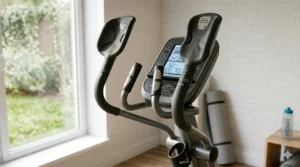
2. Sole E25 — Best for Heavier Users and Tall Athletes
The Sole E25 plays a different game than everything else in this price range. Where competitors are chasing touchscreens and subscription ecosystems, Sole is building bombproof machines with warranties that make other brands look embarrassed.
The specs that matter here: A 350-pound weight capacity — 50 lbs over the 300-lb industry standard — means you’re not operating at the edge of this machine’s limits even if you weigh 290 lbs. The 20-inch stride length is particularly valuable for taller users (over 5’10”) who feel cramped and shuffly on 18-inch machines. The 2-degree inward-sloping pedals are an underrated feature: they angle your feet slightly inward to mirror your natural walking gait, reducing lateral knee stress over long sessions. This design choice is especially meaningful for heavier users whose joints are already under more load.
The front-drive system creates a natural, walking-like motion that’s gentler on the hips and knees compared to rear-drive designs — a difference you’ll notice immediately if you’ve spent time on both types. Sole backs this machine with a lifetime warranty on the frame and flywheel, which is effectively unheard of in this price bracket.
Who is this for? Anyone close to or above 280 lbs who wants room to breathe in their weight capacity. Also ideal for tall users who’ve been frustrated by shorter stride lengths that make them feel like they’re jogging in place. This is the large user elliptical machine built with real engineering intention, not just a badge on the spec sheet.
Customer feedback: Buyers rave about the build solidity and the quiet operation. Several note it handles daily use without developing squeaks or looseness. The only frequent gripe: no touchscreen, so you’re bringing your own device for streamed content.
✅ 350-lb capacity — genuine headroom for heavier users
✅ 20-inch stride accommodates tall athletes
✅ Lifetime frame and flywheel warranty
❌ No built-in touchscreen
❌ Assembly is heavy work — two-person job
Price range and verdict: In the $1,000–$1,300 range, the Sole E25 is arguably the best value per pound of capacity on this entire list.
3. Horizon EX-59 — Best Budget-Friendly Entry for Beginners
The Horizon EX-59 is the perfect “first elliptical” — and I mean that as a genuine compliment, not a polite dismissal. It strips the experience down to what beginners actually need and executes those basics with surprising quality for under $700.
What it does well: The 18-inch stride is at the industry sweet spot — long enough to feel natural for most users under 5’11”, short enough to keep the machine’s footprint manageable. The dual-handlebar design (both moving arms and fixed grips) is smarter than it sounds: beginners often want the stability of holding fixed bars while they find their rhythm, then graduate to the moving arms once they’re comfortable. The 10 resistance levels are genuinely sufficient for a newcomer — you’ll spend months exploring that range before maxing it out.
The honest limitations: For a heavy-duty 300 capacity elliptical in the long haul, the 14-pound flywheel is the weakest link. Experienced riders or heavier users at the upper end of the 300-lb capacity will feel the motion is less fluid than premium machines. The five preset programs are basic — Calorie, Distance, Intervals, Weight Loss, and Manual — which means variety-seekers will need a tablet propped on the holder to keep things interesting.
Who is this for? Budget-conscious beginners, first-time elliptical buyers, or anyone who’s been off cardio equipment for years and wants to ease back in without a four-figure commitment. It’s also a solid pick for home gyms where a second person might use it occasionally.
✅ Lifetime frame warranty punches above its price class
✅ Intuitive dual-handlebar design for beginners
✅ Under $700 with solid construction
❌ 14-lb flywheel limits smoothness at higher intensities
❌ Only 10 resistance levels — experienced users may outgrow it
Price range and verdict: Around $699 — the best-built entry-level large user elliptical machine in this price range.
4. Schwinn 430 — Best Mid-Range Value with Incline Capability
The Schwinn 430 is a quiet overachiever. It shows up at a price most people associate with basic ellipticals, then proceeds to offer incline capability, 22 preset workouts, and a 20-inch stride that you typically only find on machines costing hundreds more.
What sets it apart: That 20-inch stride length is the big deal here. It matches what you get on the Sole E25 — a machine that costs significantly more — and it makes a meaningful difference for taller users or anyone who’s spent time on a shorter-stride machine that feels like running through wet sand. The six levels of manual incline add workout variety that most budget machines don’t touch. Twenty resistance levels provide a solid progression curve from couch-potato-easing-in to serious cardio work.
The real-world catch: The incline is manual, meaning you adjust it before you get on — not during the workout. That’s a legitimate inconvenience during interval training, but incline at this price point is rare enough that it’s still worth the tradeoff. The 13.2-lb flywheel is on the lighter side; users near the 300-lb capacity limit may notice the motion is less glassy-smooth than heavier flywheel machines. The LCD display also lacks a backlight, which makes it difficult to read in lower-lit spaces.
Who is this for? Mid-budget buyers who are moderately fit, under about 270 lbs, and want more workout programming than a budget machine but can’t stretch to $1,000+. The 22 preset programs mean you won’t exhaust the variety quickly.
✅ 20-inch stride — excellent for taller users
✅ 6 incline levels at this price is genuinely rare
✅ 22 preset workouts for structured training
❌ Manual incline only — can’t adjust mid-workout
❌ No Bluetooth connectivity
Price range and verdict: In the $799–$899 range, the Schwinn 430 delivers mid-range features at a firmly budget price.
5. Sunny Health & Fitness SF-E3912 — Best Compact Option with Surprising Capacity
Don’t let the modest price or compact footprint fool you. The Sunny Health & Fitness SF-E3912 has quietly become one of the bestselling ellipticals on Amazon, and there are good reasons people keep coming back to it.
The standout here is the 330-lb capacity — 30 pounds above the industry standard and a full 30 lbs more than most machines at this price point. It tells you something about the steel frame engineering: this isn’t a cheap machine that got a generous number stamped on its spec sheet. The 13.2-pound flywheel runs a belt drive system that’s notably quiet — you can watch TV at normal volume during a session, which matters if you’re training early morning in a shared space. The 24 built-in workout programs are genuinely impressive at this price; most sub-$500 machines offer six or eight.
The honest limitation is the 15.5-inch stride. It’s shorter than the 18-inch stride most fitness professionals recommend, which means taller users (5’9″ and above) will feel slightly cramped. For users under 5’8″, it works comfortably. The fixed handlebars also lack the swinging arm motion of mid-range machines, which limits upper body engagement during a session.
Who is this for? Apartment dwellers, smaller home gyms, or anyone who prioritizes capacity and value over stride length and feature depth. If you’re 5’7″, weigh around 280 lbs, and want a machine that fits in your living room without requiring a dedicated gym space — this is it.
✅ 330-lb capacity — above average for the price
✅ 24 preset workout programs
✅ Whisper-quiet belt drive
❌ 15.5-inch stride is short for taller users
❌ No moving handlebars
Price range and verdict: Around $400–$450 — the best 300 lb elliptical for home use on a tight budget.
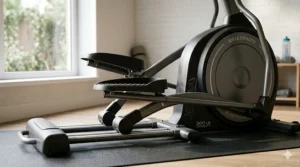
6. Niceday Elliptical Machine CT11 — Best Maximum Capacity Pick for Under $500
The Niceday CT11 is the elephant in the room — in the best possible way. While every other machine on this list tops out at 300 or 350 lbs, the CT11 is rated for 400 pounds. That’s not a typo.
What this means in practice: For users weighing 310–350 lbs, every other budget machine on this list puts you uncomfortably close to — or over — its rated limit. Running any piece of fitness equipment near its maximum rated load accelerates wear, increases wobble, and risks both the machine and the user. The Niceday’s 400-lb industrial-grade steel frame gives that population 50–90 lbs of comfortable headroom. It arrives 90% pre-assembled and requires no external power source, which are both genuinely useful advantages.
The 16-pound flywheel and 16 resistance levels provide solid workout variety, and the adjustable stride (15.5–18 inches) accommodates different heights. Kinomap app compatibility opens the door to virtual workout environments without requiring a full iFIT subscription. The compact footprint — about 8.3 square feet — is remarkable for a machine with this capacity.
The trade-offs: The lighter flywheel means the motion isn’t as buttery as the Sole or NordicTrack offerings. Some testers reported mild wobbling during high-intensity sessions, and there are no preset workout programs built in. This is a no-frills machine that gets out of your way and lets you work out — full stop.
Who is this for? Heavier users between 300–380 lbs who want genuine safety margin in their equipment without spending $1,000+. Also ideal for anyone who prioritizes durability and simplicity over tech features.
✅ 400-lb capacity — highest on this list
✅ 90% pre-assembled, no power outlet needed
✅ Adjustable stride length (15.5″–18″)
❌ No preset workout programs
❌ Mild wobble reported at peak intensities
Price range and verdict: Around $499 — the most capacity per dollar of any machine reviewed here, making it the standout heavy duty 300 capacity elliptical pick for larger users.
7. YOSUDA EM1 3-in-1 — Best for Workout Variety in a Small Footprint
The YOSUDA EM1 is the wildcard on this list — a machine that refuses to commit to being just one thing. It combines elliptical, cardio climber, and stair stepper functions into a single frame, and somehow pulls off a 400-pound weight capacity while doing it.
The versatility case: Fitness research consistently shows that workout variety improves adherence — people stick with exercise longer when they aren’t doing the exact same motion every day. The EM1’s three-mode system lets you rotate between the smooth glide of an elliptical, the quad-burning intensity of a stair stepper, and the full-body coordination challenge of a cardio climber. The 45-degree incline (in climber mode) cranks up caloric burn significantly compared to flat elliptical motion. The 18-pound flywheel is the heaviest on the budget end of this list, contributing to noticeably smoother motion than similarly priced competitors.
At 400 lbs capacity, it matches the Niceday for top-tier structural integrity. Front transport rollers make repositioning easy, and the compact design fits into spaces where a traditional full-length elliptical wouldn’t.
Who is this for? Fitness explorers who get bored easily, families where multiple people with different workout preferences will share the machine, or anyone who wants to build cardio variety into a consistent home routine. Also excellent for beginners who aren’t sure yet which type of cardio motion they prefer.
✅ 3-in-1 functions: elliptical, climber, stepper
✅ 400-lb capacity with 18-lb flywheel
✅ Compact footprint with transport wheels
❌ 15.5-inch stride may feel short at higher intensities
❌ Basic LCD monitor — no Bluetooth or app integration
Price range and verdict: Around $480 — exceptional value for the workout variety and capacity combination.
✨ Don’t Miss These Exclusive Deals!
🔍 Take your home cardio setup to the next level with these carefully selected ellipticals. Click on any highlighted product to check current pricing, reviews, and availability on Amazon. Your perfect low-impact cardio machine is waiting!
Who Should Actually Buy Which Machine: Real-World Scenarios
Let’s stop talking about spec sheets for a moment and talk about you.
Profile 1 — The Returning Athlete (220–260 lbs, previously active, getting back into it): You don’t need a machine that coddles you, but you also don’t need to spend $1,800 on features you won’t use in your first six months. The Schwinn 430 hits the sweet spot here. It has enough progression (20 resistance levels, incline capability) to challenge you as your fitness rebuilds, and the 20-inch stride will feel genuinely comfortable rather than restrictive.
Profile 2 — The Serious Beginner (260–300 lbs, little cardio history, joint concerns): This person needs stability above all else. A wobbly machine at this weight range isn’t just annoying — it can compromise form and increase injury risk. The Sole E25 is built for exactly this scenario. The 350-lb capacity provides real safety margin, the inward-pedal design reduces knee stress, and the 20-inch stride allows a natural gait rather than forcing an awkward shuffle. The lifetime frame warranty is your insurance policy.
Profile 3 — The Heavier User (300–380 lbs, needs genuine capacity headroom): Skip anything rated at exactly 300 lbs. Operating at 100% of a machine’s rated capacity is never a good idea. The Niceday CT11 or the YOSUDA EM1 — both rated at 400 lbs — give you the 50–80-lb safety buffer that makes a real difference in machine longevity and user safety. The American Council on Exercise recommends low-impact cardio for users with higher BMIs, and these machines deliver exactly that without the instability risks.
Profile 4 — The Tech-Motivated Exerciser (any weight under 290 lbs, needs external motivation to stay consistent): If you know yourself well enough to admit you’ll only work out when there’s a trainer virtually yelling at you on a screen — own it. The NordicTrack AirGlide 14i with its iFIT integration is designed precisely for this personality type. The SmartAdjust feature removes decision fatigue entirely, automatically changing resistance and incline to match your workout program.
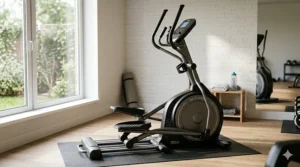
How to Choose the Right 300 lb Elliptical for Home: 6 Criteria That Actually Matter
Most buying guides for ellipticals tell you to look at resistance levels and stride length. Those matter. But here are the factors that experienced users learn the hard way:
1. Add a 50-lb buffer to your actual weight. If you weigh 280 lbs, you want a machine rated for at least 330 lbs. Running equipment at 95% of rated capacity accelerates component wear significantly. A flywheel bearing that lasts 5 years at 250 lbs may fail in 18 months at 295 lbs. The extra capacity isn’t vanity — it’s engineering logic.
2. Flywheel weight determines smoothness more than anything else. This is the spec most buyers ignore. Anything under 16 lbs will feel choppy for heavier users at high resistance. For a genuinely smooth ride that doesn’t jar your joints, look for 18 lbs minimum, ideally 20+. The NordicTrack AirGlide’s 32-lb flywheel is in a class by itself at the home-gym level.
3. Stride length should match your height. Under 5’8″? A 15.5–18-inch stride is fine. Between 5’8″ and 6’0″? Aim for 18–20 inches. Over 6’0″? The 20-inch stride on the Sole E25 or Schwinn 430 is important — shorter machines force you into a movement pattern that strains hips and knees over long sessions.
4. Frame material matters more than color or brand. Heavy-gauge steel construction is non-negotiable. Machines with significant plastic structural components — as opposed to plastic cosmetic covers — won’t hold up under consistent use at higher weights. Look for brands that specify steel construction in the frame (not just the flywheel housing).
5. Check the warranty — it tells you what the manufacturer actually believes about their product. A 3-year frame warranty signals a budget build with planned obsolescence. A lifetime frame warranty (Sole, for example) signals a company confident in its engineering. The warranty isn’t just protection — it’s a quality signal.
6. Measure your space before you buy, including ceiling height. Ellipticals raise your center of gravity — you’ll be 8–10 inches taller than normal during the stride. Taller users on high-pedal machines in low-ceiling basements have regretted not checking first. Most manufacturers list the ceiling clearance required on their spec pages.
According to Wikipedia’s overview of elliptical training, the machine’s design was specifically developed to simulate stair climbing and running while reducing the impact on joints — a key advantage that makes capacity and build quality particularly important for heavier users who already carry more load through their joints.
Elliptical vs. Treadmill for Heavier Users: The Honest Comparison
| Factor | Elliptical (300 lb capacity) | Treadmill (300 lb capacity) |
|---|---|---|
| Joint Impact | Very low — virtually no foot strike | Moderate to high — constant foot strike |
| Calorie Burn | Comparable to running | Slightly higher at same speed |
| Knee/Hip Stress | Significantly lower | Higher, especially at incline |
| Stability for Heavy Users | Better (two-foot contact) | Lower (dynamic foot strike) |
| Learning Curve | Minimal | Nearly zero |
| Best For | Joint issues, high BMI | Runners-in-training, high calorie burn |
The takeaway is this: for anyone over 250 lbs dealing with knee, hip, or ankle concerns, the elliptical wins every time. The physics are simple — you never fully leave the pedals on an elliptical, so there’s no impact force traveling up through your joints on every stride. Treadmills generate 1.2–1.5x your body weight in impact force on each footfall. At 280 lbs, that’s roughly 350–420 lbs of force hitting your knees thousands of times per session. For new exercisers, this comparison isn’t even close.
Common Mistakes When Buying a Plus Size Elliptical 300 lb Machine
Mistake 1: Choosing based on price alone. The cheapest 300-lb-rated machine is not always the best value. A $350 machine that breaks down after a year of regular use costs more in the long run than a $700 machine that runs reliably for five years. Factor in warranty coverage, flywheel weight, and frame materials before fixating on the sticker price.
Mistake 2: Ignoring the stride length for your height. This is the most common regret I see in user reviews. A 15.5-inch stride on a 6-foot user creates a motion that looks and feels like walking in place. Read the stride length spec, look up what height it’s designed for, and match it to your body — not your floor space.
Mistake 3: Assuming all “300-lb rated” machines are created equal. Two machines can both claim 300-lb capacity while having wildly different actual structural integrity. One might be tested to that limit on flat ground with a stationary load; another might be designed for dynamic, high-intensity use at that weight. Higher flywheel weights, heavier frame gauges, and longer frame warranties are your proxies for actual structural quality.
Mistake 4: Skipping professional assembly for heavy machines. A $200 assembly fee feels painful at checkout and saves significant frustration at home. Improperly assembled ellipticals develop squeaks, wobbles, and premature bearing wear. For machines weighing 150+ lbs (most of the mid-range and premium options here), professional assembly isn’t a luxury — it’s maintenance prevention.
Mistake 5: Buying a subscription-dependent machine without factoring in monthly costs. The NordicTrack AirGlide 14i costs around $1,799 upfront, but iFIT adds roughly $39/month. Over three years, that’s over $1,400 in subscription costs. That’s not a reason not to buy it — iFIT is genuinely good — but factor the total cost of ownership into your decision rather than just the sticker price.
Long-Term Cost and Maintenance: What Nobody Tells You
A 300 pound capacity elliptical is an investment that should last 5–10 years with proper care. Here’s what maintenance actually looks like in practice:
Monthly tasks (5 minutes): Wipe down the frame and pedals with a damp cloth. Check all bolts for looseness — vibration slowly backs them out over time, and a loose pedal linkage is both annoying and potentially dangerous. Check the belt for fraying on belt-drive machines.
Quarterly tasks (15 minutes): Apply light machine oil (not WD-40, which attracts dust) to moving pivot points on the handlebars and pedal arms. If your machine has a roller track, clean it with a dry cloth and inspect for debris. Check the power cord and console connections if applicable.
Annual tasks: Consider having a professional technician inspect the flywheel bearings and resistance system on machines used heavily (5+ times per week). Preventive bearing replacement at year 3–4 is far cheaper than full flywheel replacement.
The machines with the lowest long-term maintenance costs are belt-drive designs (Sunny SF-E3912, Sole E25, Niceday CT11) versus older magnetic fan designs. Belt drives are quieter, smoother, and require less frequent tensioning. Front-drive designs (Sole, Schwinn) tend to develop fewer alignment issues over time than rear-drive designs under heavy use.
The Mayo Clinic recommends regular aerobic exercise for weight management and cardiovascular health — and for that investment to pay off, the machine needs to stay functional. Budget a small amount annually for basic maintenance supplies and the machine will reward you with years of reliable use.
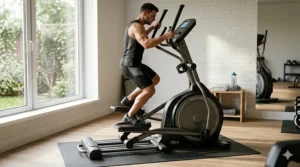
FAQ: Your Best Questions About Heavy Duty 300 Capacity Ellipticals
❓ What does '300 lb weight limit' actually mean on an elliptical machine?
❓ Is a 300 lb capacity elliptical safe for someone who actually weighs 300 lbs?
❓ What flywheel weight should I look for in a large user elliptical machine?
❓ Can a plus size elliptical 300 lb machine help with weight loss for obese users?
❓ How do I know if an elliptical is truly heavy duty, or just marketed that way?
Conclusion: Your Move
Here’s the bottom line. Finding the right 300 pound capacity elliptical isn’t about finding the most expensive machine or the one with the biggest screen. It’s about matching real engineering to your real body and your real goals.
If you’re close to 300 lbs and want genuine capacity headroom, the Sole E25 and the Niceday CT11 are your safest choices — one premium, one budget. If you want the smoothest, most technologically complete experience and you’re under 290 lbs, the NordicTrack AirGlide 14i is worth the investment. Beginners on a budget will find everything they need in the Horizon EX-59, and compact home gym owners can trust the Sunny SF-E3912 to deliver surprising capability in a small footprint.
Low-impact cardio isn’t a consolation prize for people who “can’t run.” It’s smart exercise science — the kind that keeps you training consistently, injury-free, for years. The right machine makes that consistency achievable. Choose one that’s built for your body, not just your aspirational self, and you’ll actually use it.
✨ Don’t Wait — Start Your Fitness Journey Today!
🔍 Click any highlighted product to check the latest pricing, user reviews, and availability on Amazon. These are the best picks available right now — don’t let the right machine sell out before you decide!
Recommended for You
- Best 275 Pound Elliptical Machine: 7 Top Picks (2026)
- 7 Best 250 Pound Capacity Ellipticals That Won’t Let You Down in 2026
- Conversation Level Elliptical: 7 Quietest Machines for 2026
Disclaimer: This article contains affiliate links. As an Amazon Associate, I earn from qualifying purchases. If you purchase products through these links, we may earn a small commission at no additional cost to you.
✨ Found this helpful? Share it with your friends! 💬🤗
