
In This Article
Choosing an elliptical for hotel fitness center use is nothing like picking one for a spare bedroom. A residential machine has one user, maybe five days a week, on carpet, in a climate-controlled room where nobody’s checking in at 5 a.m. after a red-eye. A hotel machine gets strangers on it in gym shoes and dress socks, sweaty palms on the console, and zero supervision — sometimes sixteen hours a day, seven days a week. In short: an elliptical for hotel fitness center placement is a total-body, low-impact cardio machine engineered for unattended, multi-user, high-duty-cycle commercial environments rather than casual home use.
That distinction matters more than most property managers realize until a $900 big-box elliptical dies eight months into a 24-hour operating schedule, and suddenly there’s a guest complaint on the front desk and an empty spot in the gym. Adults are supposed to get at least 150 minutes of moderate-intensity physical activity a week, according to the federal Physical Activity Guidelines for Americans, and business travelers frequently try to hit that number on the road — which means your fitness center isn’t a decorative amenity, it’s infrastructure guests actually use.
This guide walks through seven real, currently available commercial ellipticals spanning budget, mid-range, and premium tiers, backed by genuine spec research and aggregated reviewer sentiment rather than marketing copy. We’ll also cover multi unit commercial elliptical hotel deployments, what separates high traffic hotel gym equipment from home gear, and how full service hotel fitness amenities tie into brand-standard compliance. If you’re outfitting one property or twelve, you’ll leave with a shortlist you can actually act on.
Quick Comparison Table
Before diving into full profiles, here’s the fast version for anyone who just needs a starting point.
| Tier | Product | Best For |
|---|---|---|
| Budget / Light Commercial | Sole E98 Light Commercial Elliptical | Boutique properties, low-traffic gyms |
| Mid-Range | Octane Q47xi Elliptical | Adjustable stride, moderate-traffic hotels |
| Mid-Range | 3G Cardio Elite EM X | Small footprints, compact hotel gyms |
| Premium | Matrix E7xi Suspension Elliptical | Guest entertainment and engagement |
| Premium | Precor EFX 835 with CrossRamp | Best-in-class biomechanics |
| Premium | Life Fitness 95X Elevation Series | Full-service, high-traffic flagship gyms |
| Premium (Arc Motion) | Cybex 770AT Arc Trainer | Maximum calorie burn, joint-friendly alternative |
Notice the split here: the budget and mid-range picks suit smaller, lower-traffic properties where the machine might see two to four hours of daily use, while the premium tier is built for full-service hotels running equipment closer to sixteen hours a day. Picking a light commercial unit for a high-traffic downtown property is the single most common mistake in this category — the machine simply wasn’t engineered for that duty cycle, no matter how sturdy it feels in the showroom. We’ll unpack exactly where that line sits in the sections below.
Don’t buy on price alone — scroll down to see which tier actually matches your traffic level before you check out.
Top 7 Ellipticals for Hotel Fitness Centers: Expert Analysis
Each of these is a real, currently sold model. We’ve grouped them loosely from budget to premium, but the “right” pick genuinely depends on your property’s traffic, brand standards, and floor plan — not just your ceiling budget.
1. Sole E98 Light Commercial Elliptical — best budget pick for boutique properties
The Sole E98 Light Commercial Elliptical started life at a brand whose roots are literally in supplying hotel chains, which is a decent pedigree for this exact use case. Key numbers that matter: a 400-pound user weight capacity, a 32-pound flywheel (the heaviest in Sole’s lineup), 40 levels of magnetic resistance, and a 20-inch stride with power-adjustable incline. In practice, that flywheel weight is what keeps the stride from feeling jerky under a heavier or less-coordinated guest — lighter flywheels in this price bracket tend to feel “notchy” at low resistance, which is exactly when a jet-lagged guest is most likely to lose their footing. Based on the spec comparison against other sub-$3,000 machines, the E98 punches well above its price class on build weight alone (about 249 lbs assembled), which correlates strongly with long-term stability under daily strangers-in-shoes use.
Reviewers consistently report that Sole’s ellipticals score well above four stars on major retail platforms, and the E98 specifically draws praise for its 13.3-inch touchscreen and Bluetooth connectivity feeling more current than its price suggests. A recurring theme in aggregated feedback is that the light commercial warranty (lifetime frame, multi-year parts, one year labor) gives owners real confidence for shared-use settings, though a few owners note it’s still a step below true full-commercial coverage.
Pros:
- ✅ Lifetime frame warranty built for light commercial use
- ✅ Heaviest flywheel in its class smooths out the stride
- ✅ Bluetooth touchscreen feels modern for the price
Cons:
- ❌ Labor warranty is shorter than full-commercial competitors
- ❌ Not rated for the heaviest 16-hour-a-day traffic
Expect a price in the $2,500-$2,900 range at the time of research — always check current price before ordering. For a boutique hotel or a low-traffic extended-stay property, the value here is hard to argue with.
2. Octane Q47xi Elliptical — most adjustable stride for varied guest heights
Where the Octane Q47xi Elliptical earns its keep is SmartStride, a system that automatically shifts stride length across an 18 to 26-inch range in half-inch increments as the user’s pace changes. What most buyers overlook about this feature is that it’s not just a comfort perk — a fixed-stride machine that’s too long for a 5’2″ guest and too short for a 6’4″ guest is a genuine biomechanical mismatch, and hotel gyms see exactly that range of body types walk through the door every single day. The frame carries a lifetime warranty and roughly 290 lbs of assembled weight, positioning it closer to true commercial durability than most machines in its price tier.
Aggregated reviewer sentiment describes the Octane Q47xi as commercially built with a strong ergonomic reputation, and owners frequently mention the MOM Mode button-lock feature, which is a small but genuinely useful detail in a hotel setting where curious kids sometimes wander into the gym unsupervised. On the downside, some reviewers note the app-dependent SmartLink features feel dated compared to newer touchscreen-native consoles.
Pros:
- ✅ Auto-adjusting stride fits a wide range of guest heights
- ✅ Lifetime frame warranty signals real commercial confidence
- ✅ MOM Mode button lock adds a practical safety layer
Cons:
- ❌ Console/app experience feels older than touchscreen rivals
- ❌ Heavier footprint needs deliberate floor-plan spacing
Prices typically fall in the $3,000-$5,000 range depending on console configuration — confirm current pricing, since Octane offers several trim levels. This is a strong mid-range pick for a moderate-traffic property that still wants commercial-grade bones.
3. 3G Cardio Elite EM X — best space-saving pick for compact hotel gyms
Square footage is the silent budget killer in hotel gym design, and the 3G Cardio Elite EM X is built specifically around that constraint. Its roughly 49.2-inch footprint is meaningfully shorter than most commercial ellipticals, and it still fits a patented, roller-less, three-level adjustable stride (18″, 20″, 23″) that lets a single machine flex between a walking motion and a running motion. That’s a real differentiator: most compact ellipticals sacrifice stride quality for footprint; this one keeps both.
Based on the spec sheet, the 32 levels of magnetic resistance and 350-lb user capacity put it in respectable commercial territory, and the two-stage belt drive is designed to run quietly under heavy resistance — a genuinely underrated feature when the gym sits one floor below guest rooms. Reviewers who tested it noted the FreeSync FTMS smart connectivity lets it pair with apps like Zwift, which is a nice touch for the hybrid-hotel-gym-meets-boutique-studio positioning some brands are chasing in 2026.
Pros:
- ✅ Compact ~49-inch footprint fits tight hotel gym floor plans
- ✅ Three-level adjustable stride without sacrificing feel
- ✅ Quiet two-stage belt drive protects rooms above/below
Cons:
- ❌ Smaller install base means fewer long-term service reviews
- ❌ App-connectivity features add little value for most guests
Check current price for exact configuration and console options — this model tends to sit below the flagship-tier brands while still delivering commercial-relevant specs. Ideal for boutique and urban select-service properties working with a tight equipment closet.
4. Matrix E7xi Suspension Elliptical — best for guest entertainment and engagement
The Matrix E7xi Suspension Elliptical leans hard into what full service hotel fitness amenities increasingly need to deliver: entertainment. Its 16-inch capacitive touchscreen, WiFi connectivity, and Vista Clear television technology give guests something to actually look forward to during a workout, rather than staring at a wall. The suspension-based motion — no wheels, no tracks — is designed to deliver a constant rate of acceleration that Matrix positions as smoother than roller-based competitors, and reviewers who’ve used both note it does feel noticeably different underfoot, in a positive way.
Here’s what the spec sheet won’t tell you directly: a 21-inch stride and a low 9.5-inch step-on height mean this machine is genuinely easier for less-mobile or older guests to get onto safely, which matters more in a hotel than in a members-only gym where regulars already know the machine. Guest fitness amenities live or die on that kind of first-time-user friction, and the Matrix E7xi minimizes it well. On the flip side, the entertainment-forward console is more complex to service than a basic LED display, which can mean longer downtime if something breaks.
Pros:
- ✅ 16-inch touchscreen with WiFi keeps guests engaged
- ✅ Low 9.5-inch step-on height suits less-mobile guests
- ✅ Smooth suspension motion with no wheels or tracks
Cons:
- ❌ Complex console can mean longer repair turnaround
- ❌ Premium features add cost without adding durability
Expect a price generally in the $4,000-$6,000 range for new units, with reconditioned options available lower — always verify current pricing before purchase. This is a strong pick for full-service hotels that market their fitness center as a genuine amenity, not an afterthought.
5. Precor EFX 835 with Converging CrossRamp — best-in-class biomechanics
If you ask ten commercial fitness equipment techs which elliptical they trust most, a surprising number will say the Precor EFX 835 with Converging CrossRamp, and there’s a real reason for that reputation. Precor’s biomechanics were independently validated by the Western Washington University Biomechanics Lab across body types from the 5th to 95th percentile, and the CrossRamp incline range (roughly 13 to 40 degrees depending on version) lets a single machine target glutes, hamstrings, and quads differently just by adjusting the ramp — no separate machine needed. On paper this means one EFX 835 can functionally replace some of the variety a hotel would otherwise need two or three machines to cover.
Reviewers and service techs consistently note the covered ramp and rear-drive housing make it easier to clean and maintain than open-drive competitors, which is a real operational win for housekeeping staff who are wiping this machine down multiple times a day. A common theme in aggregated feedback is that the self-powered design (no wall outlet dependency in most consoles) simplifies installation, though some owners flag that the base P10/P20 console options feel spartan next to touchscreen rivals.
Pros:
- ✅ University-validated biomechanics across body types
- ✅ Covered ramp design simplifies daily cleaning
- ✅ Self-powered console needs no dedicated outlet
Cons:
- ❌ Entry-level console lacks touchscreen or entertainment
- ❌ Premium CrossRamp trims cost more than base LED units
Refurbished units commonly land in the $2,500-$3,500 range, with new units priced considerably higher — check current price for your configuration. For hotels prioritizing durability and biomechanical quality over flashy screens, this is close to the industry benchmark.
6. Life Fitness 95X Elevation Series (Discover SE3 Console) — best full-commercial flagship
The Life Fitness 95X Elevation Series with the Discover SE3 console is what a lot of guests picture when they imagine a “real” gym elliptical, because it’s the same machine found in Planet Fitness, LA Fitness, and countless full-service hotel chains. That recognition factor is worth something: guests who’ve never set foot in your property before already trust the name on the console. Specs back up the reputation — a rear-drive design, 20-inch stride, oversized non-slip pedals, and a 400-lb max user weight on a roughly 459-lb equipment frame that simply doesn’t rock or flex under heavier or less-coordinated users the way lighter machines can.
Here’s what most buyers overlook about the SE3 console specifically: beyond entertainment streaming and Bluetooth, it gives facility managers real usage diagnostics, which matters enormously for multi unit commercial elliptical hotel deployments across a portfolio, where a regional facilities team needs to know which machines are getting hammered and which are sitting idle. Aggregated reviewer sentiment repeatedly describes this as “the workhorse” of commercial fitness — a phrase that shows up across independent equipment blogs and refurbishers alike — though the narrow 20-inch fixed stride on some configurations is flagged as a tight fit for guests under about 5’3″.
Pros:
- ✅ Industry-recognized brand guests already trust on sight
- ✅ Heavy 459-lb frame resists rocking under daily multi-user load
- ✅ SE3 console provides real usage diagnostics for portfolios
Cons:
- ❌ Fixed 20-inch stride can feel long for shorter guests
- ❌ Touchscreen console repairs run $400-$800 out of warranty
New units carry a substantial premium, while professionally reconditioned Life Fitness 95X machines with the SE3 console are commonly found in roughly the $5,000-$8,000 range — confirm current pricing, since console tier changes cost significantly. This is the pick for flagship, high-traffic, brand-standard properties that need the machine to simply never be the reason for a bad review.
7. Cybex 770AT Arc Trainer — best for maximum calorie burn and joint protection
Technically an arc trainer rather than a true elliptical — the stride path is crescent-shaped instead of oval — the Cybex 770AT Arc Trainer earns its spot here because hotels increasingly buy it as a direct elliptical alternative, and the case for doing so is genuinely strong. Independent testing cited by Cybex found the arc motion burns roughly 16% more calories than a standard elliptical at matched effort, largely because the crescent path engages the glutes and hamstrings more directly. The 21 incline choices let a single machine function as a low-impact glider, a mid-range strider, and a high-incline stepper-style climber — effectively three cardio modalities in one footprint.
Reviewers frequently describe the 770AT as the “premium alternative” pick in commercial fitness circles, and it’s easy to see why: a 4.3-inch touchscreen setup (with an optional 15.6-inch upgrade), a 10-year frame warranty even on residential-tier packages, and a 400-lb max user weight all point toward genuine commercial durability. What most buyers overlook is that the arc motion changes posture slightly compared to a standard elliptical — users lean back a bit more naturally — which some reviewers note takes a workout or two to adjust to for guests who’ve only ever used a traditional oval-stride machine.
Pros:
- ✅ Burns roughly 16% more calories than standard ellipticals
- ✅ 21 incline choices function as three machines in one
- ✅ 10-year frame warranty even on entry console packages
Cons:
- ❌ Learning curve for guests unfamiliar with arc motion
- ❌ Higher price tier than most true ellipticals on this list
Expect a price generally in the $4,500-$6,500 range for commercial-console configurations — always check current price given the wide range of console tiers Cybex offers. This is the pick for hotels that want to differentiate their gym rather than just match the competition down the street.
Top 7 Products: Full Comparison
| Product | Tier | Stride | Approx. Price Range | Best For |
|---|---|---|---|---|
| Sole E98 Light Commercial Elliptical | Budget | 20″ | $2,500-$2,900 | Boutique, low-traffic gyms |
| Octane Q47xi Elliptical | Mid-range | 18-26″ adjustable | $3,000-$5,000 | Varied guest heights |
| 3G Cardio Elite EM X | Mid-range | 18-23″ adjustable | Check current price | Small/compact gym floors |
| Matrix E7xi Suspension Elliptical | Premium | 21″ | $4,000-$6,000 | Entertainment-focused gyms |
| Precor EFX 835 w/ CrossRamp | Premium | 21-25″ (ramp-based) | $2,500-$3,500 (refurb) | Biomechanics/durability |
| Life Fitness 95X Elevation Series | Premium | 20″ | $5,000-$8,000 (refurb) | Full-service, high-traffic flagships |
| Cybex 770AT Arc Trainer | Premium | Up to 24″ (arc path) | $4,500-$6,500 | Max calorie burn, differentiation |
Looking at the table, there’s a clear traffic-driven split: the Sole E98 Light Commercial Elliptical and the 3G Cardio Elite EM X suit properties running these machines two to six hours a day, while the Life Fitness 95X and Cybex 770AT Arc Trainer are built for the sixteen-hour, seven-day cycles typical of full-service urban and airport hotels. Notably, refurbished Precor EFX 835 units currently offer the strongest dollar-for-durability ratio on this list, which is why so many equipment resellers describe it as the category benchmark. If your property sits in the middle — moderate traffic, mixed guest demographics — the Octane Q47xi and Matrix E7xi both make a defensible case, with the deciding factor usually coming down to whether guest-facing entertainment or stride adjustability matters more to your brand positioning.
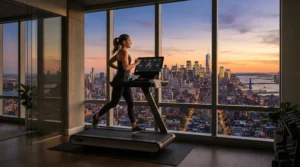
Elliptical vs. Traditional Hotel Gym Alternatives
| Factor | Elliptical/Arc Trainer | Treadmill | Stationary Bike |
|---|---|---|---|
| Joint impact | Low | Moderate-high | Very low |
| Total-body engagement | High (with moving handles) | Lower body only | Lower body only |
| Guest learning curve | Low-moderate | Very low | Low |
| Noise transmitted to floors above | Low-moderate | Higher (impact) | Low |
| Best For | Full-body, low-impact cardio | Familiar, fast setup | Seated, very low-mobility guests |
This table isn’t an argument for replacing treadmills entirely — most full-service gyms still need at least one — but it does explain why an elliptical for hotel fitness center use tends to be the second cardio machine purchased, not the third. The lower joint impact and total-body engagement make it a better match for the widest range of guest ages and fitness levels, and quieter operation matters enormously for properties where the gym sits near guest rooms. Stationary bikes remain the right call for guests with mobility limitations, but they can’t replicate the calorie burn or muscle engagement an elliptical or arc trainer delivers in the same time window.
How to Choose an Elliptical for Hotel Fitness Center Use
Picking the right machine comes down to seven factors, roughly in order of importance for most properties:
- Traffic level first, budget second. A machine rated for light commercial use in a 16-hour high-traffic gym will fail early and often — match the duty rating to your actual hours of operation, not your wish list.
- Stride length and adjustability. Guests range from 5’0″ to 6’5″. A fixed 20-inch stride works for most, but adjustable-stride models reduce the number of guests who feel cramped or overextended.
- Console complexity vs. serviceability. Touchscreens are attractive, but every added feature is another thing that can break at 11 p.m. on a Saturday with no technician on call.
- Frame weight and stability. Heavier frames (400+ lbs) resist the rocking and flexing that heavier or less-coordinated users can trigger on lighter machines.
- Warranty structure. Look specifically for commercial (not residential) coverage terms — the fine print differences between “light commercial” and “full commercial” warranties are significant.
- Footprint vs. floor plan. Measure your actual gym space before shopping; compact models exist specifically for properties that can’t fit a standard-footprint machine.
- Brand recognition for guest trust. A name guests already associate with real gyms reduces the “is this thing safe” hesitation that keeps some travelers from using unfamiliar equipment.
Practical Usage Guide: Setup and First 30 Days
Getting a new elliptical for hotel fitness center placement operational correctly in the first month prevents most of the service calls that follow. Start with floor prep: confirm the delivery team has verified doorway clearances and floor load ratings before the unit arrives, since commercial ellipticals commonly weigh 250 to 460+ lbs assembled, and a miscalculated route can mean disassembly delays or floor damage.
During setup, insist on professional leveling and calibration rather than eyeballing it — an unlevel elliptical develops uneven wear on bearings and tracks within weeks under multi-user traffic, long before it would under residential use. In the first 30 days, establish a wipe-down schedule (ideally after every few uses, not just nightly) since sweat and cleaning chemicals are the single biggest driver of early console and handlebar corrosion in commercial settings. A common mistake properties make is skipping the manufacturer’s initial break-in service check, typically recommended around 90 days or a set number of operating hours — this catch-up inspection is when techs tighten bolts that settle under real-world use and catch minor issues before they become warranty claims. Finally, post clear, laminated instructions on stride adjustment and resistance controls near the console; unsupervised guests unfamiliar with a specific console layout account for a disproportionate share of early support calls.
Real-World Scenarios: Matching Guests to Machines
Consider three common hotel guest profiles. A business traveler on a two-night stay wants a fast, familiar 20-30 minute cardio session before a full day of meetings — for this guest, a straightforward, no-learning-curve console like the Precor EFX 835 or base-tier Life Fitness 95X gets them moving without frustration. A family on a weekend trip includes a parent who wants a joint-friendly option and possibly a teenager who wants something that feels less “gym equipment,” making the touchscreen-equipped Matrix E7xi a natural fit for the entertainment factor alone. A fitness-focused guest — someone training for an event or maintaining a strict routine — will notice and appreciate stride adjustability and incline range, making the Octane Q47xi or Cybex 770AT Arc Trainer the better match, since these guests are the ones most likely to leave a review specifically about gym equipment quality.
This is exactly why full service hotel fitness amenities increasingly mix tiers within a single gym rather than buying seven identical machines: covering these three guest profiles with two or three different models, rather than one uniform fleet, measurably improves the odds that any given guest finds a machine that fits them.
Multi Unit Commercial Elliptical Hotel Deployments vs. Single-Property Buys
Buying for one property and buying across a multi unit commercial elliptical hotel portfolio are genuinely different exercises. A single boutique hotel can prioritize whatever machine fits its specific guest mix and floor plan. A regional or national portfolio, by contrast, needs standardization — consistent parts, consistent service contracts, and console diagnostics that let a central facilities team monitor usage and flag maintenance needs across dozens of properties without a site visit.
This is where consoles like the Discover SE3 on the Life Fitness 95X genuinely earn their premium: the usage-tracking data lets a facilities director see which machines across a portfolio are approaching service intervals, rather than waiting for a property manager to notice a problem. BodyKore’s 2026 buyer’s guide notes that major flags like Marriott and Hilton write fitness facilities directly into their brand standards, which means portfolio-wide equipment decisions aren’t purely a budget question — they’re a compliance question with real audit consequences for underperforming franchisees. For a multi-property buyer, negotiating a single vendor relationship across the whole portfolio for parts availability and service response times is typically worth more long-term than chasing the lowest per-unit price at each individual property.
High-Traffic Hotel Gym Equipment: What to Expect in Daily Use
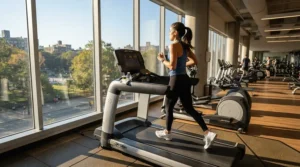
High traffic hotel gym equipment lives a genuinely different life than the same model sitting in a corporate wellness room. TZFIT’s 2026 hotel equipment guide points out that many larger properties specifically pair premium, guest-facing cardio brands with more budget-conscious strength equipment, precisely because the cardio machines are what guests notice and photograph, while strength equipment sees comparatively lighter and more predictable use patterns.
In real-world terms, expect a well-trafficked hotel elliptical to see anywhere from 80 to 120+ individual sessions weekly depending on occupancy, compared to maybe 10-15 sessions weekly for the same machine in a typical home. That duty cycle is exactly why commercial bearings, sealed electronics, and reinforced frames aren’t marketing fluff — they’re the difference between a machine that lasts five years versus fifteen. Facility managers should also expect noticeably more frequent cleaning and lubrication needs than manufacturer documentation assumes for standard “commercial” ratings, since hotel gyms combine 24-hour access with essentially zero staff supervision, a combination gyms with front-desk check-in rarely experience.
Full-Service Hotel Fitness Amenities and Guest Fitness Amenities
The line between a “gym” and a genuine full service hotel fitness amenity increasingly comes down to variety, not just square footage. Guest fitness amenities that consistently drive positive reviews tend to combine at least one low-impact cardio option (an elliptical or arc trainer), one high-familiarity option (a treadmill), and enough strength equipment to cover a basic full-body routine — not necessarily more machines, but more thoughtfully chosen ones.
Reviewers consistently note that guests judge a fitness center within the first thirty seconds of walking in, based largely on whether the equipment looks current and well-maintained rather than on the actual machine count. A single well-chosen, well-maintained elliptical for hotel fitness center placement — like the Matrix E7xi with its guest-facing touchscreen — often generates more positive sentiment in reviews than three older, mismatched machines crammed into the same space. Properties competing for the business-travel segment in particular should weight guest-visible quality signals (screen clarity, console responsiveness, general cleanliness) as heavily as raw specs, since that’s genuinely what shows up in online reviews.
Hotel Brand Standards and Compliance Requirements
Hotel brand standards are where equipment choice stops being purely a preference question. Major franchise flags including Marriott, Hilton, and IHG build fitness facility requirements directly into their brand standards, and properties that fall short risk failing brand audits — a real financial and operational consequence, not a hypothetical one. Beyond brand-specific requirements, as a public accommodation, a hotel fitness room generally needs to meet accessibility standards: adequate clear floor space at accessible equipment, compliant accessible routes with sufficiently wide doorways, and clearances around each machine, though specific requirements should always be confirmed with local code authorities since they vary by jurisdiction.
Practically, this means equipment selection should happen alongside, not after, a review of your specific brand’s fitness facility requirements and local accessibility code. A machine that’s technically excellent but installed with insufficient clearance around it, or that leaves a property short of its required equipment mix, can fail an audit regardless of how well guests like it. Choosing well-known commercial brands like Life Fitness, Precor, and Matrix also carries a secondary compliance benefit: auditors and inspectors recognize these names, which tends to streamline the review process compared with unfamiliar or off-brand equipment.
Long-Term Cost, Maintenance, and High-Traffic Equipment Turnover
The sticker price on any elliptical for hotel fitness center placement is only part of the real cost. High-traffic equipment turnover — how often a machine needs replacing due to wear, not just breakage — is driven primarily by duty cycle mismatch, meaning a light commercial machine pushed into full-commercial hours. Buying correctly the first time is almost always cheaper than replacing a light-duty machine two years early.
Total cost of ownership should factor in: purchase price, delivery and installation, an annual service contract (commonly a few hundred dollars per machine for preventive maintenance), console repairs (touchscreen replacements commonly run $400-$800 out of warranty on premium consoles), and eventual replacement cycle. On a per-use basis, a $6,000 full-commercial elliptical that lasts twelve years at high traffic works out to a fraction of a cent per guest session — often cheaper long-term than a $2,500 light-commercial unit that needs full replacement every three years under the same load. Fitness Design Group’s procurement guide notes that hospitality equipment endures punishment exceeding standard commercial expectations, with a hotel treadmill or elliptical commonly seeing usage volumes that dwarf a typical corporate gym — which is exactly why matching duty rating to actual traffic, not just budget, drives the real long-term savings.
Buyer’s Decision Framework
Use this simple framework to narrow your choice quickly:
- If your property runs under 6 hours of daily gym traffic and has a limited budget, choose the Sole E98 Light Commercial Elliptical because its light-commercial warranty and heavy flywheel match that lower duty cycle without overspending.
- If your gym floor plan is tight, choose the 3G Cardio Elite EM X because its compact footprint delivers commercial-relevant specs without requiring extra square footage.
- If your brand standards emphasize guest entertainment and engagement, choose the Matrix E7xi Suspension Elliptical because its touchscreen and low step-on height reduce first-time-user friction.
- If your property runs 16-hour, high-traffic full-service operations, choose the Life Fitness 95X Elevation Series because its frame weight and portfolio-level diagnostics are built for exactly that duty cycle.
- If you want to differentiate your gym from every other hotel on the block, choose the Cybex 770AT Arc Trainer because its calorie-burn advantage and three-in-one motion give guests something genuinely different.
Frequently Asked Questions
❓ What's the difference between commercial and light commercial elliptical for hotel fitness center use?
❓ How much does a commercial elliptical for a hotel gym typically cost?
❓ How many ellipticals does a hotel fitness center actually need?
❓ Do hotel brand standards require specific elliptical machines?
❓ How long do commercial ellipticals last in high-traffic hotel gyms?
Conclusion
Choosing the right elliptical for hotel fitness center use ultimately comes down to being honest about your property’s traffic level before you fall in love with a console. Budget-tier and light-commercial machines like the Sole E98 genuinely excel in the right setting — they’re simply not designed for full-service, 16-hour duty cycles. Mid-range options like the Octane Q47xi and 3G Cardio Elite EM X hit a real sweet spot for moderate-traffic properties balancing durability and cost. And for flagship, high-traffic, brand-standard hotels, the premium tier — the Life Fitness 95X, Precor EFX 835, Matrix E7xi, and Cybex 770AT Arc Trainer — earns its price through frame durability, biomechanics, and the guest trust that comes with a recognizable name.
Whichever tier fits your property, the underlying math stays the same: matching duty rating to actual traffic prevents the premature equipment turnover that quietly eats far more budget than the sticker price ever suggests. Guests notice worn, wobbly equipment fast, and a well-chosen elliptical is one of the more visible, high-impact investments a fitness center can make relative to its cost.
Recommended for You
- Gym Quality Elliptical for Home Use: 7 Best Picks (2026)
- Commercial Grade Elliptical: 7 Real Picks for Small Gyms (2026)
- Heavy Use Elliptical for College Dorm Gym: 7 Picks for 2026
Disclaimer: This article contains affiliate links. As an Amazon Associate, I earn from qualifying purchases. If you purchase products through these links, we may earn a small commission at no additional cost to you.
✨ Found this helpful? Share it with your team before your next equipment order! 💬🏨
