
In This Article
What Counts as a Heavy Use Elliptical for College Dorm Gym Traffic?
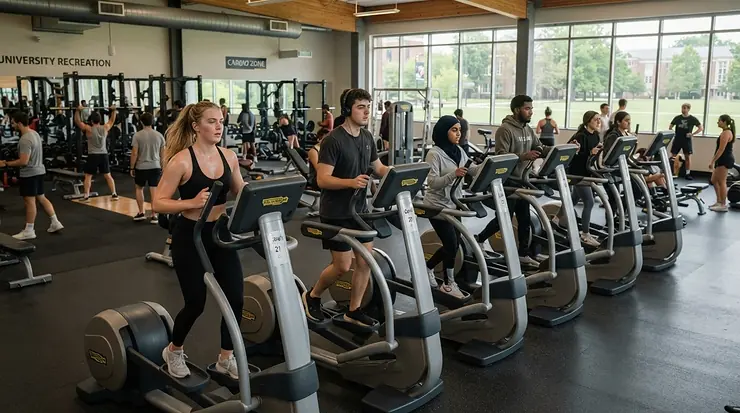
Picture this: it’s 11 p.m. on a Tuesday, three separate floors’ worth of students are cramming for a midterm, and exactly one of them decides the only cure for exam stress is twenty minutes on the elliptical down in the lounge. Multiply that by two hundred residents, zero supervision, and a machine that never gets a day off, and you start to understand why a heavy use elliptical for college dorm gym spaces is a completely different animal from the one your uncle bought for his basement. In plain terms, it’s a commercial or light-commercial grade cross-trainer engineered to survive dozens of unsupervised users a day, heavier average body-weight ranges, and zero routine maintenance — for years, not months.
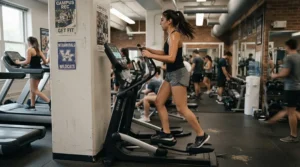
Residence hall fitness rooms are a strange hybrid. They get gym-level foot traffic but home-gym-level oversight, which is exactly the gap where flimsy machines go to die. A treadmill motor burning out during finals week is annoying. A wobbly elliptical with a loose pedal arm during finals week is a liability report waiting to happen. That’s the lens this whole guide is built around: real products, real specs, and honest reasoning about which machines actually survive a dorm’s particular brand of chaos — not just which ones look good on a spec sheet.
We pulled together seven real, purchasable elliptical trainers spanning budget, mid-range, and full commercial tiers, based on published manufacturer specifications and aggregated reviewer sentiment from equipment dealers and independent review sites. Nothing here is invented. Where the data gets thin — say, on a specific facility’s real-world failure rate — we say so plainly instead of making something up. Let’s get into it.
Quick Comparison Table: Heavy Use Elliptical for College Dorm Gym Shortlist
| Model | Weight Capacity | Warranty (Frame) | Price Range | Best For |
|---|---|---|---|---|
| TRUE C900 | 400 lbs | Lifetime, commercial | $6,000–$8,000 | Highest-traffic residence halls |
| Precor EFX 835 | 350 lbs | Commercial-grade | $7,000–$8,000 | Natural-feel stride purists |
| Matrix E50 | 325 lbs | Lifetime (home), 7 yr parts | $3,999–$6,099 | Compact lounges, quiet operation |
| Sole E98 | 400 lbs | Lifetime, light commercial | $2,500–$2,800 | Best value under $3,000 |
Even at a glance, the spread here tells a story: weight capacity and warranty terms move almost in lockstep with price, and the Sole E98 stands out as the value outlier — it matches the 400-pound capacity of machines costing three times as much. The TRUE C900 anchors the top of the range because its commercial warranty explicitly covers “all dues-paying facilities regardless of usage,” language that residential-grade machines simply don’t offer. If your dorm gym budget caps out under $3,000 per station, the Sole E98 is where this table points you first; if you’re outfitting a 24-hour flagship rec facility, the TRUE C900 or Precor EFX 835 are built for that grind.
💬 Ready to compare full specs side by side? Scroll down to the complete breakdown of all seven models below!
Top 7 Heavy Use Ellipticals for College Dorm Gyms: Expert Analysis
1. TRUE C900 — best overall pick for 24/7 residence hall traffic
The TRUE C900 earns the top spot here mostly because of one sentence buried in its warranty documentation: commercial coverage applies to “all dues paying facilities, regardless of usage.” That’s manufacturer language most competitors won’t put in writing, and it matters enormously in a dorm setting where nobody is tracking how many students used the machine before 2 a.m.
Specs-wise, the TRUE C900 is built on TRUE’s patented Core Drive system, which keeps the user centered over the pedals rather than shifting weight forward like a lot of rear-drive ellipticals do — in practice, that means less wobble and less strain on the frame bearings over thousands of unsupervised cycles. It’s rated for up to 400 pounds of moving workout weight, and the frame itself tips the scale north of 370 pounds, which is a decent proxy for how much steel is standing between your residence hall and a maintenance ticket. Facilities buyers should note it also offers a “Side Steps” feature letting users drive the machine with upper-body motion alone, useful for students recovering from a lower-body injury who still want cardio.
Based on the spec comparison against lighter machines in this guide, the TRUE C900 is the pick for buildings averaging heavy daily use across dozens of residents rather than a small, lightly trafficked lounge. Reviewers and dealers consistently describe TRUE’s commercial line as a “low cost of ownership” investment precisely because the frame rarely needs service calls, even under continuous operation — though independent, apartment-specific review data on dorm deployments specifically is limited, so treat that as a strong industry reputation rather than a guaranteed outcome for your building.
Pros:
- ✅ 400-lb capacity covers virtually any student body type
- ✅ Commercial warranty explicitly covers heavy facility use
- ✅ Core Drive design reduces frame wobble over time
Cons:
- ❌ Premium price point strains smaller housing budgets
- ❌ Nearly 375 lbs unassembled — needs a permanent floor spot
Price sits in the $6,000–$8,000 range for new units, with certified pre-owned commercial units sometimes available for less. For a facility that runs a fitness room around the clock, that upfront number is arguably cheaper over five years than replacing a budget machine twice.

2. Precor EFX 835 — best for the smoothest, most natural stride
If the TRUE C900 wins on warranty language, the Precor EFX 835 wins on sheer name recognition — this is, quite literally, the machine most students will already recognize from actual health clubs, because Precor’s commercial line is what most gyms in America install. That familiarity matters more than it sounds: students are more likely to actually use equipment that doesn’t feel like a mystery box.
The headline feature is Precor’s Converging CrossRamp technology, which lets the footpath converge naturally toward the body’s midline, mimicking a real walking or running gait rather than the stiff, parallel-track motion of cheaper ellipticals. The ramp adjusts across a 13-to-40-degree range with 20 resistance levels, and moving handlebars add an upper-body component that turns a leg day into a full-body one. What most buyers overlook about this spec sheet is that the incline range does double duty: it’s a workout variety feature for engaged users, and it’s also a way to spread wear more evenly across the drive mechanism instead of hammering one fixed motion thousands of times a week.
User capacity sits at 350 pounds — respectable, but noticeably lower than the TRUE C900 and Sole E98, worth flagging for housing departments serving a broad range of body types. Reviewers consistently note that noise is the EFX 835’s one real drawback: commercial units are simply louder than home-tuned machines, which is a fair trade-off in an open rec room but worth testing in an enclosed dorm basement with thin walls.
Pros:
- ✅ Converging CrossRamp mimics natural walking gait
- ✅ 20 resistance levels plus 27-degree incline swing
- ✅ Widely recognized brand students already trust
Cons:
- ❌ Louder operation than most home-tuned machines
- ❌ 350-lb capacity trails the category leaders
At roughly $7,000–$8,000, the Precor EFX 835 commands a premium similar to the TRUE C900, and the choice between them often comes down to whether your students prioritize gait naturalness (Precor EFX 835) or raw weight capacity and warranty language (TRUE C900).
3. Octane Fitness LX8000 LateralX — best for varied, joint-friendly full-body motion
The Octane Fitness LX8000 LateralX is the wild card of this list, and deliberately so — instead of a fixed elliptical motion, it lets users shift a side-to-side lateral width dial across ten settings, turning one machine into something closer to a lateral trainer, stepper, and elliptical combined. For a shared dorm gym where five different students want five different workouts from one footprint, that flexibility is worth a serious look.
Published product data claims up to a 27% increase in caloric expenditure moving from the narrowest to widest lateral setting, and up to a 30% increase in hip adductor and abductor engagement compared to a traditional elliptical motion — those are manufacturer-published figures, so treat them as directional rather than gospel, but the underlying mechanism (working muscles a straight-line elliptical simply can’t reach) is mechanically sound. Weight capacity comes in at 400 pounds, matching the category’s best, and the unit itself weighs a hefty 388 pounds, which translates to serious floor stability during aggressive lateral shifts.
Here’s what the spec sheet won’t tell you outright: this is also one of the pricier machines here, with commercial console options ranging from around $7,900 up past $11,000. Based on that pricing, the Octane Fitness LX8000 LateralX makes the most sense for a flagship recreation center trying to differentiate its fitness offering, not necessarily for every single residence hall satellite gym on a tight per-building budget.
Pros:
- ✅ Ten-way lateral motion targets muscles standard ellipticals miss
- ✅ 400-lb capacity matches the category’s toughest machines
- ✅ Converging handlebars add a genuine upper-body component
Cons:
- ❌ Among the most expensive machines in this roundup
- ❌ Learning curve for students unfamiliar with lateral motion
4. Life Fitness Integrity Series Elliptical — best for buildings without a dedicated power run
Older residence halls are notorious for one very specific headache: not every corner of the basement lounge has a convenient 120V outlet, and running new electrical for a fitness room addition can blow a facilities budget before a single machine arrives. The Life Fitness Integrity Series Elliptical solves that problem directly — it’s self-powered and cordless, generating its own electricity through the pedaling motion via an internal alternator and battery system.
Beyond the power situation, this model brings oversized 15-inch pedals with 3-inch spacing, a 20-inch fixed stride, and 25 resistance levels, alongside wireless internet connectivity that lets facilities staff monitor asset usage data remotely — a genuinely useful feature for a housing department managing equipment across a dozen buildings without physically walking through each one. Reviewers and dealers note the console options range from a simple LCD display up to a full touchscreen with IPTV compatibility, so budget-conscious buyers can skip the flashy screen and still get the same drivetrain durability.
Based on the spec comparison against corded commercial units, the trade-off here is fixed stride length versus the flexibility of self-generating power — you lose some workout customization but gain installation simplicity that can meaningfully cut project costs in an older building. Typical pricing for new units in this line runs roughly $4,000–$6,000 depending on console selection.
Pros:
- ✅ Self-powered design skips costly electrical work
- ✅ Wireless asset monitoring for multi-building facilities teams
- ✅ Oversized 15-inch pedals reduce numb-foot complaints
Cons:
- ❌ Fixed 20-inch stride, no adjustability
- ❌ Advanced touchscreen consoles add real cost
5. Matrix E50 — best compact, low-maintenance mid-range option
Space is the eternal enemy of dorm fitness rooms, and the Matrix E50 is built around exactly that constraint. Its Suspension Elliptical technology does away with the traditional rail-and-wheel track system altogether, meaning there’s no track to wear out, no wheels to replace, and — according to reviewers — a noticeably quieter ride than track-based competitors, which matters when the fitness room shares a wall with someone’s 8 a.m. class prep.
The footprint is compact at roughly 58 by 30 inches, small enough to fit into corners other commercial ellipticals can’t touch, while the frame itself still weighs close to 300 pounds fully assembled. Weight capacity lands at 325 pounds, and the Exact Force Induction Brake system delivers 30 levels of near-instant, whisper-quiet resistance changes. What most buyers overlook about suspension-style designs is the maintenance math: fewer moving mechanical contact points generally means fewer service calls over a multi-year lifespan, which is exactly the kind of unsupervised gym equipment durability a dorm setting demands.
Reviewers describe the ride quality as remarkably close to a full commercial machine, with the suspension design frequently singled out as the standout feature. The main knock, consistently, is price — this sits firmly in premium mid-range territory.
Pros:
- ✅ Suspension design eliminates track wear entirely
- ✅ Compact 58×30-inch footprint fits tight lounges
- ✅ 30-level induction brake stays whisper-quiet
Cons:
- ❌ 325-lb capacity trails the top commercial tier
- ❌ Fixed 20-inch stride length, no adjustability
Pricing runs $3,999–$6,099 depending on the console tier chosen, with the base 8.5-inch LCD version representing the more budget-conscious end of that range.
6. Sole E98 — best value under $3,000 for light commercial use
If there’s one machine on this list that punches dramatically above its price tag, it’s the Sole E98. Sole markets it explicitly as “commercial grade at a residential price,” and for once, the spec sheet backs up the marketing: a 400-pound weight capacity, a 20-inch stride, and a lifetime warranty on both frame and flywheel that explicitly extends to light commercial settings like apartment complexes and non-dues-paying gyms — which describes most dorm lounges perfectly.
The 32-pound flywheel is the heaviest in Sole’s lineup, and heavier flywheels generally translate to smoother, more stable pedaling motion under continuous use rather than the jerky feel cheaper flywheels produce after a few thousand cycles. Forty levels of magnetic resistance and 20 incline levels give students genuine workout variety, while the frame’s 38-millimeter steel construction is specifically marketed toward “the wear and tear of multiple users.” Reviewers consistently flag the warranty structure as a standout: lifetime frame and flywheel coverage, three years on parts and wear items, and one year of labor for light commercial deployments — better documented protection than most machines at this price point offer.
Here’s the honest caveat: the Sole E98 is designed for light commercial use, not full 24-hour, due-paying health club traffic. For a single residence hall lounge with moderate foot traffic, that’s a perfect fit. For a flagship all-hours rec center serving thousands of students, it may be undersized relative to purpose-built commercial units like the TRUE C900.
Pros:
- ✅ 400-lb capacity matches machines costing triple the price
- ✅ Lifetime frame and flywheel warranty, light commercial rated
- ✅ Heaviest flywheel in Sole’s lineup smooths the ride
Cons:
- ❌ Rated for light commercial, not full 24/7 health club traffic
- ❌ Touchscreen electronics need a climate-controlled room
Street pricing typically lands between $2,500 and $2,800, occasionally dipping lower during promotional periods — check current pricing before budgeting, since retail figures shift often.
7. Schwinn 470 — most affordable entry point for smaller, low-traffic spaces
Every category needs an honest budget option, and the Schwinn 470 is it — with a real caveat attached. At well under $1,100, it’s the least expensive elliptical on this list by a wide margin, and it comes loaded with features that seem generous for the price: a 20-pound flywheel, 25 levels of eddy current resistance, a 10-degree motorized incline, and a genuinely impressive 29 built-in workout programs.
The catch, and it’s a real one for a heavy use dorm application, is the 300-pound weight capacity and a labor warranty that reviewers describe as “below average” — often cited around 90 days, well short of the multi-year commercial coverage on every other machine here. Based on that spec comparison, the honest read is that the Schwinn 470 belongs in a small, lightly used residence hall lounge — think a 40-bed floor with modest gym traffic — rather than a high-throughput central fitness room seeing dozens of unsupervised users daily.
Reviewers are split on long-term durability at this price tier, with some noting the machine can feel “less sturdy” than its higher-priced peers despite comparable feature lists. That’s a fair trade for the price, as long as housing staff go in with realistic expectations about service life under heavier traffic.
Pros:
- ✅ Lowest price point of any machine in this guide
- ✅ 29 built-in programs add genuine workout variety
- ✅ Lightest unit here, easier to reposition or relocate
Cons:
- ❌ Only 90-day labor warranty, short for facility use
- ❌ 300-lb capacity, lowest of the seven models
For a satellite lounge, first-floor overflow space, or a pilot program before committing to pricier equipment building-wide, the Schwinn 470 is a reasonable starting point — just budget for a shorter realistic replacement cycle than the commercial-grade options above.
How to Choose a Heavy Use Elliptical for a College Dorm Gym
Shopping for one machine at home is a personal decision. Shopping for a dorm gym is a facilities decision, and the criteria shift accordingly.
- Match weight capacity to your actual resident population, not an average. A 300-pound capacity machine might handle “most” students fine, but one incident with an over-capacity user is a liability and a broken machine. Aim for 350–400 pounds when budget allows.
- Read the warranty’s fine print for the word “commercial.” Many residential warranties are voided the moment equipment is installed in a shared, non-dues-paying facility — exactly what a dorm lounge is. The TRUE C900 and Sole E98 explicitly address light or full commercial use in writing.
- Weigh self-powered versus corded designs against your building’s wiring. Older halls without a convenient outlet near the fitness room benefit enormously from a self-generating unit like the Life Fitness Integrity Series Elliptical.
- Prioritize simple, durable electronics over flashy touchscreens. Every extra screen and connected feature is one more thing that can fail under unsupervised, 24-hour access — and one more thing a frustrated student might try to pry open at 2 a.m.
- Consider footprint against your actual lounge dimensions. Compact designs like the Matrix E50 matter more in converted common rooms than in purpose-built rec centers.
- Ask vendors directly about facility-specific service response times. A machine that’s technically covered under warranty is still a problem if the nearest certified technician is three states away.
- Build in a realistic replacement timeline based on tier. Commercial-grade units like the Precor EFX 835 can reasonably serve five-plus years of heavy use; budget units like the Schwinn 470 are more realistically a two-to-three-year investment.

Unsupervised Gym Equipment Durability in Dorm Settings: A Practical Setup Guide
Getting a heavy use elliptical for college dorm gym spaces up and running correctly matters as much as which model you pick — a great machine installed badly will still generate service tickets by October.
Start with the floor itself. Commercial ellipticals in the 300-to-400-pound range need level, reinforced flooring; a wobble that seems minor on delivery day becomes a structural stress point after a few thousand unsupervised cycles. Anchor or position units away from walls to allow full range of motion for moving handlebars, and leave clearance for maintenance access on both sides rather than pushing the unit flush against a corner. During the first thirty days, the most common mistake facilities teams make is skipping a break-in inspection: check pedal bolt tightness and console mounting hardware after roughly two weeks of live traffic, since new bolts settle under initial heavy use.
From there, a light maintenance schedule pays for itself many times over. Wipe down handlebars and consoles weekly (student sweat is corrosive to electronics faster than most people expect), inspect drive belts or brake systems quarterly, and schedule an annual professional service visit even on machines that “seem fine” — catching a minor bearing issue before finals week beats an emergency repair during it. For unsupervised gym equipment durability specifically, posting simple, laminated usage guidelines near the machine (max session time, no jumping on or off pedals) reduces avoidable stress on the frame more than any single design feature can.
Vandal-Resistant Elliptical Features for Dorm Gyms
“Vandal-resistant” in commercial fitness equipment rarely means armor-plated — it means fewer exposed failure points for bored, unsupervised hands to exploit. A few features consistently separate machines that hold up in student housing from those that don’t.
Recessed or covered cabling is the first thing to check. Exposed wire runs near moving handlebars are an obvious target for curious tampering, and commercial units like the Precor EFX 835 specifically market “easy to clean and maintain” covered ramp and rear-drive housings partly for this reason. Second, look at console mounting: bolted, low-profile consoles resist prying far better than units with accessible screw panels facing outward. Third, self-powered designs like the Life Fitness Integrity Series Elliptical remove an entire category of vandalism risk — there’s no power cord to cut, tug, or trip over, which matters in a space nobody is actively watching at 1 a.m.
What most buyers overlook is that weight itself is a vandal-resistance feature. A machine like the Octane Fitness LX8000 LateralX, at nearly 390 pounds, simply cannot be tipped, dragged, or repositioned by a couple of students on a dare — a real, if unglamorous, deterrent. Reviewers of lighter budget units, by contrast, occasionally note they can be shifted or rocked noticeably during aggressive use, a fair trade for lower cost but one housing staff should weigh honestly against their specific building’s track record.
Common Mistakes When Buying Equipment for a Student Fitness Room
Even well-intentioned housing departments make the same handful of errors when outfitting a fitness room.
The first is buying based on a showroom demo rather than a facility-use profile. A machine that feels smooth for a five-minute test ride can behave very differently after its two-thousandth unsupervised cycle. The second is underestimating weight capacity needs across a diverse student body — building in headroom above the expected average protects against both liability and premature wear. The third, and probably the most expensive mistake long-term, is choosing the cheapest available unit without checking whether its warranty actually covers non-residential, shared-facility use; several budget lines quietly exclude that scenario entirely. Finally, many buyers skip asking about parts lead times, discovering only after a breakdown that a replacement drive belt is backordered for six weeks — precisely the kind of detail that separates the TRUE C900 and Sole E98, both of which lean on established commercial parts networks, from newer or less established brands.
Problem → Solution: Fixing the Most Common Dorm Gym Elliptical Headaches
Problem: The machine develops a rocking or wobbling motion within months. This is almost always a floor-leveling or bolt-torque issue rather than a design flaw. Solution: schedule the thirty-day bolt-tightness check mentioned above, and confirm the flooring itself is level before blaming the equipment.
Problem: Students report the console or screen is unresponsive. Cold-weather condensation and sweat exposure are common culprits in poorly climate-controlled basement lounges. Solution: prioritize simpler console options (like the base configurations on the Matrix E50 or Life Fitness Integrity Series Elliptical) in rooms without reliable climate control, and keep a light protective wipe-down routine.
Problem: Heavier students exceed the posted weight limit. This is a genuine safety and liability issue, not a minor inconvenience. Solution: post capacity limits clearly and choose machines like the TRUE C900, Octane Fitness LX8000 LateralX, or Sole E98, all rated to 400 pounds, specifically to minimize this risk across a broad resident population.
Problem: Warranty claims get denied after a breakdown. This usually traces back to installing a residential-only unit in a shared facility. Solution: confirm commercial or light-commercial warranty language in writing before purchase, not after a claim is filed.
Student Fitness Room Budget Equipment: Balancing Upfront Cost and Durability
Every housing department eventually runs into the same tension: student fitness room budget equipment decisions get made annually, but equipment durability plays out over five-plus years. Buying the cheapest available elliptical looks great on this year’s line item and considerably worse when it needs replacing twice before a single commercial-grade unit would have.
A useful way to think about it is cost-per-year-of-service rather than sticker price alone. The Schwinn 470 at roughly $1,000 with a realistic two-to-three-year service life under heavy dorm traffic works out to $330–$500 per year. The Sole E98 at roughly $2,600 with a much longer realistic lifespan under light commercial conditions can easily work out cheaper annually, even though the upfront number is higher. That math flips again at the top of the market: the TRUE C900 costs six to eight times what the Schwinn 470 does, but a five-to-seven-year service life across genuinely heavy 24-hour traffic can make it the better long-term value for a flagship building specifically. Budget equipment absolutely has a place — smaller, lower-traffic lounges are a legitimate use case — but it should be a deliberate choice based on that building’s actual traffic patterns, not a default driven purely by the smallest number on a quote.
Elliptical vs Treadmill vs Bike for Residence Hall Amenities
| Feature | Elliptical | Treadmill | Stationary Bike |
|---|---|---|---|
| Joint impact | Low | Moderate to high | Very low |
| Unsupervised failure points | Moderate (moving handlebars, ramp) | Higher (belt, motor, deck) | Lower (fewer moving parts) |
| Space footprint | Moderate to large | Large | Small to moderate |
| Best For | Full-body, low-impact daily use | High-intensity runners | Space-constrained lounges |
The comparison above reflects a pattern facilities managers report consistently: treadmills tend to generate more service calls in unsupervised settings because belts and motors see continuous friction stress, while a well-chosen elliptical like the Matrix E50 or TRUE C900 spreads load more evenly across a sturdier frame. Bikes are the lowest-maintenance option of the three but offer a narrower workout profile, which is exactly why most residence halls that can only afford one cardio machine per lounge tend to land on an elliptical as the versatile middle ground.
Residence Hall Amenities: Where the Elliptical Fits in the Bigger Picture
Fitness equipment has quietly become a genuine recruitment and retention factor in residence hall amenities, alongside laundry access, study lounges, and reliable Wi-Fi. Industry research on collegiate recreation trends has tracked growing investment in wellness-focused campus spaces as institutions compete for enrollment, and a functioning, well-maintained fitness room reads as a small but tangible signal that a housing department takes student wellbeing seriously.
A dorm elliptical rarely needs to compete with a full recreation center’s equipment lineup — it just needs to reliably cover the late-night, can’t-make-it-across-campus workout that a student squeezes in between problem sets. That modest, realistic role is exactly why durability and low-maintenance design (rather than flashy features) should drive the purchase decision far more than they typically do.
Student Fitness Usage Patterns: What to Expect in a 24/7 Dorm Gym
Student fitness usage patterns in a residence hall look nothing like a commercial gym’s daytime rush. Expect sharp, unpredictable spikes rather than steady traffic: a quiet Tuesday afternoon can turn into a packed 11 p.m. rush during midterms, and usage tends to cluster heavily around exam periods, the first six weeks of a new semester (hello, resolution energy), and unusually cold or rainy stretches when students avoid the campus rec center.
What this means practically is that machines need to handle burst demand, not just average daily use — a single elliptical seeing forty short sessions in one evening puts real cumulative stress on bearings and resistance systems, even if the weekly average looks modest on paper. Reviewers of commercial-grade units consistently note that machines built for this kind of unpredictable, high-frequency short-session use (rather than fewer, longer home workouts) tend to be the ones that hold up best in exactly this environment.
Campus Facilities Budget: Long-Term Cost & Maintenance Planning
A realistic campus facilities budget for dorm fitness equipment has to plan past the purchase order. Beyond the sticker price, factor in delivery and installation (commercial units weighing 250–390 pounds typically require professional inside delivery, not a dorm-room-move-in-style carry), an annual service contract or on-call technician relationship, and a genuine sinking fund for eventual replacement rather than treating equipment as a one-time capital expense.
A simple planning rule that scales reasonably well: budget roughly 10–15% of the original purchase price annually toward parts, service calls, and eventual replacement reserves for commercial-grade units, and closer to 20–25% for budget-tier machines given their shorter realistic service life. Multiply that across every building in a housing portfolio and it becomes clear why several housing departments increasingly favor fewer, higher-quality machines like the TRUE C900 or Sole E98 over a larger number of budget units that generate proportionally more service tickets.
Safety, Regulations & Compliance for Dorm Fitness Equipment
Commercial fitness equipment sold in the United States is generally expected to meet voluntary ASTM International safety specifications covering stability, guarding around moving parts, and structural loading — standards that manufacturers like TRUE, Precor, Life Fitness, Matrix, Sole, Octane, and Schwinn design their commercial lines against. Housing departments purchasing for shared, unsupervised spaces should specifically confirm a given model’s compliance documentation from the manufacturer or dealer before installation, since unsupervised access changes the risk profile compared to a staffed commercial gym.
The Consumer Product Safety Commission maintains ongoing safety guidance and recall tracking for fitness and recreation equipment broadly, which is worth periodically checking against any installed model. It’s also worth confirming basic building compliance items locally — clear emergency egress paths around equipment, adequate lighting for late-night use, and posted capacity or usage guidelines — since these are often overlooked details that matter more in an unsupervised setting than a staffed one. According to the CDC’s physical activity guidelines, adults benefit from at least 150 minutes of moderate-intensity activity weekly, a benchmark that’s genuinely useful context for why a reliable, always-available elliptical matters to student wellbeing beyond just amenity checklists.
✨ Not sure which tier fits your building’s traffic? Compare the full spec breakdown above before you commit to a purchase order!
Frequently Asked Questions
❓ What weight capacity should a heavy use elliptical for college dorm gym have?
❓ How long does a commercial elliptical typically last in a dorm setting?
❓ Do dorm gym ellipticals need a dedicated power outlet?
❓ What's the most affordable elliptical that still handles heavy student traffic well?
❓ Are cheaper ellipticals like the Schwinn 470 ever appropriate for student housing?
Conclusion
Outfitting a residence hall fitness room isn’t about finding the single “best” elliptical in the abstract — it’s about matching a real machine to a specific building’s traffic, budget, and risk tolerance. A flagship, 24-hour rec facility genuinely needs the warranty language and 400-pound capacity of a TRUE C900 or the natural-stride engineering of a Precor EFX 835. A quieter, space-constrained lounge might be perfectly served by the compact Matrix E50, and a smaller satellite building on a tighter budget can reasonably start with the Sole E98 or even the Schwinn 470, eyes open about the shorter realistic service life that comes with the lower price.
What ties every recommendation in this guide together is honesty about trade-offs rather than blanket enthusiasm for any one product. Commercial-grade durability costs real money upfront and tends to pay that back through fewer service calls and longer service life; budget equipment has a legitimate place in lower-traffic spaces as long as buyers plan for a shorter replacement cycle rather than being surprised by it. Whichever tier fits your building, checking commercial warranty language, realistic weight capacity, and self-powered versus corded design against your specific facility constraints will do more for long-term satisfaction than any single flashy feature ever will.
✨ Don’t Miss These Exclusive Deals!
🔍 Take your dorm fitness room to the next level with these carefully selected, real commercial-grade picks. Click on any highlighted model above to check current pricing and availability before your next housing budget cycle closes!
Recommended for You
- Low Maintenance Elliptical for Apartment Fitness Center: 7 Picks 2026
- Durable Elliptical for Corporate Office Gym: 7 Picks That Last (2026)
- Commercial Elliptical for Small Hotel Gym: 7 Picks for 2026
Disclaimer: This article contains affiliate links. As an Amazon Associate, I earn from qualifying purchases. If you purchase products through these links, we may earn a small commission at no additional cost to you.
✨ Found this helpful? Share it with your friends! 💬🤗
