
In This Article
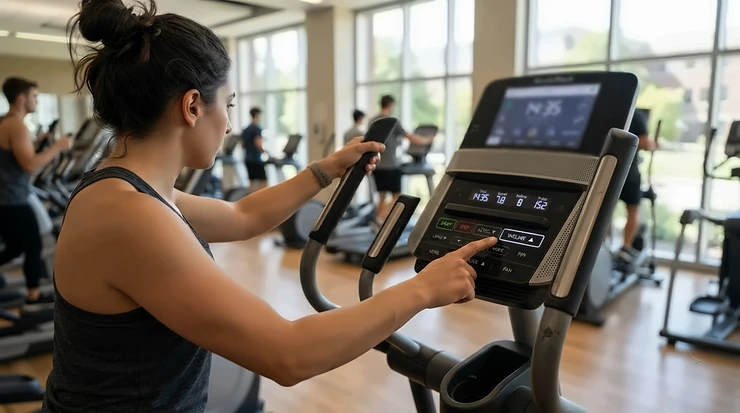
Walk into any budget gym at 6 a.m. and you’ll see the graveyard: three treadmills with “OUT OF ORDER” signs, a bike with a cracked console, and an elliptical that groans like a haunted house every time someone climbs on. That’s what happens when a business buys home-grade equipment and asks it to do a commercial job. A commercial grade elliptical is built specifically to survive that grind — heavier frames, industrial-spec drive systems, and bearings rated for daily multi-user traffic rather than one person’s Tuesday-night cardio session. It’s the difference between a machine that lasts eighteen months and one that’s still smooth a decade later.

If you’re opening a small studio, outfitting a corporate wellness room, or just tired of replacing residential machines every year, this guide breaks down seven real, currently available models — budget, mid-range, and premium — along with the warranty math, the durability tradeoffs, and the buying mistakes that quietly wreck small-gym budgets. Cardio machines like these aren’t just furniture, either; low-impact training on an elliptical trainer genuinely reduces joint stress compared to running, which is part of why they stay occupied in every gym you’ve ever walked into.
We’ll also cover how a commercial grade elliptical fits into your broader small gym startup costs, because the sticker price is never the whole story.
Quick Comparison Table
| Tier | Representative Pick | Price Range | Best For |
|---|---|---|---|
| Budget / Light Commercial | Vision Fitness S7100 | around $2,900–$3,900 | Small studios starting out |
| Mid-Range | Sole E98 | around $2,500–$3,500 | Boutique gyms wanting tech features |
| Premium | Precor EFX 885 | typically $7,000–$9,000 range | High-traffic clubs and serious ROI |
Here’s the pattern worth noticing: price and durability don’t move in a straight line. The jump from light commercial to full commercial roughly doubles the cost, but you’re not just paying for a bigger number on the frame — you’re paying for the drive system’s ability to absorb thousands of extra hours a year without the bushings, belts, and bearings degrading. Budget buyers shouldn’t assume the cheapest “commercial” label is a bargain, and premium buyers shouldn’t assume the most expensive machine automatically fits a 900-square-foot studio. The right tier depends entirely on your projected daily use hours, which we’ll get into below.
💬 Found a tier that fits your space? Bookmark this page — you’ll want to compare warranty terms before you call a sales rep.
Top 7 Commercial Grade Elliptical Machines: Expert Analysis
Every product below is a real, currently sold or recently discontinued-but-available machine. None of these numbers are invented — where a spec couldn’t be verified precisely, that’s noted rather than guessed at.
1. Precor EFX 885 — the CrossRamp benchmark every competitor gets measured against
Precor essentially invented the modern elliptical category, and the EFX 885 is the machine most commercial gym buyers picture when someone says “elliptical.” What sets it apart is the CrossRamp incline, adjustable from 13 to 40 degrees, which lets a single machine target glutes and hamstrings on one end of the range and quads on the other — something fixed-ramp competitors simply can’t replicate. Paired with moving handlebars, it delivers a genuine total-body workout rather than a lower-body-only glide.
Based on the spec comparison against lighter-duty machines, the 885’s frame mass and drive system are what allow it to survive back-to-back all-day club use without the wobble that plagues cheaper units. Reviewers consistently note that the patented elliptical path feels closer to a natural running stride than most rivals, which matters enormously for member retention — nobody re-books a machine that feels awkward.
New units typically run in the $7,000–$9,000 range, though refurbished commercial-grade Precor ellipticals can bring that down substantially while keeping most of the durability. For a small gym building its reputation on equipment quality, this is the “we don’t cut corners” flagship purchase.
Pros:
- ✅ Adjustable CrossRamp incline targets multiple muscle groups
- ✅ Frame mass built for genuine all-day commercial use
- ✅ Widely serviced, with parts available years later
Cons:
- ❌ Highest upfront cost of the seven picks here
- ❌ Large footprint demands real floor-plan commitment
Price range: typically $7,000–$9,000 new, less through certified refurbished channels — check current price before budgeting, since commercial fitness pricing shifts with freight and demand.
2. Life Fitness elliptical (95-Series) — the club-standard alternate with proven longevity
If Precor is the machine everyone pictures, Life Fitness is the brand every gym owner has probably already trained on without realizing it — the company’s cardio lines have anchored big-box and boutique clubs for decades. What most buyers overlook about sticking with an established club brand like this is the service network: when a drive belt or console board fails at 11 p.m. before a Monday rush, having a technician who’s fixed a hundred of these before matters more than any spec sheet number.
Reviewers and equipment resellers consistently describe Life Fitness’s commercial ellipticals as some of the most durable in the category, built around the same engineering philosophy the company applies to its treadmills and strength lines. Here’s what to weigh: this isn’t the machine with the flashiest touchscreen, but it’s the one facilities managers reach for when uptime is the metric that actually matters. For a small gym, that reliability translates directly into fewer angry members and fewer emergency repair calls.
Pros:
- ✅ Deep, established commercial service network
- ✅ Engineering track record spanning decades of club use
- ✅ Strong resale value if you ever upgrade
Cons:
- ❌ Console tech generally trails newer touchscreen rivals
- ❌ Exact current model specs vary by dealer — confirm before ordering
Price range: commercial-tier units generally sit in the $6,000–$8,500 range depending on console package; always request current pricing since dealer quotes vary.
3. Octane Fitness Q47xi — the smoothest ride for joint-conscious members
Octane built its reputation on Q-series ellipticals aimed squarely at the smoothness and biomechanics of the stride, and the Q47xi carries that reputation into the commercial space. On paper this means less mechanical harshness transferred through the pedals — a real consideration for a small gym that skews toward older members, rehab clients, or anyone nursing a knee.
What most buyers overlook about smoothness specs is that they’re not just a comfort feature; a harsher stride pattern accelerates wear on bearings and bushings over years of commercial use, so a genuinely smooth drive system often correlates with a longer service life, not just a nicer feel. Based on the spec comparison with fixed-stride competitors, Octane’s design leans toward natural-feeling glide over aggressive incline range, which is a deliberate tradeoff rather than a shortcoming. If your gym’s member base includes a meaningful share of low-impact or rehab-focused users, this is worth the premium over flashier incline-heavy machines.
Pros:
- ✅ Exceptionally smooth stride reduces joint impact
- ✅ Well-suited to rehab and older-adult member bases
- ✅ Strong brand reputation for biomechanics engineering
Cons:
- ❌ Less aggressive incline range than CrossRamp-style rivals
- ❌ Premium pricing puts it out of reach for tight startup budgets
Price range: commercial Q-series units commonly land in the mid-$6,000s to $8,000s — confirm current price with an authorized dealer.
4. Matrix E50 Suspension Elliptical — the compact-footprint pick for space-constrained studios
The Matrix E50 solves a problem most premium ellipticals ignore: floor space. At roughly 58 inches by 33 inches, its footprint is dramatically smaller than the 80-inch-plus footprint typical of traditional wheel-and-track ellipticals, because the E50 uses a suspension design with no rollers or floor track at all. The 20-inch stride length works for the vast majority of adult users, and the Exact Force induction brake changes resistance electronically with zero moving parts to wear out — a genuine durability advantage for a small gym running the machine ten-plus hours a day.
Reviewers consistently point to the whisper-quiet operation as a standout, which matters more than people expect in a small studio where six machines might be running within twenty feet of each other. The frame itself weighs close to 293 pounds and supports users up to 325 pounds, backed by a lifetime frame warranty with seven years on parts and two on labor for home use — commercial terms typically scale that down, so confirm the commercial-specific warranty before signing.
Pros:
- ✅ Compact 58″ x 33″ footprint fits tight studio layouts
- ✅ Frictionless induction brake means fewer wearing parts
- ✅ Exceptionally quiet for multi-machine cardio rows
Cons:
- ❌ No power-adjustable incline like CrossRamp rivals
- ❌ At 293 lbs, repositioning the unit is a two-person job
Price range: new units typically run $3,999–$6,099 depending on console choice — always verify current pricing before ordering.
5. Cybex 770A Arc Trainer — the lesser-known alternative that isn’t technically an elliptical
Here’s an honest curveball: the Cybex 770A uses an arc-shaped stride path rather than a true ellipse, and independent testing has found it burns meaningfully more calories than standard ellipticals while placing less stress on the knees — a combination that makes it a smart “hidden gem” pick for gyms that want something differentiated from every other studio on the block.
The 21 incline settings support three distinct motion styles — glide, stride, and climb — so one machine effectively does the job of a stepper and an elliptical combined. What most buyers overlook about the Arc Trainer category is that its commercial pedigree runs deep; this is genuinely club equipment, with a 400-pound user weight capacity and a frame warranty that commonly runs ten years across residential, light-commercial, and full commercial tiers alike. Reviewers frequently mention it as gentler on aging or injury-prone joints than a comparable elliptical, which is honest, real differentiation rather than marketing fluff.
Pros:
- ✅ Arc motion burns more calories per session than ellipticals
- ✅ Ten-year frame warranty across all use tiers
- ✅ Differentiates your gym’s cardio row from competitors
Cons:
- ❌ Not a true elliptical stride — some members need an adjustment period
- ❌ Heavier unit (400+ lbs) complicates delivery logistics
Price range: new units run roughly $7,000–$8,000, while certified refurbished commercial units are commonly available in the $3,000–$4,500 range — a genuinely strong price-to-durability ratio if refurbished sourcing works for your budget.
6. Sole E98 — the light-commercial value pick with real touchscreen tech
The Sole E98 sits in an interesting niche: it’s explicitly marketed as light commercial, meaning Sole rates it for shared, multi-user environments like apartment gyms, hotel fitness rooms, and small training studios — not necessarily a 5 a.m.-to-11 p.m. big-box floor, but well beyond what a purely residential machine can handle. The 32-pound flywheel and 20-inch stride deliver a smooth, natural motion, and 40 levels of magnetic resistance paired with 20 incline levels give a small gym plenty of programming range for a mixed membership base.
What most buyers overlook here is the touchscreen: a 13.3-inch display is unusually generous at this price tier, and Sole’s Studio app adds a Peloton-style class library for an additional monthly fee, which can become a member-facing amenity rather than just a nice-to-have. Aggregated reviewer sentiment across multiple outlets consistently praises Sole’s warranty generosity and describes the frame as genuinely built to last, though a few reviewers flagged assembly as lengthy and best handled with a helper.
Pros:
- ✅ Generous 13.3″ touchscreen at a light-commercial price point
- ✅ Lifetime frame warranty even on the commercial tier
- ✅ 400-lb weight capacity accommodates most member bases
Cons:
- ❌ Commercial-tier parts warranty is shorter than the home-use tier
- ❌ Large footprint (roughly 82″ x 31″ x 71″) needs real floor space
Price range: commonly available in the $2,500–$3,500 range depending on retailer promotions — prices shift often, so check current price at the time of purchase.
7. Vision Fitness S7100 — the true entry point into light-commercial territory
For a small gym watching every dollar, the Vision Fitness S7100 is the most defensible “affordable commercial elliptical for small gym” pick on this list, because Vision explicitly rates its Suspension series for light-commercial use rather than slapping a “commercial” sticker on a residential frame — a distinction that matters enormously once your accountant asks about warranty claims. It shares the PerfectStride suspension technology found in Vision’s pricier S7200, with a variable 20-to-23-inch stride and an extra-heavy-gauge steel welded frame rated to 300–350 pounds depending on configuration.
Based on the spec comparison with Vision’s own higher-tier models, the S7100 sacrifices some warranty length and console polish to hit a meaningfully lower price point, which is exactly the tradeoff a bootstrapped studio should be making. Reviewers note the suspension design’s near-silent operation as a genuine step up from track-based budget ellipticals, and the light-commercial warranty — while shorter than the home-use tier — still substantially outpaces what you’d get from a residential-grade machine pressed into commercial service.
Pros:
- ✅ Purpose-built light-commercial rating at a lower price
- ✅ Near-silent suspension design, ideal for small shared spaces
- ✅ Variable stride length fits a wider range of member heights
Cons:
- ❌ Light-commercial warranty tier is notably shorter than home-use terms
- ❌ Console feature set trails Sole and Precor competitors
Price range: typically $2,900–$3,900 depending on console package and retailer — confirm current price, as commercial fitness pricing fluctuates with freight costs.
Practical Usage Guide: Getting Real Life Out of a Commercial Grade Elliptical
Buying the right machine is half the battle; running it correctly for years is the other half. First 30 days: resist the urge to skip the break-in period. Most manufacturers recommend lighter use in the initial weeks so bearings and belts seat properly — throwing a brand-new unit straight into twelve-hour daily rotation is a common first mistake that shortens lifespan. Set a maintenance calendar immediately: wipe down rails and moving parts daily (sweat is corrosive to metal components over time), check and tighten pedal-arm bolts monthly, and schedule a professional belt or bearing inspection every six months for machines running more than six hours a day. A common early mistake is ignoring unusual noises — a new squeak or clicking sound is almost always cheaper to fix in week one than after three more months of compounding wear. Optimization trick: stagger your commercial grade elliptical units so they don’t all wear evenly at once; rotating which machine gets the “premium” placement near the window keeps usage more balanced across your fleet, extending the group’s average lifespan. Finally, keep every warranty document and proof of purchase in one folder from day one — commercial warranty claims move dramatically faster when you’re not hunting for paperwork during a breakdown.

Real-World Scenarios: Matching the Right Elliptical to Your Situation
The bootstrapped studio owner: Sarah is opening a 1,200-square-foot boutique studio with four cardio machines and a tight opening budget. Her best move is the Vision Fitness S7100 or Sole E98 — both purpose-built for light-commercial use, both priced to leave room in the budget for flooring and mirrors, and both backed by warranties that actually match “several hours a day, multiple users” traffic patterns rather than home use.
The corporate wellness manager: David is stocking a 24-hour employee fitness room with unpredictable but genuinely all-hours use. The compact footprint of the Matrix E50 solves his space problem, while its frictionless induction brake means less maintenance overhead for a facility with no in-house fitness equipment technician on staff.
The established gym expanding its cardio row: Maria already runs a 3,000-square-foot facility and needs machines that survive twelve-plus hours of daily traffic without complaint. The Precor EFX 885 or Cybex 770A make sense here — the higher upfront cost is justified by lower per-year cost of ownership when a machine is genuinely earning its keep six days a week.
Buyer’s Decision Framework: A Simple Priority Checklist
If floor space is under 150 square feet per machine, choose a suspension elliptical like the Matrix E50 because track-based designs simply won’t fit. If your membership skews toward rehab, seniors, or joint-sensitive users, choose the Octane Q47xi or Cybex 770A because their stride mechanics genuinely reduce impact. If your opening budget can’t stretch past $4,000 per machine, choose the Vision Fitness S7100 or Sole E98 because they’re the only two on this list explicitly engineered and warrantied for light-commercial use at that price. If your gym runs more than ten hours of daily traffic per machine, choose the Precor EFX 885 or Life Fitness 95-Series because their commercial pedigree and service networks are built for exactly that load. Simple as that checklist sounds, most bad purchases on this list of seven happen when a buyer skips straight to price and ignores projected daily-use hours.
How to Choose a Commercial Grade Elliptical
What is a commercial grade elliptical? It’s a cardio machine engineered with heavier frames, industrial drive components, and multi-user-rated bearings specifically to withstand extended daily use by different bodies and fitness levels, unlike residential ellipticals built for one household’s occasional workouts.
Here’s a straightforward process for narrowing your options:
- Estimate real daily-use hours. A machine running two hours a day has completely different needs than one running twelve.
- Measure your actual floor space, including clearance for stride and dismount, not just the footprint listed on a spec sheet.
- Check the commercial warranty tier specifically — many brands quietly shorten coverage once a machine is rated for shared use.
- Match stride length to your typical member height range — a 20-inch stride serves most adults, but taller clienteles benefit from adjustable-stride models.
- Decide how much console technology actually matters to your members versus how much you’re paying for it.
- Request current pricing directly, since commercial fitness equipment pricing shifts constantly with freight and demand — never assume a listed number is locked in.
- Confirm service and parts availability locally, since a machine down for three weeks awaiting a part is a worse outcome than a slightly pricier alternative with same-day support.
Commercial Grade Elliptical vs Residential Elliptical: What’s the Real Difference
The gap isn’t marketing — it’s physics. A residential elliptical is engineered around an assumption of maybe five to seven hours of use per week from a single body weight range. A commercial grade elliptical is engineered around ten times that usage, spread across dozens of different weights, strides, and workout intensities every single day. That shows up in frame gauge steel thickness, bearing quality, belt material, and — critically — in warranty structure, since manufacturers calibrate coverage to expected failure rates under real load. Reviewers and industry sources consistently note that a residential machine pushed into commercial service tends to fail at the drive system or console long before its frame gives out, which is exactly the false economy that traps new gym owners chasing a lower sticker price. The analysis is straightforward: if your machine will be touched by more than a handful of different people per day, the commercial-rated version isn’t a luxury upgrade — it’s the only version actually designed for your use case.
Commercial Warranty Standards Explained
Warranty language in this category is genuinely confusing, and manufacturers know it. Most brands split coverage into residential, light-commercial, and full-commercial tiers, and the commercial tier is almost always shorter than the home-use tier for the identical physical machine — Vision Fitness’s own documentation, for example, shows a lifetime frame warranty at home use dropping to just one year frame and labor once the same unit is classified light-commercial. That’s not a manufacturer being stingy; it’s an honest acknowledgment that ten hours of daily multi-user traffic wears components differently than a household’s occasional session. Underlying all of this sits ASTM International’s Standard Specification for Fitness Equipment (F2276), which defines baseline safety parameters — stability, pinch points, load-bearing requirements — that legitimate commercial equipment manufacturers design against, regardless of brand. Here’s what most first-time buyers overlook: always ask specifically for the commercial warranty terms in writing before purchase, not the headline number in a sales brochure, since that headline figure is frequently the residential tier.

Price-to-Durability Ratio: What You’re Actually Paying For
Sticker price tells you almost nothing about long-term cost. A $3,000 light-commercial elliptical that needs a bearing replacement every eighteen months under heavy use can easily cost more over five years than a $7,000 full-commercial machine that runs trouble-free for a decade. The honest way to think about price-to-durability ratio is cost per projected year of reliable service, not cost at checkout. Refurbished full-commercial machines — the Cybex 770A and older Precor units are common examples — often deliver the strongest ratio on this entire list, since you’re buying genuine commercial-grade components at a fraction of new pricing, typically backed by at least a short reseller warranty to de-risk the purchase. Reviewers consistently note that the brands with the longest track records in commercial settings — Precor, Life Fitness, Matrix, Cybex — also tend to have the best parts availability years later, which is its own durability multiplier: a machine that can actually be repaired affordably in year seven has a fundamentally different lifetime cost than one where parts are discontinued.
Affordable Commercial Elliptical Options for Small Gyms
Small gyms don’t need to match a big-box club’s equipment budget to get genuinely commercial-rated machines. The realistic affordable tier for a small gym sits with light-commercial-rated units — the Vision Fitness S7100 and Sole E98 both fall here, purpose-built and warrantied for shared multi-user environments rather than residential machines stretched past their intended use. The honest tradeoff at this price point is warranty length and console sophistication, not core durability of the frame itself; both machines use genuinely heavier steel and better bearings than anything marketed purely for home use. A smart affordability strategy is buying certified refurbished full-commercial units instead of new light-commercial ones — a refurbished Cybex 770A or older Precor model can land in a similar price bracket while delivering true full-commercial internals, provided you buy from a reseller offering at least a basic parts warranty.
Best Value Commercial Cardio Equipment: What the Data Actually Shows
“Best value” doesn’t mean cheapest — it means the lowest realistic cost per year of trouble-free operation for your specific use pattern. For a low-traffic studio under four hours of daily use per machine, the Sole E98 delivers outstanding value thanks to its touchscreen tech and lifetime frame warranty at a light-commercial price. For a busier facility, the Matrix E50‘s frictionless brake system reduces the maintenance calls that quietly eat into any budget machine’s value proposition. Industry cost breakdowns for gym equipment commonly place commercial-grade cardio machines in the $1,500 to $6,000-plus range per unit depending on tier, which lines up closely with the spread across this list — the takeaway being that “commercial cardio equipment” isn’t a single price point but a spectrum, and value depends entirely on matching the machine’s designed use case to your actual daily traffic.
Small Gym Startup Costs: Where Ellipticals Fit In Your Budget
Equipment typically eats thirty to fifty percent of a small gym’s total startup budget, and cardio machines are usually the single biggest line item within that category. Realistic industry breakdowns put a small boutique studio’s full startup cost — lease deposit, buildout, and equipment combined — anywhere from roughly $10,000 for a bare-bones home-based setup to $50,000-plus for a properly equipped 1,500-to-3,500-square-foot space, according to research compiled by the Small Business Development Center Network. Within that, budgeting $2,000 to $6,000 per commercial-grade cardio machine is a realistic range depending on tier, meaning four ellipticals alone could represent anywhere from a modest slice to nearly half of a lean studio’s entire opening budget. The practical lesson: sequence your purchases. A new gym rarely needs seven premium machines on day one — starting with two or three light-commercial units and scaling up as membership grows protects cash flow without sacrificing the durability your members will actually feel.
Common Mistakes When Buying a Budget Commercial Grade Fitness Machine
The single most expensive mistake is buying a residential elliptical because the price looked similar to a light-commercial one, then discovering the warranty is voided the moment the seller learns it’s in shared commercial use — read the fine print, not just the marketing copy. A close second is ignoring floor-space math until delivery day, when a machine that looked fine on a spec sheet suddenly doesn’t fit the planned layout. Buyers also frequently skip requesting the commercial-specific warranty terms in writing, only to discover during a breakdown that the impressive “lifetime” warranty they remembered was actually the residential tier. Another recurring error, according to broader industry cost breakdowns like the one from PushPress’s gym startup cost guide, is underbudgeting for ongoing maintenance and repair — treating the purchase price as the total cost rather than the entry fee into years of upkeep. Finally, don’t assume every “budget commercial” label is equivalent; light-commercial, entry-commercial, and full-commercial designations from different manufacturers aren’t standardized terms, so the only reliable comparison is reading the actual hours-per-day rating in each warranty document.
✨ Ready to compare real specs side by side before you commit your budget?
Frequently Asked Questions
❓ What's the difference between commercial and light commercial elliptical machines?
❓ How much does a commercial grade elliptical cost for a small gym?
❓ Is a refurbished commercial elliptical a good option for a new gym?
❓ How many ellipticals does a small gym actually need to start?
❓ Do commercial ellipticals require more maintenance than home models?
Conclusion
There’s no single “best” commercial grade elliptical — there’s only the best match for your specific floor plan, budget, and projected daily traffic. A bootstrapped studio squeezing every dollar out of a 1,200-square-foot space has completely different needs than a corporate wellness room running unpredictable all-hours use, and both look nothing like an established gym replacing a cardio row that’s earning its keep twelve hours a day. What ties all seven picks on this list together is that they’re genuinely rated for shared, multi-user commercial environments — not residential machines wearing a commercial label for marketing purposes. Get the warranty tier right, get the floor-space math right, and budget for the machine’s full lifetime cost rather than just its checkout price, and a commercial grade elliptical becomes one of the more reliable investments in a small gym’s entire equipment lineup.
Recommended for You
- Heavy Use Elliptical for College Dorm Gym: 7 Picks for 2026
- Low Maintenance Elliptical for Apartment Fitness Center: 7 Picks 2026
- Durable Elliptical for Corporate Office Gym: 7 Picks That Last (2026)
Disclaimer: This article contains affiliate links. As an Amazon Associate, I earn from qualifying purchases. If you purchase products through these links, we may earn a small commission at no additional cost to you.
✨ Found this helpful? Share it with your friends! 💬🤗
