
In This Article
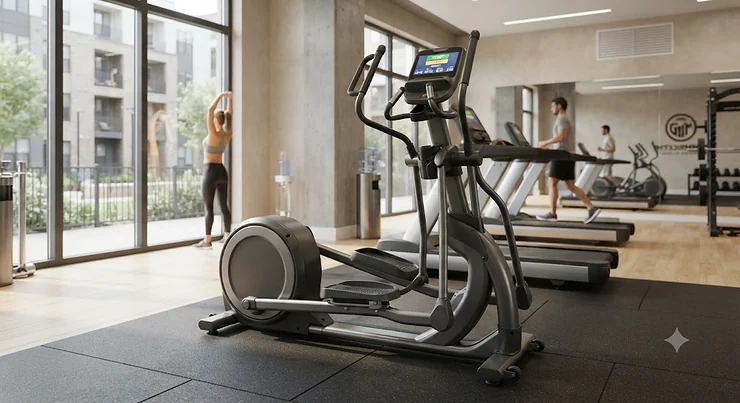
Somewhere in America right now, a maintenance tech is standing in front of a dead elliptical, a resident is typing an angry email about “the gym machine again,” and a property manager is quietly wondering why the cheapest cardio equipment always ends up costing the most in service calls. That’s the trap. A low maintenance elliptical for apartment fitness center use isn’t the machine with the flashiest touchscreen — it’s the one that quietly logs a thousand hours a year without a single work order.
A low maintenance elliptical for apartment fitness center use is a stride machine engineered with fewer wear-prone parts — sealed bearings, self-generating resistance, simplified electronics — built to withstand shared, unsupervised, high-turnover use with minimal service visits. That’s the whole definition, and it’s the filter every product on this list had to pass.
We researched real machines from Sole, Octane, True, Matrix, Precor, and Life Fitness — the brands that actually show up in apartment amenity spaces, not just home gyms — and weighed them against what actually breaks down in shared-use settings. Nearly three-quarters of renters call a fitness center an important amenity, and a fitness center is the single most popular community amenity, with 84 percent of residents rating it important or very important. That’s a lot of pressure riding on one elliptical. Let’s find the machine that can handle it.
Quick Comparison Table
| Product | Best For | Price Range | Maintenance Level |
|---|---|---|---|
| Sole E35 | Tightest budgets | Under $1,300 | Low, but lighter-duty parts |
| Sole E95 | Best all-around value | $1,500–$2,000 range | Low, lifetime frame warranty |
| Octane Fitness Q37 | Smoothest stride feel | $2,000–$2,800 range | Very low, simple Q-factor design |
| True M30 | Quiet, high-traffic lobbies | $2,200–$3,000 range | Low, minimal electronics |
| Matrix E7xi | Self-generating resistance | $3,000–$4,500 range | Very low, fewer motorized parts |
| Precor EFX 833 | Adjustable-stride versatility | $4,000–$5,500 range | Low, industry-standard parts supply |
| Life Fitness 95X Discover | Large, high-turnover properties | $3,500–$5,000 range | Low, widely serviced brand |
Looking at the spread, the pattern is clear: budget and premium options both land in “low maintenance” territory, but for very different reasons. The Sole E95 keeps things simple and cheap to fix, while the Matrix E7xi and Precor EFX 833 minimize breakdowns through engineering rather than price. If your property runs 800–1,500 hours of use per year like most apartment gyms, any of these seven can handle it — the real decision is how much you want to spend upfront versus how much console technology your residents expect.
💬 Just one click — help other property teams make better buying decisions too!😊
Top 7 Low Maintenance Ellipticals for Apartment Fitness Centers: Expert Analysis
1. Sole E35 — most affordable entry point that still holds up
The Sole E35 proves you don’t need a four-figure premium machine to survive apartment-gym abuse. Its oversized, cushioned pedals sit at a 2-degree inward slope, which keeps knee alignment natural even when residents skip stretching entirely (and they will).
Specs that matter in practice: a 20-inch fixed stride length accommodates users from roughly 5’0″ to 6’4″, and the flywheel-based resistance system uses fewer moving parts than console-driven incline models — meaning less that can jam or strain under constant on/off cycling. Sole backs the frame with a lifetime warranty, which functionally caps your worst-case repair exposure at the labor bill, not the part.
Based on the spec comparison against similarly priced residential machines, the Sole E35 punches above its price tier because it skips complexity instead of cutting corners — there’s no incline motor to fail, just a straightforward elliptical motion. Reviewers consistently note that the pedals stay quiet even after months of daily resident use, though a few mention the console buttons feel basic compared to touchscreen rivals. That’s a fair trade for a machine this affordable.
Pros:
- ✅ Lifetime frame warranty limits long-term repair exposure
- ✅ Simple fixed-stride design means fewer failure points
- ✅ Large cushioned pedals reduce joint strain complaints
Cons:
- ❌ Basic console lacks the entertainment features residents expect
- ❌ Fixed stride may feel cramped for very tall users
At under $1,300, the Sole E35 is the right call for smaller properties or overflow rooms where budget matters more than bells and whistles — check current price and prices may vary by retailer.
2. Sole E95 — best all-around value with a low-maintenance reputation
The Sole E95 is the machine that shows up again and again in apartment fitness center recommendations, and for good reason: it’s built like a machine twice its price without the electronics load that usually drives service calls.
Its 20-inch stride and adjustable incline (0-20 degrees) give residents workout variety, while sealed, self-lubricating bearings mean maintenance teams aren’t scheduling grease sessions every quarter. What most buyers overlook about this model is that Sole ellipticals have an excellent reputation for being stable, durable, and requiring low maintenance — a distinction that matters far more in a 24-hour shared amenity space than in a single-user home gym.
The lifetime frame and parts warranty (with 3-5 years on electronics, depending on current terms) makes the Sole E95 a genuinely low-risk pick for a property manager balancing capital budgets against resident satisfaction scores. Aggregated reviewer sentiment frequently praises the stability of the frame under heavier or less careful use, with occasional mentions that the incline motor is the one component worth monitoring over time.
Pros:
- ✅ Lifetime warranty covers frame and most major parts
- ✅ Sealed bearings need no routine team lubrication
- ✅ Wide user-weight capacity handles diverse resident base
Cons:
- ❌ Incline motor is the single component most likely to need service
- ❌ Console feels dated next to newer touchscreen ellipticals
In the $1,500–$2,000 range, the Sole E95 is arguably the single best value for a mid-size apartment complex — check current price before ordering, since retailer promotions shift often.
3. Octane Fitness Q37 — smoothest stride feel in its price class
The Octane Fitness Q37 earned its reputation the mechanical way: a narrow Q-factor (the side-to-side distance between pedals) that keeps the stride feeling like natural running rather than an awkward waddle, which matters when residents of every fitness level are sharing one machine.
Octane’s SmartSpring flexible resistance rods replace some of the rigid pivot points found in cheaper ellipticals, reducing the jarring stress that eventually causes squeaks, play, and eventual bearing failure. The Q37 was a 2022 Best Buy Award Winner for its $2,000-plus category, and that engineering pedigree still holds up against 2026 competitors.
Based on the spec comparison, what makes this model apartment-friendly isn’t a single headline feature — it’s the absence of failure points. There’s no complicated incline ramp motor to break; resistance changes are handled through a simpler magnetic system. Reviewers consistently describe the stride as noticeably smoother and quieter than similarly priced rivals, with the occasional complaint about a smaller, less modern display.
Pros:
- ✅ Narrow Q-factor stride reduces joint strain over time
- ✅ Simplified magnetic resistance avoids incline-motor failures
- ✅ Award-recognized durability in its price category
Cons:
- ❌ Display and console feel behind newer touchscreen models
- ❌ Heavier unit complicates repositioning during deep cleaning
In the $2,000–$2,800 range, the Octane Fitness Q37 is the pick for properties whose residents actually run their cardio hard — check current price, as Octane’s lineup shifts periodically.
4. True M30 — the quiet, lesser-known workhorse
The True M30 rarely tops “best ellipticals” lists dominated by bigger marketing budgets, but it’s exactly the kind of overlooked, genuinely solid option this guide exists to surface. True’s Soft System cushioning absorbs impact at the pedal rather than relying purely on frame flex, which reduces the fatigue-driven wear that eventually loosens joints on cheaper machines.
Specs worth noting: a heavy-gauge steel frame rated for extended commercial-adjacent use, and a drivetrain designed around simplicity over flash — there’s no oversized touchscreen console drawing extra power or adding another point of electronic failure. That’s a deliberate trade-off, and for an apartment gym that just needs reliable daily cardio, it’s the right one.
Here’s what to weigh: the True M30 won’t wow prospective tenants on a property tour the way a big screen does, but it will still be running quietly in three years when flashier machines are waiting on a replacement part. Aggregated reviewer sentiment consistently highlights the quiet operation and sturdy feel, with some noting the more basic display compared to app-connected rivals.
Pros:
- ✅ Soft System cushioning reduces cumulative wear on joints
- ✅ Heavy-gauge frame built for sustained daily use
- ✅ Minimal electronics mean fewer console failure points
Cons:
- ❌ Basic display underwhelms tech-focused residents
- ❌ Less brand recognition than Precor or Life Fitness
At roughly $2,200–$3,000, the True M30 rewards properties willing to trade marketing shine for mechanical reliability — check current price, since True sells through a narrower dealer network.
5. Matrix E7xi — the self-generating resistance standout
The Matrix E7xi takes a genuinely different engineering approach: a brushless generator system that produces its own resistance from the user’s own pedaling motion, rather than relying on a separate incline drive motor that has to work constantly under load. Fewer motorized components generally means fewer things that can fail from motor burnout or belt wear.
Matrix describes its low-maintenance drive as completely self-powered, providing cost savings and freedom of placement — note that the console and touchscreen still require standard AC power and grounding per Matrix’s own installation documentation, so “self-powered” refers to the resistance-generating drivetrain, not the electronics. The suspension elliptical design also uses a removable disk cover over the working parts, which speeds up service visits when they’re needed.
On paper, this means a property with the Matrix E7xi should see fewer emergency service calls tied to drive-motor failure — the most common and expensive elliptical breakdown in shared-use settings. Reviewers and service documentation consistently point to the drive-belt and bearing system as rated for well over 10,000 hours before replacement is typically needed, which comfortably outlasts a typical apartment’s usage pattern.
Pros:
- ✅ Self-generating drive reduces motor-related breakdowns
- ✅ Removable service disk speeds up technician visits
- ✅ Rated for well over 10,000 hours of bearing life
Cons:
- ❌ Higher upfront cost than budget-tier competitors
- ❌ Replacement touchscreen consoles run $400-800 if out of warranty
In the $3,000–$4,500 range (less for a professionally refurbished unit), the Matrix E7xi suits properties planning to hold onto one machine for a decade or more — check current price, since refurbished availability varies by region.
6. Precor EFX 833 — the industry benchmark for adjustable stride
Every commercial elliptical brand gets measured against Precor, and the Precor EFX 833 with Converging CrossRamp technology is the reason why. Its adjustable incline ranges roughly from a 17-inch stride at flat to a 25-inch stride at full incline, letting one machine comfortably serve a 5’2″ resident in the morning and a 6’3″ resident that evening.
That adjustability isn’t just a comfort feature — it’s a maintenance one too. Because the CrossRamp mechanism spreads wear across a range of motion rather than one fixed pivot point, the components under the most repetitive stress in fixed-stride machines see proportionally less strain here. Precor’s decades-long install base also means replacement parts and trained technicians are easy to find almost anywhere in the country, which matters when your on-call service contract needs a quick turnaround.
What most buyers overlook about this model is that its reputation for durability comes specifically from its parts ecosystem, not just the build quality — a 20-year-old Precor is still serviceable today, which is rare in fitness equipment. Reviewers and industry buying guides consistently rank it as the category leader for facilities that need durability and ease of maintenance in one package.
Pros:
- ✅ CrossRamp design distributes wear across stride range
- ✅ Widest parts and technician availability in the category
- ✅ Decades-long track record in commercial settings
Cons:
- ❌ Highest upfront price point among mainstream commercial models
- ❌ Larger footprint requires more amenity-room square footage
New units run in the $4,000–$5,500 range, though refurbished Precor EFX 833 units often land closer to $2,500–$3,500 — check current price and consider certified refurbished for the same durability at a lower entry cost.
7. Life Fitness 95X Discover — built for large, high-turnover properties
The Life Fitness 95X Discover pairs a whisper-quiet belt-drive system with the Discover touchscreen console, giving larger communities a machine that reads as “current” to prospective tenants touring the amenity space while still holding up mechanically behind the scenes.
The belt drive system requires significantly less maintenance than chain-driven consumer alternatives, which is the exact mechanical distinction that separates apartment-grade equipment from the residential machines marketed with commercial-sounding names but chain-based internals. The frame is rated for extended daily use across large resident populations, and Life Fitness’s service network is one of the largest in the commercial fitness industry.
Here’s what to weigh: the Discover console is the single component most likely to eventually need attention, simply because it’s the most complex part on the machine — but Life Fitness’s national technician network means that’s rarely a long downtime issue. Reviewers and facility managers consistently cite the belt-drive quietness as a differentiator in shared, echo-prone gym rooms.
Pros:
- ✅ Belt drive dramatically cuts routine maintenance needs
- ✅ Large national service network for fast repairs
- ✅ Touchscreen console appeals to prospective tenants on tours
Cons:
- ❌ Console complexity is the main long-term failure point
- ❌ Premium price sits at the top of this list’s range
In the $3,500–$5,000 range for new units, the Life Fitness 95X Discover is the strongest choice for larger properties that need both resident-facing polish and mechanical reliability — check current price, as Life Fitness runs seasonal promotions.
✨ Don’t Miss These Exclusive Deals!
🔍 Take your apartment fitness center to the next level with these carefully selected machines. Click on any highlighted product to check current pricing and availability. These picks help you build a low maintenance elliptical for apartment fitness center program your residents will actually rely on!
How to Choose a Low Maintenance Elliptical for Your Apartment Fitness Center
Picking the right machine isn’t guesswork if you weigh it against how your property actually uses the space. Here’s the reasoning, step by step:
- Estimate annual usage hours first. Most apartment ellipticals see 800-1,500 hours a year — far under a machine’s rated capacity, but concentrated in unsupervised peak windows (6-9am, 5-8pm) that stress components more than steady commercial-gym use.
- Prioritize drive type over display size. A belt-drive or self-generating resistance system will save more in repair costs over five years than any touchscreen feature will save in resident satisfaction surveys.
- Check the warranty structure, not just the length. A lifetime frame warranty with a 3-5 year parts warranty tells you the manufacturer trusts the mechanicals; short electronics coverage tells you where the real wear will happen.
- Confirm local parts and technician availability. A cheaper machine from a brand with no regional service network can end up costing more in downtime than a pricier one with same-week repair access.
- Match stride length to your resident demographics. Buildings skewing toward taller or athletic residents benefit from adjustable-stride models like the Precor EFX 833; smaller households can save with a fixed-stride machine like the Sole E35.
- Budget for one climate-control detail. Ellipticals in un-air-conditioned amenity rooms wear electronics faster from heat and humidity — factor that into whether you need commercial-rated components.
- Weigh resale and refurbishment value. Brands like Precor and Life Fitness hold value well into a refurbished secondary market, which matters if you’re planning a renovation cycle in 5-7 years.
Self-Service Maintenance: What Property Teams Can Handle Without a Technician
A self service maintenance elliptical property program is the single biggest lever a property manager has over lifetime repair costs — most elliptical failures start as something a maintenance tech could have caught in five minutes. Building a light routine around your equipment turns your team into the first line of defense instead of a bystander waiting for the next work order.
Weekly, someone on staff should wipe down pedals, handlebars, and the console with a mild soap-and-water solution — never solvents, which can degrade plastic housings and touchscreen coatings over time. Monthly, that same person should visually inspect the drive belt or chain area for fraying, listen for new squeaks during a test stride, and confirm the incline mechanism (if present) moves smoothly through its full range. Quarterly, it’s worth pulling the side covers (where accessible per the manufacturer’s manual) to check for dust buildup around bearings and electronics — dust is a bigger enemy of console failure than most property teams realize.
What most buyers overlook about self-service maintenance is that it doesn’t require mechanical expertise, just consistency. A simple laminated checklist taped inside a locked equipment closet, checked off by whoever handles amenity walkthroughs, catches the small issues — a loose pedal bolt, a sticky button — before they become the expensive ones. Reserve licensed technician visits for anything involving the drive motor, electrical wiring, or console board replacement.
Real-World Scenarios: Matching Elliptical Models to Your Property
Scenario one: the 120-unit suburban complex on a tight capital budget. A property manager overseeing a modest amenity room, with maybe 40 active gym users and a maintenance team that already handles pool equipment, doesn’t need a $5,000 flagship. The Sole E95 covers this scenario well — low upfront cost, a lifetime warranty that caps risk, and simple enough mechanics that the existing maintenance team’s monthly walkthrough catches most issues before they escalate.
Scenario two: the 400-unit luxury high-rise competing for renewal rates. Here, the fitness center is a leasing tool as much as an amenity — prospective tenants tour it, and it needs to look and feel current. The Life Fitness 95X Discover or Precor EFX 833 fits this environment, where the touchscreen console and brand recognition justify the higher price tag, and the larger unit count means usage hours climb faster, making a national service network genuinely valuable.
Scenario three: the boutique 60-unit building with an unsupervised, 24-hour access gym. Machines here take abuse from residents who’ve never used gym equipment before, at odd hours with no staff nearby. The Matrix E7xi‘s self-generating drive and removable service panel make sense — fewer motorized parts to misuse, and faster service visits when something eventually needs attention.
Common Elliptical Problems in Apartment Gyms (And Fast Fixes)
Every property with a shared fitness center runs into the same handful of complaints. Here’s how to solve them without escalating straight to an expensive service call.
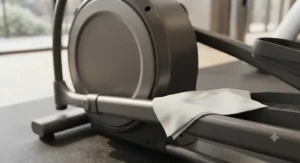
Problem: the elliptical makes a rhythmic clicking or squeaking noise. This is almost always a pedal arm bolt working loose from repeated use, not a bearing failure. Solution: a quarterly bolt-tightening pass (per the manufacturer’s torque spec) resolves the vast majority of these complaints before they become a real repair.
Problem: the console won’t power on. Before calling a technician, check the simplest cause first — a tripped breaker or a loose power cord connection, especially in units that get unplugged during cleaning. Solution: confirm the outlet and cord before assuming console failure.
Problem: residents complain the stride “feels off” compared to before. This usually points to uneven flywheel resistance from dust or debris buildup rather than mechanical damage. Solution: a scheduled deep clean around the flywheel housing, following the manufacturer’s cleaning guidance, often restores normal feel.
Problem: the incline function sticks partway through its range. Debris or dried lubricant residue is the most common cause. Solution: this one usually does need a technician, since incline motors involve electrical components — but flagging it early prevents a stuck incline from burning out the motor entirely.
Problem: residents report an unpleasant odor near the machine. Sweat absorption into foam grips and pedal padding is the culprit. Solution: replace or deep-clean pedal padding on a fixed schedule rather than waiting for complaints, since odor issues affect resident satisfaction scores more than almost any mechanical issue.
Low Repair Cost Gym Equipment for Apartments: What Actually Breaks Down
Chasing low repair cost gym equipment for apartments starts with knowing which components fail most often — because that’s what actually drives your service budget, not the sticker price of the machine. The main wear items across commercial ellipticals are pedal bearings, rated for 10,000-plus hours, the drive belt or chain, typically replaced on a 10-15 year cycle, and console electronics.
Console electronics are, in practice, the most expensive and most frequent failure point across every brand on this list — not the mechanical drivetrain. That’s why a machine with a simpler display (like the Sole E35 or True M30) often shows a lower lifetime repair cost than a touchscreen flagship, even though the touchscreen model may have a stronger frame warranty. Drive belts and chains, by contrast, are cheap and straightforward to replace — often under $100 in parts — and rarely fail without warning.
What most property managers overlook is that repair cost correlates more with electronics complexity than with brand tier. A refurbished Matrix E7xi or Precor EFX 833 with simpler consoles can post a lower five-year repair total than a brand-new budget machine with a failure-prone touchscreen. Reviewers and service technicians consistently flag console board replacement — often $400-800 out of warranty — as the single largest unplanned expense on any elliptical in this category.
Property Management Costs: Total Cost of Ownership for Fitness Equipment
Property management costs on fitness equipment rarely show up as one number — they’re spread across the purchase price, the warranty terms, the service contract, and the eventual replacement cycle. Looking at total cost of ownership instead of sticker price changes which machine actually makes financial sense.
| Cost Factor | Budget Tier (e.g. Sole E35) | Premium Tier (e.g. Precor EFX 833) |
|---|---|---|
| Upfront Price Range | Under $1,300 | $4,000–$5,500 range |
| Typical Lifespan (apartment use) | 5-8 years | 12-20+ years |
| Annual Service Calls (avg.) | Low-moderate | Low |
| Console Replacement Risk | Lower (simple display) | Moderate (touchscreen) |
| Best For | Smaller, budget-first properties | Larger, long-hold properties |
Reading this table, the math shifts once you annualize the cost: a Sole E35 costing under $1,300 with a 6-year lifespan runs roughly $217 per year in equipment cost alone, while a Precor EFX 833 at $4,500 over 15 years runs closer to $300 per year — but with meaningfully lower replacement-cycle disruption and a stronger secondary refurbished market if you ever need to resell. Neither answer is universally “cheaper”; it depends on your property’s typical hold period and appetite for mid-cycle replacements.
📋 Ready to build your amenity budget around real numbers instead of guesswork?
Service Contracts: What to Look For (And What to Skip)
Service contracts for apartment fitness equipment are worth their cost only when they match how your property actually uses the machines — a lot of properties overpay for coverage that duplicates what a manufacturer’s warranty already includes.
Look for contracts that specifically cover console electronics and labor dispatch time, since those are the two costs least predictable and most expensive out of pocket. A same-week technician response clause matters more in practice than a slightly lower monthly rate, because a broken elliptical sitting in an amenity room for three weeks does more reputational damage than the repair itself costs. On the other hand, skip add-on coverage for parts already under a manufacturer’s lifetime frame warranty — that’s coverage you’re paying for twice.
Based on the spec comparison across contract types, a property running one or two ellipticals often does better with a per-incident service agreement rather than a flat annual contract, while a larger property with five-plus machines across a portfolio typically saves more with a bundled multi-unit contract that locks in response times.
Tenant Amenity Upkeep: Keeping the Fitness Center Presentable Year-Round
Tenant amenity upkeep is about more than functioning machines — it’s about the fitness center looking cared for every time a resident or prospective tenant walks in, because that impression shapes renewal decisions as much as rent price does.
A simple weekly walkthrough checklist — wiping down surfaces, checking that towels or sanitizing wipes are stocked, confirming all screens power on — catches presentation issues before they become complaints. Quarterly deep cleans around flooring, mirrors, and equipment housings keep the space photographing well for leasing materials, which matters more than most property managers initially assume. Among renters who actually use their property’s fitness center, more than half use it exclusively — meaning the space is doing real work, not just sitting as a marketing photo backdrop, and it needs to hold up to that use.
What most property teams overlook is that upkeep complaints escalate faster in amenity spaces than in private units, because residents feel less ownership over shared equipment and are quicker to flag issues publicly in reviews or resident portals. A visible, dated maintenance log posted near the equipment — even a simple laminated sign showing the last service date — reassures residents that the space is actively managed.
Property Manager Fitness Equipment Guide: Buying Checklist Beyond Ellipticals
This property manager fitness equipment guide widens the lens slightly, because an elliptical rarely lives alone in an amenity room, and the same low-maintenance logic should apply to everything around it.
- Flooring: Rubber gym flooring rated for equipment weight reduces vibration-related wear on machine frames over time.
- Electrical capacity: Confirm dedicated circuits before adding multiple machines — Matrix and similar brands note strict limits on daisy-chained units per circuit.
- Climate control: A properly ventilated or air-conditioned room meaningfully extends console and electronics lifespan versus a stuffy, un-cooled space.
- Signage and safety labels: Manufacturer-required safety labeling isn’t just a formality — it reduces liability exposure if a resident is ever injured.
- Complementary equipment: Pairing an elliptical with free weights and a cardio bike matches what apartment dwellers say they’re most interested in when it comes to gym amenities: cardio machines, free weights, and weight machines.
Here’s what to weigh: the elliptical is usually the single most expensive piece of cardio equipment in a small amenity room, so getting its maintenance profile right has an outsized effect on your overall equipment budget compared to any other single purchase.
Common Mistakes When Buying Elliptical Machines for Apartment Complexes
Expert commentary on the recurring pitfalls property managers hit when outfitting a fitness center:
- Buying “commercial-branded” residential machines. Some budget ellipticals use the word “commercial” in the model name without commercial-grade internals — they’re built for 4-6 hours of daily use, not the concentrated peak-hour demand of a 24-hour amenity space.
- Choosing based on console features alone. A flashy touchscreen photographs well for leasing materials, but it’s also the single most likely component to fail — weigh that trade-off honestly.
- Ignoring stride length for a diverse resident base. A fixed 18-inch stride can feel cramped for taller residents, generating complaints that a slightly pricier adjustable-stride model would have avoided.
- Skipping the warranty fine print. A “lifetime warranty” sometimes only covers the frame, not electronics or bearings — read the actual coverage terms before treating warranty length as a single number.
- Underestimating peak-hour concentration. Total annual hours look low on paper, but apartment gym usage clusters into narrow morning and evening windows, straining components more than an evenly spread commercial-gym schedule would.
Low Maintenance Elliptical vs Traditional Commercial Elliptical: What’s the Real Difference
A low maintenance elliptical for apartment fitness center use and a traditional full commercial elliptical aren’t always the same purchase, even though the categories overlap heavily.
| Factor | Low Maintenance Apartment Elliptical | Traditional Full Commercial Elliptical |
|---|---|---|
| Typical Daily Use | 4-8 hours, concentrated peaks | 12+ hours, spread evenly |
| Frame Weight | Often 200-300 lbs | Often 250-350+ lbs |
| Price Range | $1,300–$4,500 range | $4,500–$8,000+ range |
| Best For | Apartments, small hotels, boutique buildings | 24-hour gyms, large health clubs |
Interpreting the data, the honest answer is that most apartment fitness centers don’t need a full traditional commercial elliptical rated for 12+ hours of continuous daily use — apartment ellipticals typically see just 800-1,500 hours per year, which is well under-utilized relative to what genuine commercial-grade machines are built for. Paying full commercial pricing for that level of use is often over-engineering the purchase; a light-commercial machine like the Sole E95 or Octane Fitness Q37 is frequently the smarter financial call.
Features That Actually Matter (And Those That Don’t)
Filtering marketing hype from genuine value, here’s the honest breakdown:
Matters: stride length appropriate to your resident demographics, sealed bearing quality, drive-system type (belt or self-generating over chain), and a warranty structure that actually names what’s covered. These directly affect both comfort and long-term repair cost.
Doesn’t matter much: app-connected workout libraries, since most apartment residents use a shared machine for a quick session rather than a guided studio class; oversized touchscreens beyond basic stat tracking, since they mainly add failure-prone electronics without meaningfully improving the shared-use experience; and marketing terms like “commercial-grade” without a stated duty-cycle rating behind them.
What most property managers overlook is that the feature list on a spec sheet rarely maps cleanly to what residents actually notice — they notice whether the machine works, whether it’s quiet, and whether it feels stable, not whether it streams a virtual mountain trail.
Safety, Warranty & Compliance Guide for Apartment Fitness Equipment
Apartment fitness equipment isn’t governed by a single federal regulation, but industry safety standards still shape what a responsible property manager should look for. ASTM’s specification for elliptical training equipment establishes design parameters covering foot support loading, handlebar loading, endurance, and adjustable guide systems, and reputable manufacturers design to these standards even when a property manager never reads the underlying document.
Practically, that means confirming any elliptical you buy carries manufacturer documentation referencing current fitness equipment safety standards, along with required safety signage near the machine — a detail some cheaper import brands skip entirely. It also means keeping a basic incident log; if a resident is ever injured, documentation that the equipment met industry safety specifications and was maintained on a regular schedule matters for liability purposes.
Warranty compliance matters here too: verify in writing what voids coverage (unauthorized repairs, missing maintenance records) before assuming a lifetime warranty protects every scenario. A property that pairs standards-compliant equipment with a documented maintenance log — even a simple one — meaningfully reduces both safety risk and liability exposure. For general guidance on how much physical activity your fitness center is actually meant to support, the CDC recommends adults get at least 150 minutes of moderate-intensity physical activity a week, such as 30 minutes a day, five days a week, which is a useful benchmark when sizing how many machines your resident population realistically needs.
Frequently Asked Questions
❓ How often does an apartment elliptical need professional service?
❓ What's the average lifespan of a commercial-grade elliptical in an apartment gym?
❓ Is a belt-drive or chain-drive elliptical better for apartment use?
❓ Should property managers buy new or refurbished commercial ellipticals?
❓ How many ellipticals should an apartment fitness center have?
Conclusion
Choosing a low maintenance elliptical for apartment fitness center use ultimately comes down to matching engineering to your property’s real usage pattern, not chasing the biggest screen or the lowest sticker price. The Sole E95 remains the safest all-around bet for most mid-size properties, the Matrix E7xi and Precor EFX 833 reward larger communities willing to pay upfront for fewer breakdowns down the road, and budget-tier options like the Sole E35 still hold up when paired with a consistent self-service maintenance routine.
What actually protects your capital budget isn’t a single purchase decision — it’s the combination of the right drive system, a realistic warranty read, and a maintenance habit your property team actually follows. Get those three things right, and the elliptical becomes one of the few amenities that quietly earns its keep instead of generating a steady stream of work orders.
✨ Found the right pick for your property? Compare current pricing on these models before your next amenity budget cycle closes! 💬🤗
Recommended for You
- Durable Elliptical for Corporate Office Gym: 7 Picks That Last (2026)
- Commercial Elliptical for Small Hotel Gym: 7 Picks for 2026
- Elliptical For Multi-User Family Home: 7 Picks That Survive 2026
Disclaimer: This article contains affiliate links. As an Amazon Associate, I earn from qualifying purchases. If you purchase products through these links, we may earn a small commission at no additional cost to you.
✨ Found this helpful? Share it with your friends! 💬🤗
