
In This Article
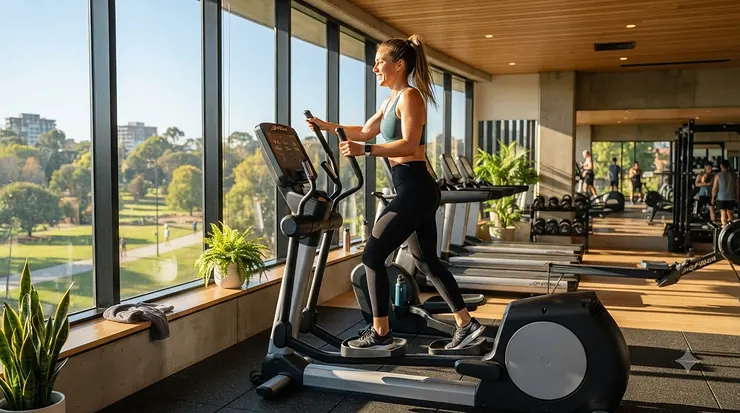
Walk into most apartment amenity gyms on a Tuesday night and you’ll see the same sad scene: a treadmill with a dead belt, a strength rack nobody understands, and an elliptical that squeaks like a shopping cart with a bad wheel. That squeak is expensive. It’s the sound of a property manager who bought a big-box store elliptical thinking “commercial” was just a marketing word on the box. A commercial elliptical for apartment complex gym use is a fitness machine engineered with heavier gauge steel, sealed industrial bearings, and higher-duty-cycle drive systems specifically so it can survive unsupervised, all-hours use by dozens of unrelated residents instead of one careful owner. That distinction — real commercial engineering versus a residential machine wearing a commercial-sounding name — is the entire ballgame for anyone furnishing a resident gym.
This guide exists because the leasing office rarely has time to become an equipment nerd, and the property management company rarely wants to eat a $3,000 mistake twice. We researched real, currently available machines from Sole, Precor, Matrix, Life Fitness, and Nautilus, checked their actual specs and warranty language, and compared them the way a facilities director would: on durability, weight capacity, footprint, noise (your neighbors below the gym will thank you), and total cost of ownership. Ellipticals also happen to be one of the smartest amenity purchases you can make — regular aerobic activity is tied to real, well-documented reductions in cardiovascular and metabolic disease risk, which is worth remembering the next time someone asks why the gym budget line matters.
By the end, you’ll have a shortlist, a comparison table, and a decision framework that works whether you’re outfitting a 40-unit boutique building or a 400-unit garden-style community.
Quick Comparison Table
Before the deep dive, here’s the express version for anyone skimming between property tours.
| Elliptical | Best For | Weight Capacity | Price Range |
|---|---|---|---|
| Sole E98 | Best all-around light-commercial pick | 400 lbs | $2,500–$2,900 |
| Precor EFX 835 (Remanufactured) | Heaviest-duty, true club-grade | 350 lbs | $2,500–$3,500 |
| Matrix E30 | Quietest ride in a tight equipment room | 325 lbs | $3,599–$4,999 |
| Life Fitness E3 | Best for shared-wall, noise-sensitive buildings | Not published | $4,069–$4,685 |
| Schwinn 470 | Tightest budget / secondary unit | 300 lbs | $999–$1,100 |
Looking at the numbers, notice that price and weight capacity don’t move together in a straight line — the Precor EFX 835 costs less than the Matrix E30 despite being the more battle-tested commercial platform, because it’s sold remanufactured rather than new. That’s a meaningful detail for a property comparing quotes: “commercial-grade” and “brand-new” are two separate decisions, and conflating them is how budgets balloon unnecessarily. The Sole E98 earns its spot at the top of this table because it’s the only machine here explicitly rated by its manufacturer for light-commercial floors while still being purchasable through normal retail channels, no dealer account required.
Just one click — help other property managers avoid the same equipment headaches you almost had!😊
Top 7 Commercial Ellipticals for Apartment Complex Gyms: Expert Analysis
1. Sole E98 — best all-around light-commercial workhorse
The Sole E98 sits at the top of Sole’s lineup specifically because it’s the one model in the family engineered for light-commercial floors rather than purely residential use. That distinction shows up in the frame, not just the marketing copy. A 32-pound flywheel and a 400-pound user weight capacity give the Sole E98 more structural headroom than nearly everything else in this price bracket, which matters enormously in an amenity gym where you can’t control who steps on next or how roughly they use the handlebars. The 20-inch stride and 20 levels of electronically adjustable resistance and incline mean it comfortably fits residents from 5’2″ to well over 6 feet without anyone feeling cramped. Based on the spec comparison against similarly priced residential machines, the heavier flywheel is the real differentiator — lighter flywheels feel jerky under heavier or faster strides, exactly the failure mode you’d expect from dozens of different bodies using one machine daily. Reviewers at Garage Gym Reviews and FitRated consistently note the E98’s build quality and touchscreen as standouts, while also flagging that assembly is a two-person, multi-hour job better left to a delivery crew than a leasing office intern.
Pros:
- ✅ 400-lb weight capacity, highest on this list
- ✅ Lifetime frame warranty even under light-commercial terms
- ✅ 13.3-inch touchscreen keeps residents engaged mid-workout
Cons:
- ❌ Assembly is genuinely difficult without professional help
- ❌ Touchscreen electronics need a climate-controlled room
At around $2,500–$2,900 depending on promotions, the Sole E98 is one of the strongest value plays here — check current price before ordering, since Sole runs frequent sales.
2. Precor EFX 835 (Remanufactured) — the true club-grade workhorse
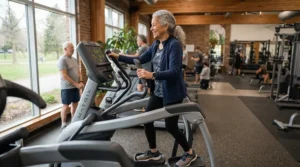
Ask any equipment technician which brand shows up in the most health clubs and the answer is almost always Precor, and the Precor EFX 835 is the model most commonly recommended when apartment communities want the exact machine used in commercial gyms rather than a residential lookalike. What most buyers overlook about this model is that it’s self-powered — no wall outlet needed, no electrician change order, which is a genuinely useful fact for retrofitting an older amenity room.
The CrossRamp technology adjusts the ramp angle from roughly 13 to 40 degrees, letting the same machine serve a resident doing gentle recovery cardio and one doing an aggressive hill-climb interval. At 338 pounds unit weight and a 350-pound user capacity, this is not a machine that wobbles under a heavy stride, and its biomechanics were validated by university lab testing rather than just internal marketing claims.
Because these units are typically sold remanufactured rather than new-in-box, reviewers and resellers alike describe the value proposition as “buy commercial-grade at a fraction of new-unit cost,” provided you buy from a reputable refurbisher who backs the unit with a real parts-and-labor warranty rather than an “as-is” disclaimer.
Pros:
- ✅ Self-powered, no dedicated electrical circuit required
- ✅ CrossRamp incline range covers rehab pace through HIIT
- ✅ Genuine commercial-grade drivetrain, not a home unit rebadged
Cons:
- ❌ Remanufactured condition varies significantly by seller
- ❌ Warranty on used units is often just one year
Refurbished units run roughly $2,500–$3,500, making the Precor EFX 835 arguably the best dollar-per-durability ratio on this entire list.
3. Matrix E30 — smoothest ride for a tight equipment room
The Matrix E30 uses what Matrix calls Suspension Elliptical Technology — a wheel-free design that eliminates the rollers and tracks most ellipticals rely on, which is the standout feature buyers notice within the first few strides. In practice this means fewer moving parts to wear out and a noticeably quieter, glide-like motion, something confirmed repeatedly in owner reviews that describe the machine as “smooth” and “quiet” even after months of use.
The 20-inch stride, 20 electronically controlled resistance levels, and a low 9.1-inch step-on height make the Matrix E30 approachable for a wide range of fitness levels and mobility needs, which is exactly the audience mix you get in a mixed-age apartment community.
Here’s what to weigh: at 284 pounds assembled and a 325-pound weight capacity, the Matrix E30 sits comfortably in the middle of this pack — sturdy enough for daily resident use, though not the heaviest-duty option if your community skews toward serious athletes. The compact 57.5-by-29.5-inch footprint is a real advantage for gyms carved out of a converted leasing-office suite rather than a purpose-built fitness room.
Pros:
- ✅ Wheel-free suspension design cuts noise and wear points
- ✅ Compact footprint fits small or awkward equipment rooms
- ✅ Low step-on height welcomes a wide range of residents
Cons:
- ❌ 325-lb capacity is lower than the Sole and Precor picks
- ❌ Premium touchscreen consoles add a meaningful price jump
Pricing runs about $3,599–$4,999 new depending on console choice, positioning the Matrix E30 as a solid mid-tier investment rather than a budget pick.
4. Life Fitness E3 — quietest choice for shared-wall buildings
If your amenity gym sits directly above or beside occupied units, the Life Fitness E3‘s standout feature is its WhisperStride technology, built around maintenance-free ball bearings designed for near-silent operation. That’s not a small thing in a multifamily building where a 6 a.m. workout directly translates into a noise complaint from the unit below.
The 20-inch stride and 20 resistance levels put it in line with the rest of the field, and Life Fitness’s biomechanical research into natural gait patterns shows up in how the elliptical path feels — reviewers describe the motion as smooth rather than mechanical, which matters for residents doing 30-plus-minute sessions.
Based on the spec comparison, the E3’s real differentiator isn’t raw toughness, it’s the acoustic engineering, and property managers dealing with shared-wall construction should weight that factor heavily. The Track Connect 2.0 console adds device integration for residents who track workouts on their phones, while the simpler GO console keeps costs down for communities that just need a reliable, quiet machine.
Pros:
- ✅ WhisperStride bearings make this the quietest pick here
- ✅ Strong biomechanical design reduces joint strain
- ✅ Console choice lets you match features to budget
Cons:
- ❌ Manufacturer doesn’t publish a specific weight capacity
- ❌ Priced above several higher-capacity competitors
Expect a price range of roughly $4,069–$4,685 depending on console, making the Life Fitness E3 a premium pick justified mainly by noise control rather than raw capacity.
5. Nautilus E618 — best mid-range value pick
The Nautilus E618‘s standout feature is its 22-inch Precision Path stride, two inches longer than most competitors in this price range, which translates to a more natural motion for taller residents who otherwise feel cramped on shorter-stride machines. With 25 levels of magnetic resistance and incline training up to 10 degrees, the E618 gives residents genuine workout variety without needing a $4,000 price tag to get there.
What most buyers overlook about this model is the warranty: 15 years on the frame, five years on parts and electronics, and two years on labor is unusually generous for a machine in this price bracket, and it signals real manufacturer confidence rather than just aggressive marketing copy.
Reviewers who directly compared the E618 against its closest sibling, the Schwinn 470, consistently rated the Nautilus as the better value despite the higher sticker price, citing sturdier pedal feel and a more complete accessory set including Bluetooth connectivity and 29 built-in programs. For a property watching every dollar but unwilling to gamble entirely on the cheapest option available, this is the natural landing spot.
Pros:
- ✅ 22-inch stride is longer than most rivals at this price
- ✅ 15-year frame warranty signals real manufacturer confidence
- ✅ 29 built-in programs keep repeat users from getting bored
Cons:
- ❌ Weight capacity data varies across retailer listings
- ❌ Console feels basic next to touchscreen competitors
At around $1,400–$1,600, the Nautilus E618 delivers a strong middle path between the budget Schwinn and the pricier commercial-grade machines above.

6. Precor EFX 225 Energy Series — budget-friendly entry option, with a catch
The Precor EFX 225‘s standout feature is genuinely borrowed from Precor’s commercial lineup: motorized CrossRamp incline that adjusts stride angle from 15 to 25 degrees, along with an adjustable 18-to-21-inch stride and moving handlebars for upper-body engagement. On paper, that’s commercial-caliber technology in a residential-priced package, and the 16 resistance levels and SmartRate heart-rate monitoring back that impression up nicely.
Here’s the honesty check every property manager needs before buying, though: Precor’s own product documentation states this warranty is based on in-home usage and explicitly is not warrantied for commercial settings, and the recommended maximum user weight is a comparatively modest 275 pounds.
That doesn’t make the EFX 225 a bad machine — it makes it the wrong machine for a large, unsupervised, 24-hour amenity gym, and a reasonable option only for very small, low-traffic communities willing to accept a shorter service life and self-insure the risk. Reviewers who tested it for home use rate it highly on smoothness and program variety; nobody in that testing pool was simulating 40 different residents a week.
Pros:
- ✅ CrossRamp incline technology borrowed from commercial models
- ✅ Adjustable stride length fits a wide range of user heights
- ✅ Lower price point than true commercial alternatives
Cons:
- ❌ Not warrantied by Precor for commercial settings
- ❌ 275-lb weight capacity is the lowest on this list
Priced roughly $3,000–$3,999 historically (check current price, as Precor’s home lineup shifts often), the Precor EFX 225 works best as a small-property compromise, not a flagship pick.
7. Schwinn 470 — most affordable overflow or backup unit
The Schwinn 470‘s standout feature is simply its price: at roughly $999–$1,100, it’s the most affordable elliptical we researched, undercutting even the Sole E98 by more than half. Its Precision Path Foot Motion Technology and 20-inch stride deliver a reasonably natural gait, and 26 resistance levels with a 10-degree motorized incline offer more variety than the price tag suggests it should.
What the spec sheet won’t tell you, but reviewer testing suggests, is that build quality trails noticeably behind pricier options — testers have described the footplates as “squishy” and noted that feet can slide forward mid-stride, a comfort issue rather than a safety failure but a real one over long sessions. The 300-pound weight capacity is workable for most residents but leaves less margin than the Sole or Precor commercial-grade picks.
Critically, Schwinn’s labor coverage on the 470 runs only 90 days, far shorter than the multi-year labor terms offered by Nautilus, Life Fitness, or Matrix, which matters a great deal when the machine is fielding daily traffic from strangers rather than one careful household.
Pros:
- ✅ Lowest price point of any machine on this list
- ✅ Bluetooth connectivity and 29 workout programs included
- ✅ Compact size fits small or secondary equipment rooms
Cons:
- ❌ Only 90 days of labor coverage under warranty
- ❌ Reviewers report reliability issues within the first six months
At its price, the Schwinn 470 makes sense purely as a low-traffic secondary unit or a stopgap while budgeting for a true commercial-grade replacement — not as a community’s sole cardio machine.
Multifamily Property Gym Setup: A Practical Installation & Maintenance Guide
Getting a multifamily property gym setup right is less about the machine itself and more about the fifteen decisions around it. Start with electrical: confirm which of your shortlisted machines is self-powered (like the Precor EFX 835) versus which requires a dedicated 110V circuit, because retrofitting an older equipment closet with new wiring can cost more than the elliptical itself. Next, measure twice — literally. Take the “active footprint” dimension, not just the resting footprint, since a resident mid-stride with arms extended needs meaningfully more clearance than the folded spec sheet number suggests. During the first 30 days after delivery, schedule a walk-through with your vendor to confirm all bolts are torqued to spec; most early failures in amenity gyms trace back to rushed self-assembly rather than manufacturing defects. Set a maintenance calendar immediately: wipe-down stations for residents, a quarterly bolt-check and lubrication pass from a technician, and an annual deep-service visit that inspects belts, bearings, and console electronics before they fail during peak evening hours. Finally, post clear signage on maximum user weight and proper use — this single step reduces both injury liability and unnecessary warranty claims from misuse.
Real-World Scenarios: A Resident Fitness Center Equipment Guide
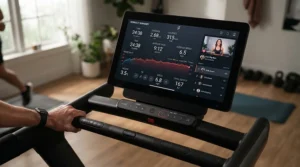
Every apartment community is different, so this resident fitness center equipment guide breaks down three common profiles. Picture a 60-unit boutique mid-rise in a walkable downtown, mostly young professionals working from home who squeeze in a 20-minute cardio session between video calls — the Matrix E30‘s compact footprint and quiet suspension design fit that lifestyle and that equipment room perfectly. Now picture a 250-unit garden-style community with a large clubhouse gym and a mix of families, retirees, and shift workers using the space around the clock — that’s exactly the unsupervised, high-traffic scenario the Sole E98 or a refurbished Precor EFX 835 was built to survive, where weight capacity and drivetrain durability matter more than console flash. Finally, consider a small 24-unit student-housing conversion with a modest fitness budget and light, infrequent use — here the Nautilus E618 or even the Schwinn 470 as a secondary machine can reasonably stretch the budget without exposing the property to real liability, since usage volume stays low enough that a lighter-duty machine can keep pace.
Common Amenity Gym Problems (And How to Solve Them)
Amenity gyms tend to develop the same handful of headaches, and most have a straightforward fix. Problem one: a single elliptical becomes a bottleneck during 6-8 a.m. rush hour — the solution is either adding a second, lower-cost unit like the Schwinn 470 as overflow, or shifting to a machine with a shorter step-on height so more resident types can rotate through comfortably. Problem two: noise complaints from units near the gym — swap toward WhisperStride-style engineering like the Life Fitness E3 or the wheel-free design of the Matrix E30, both of which were specifically built around quieter operation. Problem three: machines break down faster than expected — this is almost always a mismatch between rated weight capacity and actual usage, which is exactly why the honesty around the Precor EFX 225‘s 275-pound limit matters so much for larger, high-traffic properties. Problem four: residents ignore the gym entirely — pairing better equipment with visible touchscreen entertainment, like the Sole E98’s 13.3-inch display, measurably increases usage in comparable amenity settings. Problem five: budget gets slashed mid-project — prioritize one true commercial-grade machine over three budget units, since a single reliable elliptical outperforms three unreliable ones on both resident satisfaction and total service calls.
How to Choose a Commercial Elliptical for Apartment Complex Gym
Choosing the right machine comes down to seven decision points, in roughly this order of importance:
- Confirm true commercial rating, not marketing language. Ask directly whether the manufacturer’s warranty covers commercial or multi-user settings — as we saw with the Precor EFX 225, some “commercial-adjacent” home machines explicitly exclude that use case.
- Match weight capacity to your resident mix. A 275-pound limit may be fine for a small boutique property; a 400-plus-unit community needs the higher headroom of a Sole E98 or Precor EFX 835.
- Measure your actual room, including active footprint. Undersized rooms lead to awkward machine placement that discourages full-range strides.
- Weigh noise engineering if the gym touches occupied units. WhisperStride or suspension-based designs meaningfully reduce vibration transfer through shared walls and floors.
- Check the electrical requirements before you order. Self-powered units simplify retrofits; console-heavy touchscreen models often need dedicated circuits.
- Compare warranty terms, not just sticker price. A cheaper machine with 90-day labor coverage can cost more over five years than a pricier one with multi-year labor included.
- Confirm the accessible route to the equipment. Under federal accessibility guidance for exercise facilities, the path to the machine — not the machine’s internal controls — is typically what must meet clearance standards, so plan aisle width accordingly.
Common Mistakes When Buying Apartment Amenity Gym Equipment
The single most common mistake on any apartment amenity gym equipment list is buying on sticker price alone and ignoring duty-cycle ratings entirely — a $999 machine that fails in eight months costs more than a $2,500 machine that lasts a decade, once you count service calls and resident complaints. A close second is skipping the weight-capacity conversation out of politeness; every property serves a range of body types, and under-rating capacity is both a liability exposure and a fast track to warranty voids. Many properties also underestimate delivery and assembly costs, assuming a $3,500 machine arrives ready to use when in reality freight, threshold delivery, and professional assembly can add several hundred dollars that never made it into the original budget. Finally, plenty of leasing teams pick equipment based on a showroom demo rather than realistic, unsupervised daily use — a machine that feels smooth for five minutes under ideal conditions can behave very differently after six months of resident wear with no dedicated staff monitoring proper use.
Commercial Elliptical vs Treadmill: Which Wins for Multifamily Property Management?
For multifamily property management teams choosing between cardio equipment categories, the honest answer is “both, eventually” — but if forced to pick one first, ellipticals generally win the early rounds. Treadmills have more wear-prone parts (belts, decks, motors under constant load) and require more frequent service visits in high-traffic amenity settings, while a quality elliptical like the Precor EFX 835 or Matrix E30 has fewer moving parts subject to friction wear, translating into lower long-term maintenance costs. Ellipticals are also inherently lower-impact, which matters for liability exposure in an unsupervised gym serving residents across a wide age and fitness range. Where treadmills still win: pure running specificity for residents training for races, and a slightly lower learning curve for first-time users. Most well-designed multifamily property management fitness rooms end up running both categories side by side, but if budget forces a first purchase, the durability math favors starting with a commercial-grade elliptical.
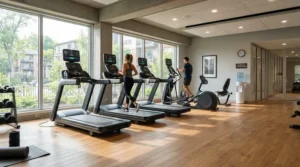
What to Expect: Real-World Performance in a 24/7 Amenity Gym
Specs on paper rarely match what actually happens once a machine meets fifty different residents. Expect the first ninety days to be the real stress test — this is when loose bolts, mismatched assembly, and any manufacturing inconsistencies typically surface, which is exactly why a post-delivery inspection matters more than the warranty paperwork itself. Expect noise levels to creep up gradually as bearings and belts see continuous use; a machine that felt silent on day one may develop a faint hum by month six, and that’s normal wear rather than a defect unless it becomes a grinding or clicking sound. Expect touchscreen consoles, like the one on the Sole E98, to need occasional resets after repeated public use — this is a software quirk, not a hardware failure, and shouldn’t trigger a warranty claim on its own. Expect usage patterns to cluster hard around 6-8 a.m. and 5-7 p.m., which is the practical argument for adding a second, lower-cost unit rather than assuming one premium machine will absorb all demand gracefully.
Long-Term Cost & Maintenance for Resident Amenities
Total cost of ownership rarely lines up with sticker price when you’re budgeting for resident amenities over a five-to-ten-year horizon. A $999 Schwinn 470 with 90-day labor coverage and reviewer-flagged reliability issues within six months can realistically require two or three paid service visits a year once labor coverage lapses, while a $2,500 Sole E98 with a lifetime frame warranty and light-commercial labor terms spreads its cost more predictably across a decade. Factor in three recurring line items when comparing candidates: annual preventive maintenance (typically a few hundred dollars per machine per year for a qualified technician), replacement wear parts (pedals, grips, and belts every few years regardless of brand), and downtime cost — every day a gym’s only cardio machine sits broken is a day that shows up in resident satisfaction surveys and, eventually, renewal decisions. Machines with longer parts and labor warranties, like the Nautilus E618‘s five-year parts coverage or the Matrix E30‘s comparable terms, effectively convert an unpredictable future expense into a known, budgetable one — which is exactly what a facilities line item should do.
Safety, ADA & Insurance Compliance Guide
Safety compliance in an amenity gym isn’t optional, and it isn’t limited to the machines themselves. Under federal accessibility guidance covering exercise facilities, the accessible route serving fitness equipment — meaning aisle width, turning space, and surface slope leading to and around each machine — typically must meet clearance requirements, even though the controls on the elliptical itself are generally exempt from those same standards. Practically, that means leaving enough clear floor space in front of and beside each unit, not squeezing the Sole E98 or Precor EFX 835 into a corner where a wheelchair user or resident with a mobility aid can’t comfortably approach. Beyond accessibility, post visible weight-capacity signage on every machine, keep a written maintenance log for insurance purposes, and confirm your umbrella liability policy explicitly covers unsupervised amenity fitness equipment — many general property policies exclude fitness-related injury claims unless a rider is added. None of this is glamorous work, but it’s dramatically cheaper than the alternative.
Leasing Office Fitness Perks: How Equipment Choice Affects Renewals
Leasing office fitness perks have quietly become one of the more measurable amenity investments a property can make. Survey research on multifamily renters consistently ranks a fitness center among the top amenities influencing both leasing decisions and renewals, which turns “we finally fixed the gym” into a genuine talking point on leasing tours rather than an afterthought buried in the amenity list. A resident who can rely on a properly maintained, genuinely commercial-grade elliptical is less likely to justify a competing property’s slightly lower rent purely on the strength of a nicer fitness room. Leasing teams should treat equipment quality photos — a Sole E98‘s touchscreen, a clean and quiet Matrix E30 — as marketing assets, not just facilities line items, because prospective residents notice the difference between stock photography and an actual, well-kept amenity space during a tour.
Frequently Asked Questions
❓ What weight capacity should a commercial elliptical for apartment complex gym have?
❓ Is a light-commercial elliptical enough, or do I need full commercial grade?
❓ How often should apartment gym ellipticals be serviced?
❓ Can budget ellipticals like the Schwinn 470 work in an apartment gym?
❓ Does ADA apply to apartment amenity gym equipment?
Conclusion
Furnishing a resident gym well comes down to matching machine durability to actual usage, not to the biggest number on a spec sheet. For most multifamily properties, the Sole E98 or a refurbished Precor EFX 835 delivers the safest combination of weight capacity, warranty confidence, and genuine commercial engineering, while the Matrix E30 and Life Fitness E3 earn their place in noise-sensitive or space-constrained buildings. Budget-conscious properties can lean on the Nautilus E618 for solid mid-range value, and reserve machines like the Precor EFX 225 or Schwinn 470 for smaller communities or secondary-unit roles rather than as a sole cardio investment. Whichever machine you choose, pair it with real maintenance planning, clear signage, and an honest look at your accessible-route compliance — the equipment is only half the job. Get that right, and the gym stops being a line item nobody thinks about and starts being the amenity residents actually mention when they renew.
Recommended for You
- Elliptical for Corporate Wellness Room: 7 Best Picks 2026
- 7 Best Elliptical for Hotel Fitness Center Options in 2026
- Gym Quality Elliptical for Home Use: 7 Best Picks (2026)
Disclaimer: This article contains affiliate links. As an Amazon Associate, I earn from qualifying purchases. If you purchase products through these links, we may earn a small commission at no additional cost to you.
✨ Found this helpful? Share it with your friends! 💬🤗
