
In This Article
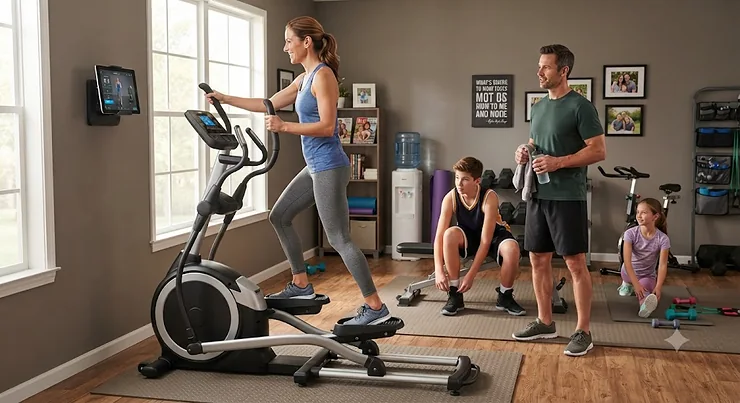
Six people, one machine, zero patience for anything that squeaks after week three. That’s the real brief behind finding an elliptical for multi-user family home use, and it’s a very different shopping problem than picking a solo cardio machine for your own bedroom corner. A elliptical for multi-user family home is a stationary cross-trainer built (or specced) to handle a rotating cast of bodies — different heights, different weights, different workout habits — without falling apart or forcing a compromise on any one person. The elliptical trainer itself is a fairly simple concept: a low-impact machine that mimics walking, running, or stair-climbing while sparing your joints the pounding. What gets complicated is durability and fit once four or five people start sharing the same set of pedals.
This guide skips the generic “top 10 ellipticals” format you’ve already scrolled past a dozen times. Instead, we dug into real specs, real weight capacities, and real aggregated review sentiment to find machines that specifically hold up to shared, heavy household use — the kind where Dad rides at 6 a.m., the teenager wants a HIIT session after school, and Grandma needs something gentler at 4 p.m. We looked at adjustable stride, sturdy frames, and multiple user profiles because those three things, more than touchscreen size or app subscriptions, determine whether a family elliptical becomes a daily habit or a very expensive coat rack. Below you’ll find seven real machines across every price tier, comparison tables you can actually use, and practical guidance for keeping shared equipment running smoothly for years, not months.
Quick Comparison Table: Elliptical For Multi-User Family Home
| Model | Stride Range | Weight Capacity | Best For |
|---|---|---|---|
| SOLE E95S | 18″–24″ (power-adjustable) | 400 lbs | Wide height range in one household |
| NordicTrack AirGlide 7i | 20″ (fixed) | ~300 lbs | Competitive siblings who like coached workouts |
| Life Fitness E1 Go | 20″ (fixed) | 350 lbs | Gym-familiar feel, near-silent operation |
| Niceday 20IN 500LBS | 15.5″ / 16″ / 20″ | 500 lbs | Best value for heavier household users |
| Schwinn 411 | 18″ (fixed) | 275 lbs | Budget entry point for casual use |
| Sole E35 | 20″ (fixed) | 375 lbs | Daily rotation, multiple regular users |
| 3G Cardio Elite EM X | 20″ adjustable | 350 lbs | Commercial-grade toughness for heavy use |
A quick glance tells you most of what you need to know before you dig into the details: weight capacity and stride adjustability are doing the heavy lifting here, literally. The SOLE E95S and 3G Cardio Elite EM X stand out for households where a 5’1″ parent and a 6’3″ teenager both need to feel comfortable on the same frame, since their adjustable strides remove the “one size fits nobody” problem that plagues fixed-stride budget machines. Meanwhile, the Niceday 20IN 500LBS punches well above its price tag on raw weight capacity, which matters more than people expect once you’re accounting for multiple adult users cycling through the same machine every week.
💬 Bookmark this comparison — you’ll want to scroll back to it once you start weighing warranties against your budget.
Top 7 Ellipticals for Multi-User Family Homes: Expert Analysis
1. SOLE E95S — power-adjustable stride for any height
The standout here is the motorized stride adjustment that shifts from 18 to 24 inches at the touch of a button, meaning nobody has to manually crank a lever between sessions. That range alone covers users from roughly 5’0″ to 6’6″, according to SOLE’s own sizing guidance, which is exactly the spread you’d expect across two or three generations under one roof. The 30-pound flywheel is heavy enough to produce a smooth, momentum-driven glide rather than the choppy feel of lighter magnetic units, and the 400-pound weight capacity gives real headroom for larger users without the frame feeling like it’s straining.
Based on the spec comparison, this is the machine for families who’ve outgrown a fixed-stride budget model and are tired of someone always feeling cramped or overextended. Reviewers consistently note the 13.3-inch touchscreen and wireless charging as premium touches, though a few mention the price tag requires genuine commitment rather than an impulse buy. The lifetime frame warranty with three years of parts coverage is one of the strongest in this category, which matters enormously when five family members are putting cumulative hours on one machine.
Pros:
- ✅ Motorized stride adjusts instantly for any height in the house
- ✅ 400-lb weight capacity with a reassuringly heavy flywheel
- ✅ Lifetime frame warranty outlasts most competitors by years
Cons:
- ❌ Premium price point requires real budget commitment
- ❌ Large footprint needs a dedicated home gym corner
Price sits in the upper premium range, generally in the $2,500–$3,000 range depending on current promotions — check current price before buying, since fitness retailers rotate deals often. For a household that genuinely spans multiple heights and fitness levels, the value case holds up.
2. NordicTrack AirGlide 7i — smart coaching for competitive siblings
What immediately stands out is the 20-inch adjustable stride paired with 22 levels of silent magnetic resistance, giving a spread wide enough for most adult users from about 5’2″ to 6’4″ without feeling boxed in. The 7-inch HD touchscreen connects to iFIT for trainer-led sessions, which turns “get on the elliptical” from a chore into something closer to a game — useful leverage in households where teenagers need more than a blank console to stay motivated.
Here’s what to weigh: iFIT requires a separate subscription, and the family plan runs about $39 a month, on top of the machine’s price. That’s real money over a few years, so factor it into your total cost of ownership rather than treating it as an afterthought. What most buyers overlook is that the screen becomes noticeably less useful without an active subscription, since a large portion of the workout library and auto-adjusting resistance lives behind that paywall. Aggregated user feedback frames the ride quality and quietness positively, while noting the subscription friction as the most common complaint.
Pros:
- ✅ 22 resistance levels cover casual walks to hill-climb intervals
- ✅ iFIT coaching keeps competitive family members engaged
- ✅ Quiet operation suits early-morning or late-night sessions
Cons:
- ❌ Full functionality requires an ongoing iFIT subscription
- ❌ Console feels underused without the paid content
Expect a price in the $1,000–$1,500 range for the base unit, before subscription costs. Families who’ll actually use the coached content get real value; those who won’t should weigh a simpler console instead.
3. Life Fitness E1 Go — gym-grade quiet for shared spaces
The 350-pound weight capacity and lifetime frame warranty telegraph exactly what Life Fitness is going for here: a smaller, gym-familiar version of the equipment you’ve used at a commercial fitness center, scaled for home use. The belt-drive system delivers a notably quiet ride compared to chain-driven consumer machines, which reviewers repeatedly flag as a meaningful upgrade for anyone sharing walls with sleeping family members during early workouts.
What the spec sheet won’t tell you, but Life Fitness’s own Connect ecosystem does, is that the brand’s console line generally supports multiple saved user profiles, letting each family member store their own settings and skip re-adjusting the machine every single time. On paper this means less friction in a household where four different people are rotating through the same unit daily. The tradeoff is a genuinely minimal console — no Bluetooth syncing on this model, and a “Go” version of the display that trades data richness for reliability and simplicity.
Pros:
- ✅ Whisper-quiet belt drive suits shared or upstairs spaces
- ✅ Multiple saved profiles cut down on setup friction
- ✅ Commercial-gym feel with a genuinely durable frame
Cons:
- ❌ No Bluetooth app syncing on this console
- ❌ Premium price for a fairly basic display
Pricing generally lands around the $2,000–$2,200 range. This is a strong pick for buyers who’ve trained on Life Fitness equipment at a gym and want that same dependable feel without the flashy extras.
4. Niceday 20IN 500LBS — best value for heavy-capacity strength
The headline number is the 500-pound weight capacity, which is genuinely rare at this price point and immediately widens the pool of family members who can use the machine without a second thought. Add three stride settings — 15.5, 16, and 20 inches — and you get real flexibility for a household with a mix of shorter and taller users, even without the motorized adjustment found on pricier machines.
Based on the spec comparison, this is the practical choice for families who want SOLE-level capacity numbers without the SOLE-level price tag. The 16 resistance levels provide enough range for both light recovery days and genuinely challenging sessions, and aggregated buyer feedback frequently highlights the sturdy frame feel as surprising for the price. What most buyers overlook is that manual stride adjustment takes an extra minute compared to power-adjustable models, a small tradeoff that matters more in households with frequent, back-to-back users.
Pros:
- ✅ 500-lb capacity is exceptional for the price tier
- ✅ Three stride settings fit a genuine range of heights
- ✅ 16 resistance levels cover beginner to advanced sessions
Cons:
- ❌ Manual (not motorized) stride adjustment takes extra time
- ❌ Console and app features are more basic than premium rivals
Typically priced under $900, this is one of the strongest value plays for multi-user households prioritizing weight capacity and durability over smart features.
5. Schwinn 411 — budget entry point that just works
The 411’s appeal is refreshingly simple: an 18-inch stride in a compact 54-inch footprint, built by a recognizable brand without a subscription attached to basic functionality. It won’t wow anyone with a touchscreen, but the drivetrain is smooth and the noise level stays low enough for early risers who don’t want to wake the house.
Here’s what to weigh honestly: this is a casual-use machine, not a heavy-rotation family workhorse. Reviewers and comparison guides consistently position it as ideal for light cardio a few times a week rather than daily structured training across multiple household members. Families with several regular users, or anyone significantly taller than average, will likely outgrow the frame’s stride range and duty cycle faster than a commercial-grade alternative. That’s not a knock on the product — it’s simply built for a different use case, and being honest about that upfront saves buyers a frustrating surprise eighteen months in.
Pros:
- ✅ Genuinely affordable entry point under $600
- ✅ Compact footprint fits smaller home gym spaces
- ✅ Smooth, quiet drivetrain for its price class
Cons:
- ❌ Fixed 18-inch stride limits taller users’ comfort
- ❌ Not built for daily use by multiple family members
Expect a price in the $500–$600 range. This is the right call for a starter machine or a secondary unit, not the sole workhorse for a five-person household.
6. Sole E35 — steel-frame durability for daily rotation
A 375-pound weight capacity paired with a heavy-duty steel frame puts the Sole E35 squarely in “built to be shared” territory. The 20-inch stride and 25-pound flywheel produce a smooth, natural motion, and the multiple handhold positions — inner and outer bars — let users of different arm lengths and workout styles find a comfortable grip without fighting the machine’s design.
What stands out in aggregated Amazon feedback (a 4.4-star average across 761 reviews) is how frequently owners mention the frame’s stability under sustained, repeated use — exactly the scenario a multi-user household creates. The 7.5-inch LCD display and 20 resistance levels are straightforward rather than flashy, and the lifetime frame warranty with five years of parts coverage backs up the durability claim with real accountability. On paper, this is one of the more balanced picks here: not the cheapest, not the most feature-loaded, but built with the daily-rotation use case specifically in mind.
Pros:
- ✅ Heavy-duty steel frame rated for sustained daily use
- ✅ 375-lb capacity plus multiple handhold positions
- ✅ Strong warranty: lifetime frame, 5 years parts, 2 years labor
Cons:
- ❌ Large, heavy unit that’s difficult to reposition
- ❌ Console feels basic next to touchscreen competitors
Pricing generally falls in the $1,000–$1,500 range. For families prioritizing long-term frame durability over smart-screen extras, this is one of the safer bets on the list.
7. 3G Cardio Elite EM X — commercial toughness for daily family use
Built in Arizona on what the manufacturer describes as a commercial-grade frame philosophy, the Elite EM X leans on a heavier flywheel and sealed bearings — components most residential-only machines skip to hit a lower price point. The adjustable resistance levels and stride range are engineered to accommodate a wider mix of body types than typical home units, which is precisely the durability profile a shared, heavy-use household needs.
Based on the spec comparison, the sealed bearing design is the detail that matters most here: it means less frequent maintenance and a longer service life than the loose-ball bearings found on cheaper alternatives, which tend to need re-greasing or replacement well before a commercial-grade unit shows similar wear. Reviewers and industry buying guides frequently position this machine as the upgrade path for anyone who’s already burned through a budget elliptical and wants something that won’t need replacing in two years. App connectivity is included without a mandatory subscription fee, a meaningful cost difference over a machine’s lifespan compared to iFIT-dependent competitors.
Pros:
- ✅ Sealed bearings and heavy flywheel built for daily wear
- ✅ Adjustable stride and resistance suit varied body types
- ✅ App connectivity with no required subscription fee
Cons:
- ❌ Higher upfront cost than most residential-only machines
- ❌ Bulkier footprint typical of commercial-grade construction
Pricing typically runs in the $2,000–$3,000 range depending on configuration. This is the pick for households that have already worn out one machine and want the last elliptical they’ll ever need to buy.
Practical Usage Guide: Setting Up a Shared Family Elliptical
Getting a durable elliptical for heavy household use is only half the job — setup determines whether it survives contact with an actual family. Start by placing the machine on a rubber equipment mat; this single $30–$50 purchase protects flooring and reduces vibration transfer to rooms below, which matters enormously in multi-story homes with early-morning or late-night users. Level the machine on all four feet before the first use, since an uneven base accelerates wear on stride mechanisms far faster than the manufacturer’s duty-cycle rating assumes.
In the first 30 days, resist the urge to skip the break-in period some manufacturers recommend for flywheel and belt components — running a new unit at moderate resistance for the first week lets bearings and belts seat properly. A common mistake in shared households is skipping individual profile setup entirely; take ten minutes to program each family member’s stride, resistance preference, and weight into the console if the model supports it, since consistent, correct settings reduce joint strain and prevent the kind of forceful, mismatched pedaling that shortens component life. Build a simple monthly maintenance habit: wipe down rails and pedals, check bolt tightness, and lubricate the drive mechanism per the manual — a five-minute task that meaningfully extends the machine’s service life under the kind of daily, rotating use this guide is built around.
Real-World Scenarios: Which Elliptical Fits Your Family?
Consider the Martinez household: two working parents in their 40s, a college-age daughter home for summer, and a grandmother who joins for light cardio three mornings a week. Their budget sits around $1,500, and their priority is stride flexibility over smart features. A machine like the Sole E35 or Niceday 20IN 500LBS fits this profile well — durable frames, real weight capacity, and enough stride range to serve three generations without anyone feeling cramped or overextended.
Now picture a household with two teenagers who treat cardio as competition, checking heart rate zones and chasing personal records. Here, the NordicTrack AirGlide 7i‘s coached iFIT sessions add genuine motivation that a blank console simply can’t replicate, even accounting for the subscription cost. Finally, consider a multigenerational home where a 6’4″ son-in-law and a 5’1″ grandparent both need the same machine to feel right — this is exactly the scenario the SOLE E95S‘s power-adjustable stride was built to solve, since manual adjustment becomes a genuine hassle when the machine changes hands three or four times a day.
Problem → Solution: Common Shared-Elliptical Headaches
Problem: Squeaking pedals after a few months of heavy use. This is almost always a lubrication issue at the pivot points rather than a defect — a few drops of silicone-based lubricant (never oil-based, which attracts dust) usually resolves it within a day.
Problem: One family member always readjusts settings, frustrating the next user. Machines with multiple user profiles, like the Life Fitness E1 Go, solve this directly; on units without saved profiles, a laminated card taped to the console listing each person’s preferred stride and resistance works surprisingly well.
Problem: The frame feels wobbly after eight months. Re-check and re-tighten all bolts, particularly around the pedal arms and stabilizer feet — this is standard maintenance, not a warranty issue, and it’s the single most common oversight in households sharing equipment across multiple daily users.
Problem: Disagreements over morning versus evening workout slots. A simple shared calendar or whiteboard schedule near the machine resolves more household friction than any product feature ever will.
How to Choose an Elliptical for Multi-User Family Home
What is the best way to choose an elliptical for multi-user family home use? Prioritize adjustable stride range and weight capacity above console features, then confirm the warranty covers residential multi-person use rather than single-owner assumptions. Here’s the step-by-step approach:
- Measure your tallest and shortest regular users. An adjustable stride elliptical for families should comfortably span both, typically requiring at least a 4–6 inch adjustment range.
- Add up realistic weekly hours across all users. Five hours a week per person across three people means real wear — budget-tier machines rated for light residential use will struggle.
- Check weight capacity against your heaviest user, plus buffer. Add at least 50 pounds of headroom beyond your heaviest regular user’s weight for long-term frame integrity.
- Decide if smart coaching justifies a subscription. Competitive or easily-bored users benefit from iFIT-style programming; casual users often don’t need it.
- Confirm warranty terms explicitly cover residential shared use. Some warranties quietly assume single-owner conditions, which matters if a claim ever comes up.
- Test stride comfort in person if at all possible. Specs can’t fully substitute for how a stride actually feels to a real body.
- Factor in footprint against your actual available space, not just the showroom photo’s implied scale.
Common Mistakes When Buying a Family Elliptical
The most frequent mistake is buying based on console flash rather than frame durability — a large touchscreen means nothing if the drive mechanism can’t handle five people’s combined weekly hours. A close second is underestimating weight capacity; buyers often size to their own weight rather than their heaviest regular user, which creates avoidable strain on stride mechanisms and bearings over time.
Another common misstep is ignoring stride adjustability entirely, assuming “one size fits most” when the whole point of a shared household purchase is accommodating a genuine range of bodies. Buyers also frequently skip reading warranty fine print, only to discover residential warranties sometimes include usage-hour caps that a busy multi-user household can exceed within a year or two. Finally, many households underestimate assembly complexity — a family elliptical with multiple user profiles and a large touchscreen often requires two people and an hour or more to assemble correctly, which is worth planning around rather than discovering on delivery day.
Elliptical vs Treadmill for Family Cardio
| Factor | Elliptical | Treadmill |
|---|---|---|
| Joint impact | Low-impact, easier on knees and hips | Higher impact, especially at running speeds |
| Noise level | Generally quieter, better for shared homes | Motor and footfall noise carries further |
| Multi-user fit | Adjustable stride accommodates varied heights | Speed/incline settings adjust, but impact stays constant |
| Space footprint | Similar or slightly larger | Similar, foldable options common |
Looking at the comparison above, ellipticals generally win out for genuinely shared, multi-generational households because low-impact motion protects joints across a wider range of ages and fitness levels than a treadmill’s constant footfall demands. Treadmills still hold an edge for runners specifically training for running events, since running-specific conditioning doesn’t fully transfer from an elliptical’s fixed motion path. For a household prioritizing daily use across grandparents, teenagers, and everyone in between, the joint-friendly case for an elliptical is hard to beat.
What to Expect: Real-World Performance With Multiple Users
Specs on paper translate into everyday experience in fairly predictable ways. A 20-inch fixed stride will feel natural for most adults between 5’2″ and 6’2″, but users outside that range will notice real discomfort within a few sessions — this is where adjustable-stride machines earn their premium. Resistance levels in the mid-teens (14–16) cover the vast majority of real-world household fitness levels, from a grandparent’s recovery-pace walk to a teenager’s genuine hill-climb effort, and going beyond 20 levels mostly matters for households with serious athletes chasing granular training zones.
Noise matters more than most buyers expect until they’re the one waking a sleeping household at 6 a.m. Magnetic and belt-drive systems consistently outperform older chain-driven mechanisms here, a detail aggregated reviews mention again and again as a genuine quality-of-life factor. Expect a properly maintained mid-range to premium machine to deliver smooth, consistent motion for years under heavy shared use, while budget machines under $600 typically show detectable wear — looser pedals, minor wobble — within twelve to eighteen months of daily multi-user rotation.
Adjustable Resistance Settings Explained
Adjustable resistance settings are the single feature most responsible for making one machine work for an entire household’s range of fitness levels. In practice, resistance controls how much force the flywheel pushes back against your pedaling — lower settings suit warm-ups, recovery days, or a grandparent’s gentle daily walk, while higher settings turn the same machine into genuine hill-climb training for a fit teenager or adult.
Most home units in this guide offer 14 to 22 magnetic resistance levels, which sounds like a lot of granularity but really breaks down into three practical zones: light (levels 1–6), moderate (7–14), and challenging (15 and up). What most buyers overlook is that magnetic resistance systems, used by every model on this list, are quieter and require less maintenance than older friction-based resistance mechanisms, which matters directly for shared-use durability. When multiple people with different fitness goals share one machine, generous resistance range — rather than resistance level count alone — is what actually prevents anyone from feeling under-challenged or overwhelmed.
Shared Equipment Durability: What Actually Holds Up
Shared equipment durability comes down to a short list of components: flywheel weight, bearing type, frame-steel gauge, and drive-belt quality. Heavier flywheels (25–30 lbs, as seen on the Sole E35 and SOLE E95S) produce smoother momentum and put less repetitive strain on connecting joints than the lighter 10–13 lb flywheels common on budget machines. Sealed bearings, like those on the 3G Cardio Elite EM X, resist dust and moisture far better than exposed loose-ball bearings, directly translating into fewer squeaks and less frequent maintenance across years of multi-person use.
Reviewers consistently note that steel-frame construction with a genuine weight-capacity buffer — rated well above any single user’s actual weight — correlates strongly with long-term stability in households running the machine daily across several people. Warranty length is also a reasonably honest durability signal: manufacturers offering lifetime frame coverage are implicitly betting on their own component quality holding up, which is exactly the bet a heavy-use family household needs to win alongside them.
Elliptical With Multiple User Profiles: Why It Matters
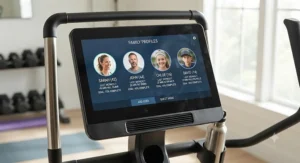
An elliptical with multiple user profiles solves a problem that’s easy to underestimate until you’re living with it: constant re-adjustment friction. Without saved profiles, every user has to manually reset stride, resistance, and sometimes even seat or handle position before each session — a minor annoyance for one person, but a genuine daily time cost multiplied across four or five family members.
Machines like the Life Fitness E1 Go, which supports saved settings through its companion app ecosystem, and the NordicTrack AirGlide 7i, which ties usage data to individual iFIT accounts, both reduce this friction meaningfully. On paper, this feature matters most in households where workout times overlap or rotate quickly — think a parent finishing a session right as a teenager arrives for theirs. Reviewers who mention this feature specifically tend to frame it as a quality-of-life upgrade rather than a dealbreaker, but for genuinely heavy multi-user rotation, it’s one of the more underrated specs on any spec sheet.
Long-Term Cost & Maintenance for Family-Use Ellipticals
Total cost of ownership extends well past the sticker price, especially for households running a machine across multiple daily users. Budget machines in the $500–$600 range often carry shorter parts warranties (one year is common) and may need belt or bearing replacement within two to three years of heavy shared use — a real cost that’s easy to overlook at checkout. Mid-range and premium machines ($1,000–$3,000) generally carry longer parts and frame warranties, which on paper reduces your risk of an expensive surprise repair down the line.
Subscription-based consoles add a recurring cost worth calculating honestly: an iFIT family plan at roughly $39 a month adds up to nearly $1,900 over four years, a figure worth weighing against a simpler, subscription-free console if your household won’t consistently use the coached content. Maintenance costs stay modest across every tier here — lubricant, occasional bolt tightening, and the rare belt replacement — provided the initial component quality (flywheel weight, bearing type) matches the household’s actual usage volume.
Building Family Fitness Routines Around One Machine
Family fitness routines built around a single shared elliptical work best with a simple, visible schedule rather than an informal “whoever gets there first” system. A physical or shared-app calendar assigning rough time blocks — early morning for working parents, after-school for teenagers, mid-afternoon for retired grandparents — prevents the daily friction that quietly kills consistency in shared-equipment households.
The CDC recommends adults get at least 150 minutes of moderate-intensity aerobic activity weekly, a target that a shared elliptical can realistically support across an entire family if usage is actually scheduled rather than left to chance. Rotating workout styles also helps sustain engagement: alternating steady-state sessions with interval-based resistance changes keeps the same machine feeling fresh for users who’ll be logging hundreds of hours on it over several years. Households that treat the elliptical as shared infrastructure — with clear time slots and light accountability — consistently report higher long-term usage than those relying purely on individual motivation.
Safety & Space Considerations for Multi-User Home Gyms
Safety in a shared household starts with genuine clearance space — manufacturers typically recommend at least two feet of clear space around the machine’s footprint, more if younger children will be nearby during workouts. Weight capacity should never be treated as a ceiling to approach; leaving real buffer between your heaviest user’s weight and the machine’s rated capacity protects both the frame and the warranty’s fine print.
For households spanning several generations, the CDC’s guidance for older adults recommends pairing aerobic activity with balance-focused movement, a useful reminder that an elliptical’s stability features — sturdy handlebars, non-slip pedals — matter more for some users than others. Keep emergency stop mechanisms clearly explained to every user, including guests or extended family visiting temporarily, and schedule that simple monthly bolt-check mentioned earlier as a non-negotiable safety habit, not just a durability one.
FAQ: Elliptical for Multi-User Family Home
❓ What is the best elliptical for a family with different heights?
❓ How much weight capacity do I need for a shared elliptical?
❓ Can multiple people use the same elliptical without voiding the warranty?
❓ What's a good budget elliptical for a multi-user household?
❓ How do adjustable resistance settings work on a family elliptical?
Conclusion
Finding the right elliptical for multi-user family home use really comes down to three honest questions: how wide is your household’s height range, how many combined hours will the machine actually log each week, and how much of that usage will happen without anyone re-adjusting settings for the next person. Adjustable stride, real weight-capacity buffer, and durable components like sealed bearings and heavier flywheels matter far more, over a five-year ownership window, than touchscreen size or app polish.
Whether that means the value-driven Niceday 20IN 500LBS, the commercial-grade 3G Cardio Elite EM X, or the premium, height-spanning SOLE E95S, the right pick is the one that matches your household’s actual usage pattern rather than the flashiest spec sheet on the shelf. Build a simple usage schedule, stick to basic monthly maintenance, and a well-chosen shared elliptical can genuinely become the piece of equipment your whole family actually uses — not just the one gathering dust in the corner.
✨ Don’t Miss These Exclusive Deals!
🔍 Take your home fitness setup to the next level with these carefully selected ellipticals. Click on any highlighted model to check current pricing and availability. These machines can help your whole family build a genuinely sustainable fitness routine, together!
Recommended for You
- Compact Elliptical For Home Office Desk Breaks: 7 Best Picks (2026)
- Elliptical vs Stationary Bike for Garage Workouts: 7 Picks (2026)
- Heavy Duty Elliptical for Garage Gym: 7 Tough Picks (2026)
Disclaimer: This article contains affiliate links. As an Amazon Associate, I earn from qualifying purchases. If you purchase products through these links, we may earn a small commission at no additional cost to you.
✨ Found this helpful? Share it with your friends! 💬🤗
