
In This Article
Waterproof vs dust cover for home gym equipment boils down to one question: are you guarding your machine against liquid water, or against everything else? A waterproof cover uses coated fabric to block rain, spills and damp floors. A dust cover uses lighter, often breathable fabric to stop dust, pet hair and scratches.
Here’s the plot twist most buying guides skip. The “tougher” cover isn’t automatically the safer one. A fully sealed shell can turn a humid basement corner into a tiny terrarium, and the EPA’s guidance on controlling indoor moisture is blunt: mold control is moisture control, with indoor humidity ideally held in roughly the 30-60% band. Wrap a sweaty treadmill in a plastic-backed cover and you may be doing the opposite of protecting it.
So this guide does something different. Instead of just ranking covers, it walks through choosing the right equipment cover type for your actual room, your climate and your habits. You’ll get seven real products across budget, mid-range and premium tiers, plus honest analysis of fabrics, vents and humidity.
One transparency note: everything below is built from manufacturer specs, retailer listings and publicly available guidance. It is not hands-on testing. Where reviews couldn’t be verified, I say so rather than invent anything.
Quick Comparison: Waterproof Cover vs Dust Cover vs Vented Hybrid
| Cover Type | Protects Against | Breathability | Typical Fabric | Best For |
|---|---|---|---|---|
| Dust cover | Dust, pet hair, light scratches, window sun | High | Lightweight polyester, elastic hem | Climate-controlled living spaces, spare rooms |
| Fully waterproof (sealed) | Rain, snow, spills, damp | Low | 420D-600D coated Oxford | Covered porches, short-term outdoor storage |
| Vented waterproof hybrid | Spills, splashes, dust, plus moisture exit | Medium | 420D-600D with mesh vents | Garages, basements, humid rooms |
Looking at the table, the dust cover wins on airflow but offers little defense against a leaky ceiling or a tipped drink. The sealed waterproof cover is the opposite: great shield, poor ventilation. The vented hybrid is the sensible middle path for most homes, which is why several picks below lean that way.
💬 Just one click — help others make better buying decisions too!😊
Top 7 Covers for Home Gym Equipment: Expert Analysis
Prices below are ranges only and shift often, so check current pricing before buying. Review signals come from the listings I could find and are labeled as such.
1. Aidetech Treadmill Cover — three layers and a zipper for quick access
The zip panel is the clever part: you lift a section and run, no wrestling a full cover off every morning. That convenience matters more than it sounds, because covers that are annoying to remove tend to stay in the closet.
The listing describes a 500D Oxford outer layer, a PE waterproof membrane in the middle and a soft PVC microfibre suede lining. In plain English, the outer layer resists snags and claws, the membrane stops spills, and the lining keeps the console and rails from getting scuffed. A drawstring hem helps it hug the frame in drafty spaces.
Based on the spec comparison, this suits households with pets or kids and a treadmill that lives in plain sight. What the spec sheet won’t tell you is the sizing risk: it’s marketed for “T series” style machines, so measuring your treadmill is non-negotiable.
The retailer listing I found shows roughly a 4.8-star average across about 110 ratings. That’s encouraging, but it’s one seller’s snapshot rather than an independent review analysis.
Pros:
- ✅ Zip access without removing the cover
- ✅ Layered build resists spills and pet claws
- ✅ Soft lining protects finishes
Cons:
- ❌ Fit depends on exact treadmill model
- ❌ Layered fabric may trap humidity without extra venting
Price: around the $40-$60 range. Value verdict: strong for living-space treadmills, less ideal for damp garages.
2. XYZCTEM Treadmill Cover — waterproof shell with built-in air vents
Most waterproof covers ignore airflow. This one doesn’t. The listing highlights air vents designed to let moisture escape, with a windproof drawstring to keep the cover from lifting in drafts.
That pairing matters in a garage or basement. A coated shell blocks drips and splashes, while the vents give trapped humidity somewhere to go. Think of it as a raincoat with armpit zips: not fancy, just smart.
On paper, this is the most mold-conscious design of the seven. The trade-off is that vents can admit some fine dust and are rarely as protective in driving rain as a fully sealed seam. For indoor-to-garage use, that’s usually acceptable.
I could not verify an aggregated review base for this product, so I won’t characterize owner sentiment. The listing’s Q&A advises manual cleaning to preserve the waterproof and dustproof properties, a useful care detail.
Pros:
- ✅ Vents promote airflow and limit moisture buildup
- ✅ Drawstring helps resist drafts
- ✅ Waterproof and dustproof in one cover
Cons:
- ❌ Vents may let in some fine dust
- ❌ Review history not verifiable here
Price: full-size treadmill covers in this category typically sit around $25-$60. Value verdict: good insurance for humid rooms.
3. Concept2 RowErg Cover (1520) — made by the machine’s own manufacturer
Fit is the headline. This cover is cut for Concept2 machines, so there’s no guessing whether it will drape properly over a RowErg.
Per the manufacturer, it is a 14 oz polyester/vinyl laminate with Velcro tabs at the bottom edge, rot-resistant and easy to clean. It fits the RowErg with standard or tall legs and Models A-D. The Model E needs a different 10 oz cover (1554), and neither is compatible with the Dynamic.
Here’s the honest catch: Concept2 calls it water-resistant, built for dust and dirt, and not designed for full weather protection if stored outside. That makes it a pure indoor dust-and-spill cover. A vinyl laminate has little breathability, so keep the machine dry and the room moderate.
I found no independent aggregated reviews, so I’m leaving sentiment out. The value case rests on exact fit and the maker’s own guidance.
Pros:
- ✅ Exact fit for specified Concept2 models
- ✅ Rot-resistant, easy-to-clean laminate
- ✅ Velcro tabs help it stay put
Cons:
- ❌ Not intended for outdoor storage
- ❌ Different covers for different models
Price: roughly $60-$70. Value verdict: pricey per square foot, but no sizing gamble.
4. Guisong Weight Bench Cover — sized for full-length benches
Benches are awkward to cover because of their long, low, lumpy shape. This one is cut for benches around 75″L x 30″W x 37″H and uses a drawstring hem to snug the fabric down.
The listing cites 463D Oxford cloth with a waterproof and UV coating. A mid-high denier like that resists scuffs from dumbbells and pets, while the coating sheds splashes and garage condensation drips. At roughly 2 pounds, it’s light enough to flip on and off after each workout.
My analysis: it’s a sensible pick for an adjustable bench in a garage or on a covered patio. Measure first, though. Adjustable benches stored incline-up can exceed the listed height.
The listings I found show ratings in the 4.0-4.2 range from about 100-130 ratings, but no written reviews to summarize. So I can’t speak to durability themes.
Pros:
- ✅ Sized for full-length weight benches
- ✅ Coated Oxford sheds splashes and UV
- ✅ Light and quick to remove
Cons:
- ❌ Inclined benches may need larger sizing
- ❌ Price varies widely across sellers
Price: seller-dependent, roughly $30-$75, so compare listings. Value verdict: fair at the low end, questionable at the high end.
5. MBOOM 600D Bench Cover — ventilation holes and machine-washable
Washability is underrated. Gym covers collect chalk, sweat mist and garage grit, and being able to toss one in the machine is genuinely practical.
The listing describes 600D polyester with reinforced edges, a drawstring and ventilation holes meant to let air circulate and reduce musty odors. That vented design addresses the main downside of a coated cover. The 600D denier is on the heavier end for consumer covers, which tends to mean better tear and abrasion resistance.
What most buyers overlook is the sizing language. The listing gives confusing dimensions, so measure your bench and ask the seller before ordering. Waterproof claims also deserve a light touch; vent holes plus stitched seams mean it’s best treated as splash-resistant, not submersion-proof.
I found no verifiable review aggregate for this listing, so sentiment is unreported here.
Pros:
- ✅ Ventilation holes help limit odors
- ✅ Heavier 600D denier resists tears
- ✅ Machine-washable for easy upkeep
Cons:
- ❌ Confusing dimension listing
- ❌ Vent holes reduce heavy-rain protection
Price: around the $25-$50 range. Value verdict: excellent for garage benches, if the size checks out.
6. CyclingDeal Bike Cover — stays on while you move the bike
Moving a bike with a loose cover on it is a slapstick routine waiting to happen. The four tie-down straps here are designed to solve that, so you can roll the bike aside with the cover in place.
The listing says it’s tailored for the Peloton Bike and Bike+ and the NordicTrack S22i, and can fit other exercise bikes. The straps double as wind insurance for porch or patio use.
My advice: power down and let the screen cool before covering, a rule echoed in other treadmill cover guidance. A tight cover over warm electronics is not ideal.
I couldn’t verify independent review themes for this exact listing. As a category check, a generic waterproof bike cover I found carried about 4.0 stars across roughly 83 ratings, which says little about this one.
Pros:
- ✅ Tailored fit for popular connected bikes
- ✅ Four straps secure it in wind
- ✅ Movable with cover in place
Cons:
- ❌ Fit limited to listed models
- ❌ No verified review base found
Price: comparable bike covers run around $25-$50, so check current pricing. Value verdict: smart for smart bikes.
7. Covers & All Cover Tuff — made-to-measure 1000D for harsh weather
If your machine lives outside a garage door, this is the heavyweight conversation. Covers & All makes custom covers in three fabrics: Cover Max, Cover Fab and Cover Tuff.
Cover Tuff is described as 18 oz, 1000D PVC-coated polyester for extreme conditions. Cover Fab is a 600D option suited to shaded or semi-shaded spots. Tie-down choices include drawstrings, push clips, elastic bottoms and split zippers, with a fit tolerance of 1-2 inches.
The analytical take: made-to-measure beats universal sizing for odd machines, but heavy PVC-coated fabric has low breathability. Ask about venting when you order. The vendor lists warranties of up to 5 years on some exercise bike covers, which helps the long-term math.
Note that this is sold direct, not through Amazon. I found no independent review aggregate, so sentiment stays unreported.
Pros:
- ✅ Custom sizing for unusual machines
- ✅ Heavy 1000D option for extreme weather
- ✅ Multiple tie-down styles
Cons:
- ❌ Premium cost versus off-the-shelf covers
- ❌ Heavy fabric needs venting planned in
Price: quote-based, usually well above the $25-$60 off-the-shelf range. Value verdict: worth it for outdoor or unusual machines.
Top 7 at a Glance
| Product | Cover Type | Fabric/Build | Airflow Feature | Listing Signal | Price Range | Best For |
|---|---|---|---|---|---|---|
| Aidetech | Waterproof, layered | 500D Oxford + PE membrane | Drawstring/zip only | ~4.8 stars, ~110 ratings | $40-$60 | Pet-friendly living spaces |
| XYZCTEM | Vented hybrid | Waterproof shell | Air vents | Not verified | $25-$60 | Humid garages |
| Concept2 | Water-resistant | 14 oz poly/vinyl laminate | None noted | Not verified | $60-$70 | Indoor RowErg owners |
| Guisong | Waterproof | 463D Oxford, UV coating | Drawstring only | ~4.0-4.2 stars | $30-$75 | Weight benches |
| MBOOM | Vented | 600D polyester | Vent holes | Not verified | $25-$50 | Garage benches |
| CyclingDeal | Waterproof | Strapped design | Not noted | Not verified | $25-$50 | Connected bikes |
| Covers & All | Custom heavy-duty | 1000D PVC-coated | Ask for vents | Not verified | Quote-based | Outdoor/odd shapes |
The table shows a pattern: only XYZCTEM and MBOOM advertise airflow outright, which makes them the safer picks for humid rooms. Concept2 and Aidetech trade ventilation for fit and convenience, while Covers & All is the only option built for harsh exposure. Budget buyers should note that “Not verified” in the signal column is a reason to scrutinize returns policies.
✨ Don’t Miss These Carefully Selected Picks!
🔍 Take your gym protection to the next level with these covers. Click any highlighted product name to check current pricing and availability. A few minutes of measuring now can save a moldy surprise later!
Choosing the Right Equipment Cover Type
Choosing the right equipment cover type is mostly about matching fabric to environment. Use these steps, whatever your waterproof vs dust cover for home gym equipment shortlist looks like:
- Measure the machine as it will be stored. Folded treadmill dimensions and bench height with the backrest raised are the numbers that matter.
- Read your room, not the label. A spare bedroom needs dust defense. A garage or basement needs spill and humidity management.
- Check seams and coatings. Stitch holes leak unless sealed or taped, so a fabric rating alone doesn’t guarantee dry equipment.
- Decide how often you’ll uncover it. Daily users should favor zip access or quick-release straps.
- Confirm airflow. Vents, an open hem or breathable fabric beat a sealed shell in anything but outdoor weather.
- Match the attachment style to wind and traffic. Drawstrings suit still rooms; straps suit porches and tight corners.
- Check machine-specific compatibility. Models differ, as the Concept2 cover lineup shows.
Treat these as a filter. If a cover fails step 3 or step 5 for your room, move on.
Indoor vs Outdoor Gym Cover Needs
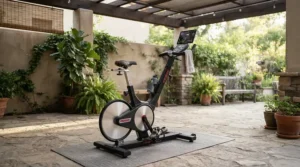
Indoor vs outdoor gym cover needs diverge more than most shoppers expect. In a living area, your enemies are dust, lint, pet hair and the occasional spilled latte, so a lighter cover with some breathability does the job. One buying guide I found notes that indoor setups benefit from breathable protection that blocks dust without trapping ambient moisture.
Garages and utility rooms are the middle ground. You get concrete-floor dampness, temperature swings and dust, so a vented hybrid like XYZCTEM or MBOOM fits the brief. The same guide suggests a cover that reaches the floor plus a rubber mat underneath to buffer rising moisture. Meanwhile, one custom-cover maker recommends deliberate ventilation and ground clearance. Those views conflict on the hem, but they agree on the principle: control airflow and keep the floor dry.
Outdoors is a different sport. Heavier denier, UV-resistant coatings and wind straps matter, and loose covers can act like sails in storms. Still, even Concept2 states its cover isn’t meant for full weather protection outdoors, and many machine makers discourage outdoor storage entirely, so check your manual first.
Equipment Cover Material Comparison
An equipment cover material comparison starts with denier. Denier measures yarn thickness (grams per 9,000 meters), so higher numbers mean thicker, heavier fabric with greater tear and abrasion resistance. But denier alone doesn’t make a cover waterproof; the coating does the heavy lifting.
| Material | Waterproofing | Breathability | Weight | Best For |
|---|---|---|---|---|
| 210D coated polyester | Good with PU coating | Low | Light | Budget indoor covers |
| 420D-600D coated Oxford | Strong with sealed seams | Low to medium | Medium | MBOOM, Guisong garages |
| 1000D PVC-coated polyester | Excellent | Very low | Heavy | Covers & All outdoor setups |
| Polyester/vinyl laminate | Water-resistant | Low | Medium-heavy | Concept2 indoor use |
| Plain polyester dust sheet | Minimal | High | Very light | Clean, dry living rooms |
The table makes the trade-off visible: the sturdier and more waterproof the material, the less it breathes. Pick lighter fabric for stable indoor rooms and heavier fabric only where weather actually reaches the machine.
Cover Material Breathability: The Hidden Variable
Cover material breathability determines whether moisture can leave once it’s inside. Uncoated or lightly coated fabrics let vapor drift out. Coated and laminated fabrics don’t.
One guide warns that fully sealed, non-breathable covers can trap indoor humidity, creating a microclimate that promotes rust, electrical corrosion and mold. That’s the quiet failure mode of an over-protective cover.
There’s also a counterpoint. A made-to-measure cover maker argues that vapor-tight fabric is genuinely waterproof, while truly breathable fabric can leak in prolonged rain, so it builds airflow into the construction instead. That’s the practical takeaway: breathability can come from the fabric or from vents, but you need one of them unless the cover lives in a dry, controlled room.
Mold Prevention Covers: Humidity, Fabric and Floor
Mold prevention covers only work as part of a moisture plan. The EPA says there’s no practical way to eliminate all mold and spores, so the strategy is controlling moisture, and it recommends keeping indoor humidity in the 30-60% range. A $15 hygrometer tells you more than any fabric label.
Public-health guidance, including from the CDC’s NIOSH mold resources, also treats dampness control as the core prevention step. Routine mold testing isn’t generally recommended.
Here’s the practical routine:
- Wipe sweat off handles, seats and consoles before covering.
- Let the machine cool and dry fully.
- Avoid covering in rooms that regularly exceed the upper humidity band.
- Run a dehumidifier in basements and garages.
The EPA advises cleaning and drying damp materials within 24-48 hours. Apply that same logic to a wet cover: never put it back over equipment while damp.
Cover Ventilation Panels: What Good Design Looks Like
Cover ventilation panels are the cheapest insurance in this entire category. Good designs share a few traits. Vents sit on opposite sides so air flows through rather than pooling, and mesh or flap coverings keep insects and rain out. One cover maker recommends at least two concealed vents plus a few centimeters of floor clearance, while a patio-cover guide stresses large, covered vents on opposite sides.
Poorly designed vents are tiny, single-sided or uncovered. In that case they can let in rain without really moving air.
If your favorite cover has none, a sew-in vent costs just a few dollars from marine suppliers and installs easily, though modifying a cover may affect its warranty. Consider that option for a heavy Guisong or Covers & All style cover before buying a second one.
Waterproof Cover vs Dust Cover vs Traditional Alternatives
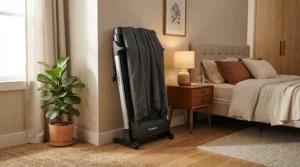
Many people start with an old bedsheet or a tarp. Does that work? Sometimes, briefly.
| Option | Dust Defense | Spill Defense | Moisture-Trap Risk | Best For |
|---|---|---|---|---|
| Old bedsheet | Moderate | Poor | Low | Short-term indoor cover-ups |
| Plastic sheeting or tarp | Good | Good | High | Emergencies only |
| Dust cover | Good | Poor | Low | Dry living spaces |
| Sealed waterproof cover | Excellent | Excellent | Medium to high | Covered porches with dry machines |
| Vented waterproof cover | Excellent | Good | Low to medium | XYZCTEM-style humid garages |
The comparison shows why waterproof vs dust cover for home gym equipment isn’t a binary choice. Plastic sheeting looks protective but is the likeliest moisture trap. A vented waterproof cover covers the most scenarios, while a plain dust cover remains perfectly fine in a dry room.
Practical Usage Guide: Your First 30 Days With a Gym Cover
Day 1: Fit check. Put the cover on, tighten the drawstring and confirm it clears moving parts. Remove it before using the treadmill, since manufacturer guidance for covers in this category advises not running the machine with the cover on.
Week 1: Build the habit. Wipe down the machine, let it cool, then cover it. If it takes more than 30 seconds, consider a zip-access design like Aidetech.
Week 2: Check for condensation. Lift the cover in the morning. Beads of moisture inside mean you need more ventilation or a dehumidifier.
Week 3: Inspect seams and straps. Look for fraying where drawstrings cinch.
Day 30: Clean schedule. Wipe the cover with a damp cloth, as several listings recommend, and let it dry completely. For washable options like MBOOM, follow the care tag.
Common first-month mistakes include covering a warm or sweaty machine, leaving the cover loose enough to flap in a draft, and forgetting that heat from electronics needs time to dissipate.
Real-World Scenarios: Three Buyers, Three Covers
The apartment commuter. A 650-square-foot apartment, a folding treadmill and a cat. Dust and claws are the issues, not floods. Aidetech fits the brief, with its claw-resistant outer layer and zipper for everyday use. Budget: mid-range. Usage: five days a week.
The garage lifter. A concrete-floor garage with a flat bench and wide humidity swings. MBOOM‘s vent holes and washable fabric make sense here, with a rubber mat underneath. Budget: low. Usage: three days a week.
The porch rower. A covered porch, a RowErg and occasional blowing rain. Here the honest advice is to relocate indoors, because Concept2 says its own cover isn’t for full outdoor weather. If moving isn’t possible, a made-to-measure option like Covers & All is the more suitable class of protection. Budget: premium. Usage: daily in good weather.
Problem → Solution Guide
Problem: musty smell under the cover. Solution: add venting, run a dehumidifier and make sure the machine is dry before covering.
Problem: cover blows off in wind. Solution: use straps or a snug drawstring, as on CyclingDeal, and avoid loose fits.
Problem: cover leaks at the seams. Solution: look for heat-sealed or taped seams and avoid placing it where water pools.
Problem: cover won’t fit. Solution: measure the machine in storage position, add a small allowance, and check model compatibility, which is crucial with Concept2.
Problem: cover fades and flakes. Solution: choose UV-resistant fabric and replace worn covers. One patio-cover reviewer reported flaking fabric after about a year in harsh sun, which is a useful warning about cheap coatings.
Long-Term Cost & Maintenance
Cover economics are about cost per year, not sticker price. A $30-$50 cover lasting three seasons runs roughly $10-$17 annually. A cover that fails in a year doubles that.
Spending a little more often pays off when the machine is expensive. A cardio machine worth hundreds or thousands of dollars, protected by a cover costing a small fraction of that, is a low-risk bet. Warranties help; Covers & All notes up to 5 years on some bike covers, while budget picks like XYZCTEM and MBOOM may offer shorter terms, so check the listing.
Maintenance is cheap: wipe, dry, inspect seams and store the cover clean. A hygrometer and a small dehumidifier add modest cost but can prevent far costlier corrosion and mold cleanup.
FAQ
❓ Is a waterproof cover better than a dust cover for a basement gym?
❓ Can mold prevention covers really stop mold on a treadmill?
❓ Do cover ventilation panels let dust in?
❓ How do I pick the right size for an equipment cover?
❓ Should I take the cover off before using the machine?
Conclusion
So, which wins in the waterproof vs dust cover for home gym equipment debate? Neither, universally. A dust cover is perfect for a dry, climate-controlled room. A waterproof cover shines when spills, rain or garage damp are real threats. For most homes, the winner is a vented waterproof hybrid, because it handles splashes without turning into a humidity trap.
If you want a short-list: Aidetech for living-space treadmills with pets, XYZCTEM for humid rooms, Concept2 for exact RowErg fit, Guisong and MBOOM for benches, CyclingDeal for connected bikes and Covers & All for outdoor or unusual machines. Whatever you pick, measure first, check seams and venting, and keep the machine dry before covering.
The FTC expects that kind of relationship to be clearly disclosed, as laid out in its Endorsement Guides FAQ. That is why the disclosure below is front and center.
Recommended for You
- Custom Fit Cover Vs Universal Elliptical Cover: 7 Top Picks 2026
- Cover For Elliptical Machine In Garage Gym: 7 Proven Picks (2026)
- Affordable Dust Cover For Home Gym Equipment: 7 Smart Buys 2026
Disclaimer: This article contains affiliate links. As an Amazon Associate, I earn from qualifying purchases. If you purchase products through these links, we may earn a small commission at no additional cost to you.
✨ Found this helpful? Share it with your friends! 💬🤗
