
In This Article
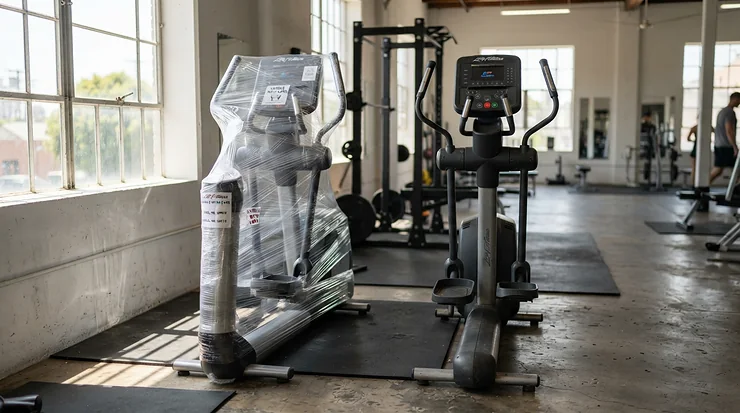
Here’s a small tragedy playing out in garages and spare rooms right now. A $1,000 elliptical sits uncovered, quietly collecting dust in its pivot points, pet hair in its pedal rails, and a fine film of humidity on its console. Meanwhile its owner is stuck in a 40-tab debate over custom fit cover vs universal elliptical cover. The machine does not care who wins. It just wants a roof.
So let’s settle it. A custom fit cover is cut to the dimensions of a specific machine or machine family. A universal elliptical cover is a one-size-fits-many shell, usually sold in one or two sizes and cinched down with a drawstring. The trade-off is simple: custom buys precision and a cleaner look, universal buys price and flexibility. Everything else is detail, and the detail is where people get burned.
This guide is built around the real decision points. It covers elliptical cover fit types explained in plain English, custom cover cost vs universal over the long haul, cover sizing charts and how to read them, brand-specific elliptical covers, and cover installation ease. You’ll also meet seven real covers, from budget universal shells to a genuinely custom-cut option, so you can see how each approach plays out on an actual spec sheet.
One housekeeping note. Product data here comes from published listings and aggregated review pages at the time of research (October 2026). Prices are given as ranges only, and listings change fast, so always check current price and availability before you buy.
Quick Comparison Table: 7 Elliptical Covers at a Glance
| Cover | Fit Type | Listed Size | Material | Best For |
|---|---|---|---|---|
| DEERGAZE Elliptical Bike Cover | Universal | 170 x 170 x 70 cm (listing) | 210D Oxford polyester, PU coating | Budget shoppers wanting UV-resistant protection |
| Kingling Elliptical Exercise Machine Cover | Universal | 71″ L x 29″ W x 65″ H | High-density Oxford, waterproof coating | Full-size ellipticals in garages |
| Aidetech Elliptical Exercise Machine Cover | Universal | 71″ L x 29″ W x 65″ H | 420D Oxford, silver undercoating | Windy spots and tidy storage |
| Two-Size Indoor/Outdoor Elliptical Cover | Universal, two sizes | 71″ or 55″ L x 25-29″ W x 65″ H | High-density Oxford | Compact machines that need a closer fit |
| Teeter-Compatible Cross Trainer Cover | Model-targeted | 55.9″ L x 38.6″ W x 52.4″ H | 420D Oxford, triple-layer coating | Recumbent cross trainers |
| ElliptiGO Custom Bike Cover | Custom fit | Designed for all ElliptiGO models | 300D woven polyester, PU coating | ElliptiGO owners wanting year-round protection |
| Fanjie Steppers Elliptical Cover | Universal (light) | Varies by size | 210D/420D Oxford, 200-350 g | Light-duty indoor dust protection |
Here’s how to read that table. The three full-size universal covers (Kingling, Aidetech, and the two-size option) share the same 71-inch envelope, so the real differences are fabric weight, closures, and how forgiving each is on a machine that doesn’t match the box. The ElliptiGO cover is the only one in the group that is truly custom, and it’s the priciest by a wide margin. Buyers watching their wallet should note that the universal covers trade precision for price, and the section below on cost explains when that trade stops being worth it.
💬 Just one click — help others make better buying decisions too!😊
Top 7 Elliptical Covers: Expert Analysis
A reminder on how to read the sentiment notes below. Where a listing shows real aggregated ratings, they’re reported. Where it doesn’t, the analysis says so rather than pretending. Nobody here has handled these covers, so the commentary comes from spec comparison and what published listings reveal.
1. DEERGAZE Elliptical Bike Cover — UV-resistant universal pick on a budget
Start with the fabric: 210D Oxford polyester with a PU coating, which is the standard “waterproof and UV-resistant” recipe in this price tier. The listing describes a universal fit with an adjustable drawstring, and a published rating of 4.5 out of 5 stars from roughly 596 reviews.
On paper the listed dimensions (170 x 170 x 70 cm) read oddly for a tall upright machine, because 70 cm of height wouldn’t clear a console. That likely reflects how the box is measured rather than the cover’s true drape, but it’s exactly the sort of detail the spec sheet won’t resolve. Check the product photos and the Q&A before ordering, and measure your machine first. It suits compact or low-profile machines and buyers whose priority is keeping rain and sun off.
Aggregated review sentiment on the listing is generally positive, and the buyer feedback visible in the sources I could verify is brief, with no detailed complaints to report. It is a decent pick for a seasonal machine in a covered porch.
Pros:
- ✅ UV-resistant PU-coated polyester fabric
- ✅ Adjustable drawstring for a snugger hold
- ✅ Strong published rating from hundreds of buyers
Cons:
- ❌ Listed dimensions are ambiguous for tall machines
- ❌ 210D fabric is lighter than 420D rivals
Price: budget tier, check current price. Verdict: good value if your machine fits the envelope.
2. Kingling Elliptical Exercise Machine Cover — roomy universal shell with a side zipper
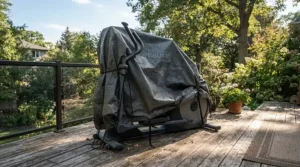
The Kingling cover is sized at 71″ L x 29″ W x 65″ H and sold as a fit for similar large ellipticals. It uses high-density Oxford fabric with a silver-plated waterproof lining and double-stitched seams, plus a side zipper and a bottom drawstring.
That zipper deserves more credit than it usually gets. A cover that has to be wrestled over a 65-inch machine is a cover that stays in the closet, and a side opening turns “drape and tuck” into “drape and zip”. The drawstring then does the job of making a universal shape behave like a tailored one, by cinching the hem around the base so wind can’t get under it.
The listing doesn’t show verified aggregated reviews, so there’s no sentiment to report here, which is worth knowing before you buy. Judge it on specs: the seams, the coating, and the closure design all point to a sturdy mid-grade universal cover.
Pros:
- ✅ Side zipper makes on and off quick
- ✅ Double-stitched seams with waterproof lining
- ✅ Generous 65-inch height for tall consoles
Cons:
- ❌ Loose billowing on narrower machines
- ❌ No verifiable review data in the listing
Price: check current price. Verdict: a sensible default for standard home ellipticals.
3. Aidetech Elliptical Exercise Machine Cover — windproof drawstring and packable design
Aidetech matches the 71 x 29 x 65 inch footprint but upgrades the fabric to 420D Oxford with an internal silver-plated undercoating and double-stitched seams. The listing says it suits equipment of the same shape that is smaller than the cover, which is a polite way of saying it’s a roomy universal fit, not a snug one.
The standout practical detail is that it folds into a small storage bag. If your cover lives in a closet between seasons, that matters more than a spec bullet suggests. The windproof drawstring and side zipper mirror the Kingling, so the real contest is fabric weight: 420D versus an unspecified density on the other.
One caution from the research: at least one retailer listed this cover as out of stock. Availability shifts, so confirm on Amazon before you plan around it. No verified aggregated reviews were available, so treat it as spec-backed rather than crowd-proven.
Pros:
- ✅ Heavier 420D fabric than many rivals
- ✅ Folds into a compact storage bag
- ✅ Windproof drawstring keeps it anchored
Cons:
- ❌ Availability looked inconsistent across retailers
- ❌ Roomy fit won’t look tailored
Price: check current price. Verdict: a strong value if it’s in stock.
4. Two-Size Indoor/Outdoor Elliptical Cover — the only universal that offers a smaller fit
Universal covers usually fail compact machines first, because a 71-inch envelope on a short-stride trainer looks like a tent. This Oxford-cloth cover answers that by offering two sizes: 71″ L x 29″ W x 65″ H and 55″ L x 25″ W x 65″ H. Both use a silver-coated waterproof lining, a side zipper, and a bottom drawstring.
That second size is the whole story. It narrows the gap between universal and custom without a custom price tag, and it’s the closest thing in this list to a sizing chart you can actually use. Measure first, as the listing itself urges, then pick the footprint that sits closest to your machine.
A retailer listing showed this cover in the $70s, which is notable because that’s pricier than other universals in the group. No aggregated review data was verifiable, so the premium rests on the sizing flexibility, not on crowd approval.
Pros:
- ✅ Two footprint options for better fit
- ✅ Side zipper and drawstring for secure coverage
- ✅ Positioned for indoor and outdoor use
Cons:
- ❌ Pricier than most one-size universals
- ❌ No verifiable aggregated reviews
Price: around the $70s on one retailer, check current price. Verdict: worth it only if the smaller size matches your machine.
5. Teeter-Compatible Elliptical Cross Trainer Cover — model-targeted fit for recumbent trainers
This one lives in the middle ground. It’s marketed as compatible with the Teeter recumbent cross trainer LT1, with dimensions of 55.9″ L x 38.6″ W x 52.4″ H, so it’s model-targeted rather than universal. The fabric is 420D Oxford with a triple-layer coating, an adjustable drawstring, and handles on both sides.
Those handles matter. They turn the cover into a two-hand job instead of a shoulder-height struggle, and for a recumbent machine with a wide, low profile, the shorter 52-inch height is a better match than any 65-inch universal shell. It shows how “compatible with” listings can deliver most of a custom fit’s benefit at a universal price.
The listing displayed 4.4 stars from 81 ratings, though the written-review count was thin at the time of research. It sat around $30-$35 at the retailer I checked.
Pros:
- ✅ Dimensions tuned to a recumbent profile
- ✅ Handles on both sides for easy handling
- ✅ Heavy 420D fabric at a low price
Cons:
- ❌ Poor match for upright ellipticals
- ❌ Small rating pool
Price: around $30-$35. Verdict: excellent value for the machine it’s built for.
6. ElliptiGO Custom Bike Cover — the genuinely custom-fit benchmark
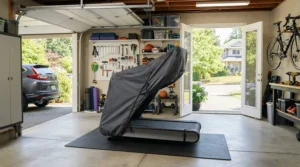
Here is what “custom” looks like when the manufacturer does it. The ElliptiGO cover is made from 300D stock-dyed woven polyester with a polyurethane coating, double-stitched seams, an elastic hem, an auto-locking drawcord, and a heavy-duty buckle strap. It’s described as compatible with all ElliptiGO models and carries a 3-year warranty.
The elastic hem and buckle strap are where custom earns its keep. A hem that grips the frame and a strap that locks the cover against wind do things a universal drawstring can only approximate. The 3-year warranty also signals confidence a no-name shell rarely matches. One honest caveat: the brand itself advises against using the cover while transporting the bike on a vehicle.
This is a cover for ElliptiGO stand-up elliptical bikes, not a home gym elliptical, so it’s a benchmark for what tailoring delivers rather than a pick for everyone. The listing showed a price near $110, and no aggregated reviews were available to quote.
Pros:
- ✅ Tailored fit with elastic hem and buckle
- ✅ 3-year warranty on the cover
- ✅ Breathable, UV-resistant woven polyester
Cons:
- ❌ Only fits ElliptiGO models
- ❌ Highest price in this group
Price: around $110. Verdict: the right call for ElliptiGO owners, a useful yardstick for everyone else.
7. Fanjie Steppers Elliptical Cover — featherweight indoor dust shield
The Fanjie cover is built for elliptical machines and steppers, using 210D and 420D Oxford cloth depending on the size, and weighing just 200 to 350 grams. That featherweight build is the point: it’s meant to keep dust off an indoor machine, not to fight a monsoon.
The analytical read is straightforward. Light fabric means easy handling and easy storage, but also less abrasion resistance and less wind-holding weight. For a machine in a spare bedroom, that’s a fair trade. For a garage with temperature swings, step up to a heavier fabric.
No ratings had been posted on the listing I reviewed, so there’s no sentiment to share. Treat it as a spec-based budget option and check current price before buying.
Pros:
- ✅ Very light and easy to handle
- ✅ Designed for ellipticals and steppers
- ✅ Two fabric weights across sizes
Cons:
- ❌ No ratings posted at time of research
- ❌ Light fabric suits indoor use only
Price: budget tier, check current price. Verdict: fine for dust, not for weather.
Top 7 Specs and Value Side by Side
| Cover | Fabric Weight | Closure | Price Range | Published Rating | Best For |
|---|---|---|---|---|---|
| DEERGAZE Elliptical Bike Cover | 210D | Drawstring | Budget, check price | 4.5 (about 596 reviews) | Rain and UV on a budget |
| Kingling Elliptical Exercise Machine Cover | Not stated | Zipper + drawstring | Check price | None verified | Standard home ellipticals |
| Aidetech Elliptical Exercise Machine Cover | 420D | Zipper + drawstring | Check price | None verified | Windy garages |
| Two-Size Indoor/Outdoor Elliptical Cover | Not stated | Zipper + drawstring | Around the $70s | None verified | Compact machines |
| Teeter-Compatible Cross Trainer Cover | 420D | Drawstring + handles | Around $30-$35 | 4.4 (81 ratings) | Recumbent trainers |
| ElliptiGO Custom Bike Cover | 300D | Elastic hem + buckle | Around $110 | None verified | ElliptiGO owners |
| Fanjie Steppers Elliptical Cover | 210D/420D | Not stated | Budget, check price | None posted | Indoor dust only |
The table shows a pattern worth noticing. Fabric weight tracks use case more than price, and the only two covers with rating data (DEERGAZE and the Teeter-compatible option) both land at 4.4 to 4.5. If you want crowd-proven, start there; if you want the most purpose-built construction, the ElliptiGO cover is the standout, with the caveat that it only fits one family of machines.
Elliptical Cover Fit Types Explained
Cover shopping gets confusing because sellers use “universal”, “custom”, and “compatible” as if they were interchangeable. They aren’t. Here are the four fit types you’ll actually meet.
Universal (One-Size-Fits-Many)
A universal cover is a rectangular or boxy shell, typically 71 inches long and 65 inches tall, that drapes over any machine smaller than itself. Its fit comes from the drawstring, not the pattern. It’s cheap and flexible, and the price is wasted fabric: on a smaller machine, the extra material pools, flaps, and traps dust at the base.
Multi-Size Universal
This is the middle child. The two-size cover above is the clearest example, offering a 71-inch and a 55-inch option. You still don’t get tailoring, but you get a choice, and a choice means a closer match. It’s the most underrated fit type for anyone with a compact trainer.
Model-Targeted (“Compatible With”)
Model-targeted covers are cut for a specific machine or class, like the Teeter-compatible cover above. They use real dimensions instead of a generic envelope, which delivers custom-like fit at a near-universal price. The risk is the label: “compatible” claims are made by sellers, so verify the dimensions yourself rather than trusting the title.
Custom Fit
A true custom cover is cut to one manufacturer’s machine, like the ElliptiGO cover. Expect an elastic hem, tighter shaping, a manufacturer warranty, and a higher price. It also means you can’t reuse it on another machine if you upgrade.
One more reality check from adjacent products. A WaterRower rowing-machine cover is sold as a tailored shape that follows the rower’s profile for a cleaner look than a generic cover, at a list price of around $175 in the listing I reviewed. It’s a rower, not an elliptical, but it shows where the price ceiling sits when “custom” means precisely tailored. For background on what an elliptical actually is and how its motion works, Wikipedia’s elliptical trainer entry is a clear reference.
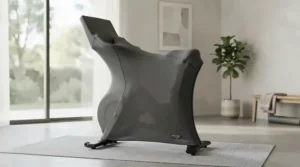
Choosing the Right Elliptical Cover Style
What is custom fit cover vs universal elliptical cover?
It’s the decision between a cover tailored to one machine’s dimensions and a generic shell sized to fit many. Custom covers fit tighter, look cleaner, and cost more. Universal covers cost less and work across machines, but they drape loosely and rely on a drawstring to stay put. Your machine’s shape and storage spot decide the winner.
How to choose, in seven steps
- Measure the machine at its storage position. Length, width, and the tallest point, including the console and any tablet holder. A cover that’s too small strains seams; too large collects dust. Guides on measuring fitness equipment make the same point: take the dimensions in the position the machine will actually sit in.
- Decide where it lives. Indoor, covered garage, or open patio each demand different fabric. Indoor setups need breathability more than waterproofing.
- Check the fabric weight. 210D is light, 420D is heavy. Heavier fabric resists abrasion and wind but costs more and packs bigger.
- Look for a zipper. A side opening makes on-and-off fast, which is what decides whether you’ll actually use the cover.
- Confirm the hem system. A drawstring is the minimum; an elastic hem or buckle strap is better in wind.
- Read the dimensions, not the title. “Fits all ellipticals” is a marketing claim. The numbers are the truth.
- Check return terms. A fit gamble is only safe if returns are easy.
Looking at the process above, steps 1 and 6 prevent most regrets. Buyers who skip the tape measure are the ones who end up writing the “cover is too small” review.
Cover Sizing Charts: How to Measure Your Elliptical
Cover sizing charts look authoritative, but they’re only as good as the measurements you feed them. Here’s a practical method that avoids the classic traps.
Step-by-step measuring
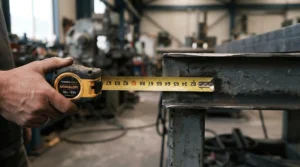
Park the machine where it will live, because moving it changes its footprint. Fold or lower anything adjustable, such as a tall console or tablet holder, into its standard storage position. Then measure three things: the longest point front to back (usually the pedal rails and rear stabilizer), the widest point side to side (often the pedal span), and the tallest point from floor to the top of the console or handlebars.
Matching numbers to a chart
Compare your three numbers to the cover’s listed dimensions, and give yourself a few inches of slack in each direction. A snug cover that strains at the seams will wear out fast, while one that’s wildly oversized will flap. A good target is a cover that’s 2 to 6 inches larger than your machine in each dimension, with a drawstring to take up the rest.
Take the common 71″ x 29″ x 65″ universal size as a worked example. A machine measuring 66″ long, 24″ wide, and 62″ tall fits with comfortable slack. A compact machine at 50″ x 22″ x 60″ is better served by the 55-inch size from the two-size cover, because the larger shell would leave 20 inches of loose fabric along its length.
Treat sizing charts from sellers with healthy skepticism. As one sizing guide for another product category points out, brands don’t follow standardized naming, so a “medium” from one seller can be a “small” from another. The lesson transfers: trust the inch measurements, not the size label.
For storage environments where moisture is a worry, the EPA’s guidance on mold and moisture is a useful reference, since a cover that traps damp air against a machine can cause the very problem it’s meant to prevent.
Custom Cover Cost vs Universal: The Real Math
Sticker price is the least interesting number here. What matters is cost per year of protection and the cost of what the cover is protecting.
The sticker gap
In this research, the spread is wide. A model-targeted cover like the Teeter-compatible option sat around $30-$35. A multi-size universal came in around the $70s. The ElliptiGO custom cover sat near $110. Generic universal covers like Kingling, Aidetech, and DEERGAZE sit in the budget tier, though you should check current price on each.
The cost-per-year view
Suppose a $110 custom cover lasts five years with its 3-year warranty as a safety net. That’s roughly $22 a year. A $30 universal that frays in two seasons costs $15 a year but needs replacing twice as often, plus you re-buy the hassle. Over a long horizon the numbers converge, and the winner depends on how harshly your cover is treated.
The protected-asset view
Think about it as insurance. If your machine costs somewhere in the high hundreds to low thousands, a cover in the $30-$110 range protects a pricey asset from dust, pet hair, and humidity. Even the most expensive cover in this list is a small fraction of the machine’s value, so the cheap option isn’t automatically the smart one when it fails early.
When universal wins on cost
Universal wins when your machine is common-sized, stored indoors, and unlikely to be replaced soon. It also wins if you might upgrade machines, because a universal cover can move with you. Custom wins when the machine lives outdoors or in a harsh garage, where a tight elastic hem and a warranty justify the premium.
| Factor | Custom Fit | Universal |
|---|---|---|
| Typical price tier | Higher (around $110 benchmark) | Budget to mid (around $30-$75) |
| Fit precision | Tailored, tight | Loose, drawstring-dependent |
| Warranty | Often multi-year | Rarely stated |
| Reusable on a new machine | No | Usually |
| Best For | Outdoor or harsh storage | Indoor, budget, flexible use |
Looking at the table above, the premium for custom buys you fit and warranty, not magic. If your storage is gentle and your machine is standard, universal is the rational choice. If wind, rain, or a long ownership horizon is in play, custom’s elastic hem and multi-year coverage start paying for themselves.
✨ Don’t Miss These Picks!
🔍 Take your elliptical care to the next level with these carefully selected covers. Click on any highlighted item to check current pricing and availability. A good cover is the cheapest upgrade your machine will ever get!
Brand-Specific Elliptical Covers: What’s Real and What’s a Part
Searching for a brand-specific elliptical cover, say for NordicTrack, ProForm, or Sole, throws up a confusing mix. Much of what appears isn’t a machine cover at all. Replacement components like rear console covers, ramp noise covers, and battery covers appear in search results for these brands, and they’re parts, not protection.
That’s an important trap. A rear console cover is a small plastic or trim piece for the machine’s console area, and a ramp track noise cover is a component on specific models. Neither will keep dust off your machine. If you want a shield for the whole machine, look for full-body covers with dimensions listed, not part numbers.
Where brand-specific covers do exist
Brand-targeted covers exist when a manufacturer builds a cover for its own product line. The ElliptiGO cover is the cleanest example: designed for all of its models, with an embroidered logo and a warranty. For mainstream home brands, the more common reality is a universal or model-targeted third-party cover, like the Teeter-compatible option.
How to evaluate “compatible with” claims
Treat compatibility as a claim to verify, not a promise. Look for the seller’s listed dimensions, compare them with your measured numbers, and read the questions-and-answers section for owners of your exact model. If a listing names your brand but gives no dimensions, assume it’s a universal cover wearing a brand-name hat.
The practical upshot is that brand-specific covers are less common than their search volume suggests. For most home ellipticals, your real choice is between a well-chosen universal, a multi-size universal, or a model-targeted third-party cover.
Cover Installation Ease: What to Expect in the First 30 Days
A cover you don’t use is a $40 closet decoration. Installation ease decides compliance, and compliance decides protection.
Why the zipper changes everything
A drape-over cover requires you to lift fabric over a 65-inch machine, find the corners, and cinch a hem. A side-zipper cover like the Kingling, Aidetech, or the two-size option lets you open the shell, slide it on, and zip. That difference is the gap between covering after every workout and covering “when I remember”.
A realistic first-30-days routine
In week one, practice on and off a few times so the fabric learns the machine’s shape. Cinch the drawstring only until snug, not strangled. Over the following weeks, check the hem for pooling and tuck extra fabric rather than letting it hang. By day thirty, you should be able to cover the machine in under a minute, and if you can’t, the cover is the wrong shape.
Common first-month mistakes
Covering a sweaty machine is the big one. Let moisture dissipate before you cover, a point echoed by care instructions for tailored equipment covers. Another is leaving a loose cover in wind, where a flapping hem can chafe both the fabric and the finish. A third is skipping the storage bag: the Aidetech cover folds into one, and it’s worth using so the cover isn’t crushed under boxes.
Handling and storage ease
Weight matters too. The Fanjie cover’s 200-350 gram build is easy to lift and fold, while a 420D cover is heavier but holds its shape in wind. Handles, like those on the Teeter-compatible cover, help with the awkward lifting angle. If you have limited strength or space, prioritize light fabric and a zipper.
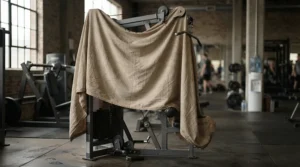
Who Should Buy What: Real-World Scenarios
Scenario 1: The apartment dweller with a compact trainer
Budget is modest, the machine lives in a spare room, and dust and pet hair are the enemies. A multi-size universal is the best fit here: the 55-inch option on the Two-Size Indoor/Outdoor Elliptical Cover keeps fabric from pooling, and indoor use means you don’t need heavy weatherproofing. If budget is tighter still, the Fanjie Steppers Elliptical Cover handles dust at a low price.
Scenario 2: The garage owner with temperature swings
The machine sits next to the car, with concrete dust, exhaust, and humidity swings. Go heavier: the Aidetech Elliptical Exercise Machine Cover brings 420D fabric, a zipper, and a windproof drawstring. Garage-focused guidance for fitness equipment also recommends covers that reach the floor to block rising moisture, and a rubber mat underneath adds a barrier against concrete dampness.
Scenario 3: The ElliptiGO rider keeping a bike outdoors
Frequent use, outdoor storage, long ownership horizon. The ElliptiGO Custom Bike Cover is the right answer: elastic hem, buckle strap, and a 3-year warranty are exactly what outdoor exposure demands. Spending around $110 here is rational.
Scenario 4: The recumbent cross trainer owner
A wide, low machine that a tall universal shell swallows. The Teeter-Compatible Elliptical Cross Trainer Cover at around $30-$35 is the clear value pick, with dimensions that match the machine’s real profile.
Scenario 5: The sun-and-rain porch setup
A covered but open patio with UV and splashing. The DEERGAZE Elliptical Bike Cover brings UV-resistant PU-coated polyester at a budget price, provided you’ve confirmed your machine fits its listed envelope.
Custom Fit Cover vs Universal Elliptical Cover vs No Cover
| Option | Dust Protection | Moisture Protection | Fit Look | Cost | Best For |
|---|---|---|---|---|---|
| Custom fit | Excellent | Excellent | Tailored | Highest | Outdoor or long-term ownership |
| Kingling Elliptical Exercise Machine Cover (universal) | Very good | Good | Loose | Low-mid | Garages and spare rooms |
| Fanjie Steppers Elliptical Cover (light universal) | Good | Limited | Loose | Lowest | Indoor dust only |
| Old bedsheet | Fair | Poor | Sloppy | Free | Short-term emergencies |
| No cover | None | None | Bare | Free | Machines used daily |
The table makes the stakes clear. A bedsheet and no cover both fail on moisture, which is the more insidious threat to electronics and pivots. Even a light universal beats nothing for dust, while only the heavier or custom options handle real weather. The honest summary of custom fit cover vs universal elliptical cover is that universal covers solve 80 percent of the problem at a fraction of the price, and custom solves the last 20 percent when conditions are harsh.
Common Mistakes When Buying an Elliptical Cover
Trusting “fits all ellipticals”. No cover fits all, and the dimensions are the only truth. A 71-inch shell will swamp a compact trainer.
Ignoring the storage environment. Indoor needs breathability, outdoor needs waterproofing and UV resistance. Mismatching them is the most common waste of money. One treadmill-focused guide also notes that outdoor storage can void a manufacturer’s warranty, so check your machine’s terms before parking it outside under any cover.
Buying on a fabric number alone. A 420D label means little if the seams are weak. Double-stitched seams, like those on the Kingling and ElliptiGO covers, matter as much as denier.
Covering a damp machine. Trapped sweat and humidity can breed mildew, which is the exact opposite of protection. The EPA’s mold resources explain how moisture control prevents growth.
Skipping the return policy. Fit is the one variable you can’t fully check online. Buy where returns are easy.
Confusing parts with covers. Rear console covers and ramp noise covers are components, not machine protection. Check what you’re actually buying before you click.
Features That Actually Matter (And Those That Don’t)
Features worth paying for
A side zipper is the single biggest usability upgrade, because it turns covering into a thirty-second habit. Double-stitched seams stop the most common failure point, where the cover splits along a stress line. A hem system, whether a drawstring, elastic hem, or buckle strap, decides whether the cover survives wind. Appropriate fabric weight matters: 210D for light indoor duty, 420D for garages and porches.
Features that sound better than they are
“Silver-plated” or “silver-coated” linings appear on several covers here, including the Kingling, Aidetech, and two-size options. The coating is a reflective, water-resistant layer, but its exact performance depends on coverage and seam sealing, which listings rarely detail. Treat it as a mild plus rather than a guarantee. “Windproof” claims are only as good as the drawstring behind them. “All-season” is a marketing phrase, not a standard.
Features that matter only sometimes
A storage bag matters if you remove the cover seasonally. Handles matter if you have limited reach or strength. A logo or color rarely affects performance. And a long warranty, like the ElliptiGO cover’s 3 years, matters mostly when the cover faces harsh conditions.

Frequently Asked Questions
❓ Is a custom fit cover worth it for an elliptical?
❓ How do I know what size elliptical cover to buy?
❓ Can I use a universal elliptical cover on a recumbent cross trainer?
❓ Do elliptical covers need to be waterproof?
❓ Should I cover my elliptical after every workout?
Conclusion
After all that fabric talk, the decision is simpler than the shopping tabs suggest. For most home users, a universal elliptical cover handles the job: it keeps dust, pet hair, and household grime off a machine you probably spent real money on. For outdoor machines, harsh garages, and long ownership horizons, a custom fit cover earns its higher price through tighter fit and warranty support.
Here’s how the seven picks line up. For rain and sun on a budget, the DEERGAZE Elliptical Bike Cover is a reasonable start, once you’ve checked its dimensions. For standard garage use, the Aidetech Elliptical Exercise Machine Cover brings the heavier fabric and packable design, while the Kingling Elliptical Exercise Machine Cover offers a solid side-zipper shell. Compact machines should look at the Two-Size Indoor/Outdoor Elliptical Cover, recumbent owners at the Teeter-Compatible Elliptical Cross Trainer Cover, and light indoor dust duty is where the Fanjie Steppers Elliptical Cover fits. If you ride an ElliptiGO outdoors, the ElliptiGO Custom Bike Cover is in a class of its own.
Measure first, buy second, and let the machine dry before you cover it. Do that, and either side of the custom fit cover vs universal elliptical cover debate will serve you well.
✨ Ready to protect your machine?
🔍 Pick the cover that matches your space, check current pricing and availability, and give your elliptical the roof it deserves!
Recommended for You
- Cover For Elliptical Machine In Garage Gym: 7 Proven Picks (2026)
- Affordable Dust Cover For Home Gym Equipment: 7 Smart Buys 2026
- Cover For Exercise Equipment During Winter Storage: 7 Best Picks 2026
Disclaimer: This article contains affiliate links. As an Amazon Associate, I earn from qualifying purchases. If you purchase products through these links, we may earn a small commission at no additional cost to you.
✨ Found this helpful? Share it with your friends! 💬🤗
