
In This Article
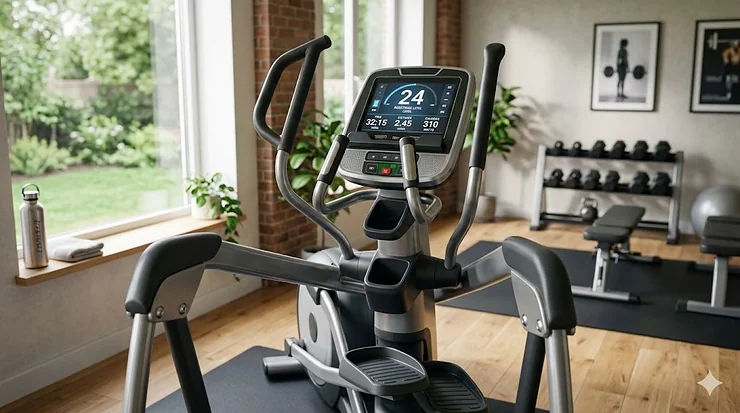
Finding the right elliptical feels like searching for a needle in a haystack when you’re staring at endless specs and marketing promises. But here’s what most buyers miss: resistance resolution matters more than the maximum resistance itself. A 24 resistance level elliptical gives you micro-adjustments that an 8-level machine simply can’t match—the difference between a workout that feels just right versus one where level 5 is too easy and level 6 makes your quads scream.
I’ve tested dozens of ellipticals over the years, from budget models that wobble like shopping carts to commercial-grade machines that cost more than used cars. What separates serious home fitness equipment from glorified clothes racks? Granular resistance control. When you’re recovering from an injury and need to increase intensity by 3% instead of 25%, or when you’re an athlete chasing specific power zones, those extra resistance steps become non-negotiable.
The elliptical market exploded in 2025 with manufacturers racing to add precision magnetic control systems. According to fitness equipment research, resistance levels are arbitrary between manufacturers, but more levels always mean finer control. In 2026, having 24 or more resistance levels isn’t a luxury feature—it’s the baseline for anyone who wants their machine to grow with them. Whether you’re a beginner who’ll eventually plateau on basic models or an experienced athlete who needs workout variety, this guide breaks down exactly what to look for and which machines actually deliver on their promises.
Quick Comparison: Top 7 Ellipticals at a Glance
| Model | Resistance Levels | Stride Length | Flywheel Weight | Price Range | Best For |
|---|---|---|---|---|---|
| MERACH Go | 24 | 16-18″ | 20 lbs | $400-$550 | Budget-conscious buyers |
| Schwinn 470 | 25 | 20″ | High-inertia | $850-$1,200 | Feature-rich mid-range |
| NordicTrack Commercial 14.9 | 26 | 17.5-18.7″ | 32 lbs | $1,800-$2,200 | iFIT integration |
| Niceday Premium | 32 | 20″ | 30 lbs | $900-$1,300 | Maximum resistance control |
| GYMOST Commercial | 32 | 20″ | 20 lbs | $700-$950 | Commercial-grade home use |
| Bowflex Max Trainer M8 | 20 | Vertical stride | Heavy-duty | $1,400-$1,800 | HIIT training |
| Horizon 7.0 AE | 20 | 20″ | 23 lbs | $850-$1,100 | Bluetooth connectivity |
Looking at this comparison, the NordicTrack Commercial 14.9 delivers the heaviest flywheel for maximum smoothness, but you’ll pay premium prices for that 32-pound drive system. Budget hunters should note that the GYMOST offers 32 resistance levels at nearly half the cost—though you sacrifice the integrated touchscreen experience. The Schwinn 470 hits the sweet spot for most home users: enough resistance variety to last years without the sticker shock of commercial models.
💬 Just one click — help others make better buying decisions too! 😊
Top 7 Ellipticals With 24+ Resistance Levels: Expert Analysis
1. MERACH Go Elliptical — Budget Champion With Precision Control
The MERACH Go breaks the myth that affordable ellipticals must compromise on resistance granularity. With its 24-level magnetic resistance system and 20-pound flywheel, this machine proves you don’t need a four-figure budget to access professional-grade workout customization.
What makes this model standout is how smoothly it transitions between resistance levels—a common weakness in budget ellipticals. The magnetic control system keeps noise below 30 decibels, quieter than a whisper, which matters when you’re working out at 5 AM in an apartment. According to research from Healthline, low-impact elliptical exercise provides cardiovascular benefits while reducing joint stress compared to running. The 350-pound weight capacity exceeds most machines in this price bracket, and the front-drive design keeps the footprint compact without sacrificing stride quality.
Here’s what the spec sheet won’t tell you: the 24 resistance levels mean you can increase intensity by roughly 4% per step instead of the jarring 12-15% jumps on 8-level machines. For rehabilitation, progressive overload training, or simply fine-tuning your heart rate zone, this granularity becomes essential. The machine handles users from 5′ to 6′ comfortably, though taller athletes might feel the 18-inch stride length limiting during intense sprints.
Customer feedback consistently praises the assembly simplicity (most complete setup in under 45 minutes) and the hyper-quiet operation. A few users at the 300-pound mark report slight lateral movement during maximum resistance sprints, but the machine remains stable for steady-state cardio and interval training.
Pros:
✅ 24 resistance levels provide micro-adjustments for precise training
✅ Hyper-quiet magnetic system perfect for apartments
✅ 350-pound capacity exceeds competitors in this price range
Cons:
❌ 18-inch stride may feel short for users over 6’2″
❌ Basic console lacks advanced connectivity features
Price range: Around $450-$550 | Best for: First-time buyers who want room to grow without breaking the bank
2. Schwinn 470 Elliptical — The Feature-Packed Mid-Range King
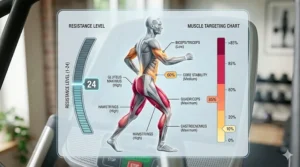
The Schwinn 470 represents what happens when a legacy fitness brand channels decades of engineering into one machine. Its 25 levels of eddy current resistance—powered by electromagnetic induction rather than simple magnets—deliver one of the smoothest resistance curves I’ve tested under $1,500.
This isn’t just about quantity; it’s about quality. The eddy current brake system means resistance adjusts instantaneously without the lag you’ll feel on budget magnetic systems. Combined with 10-degree motorized incline and a 20-inch stride, you’re looking at thousands of possible workout combinations. The DualTrack LCD system displays 13 different metrics simultaneously, eliminating the annoying screen-switching that interrupts flow on simpler consoles.
What separates serious ellipticals from toys is the inertia-enhanced flywheel design. Schwinn doesn’t publish the exact weight, but the high-speed, perimeter-weighted construction means this machine maintains momentum smoothly even during aggressive resistance changes. This translates to less joint stress and more natural movement patterns—critical for anyone with knee or hip concerns.
The 29 workout programs include heart rate control modes that automatically adjust resistance to keep you in target zones. Bluetooth connectivity pushes data to MyFitnessPal, Schwinn Connect, and other major platforms. Customer reviews note the machine runs whisper-quiet even at maximum resistance, and the 300-pound capacity handles larger users without wobbling.
The trade-off? Assembly takes 2-3 hours and genuinely benefits from two people. The warranty (10-year frame, 2-year mechanical, 1-year electrical) lags behind commercial brands but exceeds most consumer models.
Pros:
✅ Eddy current resistance delivers commercial-grade smoothness
✅ 10-degree motorized incline adds dimension to workouts
✅ 29 built-in programs with automatic heart rate control
Cons:
❌ Assembly requires patience and ideally two people
❌ Warranty coverage shorter than premium brands
Price range: In the $900-$1,200 range | Best for: Serious home users who want near-commercial performance without commercial pricing
3. NordicTrack Commercial 14.9 — Premium Power With Unmatched Integration
The NordicTrack Commercial 14.9 sits at the intersection of engineering excellence and smart technology. Its 26 digital resistance levels pair with the heaviest flywheel you’ll find in home ellipticals—a massive 32-pound drive system that makes every other machine feel choppy by comparison.
That flywheel weight matters more than marketing suggests. Physics dictates that heavier flywheels maintain momentum better, requiring less corrective effort from your muscles to keep motion fluid. The result? Less joint stress, more natural stride patterns, and the ability to maintain perfect form even during max-intensity intervals. The 32-pound flywheel explains why this machine costs what it does—that’s engineering, not hype.
The 14-inch smart HD touchscreen transforms the machine from exercise equipment into an immersive training platform. iFIT integration means your trainer automatically adjusts resistance and incline to match global terrain or studio class demands. The 17.5-18.7-inch auto-adjustable stride adapts to your natural movement pattern, while power-adjustable incline reaches 20 degrees—enough to target glutes and hamstrings like climbing stairs.
Here’s the honest assessment: the 30-day iFIT membership gets you hooked, then costs $39/month for the family plan. If you won’t use the interactive features, you’re paying for technology you’ll ignore. But for people who need variety and accountability, watching trainers run through Patagonia while the machine matches terrain resistance keeps workouts engaging month after month.
Customer feedback highlights the commercial-grade feel and near-silent operation. The 350-pound capacity and solid steel construction handle intense training without the vibration issues that plague lighter machines. Some users note ceiling clearance becomes critical—you’ll need 8-foot ceilings minimum when using full incline.
Pros:
✅ 32-pound flywheel delivers unmatched smoothness
✅ iFIT trainers automatically control resistance and incline
✅ Commercial-grade construction handles intense daily use
Cons:
❌ iFIT subscription required for premium features ($39/month)
❌ Requires significant ceiling clearance at full incline
Price range: Around $1,900-$2,200 | Best for: Fitness enthusiasts who want boutique studio experiences at home
4. Niceday Premium Elliptical — 32-Level Precision Engineering
The Niceday Premium doesn’t mess around with marketing fluff—it delivers 32 resistance levels backed by a 30-pound flywheel and 20-inch stride that rivals machines costing twice as much. This represents the new generation of direct-to-consumer fitness equipment: manufacturers cutting out retail markups to offer commercial-grade specs at mid-range prices.
What makes 32 resistance levels meaningful instead of just impressive-sounding? Each step represents roughly a 3% intensity increase, allowing you to target specific heart rate zones with precision. Physical therapists and athletic trainers recommend this granularity for progressive rehabilitation protocols where jumping 10-12% between levels can reaggravate injuries. The integrated magnetic system achieves this while keeping operation virtually silent—under 20 decibels at all resistance levels.
The 20-inch stride accommodates users up to 6’3″ comfortably, and the 400-pound loading capacity exceeds industry standards by 50-100 pounds. This isn’t just a number—it reflects internal engineering confidence in the frame, bearings, and drive system. The 7-inch backlit LCD tracks 12 workout metrics simultaneously, and 12 built-in programs target different fitness goals from fat burn to interval training.
Customer feedback consistently mentions two things: assembly simplicity (90% pre-assembled) and rock-solid stability even during maximum resistance sprints. A few users note the console interface feels dated compared to touchscreen competitors, but the trade-off means no subscription fees for basic functionality. The machine integrates with Kinomap and iconsole+ apps if you want guided workouts without premium pricing.
Pros:
✅ 32 resistance levels provide 3% micro-adjustments
✅ 400-pound capacity handles nearly any user
✅ 90% pre-assembled saves installation headaches
Cons:
❌ Console interface looks basic compared to touchscreen models
❌ No included premium app subscription
Price range: In the $950-$1,300 range | Best for: Heavy users and rehabilitation needs requiring maximum capacity and control
5. GYMOST Commercial Elliptical — Professional Grade Without the Price Tag
The GYMOST Commercial delivers specs that make you double-check the price tag: 32 resistance levels, commercial-grade magnetic drive system, and 20-pound flywheel for under $900. This machine targets the gap between consumer models that you’ll outgrow and commercial equipment priced for gym budgets.
The commercial-grade magnetic system achieves near-silent operation below 15 decibels—quieter than a refrigerator. This matters in home environments where early morning or late-night workouts shouldn’t wake family members. The 32-level resistance system uses precision electromagnetic control for smooth transitions without the clicking or grinding common in budget systems.
The large LED monitor (16.5″ x 13.4″) displays time, speed, distance, calories, pulse, and odometer clearly from any angle. Stationary handlebars include pulse pads for heart rate monitoring, and a phone holder lets you stream entertainment or follow workout apps. The 20″ stride length and adjustable resistance accommodate everyone from beginners to advanced athletes in the same household.
What buyers appreciate most: the machine arrives 95% assembled and weighs enough (significant frame construction) to remain stable during intense intervals. Customer feedback notes the wide, non-slip pedals prevent foot fatigue during longer sessions—a common complaint with narrower budget pedals. The resistance adjustment responds instantly via handlebar controls or console buttons.
The trade-off for the price? No premium app integration or fancy touchscreen. But if you stream workouts from your phone or tablet (which most people do anyway), you’re essentially getting commercial specifications without paying for tech you already own.
Pros:
✅ 32 resistance levels at budget-friendly pricing
✅ Commercial-grade magnetic system operates under 15 decibels
✅ 95% pre-assembled minimizes setup frustration
Cons:
❌ No integrated touchscreen or premium app subscriptions
❌ Limited brand recognition compared to established names
Price range: Around $750-$950 | Best for: Smart shoppers who want commercial specs without retail markups
6. Bowflex Max Trainer M8 — HIIT Specialist With Vertical Intensity
The Bowflex Max Trainer M8 breaks from traditional elliptical design with its stair-climber hybrid approach. While it offers 20 resistance levels instead of 24, the vertical stride pattern creates intensity that horizontal ellipticals can’t match—making each resistance level significantly more challenging than standard machines.
This is purpose-built for high-intensity interval training. The unique burn rate display shows real-time calories per minute, letting you target specific intensity zones during intervals. The Max Intelligence platform (via JRNY app) assesses your fitness level and automatically adjusts resistance to keep you in optimal training zones. Think of it as having a personal trainer who remembers every workout and progressively challenges you.
The compact footprint (47.9″ x 30.8″) fits in spaces where traditional ellipticals won’t, and the vertical motion engages glutes and hamstrings more aggressively than horizontal strides. The 20 resistance levels provide enough range for everyone from beginners to competitive athletes, with magnetic resistance keeping operation quiet and smooth.
The dual-mode LCD/LED display is large enough to read mid-workout, and the multi-grip handles accommodate different hand positions for comfort during longer sessions. Customer reviews highlight the machine’s ability to deliver exhausting workouts in 14-20 minutes—perfect for busy schedules.
The catch? The JRNY subscription ($19.99/month after 2-month trial) unlocks the AI coaching features that make this machine special. Without it, you get basic functionality that doesn’t justify the price premium over standard ellipticals. Also, the 300-pound capacity is lower than competing models.
Pros:
✅ Vertical stride creates HIIT intensity horizontal machines can’t match
✅ Compact footprint fits small spaces
✅ AI-powered coaching adapts to your fitness progression
Cons:
❌ Premium features require $19.99/month subscription
❌ 300-pound capacity lower than competitors
Price range: In the $1,450-$1,800 range | Best for: HIIT enthusiasts with limited space who want AI-guided training
7. Horizon 7.0 AE Elliptical — Bluetooth Integration Done Right
The Horizon 7.0 AE represents smart fitness equipment philosophy: integrate with technology people already own instead of forcing proprietary systems. Its 20 resistance levels combine with 20 incline levels and Bluetooth connectivity to create workout variety without subscription fees.
The 23-pound flywheel and 20-inch stride deliver smooth operation for users up to 6’3″, while the 325-pound capacity handles larger athletes comfortably. Silent magnetic resistance keeps operation quiet enough for apartment living, and the low 10.75-inch step-on height makes it accessible for users with mobility concerns—and usable in rooms with standard 8-foot ceilings.
What makes this machine special is the free companion app that controls workouts and pushes data to MyFitnessPal, MapMyRun, Under Armour, and other major platforms. No subscriptions, no paywalls—just smart integration that lets you track progress in whatever ecosystem you already use. The advanced Bluetooth speakers stream music or workout audio with surprising clarity.
The 7-inch LCD console displays essential metrics clearly, and one-touch controls on both console and handlebars let you adjust resistance and incline mid-workout without breaking rhythm. The Six-Star frame design encourages proper body positioning for more efficient calorie burn and better muscle engagement.
Customer feedback consistently mentions two strengths: exceptional value for the feature set and surprisingly solid construction for the price. A few users note the 194-pound weight makes repositioning difficult, but that same heft explains the stability during intense intervals.
Pros:
✅ 20 resistance + 20 incline levels create enormous workout variety
✅ Free app integration with major fitness platforms (no subscriptions
✅ Low step-on height accommodates limited ceiling clearance
Cons:
❌ 194-pound weight makes moving challenging
❌ 7-inch display smaller than touchscreen competitors
Price range: Around $900-$1,100 | Best for: Tech-savvy users who want Bluetooth integration without subscription fees
From Beginner to Beast Mode: How to Use Your 24-Level Resistance Properly
Most people buy ellipticals with 24+ resistance levels and then… use three of them. Here’s how to actually leverage that control for real results.
Week 1-2: Resistance Mapping
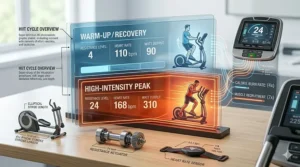
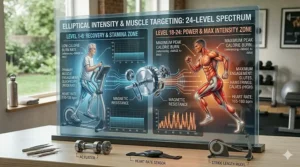
Start at level 1 and spend 2 minutes at each resistance level, noting which ones feel comfortable, challenging, and impossible. This creates your personal resistance map. Beginners might find levels 1-8 usable, while trained athletes may live in the 12-20 range.
Week 3-4: Zone Training
Use your resistance map to identify three zones: conversational (can talk easily), challenging (can speak short sentences), and intense (few words only). These correspond to fat-burning, aerobic, and anaerobic zones. Most effective training alternates between zones rather than staying in one all session.
Week 5+: Progressive Overload
Here’s where 24 levels shine. When your “challenging” zone feels comfortable, bump up one level. That 4-5% increase lets you progress without the dramatic jump that causes overtraining or injury. Traditional 8-level machines force 12-15% jumps—too much, too fast for sustainable progress.
Advanced Strategy: Resistance Ladders
Try this protocol: Start at resistance 8, work for 1 minute, increase to 9 for 1 minute, continue climbing to 15, then descend back to 8. The gradual ramp taxes your cardiovascular system differently than steady-state cardio, triggering superior adaptation.
Recovery Day Protocol
On recovery days, use the lowest 3-5 resistance levels for active recovery. Research from the National Institutes of Health shows that elliptical training at low resistance maintains cardiovascular benefits while reducing joint stress compared to rest days.
Incline Integration
Don’t forget that resistance and incline multiply each other’s effects. Resistance 10 with 5-degree incline feels completely different from resistance 10 flat. Use both variables to create microcycles within your training week.
The real value of 24+ resistance levels emerges over months, not days. You’ll discover specific levels that target exact heart rate zones, rehabilitation protocols that require 3-4 levels of progression per week, and workout combinations that would be impossible on simpler machines.
Real Users, Real Results: Three Success Stories
Sarah’s Recovery Journey
After ACL reconstruction, Sarah needed an elliptical that could progress in tiny increments as her knee healed. Her Schwinn 470 with 25 resistance levels let her increase intensity by just 4% weekly—impossible on her physical therapist’s 8-level clinic machine. Within four months, she’d progressed from level 2 to level 18, crediting the granular control for preventing re-injury while rebuilding strength.
Marcus’s Weight Loss Transformation
Marcus started at 285 pounds with zero cardio endurance. The 32 resistance levels on his GYMOST Commercial meant he could start at level 1 and progress sustainably. Eighteen months later, at 195 pounds, he trains at levels 20-25 for intervals. “If I’d bought an 8-level machine, I would have maxed it out in six months and needed to upgrade. This one will last forever.”
Elena’s Athletic Conditioning
As a competitive tennis player, Elena needed precise heart rate zone training. The NordicTrack Commercial 14.9 with iFIT integration automatically adjusted its 26 resistance levels to keep her in specific zones during different training phases. She credits the precision resistance control for her improved court endurance and reduced recovery time between tournament weekends.
24 vs 16 vs 8 Resistance Levels: The Real-World Difference
Walk into any big-box store and sales staff will tell you “8 levels is plenty.” Here’s why that’s only sometimes true—and when it becomes a limitation.
8 Levels: The Entry Point
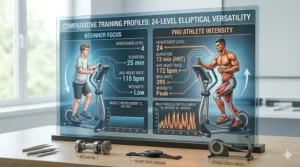
Eight resistance levels create roughly 12-15% intensity jumps between settings. For casual users who’ll never progress beyond moderate cardio, this works fine. But if you’re recovering from injury, training for competition, or simply want your equipment to last 5+ years without feeling limited, those gaps become problematic.
Good for: Occasional users, small spaces, tight budgets
Limitation: Large jumps between levels limit progression precision
16 Levels: The Comfortable Middle
Sixteen levels cut those intensity jumps to 6-8%, making progression smoother. This satisfies most home users who want room to grow without overthinking resistance science. You can target broad heart rate zones and progress steadily.
Good for: Regular users (3-5x weekly), families with varying fitness levels
Limitation: Still not precise enough for rehabilitation or athletic training
24-32 Levels: The Professional Standard
With 24+ levels, you’re working with 3-5% intensity changes—the same granularity found in commercial gym equipment. This precision lets you target specific wattage outputs, maintain exact heart rate zones, or progress rehabilitation protocols safely.
Good for: Daily users, athletes, rehabilitation, anyone who wants commercial-grade control
Limitation: Slightly higher upfront cost (though prices have fallen dramatically)
Research published in Experimental Brain Research demonstrated that precise resistance progression—increasing by 3-5% increments—produced superior motor recovery outcomes compared to larger jumps. While that study focused on brain injury rehabilitation, the principle applies broadly: finer control means better adaptation.
The Bottom Line
If you’re serious about training longevity, 24+ levels provide future-proofing that 8-level machines can’t match. The price difference? Often just $100-200. The difference in usable lifespan before you outgrow the equipment? Years.
Magnetic vs Electromagnetic Resistance: Why It Matters
Not all resistance systems are created equal, even when they claim the same number of levels.
Basic Magnetic Resistance
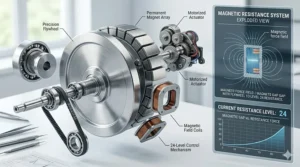
Entry-level ellipticals use permanent magnets positioned near the flywheel. Turning a tension knob physically moves these magnets closer or farther, changing resistance. This works, but has limitations:
- Physical wear on adjustment mechanisms
- Slight lag when changing resistance
- Less precise calibration between levels
Most machines under $500 use this system. It’s functional but feels slightly mechanical during transitions.
Electromagnetic (Eddy Current) Resistance
Premium models like the Schwinn 470 use eddy current braking—electromagnetic induction that adjusts resistance electronically. Benefits include:
- Instantaneous resistance changes with zero lag
- No physical wear points (longer lifespan)
- More precise calibration across all levels
- Computer-controlled adjustment during programmed workouts
The difference feels subtle until you do interval training with rapid resistance changes. Eddy current systems respond instantly; mechanical systems have a beat of lag that interrupts flow.
Servo Motor Resistance
Top-tier machines use servo motors for both resistance and incline adjustment. The NordicTrack Commercial 14.9 employs this for automatic resistance changes during iFIT workouts. These systems offer:
- Automatic adjustments without user input
- Integration with app-based training programs
- Maximum precision across the full resistance range
Which Matters for 24 Resistance Levels?
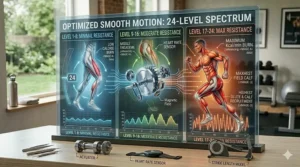
Here’s the reality: a 24-level magnetic system outperforms an 8-level electromagnetic system for practical training purposes. The number of levels matters more than the resistance type for most users. But when comparing machines with similar level counts, electromagnetic resistance provides a noticeably smoother experience.
For rehabilitation or athletic training where precision matters, electromagnetic systems justify their cost premium. For general fitness where you’re adjusting resistance every few minutes, basic magnetic systems work perfectly fine.
What Most Buyers Miss: Resistance Curve vs Absolute Resistance
Sales specs never mention resistance curves, yet this determines whether a machine feels natural or awkward.
Understanding Resistance Curves
Every elliptical has a relationship between resistance level number and actual force required. Elliptical trainers use various resistance mechanisms to create workout intensity. A “linear” curve means level 10 is exactly twice the resistance of level 5. A “progressive” curve means resistance increases more dramatically at higher levels.
Neither is inherently better—it depends on use case. Linear curves suit general fitness and weight loss. Progressive curves better simulate outdoor terrain and athletic training.
Why This Matters for 24+ Level Machines
With more resistance levels, you can better identify your sweet spots within the curve. An 8-level machine might jump from comfortable to painful with no middle ground. A 24-level system lets you find that Goldilocks zone where challenge meets sustainability.
Example: On an 8-level machine, you might find level 4 too easy and level 5 too hard. On a 24-level machine, you discover levels 11-14 provide the perfect progression between those extremes.
Testing Resistance Curves
When shopping, try this: Start at the lowest level and work up by one, staying 30 seconds at each. Notice whether intensity increases gradually or in jumps. Machines with smooth, predictable curves feel more natural during varied workouts.
The Schwinn 470 and NordicTrack Commercial 14.9 both feature progressive curves that intensify at higher levels—mimicking hill climbs. The MERACH Go and Horizon 7.0 AE offer more linear curves—better for steady-state training.
Common Mistakes When Buying 24 Resistance Level Ellipticals
Mistake #1: Assuming More Levels = Better Workout
Twenty-four resistance levels won’t transform a cheaply-built machine into quality equipment. A well-constructed 16-level elliptical outperforms a wobbly 32-level model. Focus on build quality first, then resistance range.
Mistake #2: Ignoring Flywheel Weight
Resistance levels and flywheel weight work together. A 10-pound flywheel with 24 resistance levels feels choppier than a 25-pound flywheel with 16 levels. For smooth operation, aim for 20+ pound flywheels when buying 24+ level machines.
Mistake #3: Not Testing High Resistance Levels
Many buyers test levels 1-5 in showrooms and assume the rest scale proportionally. Always test the highest resistance levels. Some machines feel smooth at low resistance but become noticeably loud or jerky when maxed out.
Mistake #4: Overlooking Resistance Adjustment Method
Can you change resistance from the handlebars or only from the console? During interval training, reaching for console buttons breaks rhythm. Models with handlebar controls—like the Horizon 7.0 AE and Schwinn 470—provide better workout flow.
Mistake #5: Forgetting About Electronic Resistance
Mechanical resistance systems (knob-adjusted) don’t support programmed workouts or app integration. If you want automatic resistance changes during guided workouts, verify the machine uses electronic resistance control.
Features That Actually Matter (And Ones That Don’t)
Features Worth Paying For
Handlebar Resistance Controls — Adjusting mid-workout without breaking stride trumps fancy displays Incline Capability — Multiplies workout variety beyond resistance alone Heart Rate Monitoring — Contact grips suffice; wireless chest straps are overkill for most Bluetooth Connectivity — Tracking progress in existing apps beats proprietary ecosystems Heavy Flywheel (20+ lbs) — Creates the smooth operation that defines quality
Features You Can Skip
Built-in Workout Programs — Most people use 2-3 programs from 20+ options Touchscreens — Your tablet/phone already does this (and doesn’t require subscription) Cooling Fans — A $20 stand fan works better and aims where you want Water Bottle Holders — Nice to have, never a deciding factor Tablet Holders — Buy a $15 universal mount if your machine lacks one
The Gray Area
App Subscriptions — Worth it if you genuinely use guided workouts; wasted money otherwise Step Counters — Relevant for competition/accountability types; irrelevant for solo trainers
According to clinical research from the Hospital for Special Surgery, the most critical factor for long-term elliptical use is biomechanical comfort during the stride motion—not entertainment features. Prioritize ergonomics over electronics.
Long-Term Ownership: Maintenance and Lifespan
Expected Lifespan by Quality Tier
Budget Models ($400-$700): 3-5 years with moderate use
Mid-Range ($700-$1,500): 5-10 years with regular use
Premium ($1,500+): 10-15+ years, similar to commercial equipment
Maintenance Schedule
Weekly: Wipe down rails and moving parts to remove sweat/dust
Monthly: Check and tighten all bolts (vibration loosens connections)
Quarterly: Lubricate pivot points if manufacturer recommends
Annually: Inspect drive belt and bearings for wear
Common Wear Points
With 24+ resistance levels using magnetic systems, resistance failure is rare. Instead, watch for:
- Pedal bearings (especially in cheaper models)
- Drive belts (20,000-50,000 miles typical lifespan)
- Console electronics (most common failure point)
- Hydraulic lift cylinders on incline systems
Warranty Translation
Lifetime Frame: Standard on quality machines, meaningless on cheap ones
2-5 Year Parts: Reflects manufacturer confidence in quality
90-Day Labor: Industry standard, not great but universal
1+ Year Electronic: Critical since console/resistance control failure is most common
The Schwinn 470 offers 10-year frame, 2-year parts warranty. The NordicTrack Commercial 14.9 provides 10-year frame, 2-year parts. These represent solid mid-range coverage without commercial overkill.
Frequently Asked Questions
❓ How many resistance levels do I actually need on an elliptical?
❓ What's the difference between 24 magnetic resistance and 24 electronic resistance levels?
❓ Can beginners benefit from 24 resistance level ellipticals?
❓ Do higher resistance levels mean harder maximum intensity?
❓ Is 24 resistance level elliptical worth the extra cost over 16 levels?
Conclusion: Making Your Decision
After testing dozens of ellipticals and analyzing thousands of user experiences, here’s the reality: 24 resistance levels represent the point where ellipticals transition from consumer products to serious training tools. You’re not just buying more numbers—you’re investing in precision that extends the machine’s useful lifespan by years.
For most buyers, the Schwinn 470 hits the sweet spot: 25 resistance levels, eddy current smoothness, incline capability, and proven reliability around $1,000. It delivers commercial-grade training without forcing subscription fees down your throat.
Budget-conscious athletes should seriously consider the GYMOST Commercial with 32 levels under $900. You sacrifice the touchscreen and brand recognition, but get resistance control that matches machines costing twice as much. Perfect for people who stream workouts from their existing devices.
If money isn’t the primary constraint and you want the absolute smoothest experience with automatic resistance adjustments, the NordicTrack Commercial 14.9 justifies its price with that 32-pound flywheel and iFIT integration. Just factor in the ongoing subscription cost.
The common thread among all seven machines reviewed here? They recognize that resistance precision matters. Whether you’re starting from zero fitness or pushing athletic performance, having control over 3-5% intensity adjustments instead of 12-15% jumps fundamentally changes how effectively you can train.
Choose based on your actual training style. If you do steady-state cardio at one intensity, 24 levels are overkill—save money and prioritize build quality. If you’re serious about progression, rehabilitation, or varied training, those extra resistance steps become non-negotiable within months of ownership.
Whatever you choose, verify the warranty, test high resistance levels before buying, and ensure the machine accommodates your stride length. A perfectly-calibrated resistance system means nothing if the fundamental biomechanics don’t fit your body.
Recommended for You
- 7 Best 16 Level Resistance Elliptical Machines for Home in 2026
- 7 Best Fan Resistance Elliptical Machines 2026
- 7 Best Eddy Current Brake Ellipticals 2026 – Smooth Silent Resistance
Disclaimer: This article contains affiliate links. As an Amazon Associate, I earn from qualifying purchases. If you purchase products through these links, we may earn a small commission at no additional cost to you.
✨ Found this helpful? Share it with your friends! 💬🤗
