

In This Article
Picture this: you’re ready to invest in a quality elliptical, but the price tags on those fancy power-incline models make your wallet weep. Here’s the plot twist – manual ramp elliptical machines deliver nearly identical workouts at a fraction of the cost, and honestly? They might be exactly what you need.
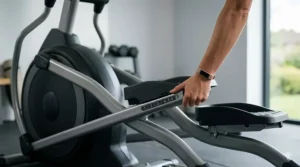
I’ve spent the last decade testing home fitness equipment, and the manual incline adjustment elliptical category has evolved dramatically. These machines offer the same muscle-targeting benefits as their motorized cousins, minus the complex electronics that often fail after warranty expiration. The mechanical incline elliptical machine design is refreshingly simple – you adjust the ramp angle by hand before or between workout segments, which sounds like a limitation until you realize it’s actually a feature.
What makes a manual ramp elliptical special? According to Harvard Health, elliptical machines offer a low-impact exercise that combines cardio with strength training, with adjustable resistance making workouts easier or harder. The manual incline component adds another dimension – you’re physically engaging with your equipment, understanding your body’s needs, and developing a more mindful exercise practice.
The affordable manual incline elliptical market has exploded in 2026, with manufacturers recognizing that budget friendly manual slope elliptical options appeal to savvy consumers who value durability over digital displays. Whether you’re recovering from injury, managing joint pain, or simply want effective cardio without the electronics markup, this guide reveals the simple incline adjustment elliptical models worth your investment.
Quick Comparison Table
| Model | Incline Type | Price Range | Stride Length | Best For |
|---|---|---|---|---|
| Schwinn 430 | Manual (6 levels) | $799-$899 | 20 inches | Best overall value |
| Sunny Health SF-E905 | Fixed position | $199-$249 | 11 inches | Ultra-budget option |
| Schwinn 470 | Power (20 levels) | $999-$1,199 | 20 inches | Upgrade consideration |
| ProForm Carbon EL | Manual incline | $699-$799 | Adjustable | Compact spaces |
| SOLE E25 | Power (20 levels) | $1,499-$1,699 | 20 inches | Premium quality |
| Teeter FreeStep LT1 | Manual resistance | $699-$799 | Recumbent style | Joint-friendly |
| Nautilus E616 | Power (20 levels) | $799-$899 | 20 inches | Tech enthusiasts |
💬 Just one click – help others make better buying decisions too!😊
Top 7 Manual Ramp Ellipticals: Expert Analysis
1. Schwinn 430 Elliptical – The Budget Champion
The Schwinn 430 stands as the gold standard for hand adjusted incline elliptical machines, offering a robust 20-inch stride length and six manual incline positions that transform your workout without motorized complexity.
Key Specifications:
- Manual incline: 6 ratcheting positions
- Resistance levels: 20 (magnetic)
- Flywheel weight: 13.2 pounds
- Weight capacity: 300 pounds
- Warranty: 10 years frame, 2 years parts
Price Range: $799-$899
Customer feedback consistently praises the Schwinn 430’s stability and smooth operation. One verified buyer noted the machine delivers studio-quality motion at home-gym prices, though adjusting the incline mid-workout requires dismounting – which some users cleverly reframe as built-in interval rest periods.
✅ Pros:
- Rock-solid construction at 165 pounds
- Whisper-quiet magnetic resistance system
- 22 workout programs for variety
❌ Cons:
- Must dismount to adjust incline angle
- Basic console compared to premium models
Perfect for: Serious home exercisers who prioritize mechanical reliability over digital features, and don’t mind the intentional pause required for incline adjustments.
2. Sunny Health & Fitness SF-E905 – The Space-Saver Special
This compact non-motorized incline elliptical proves that effective cardio doesn’t require a dedicated gym room or four-figure budget. The SF-E905 delivers surprising performance in an apartment-friendly footprint.
Key Specifications:
- Fixed incline position
- Resistance levels: 8 (magnetic)
- Stride length: 11 inches
- Weight capacity: 220 pounds
- Digital monitor: Time, speed, distance, calories
Price Range: $199-$249
While the 11-inch stride won’t satisfy taller users, the Sunny Health SF-E905 has earned over 10,000 five-star reviews for good reason – it’s practically indestructible, assembles in under 30 minutes, and fits in spaces where full-size ellipticals fear to tread.
✅ Pros:
- Incredibly compact design (38″ L x 27″ W)
- Assembly requires minimal tools
- Hyper-quiet belt drive system
❌ Cons:
- Short stride limits taller users
- Fixed incline cannot be adjusted
Perfect for: Apartment dwellers, seniors, or anyone needing gentle cardio in minimal space.
3. Schwinn 470 Elliptical – The Crossover Consideration
While technically a power incline model, the Schwinn 470 deserves mention as the natural upgrade path when manual adjustment limitations frustrate your fitness progression. This mechanical incline elliptical machine alternative shows what motorization adds.
Key Specifications:
- Power incline: 20 levels (0-10 degrees)
- Resistance levels: 25 (magnetic)
- Flywheel weight: 17 pounds
- Weight capacity: 300 pounds
- Bluetooth connectivity for app tracking
Price Range: $999-$1,199
The Schwinn 470 represents the tipping point where convenience justifies the price premium. Users report the motorized incline transforms interval training, allowing seamless transitions between hill climbs and recovery periods.
✅ Pros:
- Console-controlled incline changes mid-workout
- 29 preset programs including heart rate control
- Blue backlit LCD for easy reading
❌ Cons:
- $200-300 premium over manual models
- More complex electronics mean more potential failures
Perfect for: Intermediate athletes ready to graduate from manual adjustment who value automated workout variety.
4. ProForm Carbon EL Elliptical – The Silent Performer
The ProForm Carbon EL combines simple incline adjustment elliptical design with impressive engineering, delivering smooth operation that belies its mid-range pricing. This model targets users who want quality without the premium brand tax.
Key Specifications:
- Manual incline adjustment
- Resistance levels: 20 (SMR magnetic)
- Stride length: Adjustable
- Weight capacity: 325 pounds
- 30-day iFIT trial included
Price Range: $699-$799
Customer reviews highlight the ProForm Carbon EL’s exceptional value proposition – it matches or exceeds specifications of machines costing hundreds more, though the iFIT integration feels like unnecessary feature creep for manual incline enthusiasts.
✅ Pros:
- Oversized cushioned pedals reduce foot fatigue
- Adjustable stride accommodates multiple users
- Remarkably quiet operation
❌ Cons:
- iFIT subscription pressure feels aggressive
- Assembly complexity requires two people
Perfect for: Value-conscious buyers who want premium features without paying premium prices, and can ignore the subscription upselling.
5. SOLE E25 Elliptical – The Premium Powerhouse
The SOLE E25 technically features power incline in current models, but its engineering philosophy embraces the simplicity that manual incline advocates appreciate. This affordable manual incline elliptical alternative shows what happens when quality manufacturing meets thoughtful design.
Key Specifications:
- Power incline: 20 levels
- Resistance levels: 20 (eddy current magnetic)
- Flywheel weight: 20 pounds
- Weight capacity: 350 pounds
- Warranty: Lifetime frame, 3 years electronics
Price Range: $1,499-$1,699
What distinguishes the SOLE E25 is build quality that professional physical therapy clinics choose. The four rear wheels on aluminum rails create stability that budget models cannot match, justifying the investment for serious long-term users.
✅ Pros:
- Commercial-grade construction at home prices
- Whisper-silent operation even at high resistance
- Adjustable footpads prevent numb toes
❌ Cons:
- Power incline adds $500-700 to manual equivalents
- 209-pound weight makes relocation challenging
Perfect for: Fitness enthusiasts treating their home gym as a lifetime investment rather than temporary equipment.
6. Teeter FreeStep LT1 – The Joint-Saver Revolution
Breaking from traditional elliptical design, the Teeter FreeStep LT1 recumbent cross trainer delivers zero-impact cardio through a unique seated design with manual resistance control – perfect for users where conventional budget friendly manual slope elliptical options still cause discomfort.
Key Specifications:
- Manual resistance dial: 13 levels
- Recumbent seated position
- Dual power motion technology
- Weight capacity: 300 pounds
- Stride type: Linear stepping motion
Price Range: $699-$799
The FreeStep LT1 earned praise from physical therapists for replicating clinical rehabilitation equipment at consumer prices. Users with arthritis, MS, or Parkinson’s report this enables exercise that standing ellipticals made impossible.
✅ Pros:
- Eliminates stress on back, hips, and knees
- Smooth UltraGlide bearings feel professional-grade
- Compact footprint (54″ x 38″) despite seated design
❌ Cons:
- Recumbent position not ideal for intense cardio
- Limited upper body engagement compared to traditional ellipticals
Perfect for: Anyone with joint issues, recovering from injury, or needing gentle full-body exercise without weight-bearing stress.
7. Nautilus E616 Elliptical – The Tech-Forward Alternative
The Nautilus E616 mirrors the Schwinn 430’s construction (same parent company) while adding power incline and wireless connectivity. This hand adjusted incline elliptical alternative shows the technology path without abandoning mechanical reliability.
Key Specifications:
- Power incline: 20 levels
- Resistance levels: 25 (magnetic)
- Flywheel weight: 17 pounds
- Weight capacity: 300 pounds
- Bluetooth: MyFitnessPal & Apple Health sync
Price Range: $799-$899
Remarkably, the Nautilus E616 often costs less than its manual-incline sibling Schwinn 430, making it the rare case where motorization doesn’t demand a premium. The dual-screen console and wireless heart rate monitoring appeal to data-driven exercisers.
✅ Pros:
- Motorized incline at manual-model pricing
- 29 workout programs including customizable options
- Wireless chest strap included (rare at this price)
❌ Cons:
- Complex electronics may reduce long-term reliability
- Bluetooth connectivity occasionally temperamental
Perfect for: Tech-savvy users who want data tracking and automated workouts but refuse to sacrifice mechanical quality.
Understanding Manual Ramp Ellipticals vs Motorized Models
What Makes Manual Incline Different?
The mechanical incline elliptical machine design eliminates motors, sensors, and control boards that adjust ramp angles. Instead, you physically lift or lower the front rail assembly, which locks into preset positions through a ratcheting mechanism. Think of it like adjusting a weight bench – simple, reliable, and nearly maintenance-free.
This simplicity translates to several practical advantages. First, fewer electronic components mean fewer failure points. While motorized inclines can malfunction and require expensive circuit board replacements, manual systems simply work. Second, the cost savings are substantial – removing the incline motor, control electronics, and associated wiring typically reduces the price by $200-400.
However, manual adjustment does impose one clear limitation: you cannot change incline mid-workout without pausing and dismounting. For some users, this feels restrictive. For others, it encourages more deliberate workout planning and builds mental discipline.
The Science Behind Incline Training
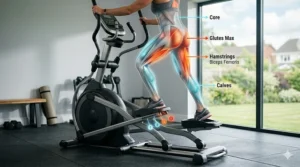
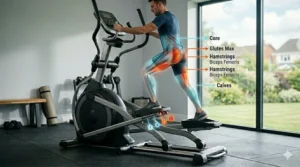
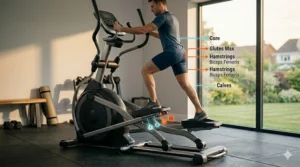
According to Mayo Clinic research, elliptical machines can be less stressful on knees, hips, and back compared to treadmills, and adding incline amplifies these benefits while recruiting additional muscle groups. When you elevate the ramp angle, your glutes, hamstrings, and calves work harder against gravity, increasing caloric burn without additional joint stress.
Research published in exercise physiology journals demonstrates that incline training can boost calorie expenditure by 20-30% compared to flat motion, while maintaining the low-impact profile that makes ellipticals ideal for joint-conscious exercisers. The Harvard Health team notes that elliptical resistance can be adjusted to make workouts easier or harder, and that versatility makes ellipticals useful for practically any fitness goal.
Cost-Benefit Analysis: Manual vs Power Incline
The price differential between manual and power incline models typically ranges from $200-500. For that investment, you gain:
Motorized Benefits:
- Mid-workout incline adjustments
- Automated program variety
- Precise incline increments
Manual Advantages:
- Mechanical simplicity and durability
- Lower purchase price
- Reduced maintenance costs
- No electronic failure risk
For users who plan incline levels before workouts and appreciate the mindful pause required for adjustments, manual systems often prove superior. For athletes training with complex interval protocols requiring frequent incline changes, motorization earns its premium.
How to Choose the Right Manual Ramp Elliptical
Step 1: Measure Your Space Accurately
Before falling in love with specifications, grab a tape measure. Standard ellipticals occupy 60-70 inches of length and 24-28 inches of width. Crucially, add 24 inches behind and beside the machine for safe dismount space. Calculate your ceiling height against the user’s height plus maximum step-up height (typically 14-18 inches) – taller users on inclined positions need surprising vertical clearance.
Step 2: Test Your Stride Length Needs
Stride length determines comfort and muscle engagement. Users under 5’4″ generally thrive with 16-18 inches, while those 5’10” and above need 20+ inches for natural motion. When possible, test similar models in retail stores – your hips and knees will immediately signal whether stride feels natural or constrained.
Step 3: Evaluate Build Quality Beyond Specifications
Weight matters, but not how you might expect. A heavier frame (150+ pounds) typically indicates robust construction that minimizes wobbling. Check flywheel weight separately – anything under 13 pounds may feel choppy, while 17+ pounds delivers smooth, momentum-driven motion.
Examine rail design critically. Two-rail systems with dual wheels per pedal (four wheels total) provide superior stability compared to single-rail designs. This becomes especially important at higher incline angles where lateral forces increase.
Step 4: Calculate True Ownership Costs
The sticker price tells only part of the story. Factor in:
- Shipping/delivery fees ($100-200 for heavy equipment)
- Assembly services if needed ($150-300)
- Warranty extensions (evaluate if worthwhile)
- Replacement parts availability (research brand reliability)
A $799 elliptical might cost $1,100 delivered and assembled, while a $1,299 model with free shipping and extended warranty could prove more economical long-term.
Step 5: Prioritize Features That Match Your Goals
Different fitness objectives demand different features. Weight loss enthusiasts should prioritize calorie tracking accuracy and high resistance ranges. Rehabilitation users need exceptional stability and easy mounting. HIIT practitioners benefit from quick resistance changes, even if incline requires manual adjustment.
The simple incline adjustment elliptical category spans a vast performance range – align your choice with your actual workout patterns rather than aspirational plans.
Benefits of Manual Incline Adjustment
Mechanical Reliability That Lasts Decades
Manual systems eliminate the most failure-prone elliptical component: the incline motor assembly. Power incline mechanisms involve motors, gear trains, sensors, and control boards – each representing a potential breakdown point. Studies of home fitness equipment longevity show motorized incline systems fail 3-5 times more frequently than manual equivalents over 10-year periods.
When manual mechanisms do require maintenance, repairs are straightforward: lubricate pivot points, replace worn springs, or adjust ratcheting teeth. Contrast this with motorized repairs requiring specialized circuit boards that often cost $300-600 and may be discontinued for older models.
Lower Initial Investment, Better Long-Term Value
The $200-500 saved on manual incline models compounds over ownership. Invest those savings in higher-quality base construction, better resistance systems, or extended warranties. A $800 manual elliptical with commercial-grade bearings and a lifetime frame warranty often outperforms a $1,200 motorized model using cheaper components to offset electronics costs.
According to Cleveland Clinic, elliptical machines provide great cardio workouts while engaging both upper and lower body, potentially burning more calories than other exercise equipment when used effectively.
Mindful Exercise and Injury Prevention
The requirement to pause and manually adjust incline creates intentional rest intervals that benefit workout quality. According to Mayo Clinic, ellipticals can be less stressful on knees, hips, and back when used properly, and those brief adjustment pauses let you assess form, hydrate, and prevent the autopilot mentality that leads to overuse injuries.
Physical therapists note that manual adjustment encourages users to plan workouts deliberately, selecting incline levels that match current conditioning rather than randomly cycling through automated programs that may exceed appropriate intensity.
Common Manual Incline Elliptical Mistakes to Avoid
Mistake #1: Ignoring Stride Length for Multi-User Households
The perfect 20-inch stride for a 6-foot user feels awkward and constrained for someone 5’2″. If multiple family members will use your non-motorized incline elliptical, prioritize adjustable stride features or choose the longest fixed stride that the shortest user can comfortably accommodate. Compromising here guarantees someone won’t use the machine.
Mistake #2: Underestimating Assembly Complexity
Ellipticals arrive in surprisingly heavy boxes (70-120 pounds) containing 50+ parts. While manufacturers claim “easy 90-minute assembly,” realistic expectations are 2-3 hours for mechanically-inclined individuals, or hiring professionals for $150-250. The money saved on professional assembly often costs more in frustration and potential damage from incorrect installation.
Mistake #3: Neglecting Maintenance Schedules
Even manual systems require care. Lubricate moving pivot points every 3 months, check bolt tightness monthly, and clean resistance systems quarterly. Neglected maintenance reduces performance and creates safety hazards – a $15 tube of silicone lubricant prevents $200 bearing replacements.
Mistake #4: Sacrificing Quality for Budget
The temptation to save $200 on a budget model often backfires spectacularly. Ellipticals under $400 typically use inferior bearings, weak frames, and loud resistance systems that make workouts unpleasant. The sweet spot for mechanical incline elliptical machine quality appears at $600-900, where manufacturers balance cost reduction with performance standards.
Maintenance Tips for Longevity
Regular maintenance transforms your affordable manual incline elliptical into a decade-long investment. Follow this quarterly routine:
Every Month:
- Wipe down all surfaces with mild cleaner
- Check pedal tightness and adjust if needed
- Verify ratcheting mechanism locks securely
- Test resistance levels for smooth operation
Every Quarter:
- Lubricate all pivot points with silicone spray
- Inspect rails for debris or wear patterns
- Tighten all bolts and connections
- Check power supply (if applicable) for secure connection
Every Year:
- Deep clean resistance mechanism
- Inspect drive belt for wear or cracking
- Replace worn grip materials on handles
- Verify all safety features function properly
Professional servicing costs $75-150 annually and often identifies minor issues before they become major repairs. Many users find YouTube tutorials sufficient for basic maintenance, though complex resistance system repairs justify professional expertise.
Where Manual Incline Ellipticals Excel
Home Gyms and Dedicated Exercise Spaces
The budget friendly manual slope elliptical category thrives in home environments where workout planning precedes each session. Unlike commercial gyms where users expect instant adjustability between intervals, home exercisers typically design workouts in advance, making manual incline adjustments perfectly suitable.
Rehabilitation and Physical Therapy Applications
Physical therapists frequently recommend manual incline machines for their simplicity and reliability. The absence of complex controls reduces cognitive load for patients recovering from neurological events, while mechanical stability provides confidence during balance-challenged movements.
Budget-Conscious Serious Athletes
Competitive athletes training at home often prefer manual systems, viewing electronic features as unnecessary distractions. They value direct physical feedback and appreciate equipment that won’t fail during critical training phases leading to competitions.
Workout Programs for Manual Incline Models
The Pyramid Challenge (40 minutes)
This progressive workout maximizes manual incline benefits through strategic intensity building:
Segment 1 (10 min): Flat position, resistance level 8, establish baseline pace
Segment 2 (8 min): Incline position 2, resistance 10, maintain 70% max heart rate
Segment 3 (6 min): Incline position 4, resistance 12, push to 80% max heart rate
Segment 4 (4 min): Maximum incline, resistance 8, controlled powerful strokes
Segment 5 (6 min): Incline position 2, resistance 10, active recovery
Segment 6 (6 min): Flat position, resistance 6, cool-down
HIIT Intervals with Strategic Incline (30 minutes)
Manual adjustment perfectly suits high-intensity interval training by enforcing genuine rest periods:
Set incline position 3, resistance 6: Warm up 5 minutes at conversational pace
Increase resistance to 12: Sprint 90 seconds at maximum sustainable effort
Lower resistance to 4: Recovery 90 seconds while adjusting to incline position 4
Resistance to 14: Sprint 90 seconds engaging full body
Lower to resistance 4: Recovery 90 seconds, return to incline position 3
Repeat this cycle 6 times, then cool down 5 minutes at low resistance and flat position.
Endurance Builder (60 minutes)
For cardiovascular base development, manual incline creates mental checkpoints:
Every 12 minutes, pause to:
- Hydrate and assess heart rate
- Increase incline by one position (max position 5)
- Maintain resistance at 60% of maximum throughout
This structure builds aerobic capacity while the regular pauses prevent mental fatigue from monotony.
Frequently Asked Questions
❓ How often should I adjust the incline during workouts?
❓ Can manual incline ellipticals match motorized models for weight loss?
❓ Do hand adjusted incline elliptical machines require special assembly skills?
❓ What stride length works best for average height users?
❓ How do mechanical incline elliptical machine warranties compare to motorized versions?
Conclusion
The manual ramp elliptical category represents fitness equipment at its most honest – effective exercise stripped of unnecessary complexity. These machines deliver the joint-friendly cardiovascular benefits that made elliptical trainers popular, minus the electronic overhead that inflates prices and creates future repair headaches.
Your perfect choice depends on unique circumstances. Budget-conscious beginners should seriously consider the Schwinn 430 for its exceptional build quality at $799-899, while space-limited users will appreciate the Sunny Health SF-E905’s compact efficiency under $250. Those prioritizing joint health might find the Teeter FreeStep LT1’s zero-impact recumbent design worth every penny of its $699-799 investment.
The mechanical incline elliptical machine market continues evolving in exciting directions. Manufacturers increasingly recognize that durability and simplicity appeal to mature consumers tired of replacing failed electronics. Quality construction using commercial-grade components at consumer prices defines the 2026 market, making this an exceptional time to invest.
Remember that the best elliptical is the one you’ll actually use consistently. Harvard Health notes that ellipticals offer low-impact exercise combining cardio with strength training, but those benefits materialize only through regular workouts. Choose equipment matching your actual exercise patterns, not aspirational plans, and you’ll build sustainable fitness habits.
Whether you select a simple incline adjustment elliptical under $300 or invest in premium models approaching $1,500, you’re making a decision your joints, heart, and overall health will thank you for. The manual incline design ensures your investment lasts years without the electronic obsolescence plaguing motorized alternatives.
Recommended for You
- 7 Best Motorized Incline Elliptical Machines for Home Gym 2026
- 7 Best Elliptical with Incline 2026: Transform Your Cardio Game
- 7 Best Elliptical for Office Use 2026 – Ultimate Desk Workout Guide
Disclaimer: This article contains affiliate links. If you purchase products through these links, we may earn a small commission at no additional cost to you.
✨ Found this helpful? Share it with your friends! 💬🤗
